Arkansas Bear Baiting Rules
It's incredibly frustrating, isn't it, trying to navigate the maze of hunting regulations, especially when it comes to something as specific as bear baiting? One minute you hear it's allowed, the next you're sure it's not, and the rules seem to change every other season. This guide is here to cut through that confusion, giving you a clear, realistic understanding of Arkansas's bear baiting rules so you can hunt ethically, legally, and with confidence.
The Core Rule: Public Versus Private Land Restrictions
Let's get right to the heart of the matter because this is where most of the misunderstanding comes from. Arkansas has very distinct rules regarding bear baiting, and the primary differentiator is whether you're on public land or private property. It's not a blanket "yes" or "no," and missing this crucial distinction can land you in a heap of trouble.
Public Land: A Clear Prohibition
When it comes to Arkansas's vast public hunting grounds, the rules are pretty straightforward: bear baiting is generally prohibited. This includes all Arkansas Game and Fish Commission (AGFC) Wildlife Management Areas (WMAs), the expansive Ouachita National Forest and Ozark National Forest, and any National Wildlife Refuges. The AGFC is clear on this: "No person shall bait, or hunt over bait, on any Wildlife Management Area (WMA), National Forest, or National Wildlife Refuge." This rule exists for a few good reasons. First, it's about maintaining fair chase principles, ensuring that animals aren't unnaturally concentrated or accustomed to human-provided food sources. Secondly, and perhaps more critically, it's about preventing the spread of diseases. When animals congregate at a bait site, the risk of disease transmission, especially something as devastating as Chronic Wasting Disease (CWD), skyrockets. It's a measure to protect the overall health of the herd.
Think about it this way: imagine everyone trying to put out bait on a WMA like the Sylamore WMA or the Gene Rush WMA. Not only would it create chaos and potential conflicts between hunters, but it would also create a highway for diseases and drastically alter the natural movement and feeding patterns of bears and other wildlife. The AGFC manages these lands for the benefit of all wildlife and all hunters, and a universal baiting ban helps maintain that balance. So, if you're planning to hunt bears on public ground, you'll need to focus on scouting for natural food sources, understanding bear travel corridors, and knowing how to find bear sign in the Ozarks. It's a more challenging, but incredibly rewarding, way to pursue black bears.
Private Land: Navigating the Nuances
Now, here's where it gets a bit more complicated, but also where opportunities arise for those with access to private property. On private land, with explicit landowner permission, bear baiting is generally permitted, but it's far from a free-for-all. You can't just throw out anything you want, anywhere you want. The state still has regulations governing what materials you can use as bait and where those sites can be located, especially in relation to CWD zones, which we'll dive into shortly.
Obtaining permission is your absolute first step. A verbal "sure, go ahead" might not cut it if you ever run into a game warden. It's always best practice to get written permission from the landowner, clearly stating that you have consent to hunt and to bait bears on their property. This protects both you and the landowner. Beyond permission, you're responsible for understanding the specific regulations that still apply to private land baiting. This means knowing what kind of bait is legal and being aware of any local ordinances that might restrict certain activities. For instance, some counties or municipalities might have rules about attracting large wildlife near residential areas, even on private property. Before you even think about setting out a single donut, make sure you've covered your bases with both the landowner and the latest AGFC digest.
What Constitutes "Baiting" and Permissible Baits
The term "baiting" might seem obvious, but in the eyes of wildlife regulations, it's often more expansive than hunters initially think. Understanding the AGFC's definition and the specific types of materials allowed or prohibited is crucial to staying legal.
Defining "Bait" in Arkansas Regulations
The Arkansas Game and Fish Commission defines "bait" as any natural or artificial substance that is used to attract wildlife. This isn't just limited to corn, oats, or those sugary treats often associated with bear baiting. It includes, but isn't limited to, food, minerals, salt, or any other substance that could entice an animal. The crucial part of the definition is "used to attract wildlife" and that includes incidental attraction. This means if you've been having lunch in the woods and leave your sandwich wrapper with crumbs, and a bear comes to investigate, you could technically be in violation if that's interpreted as having used a substance to attract wildlife for hunting purposes. While that's an extreme example, it highlights the broad interpretation.
The intent behind placing the substance is paramount. If you're putting out food specifically to draw bears to a location to hunt them, that's baiting. It also extends to hunting "over bait," meaning if someone else placed the bait, and you choose to hunt near it, you're still hunting over bait and are subject to the same regulations. This is particularly important for group hunts or when hunting on properties where multiple people might have access. Communication is key to avoid accidental violations. Make sure everyone on your hunting property understands the rules and isn't inadvertently creating a baiting situation, even if it's not their primary target.
Legal vs. Illegal Baiting Materials
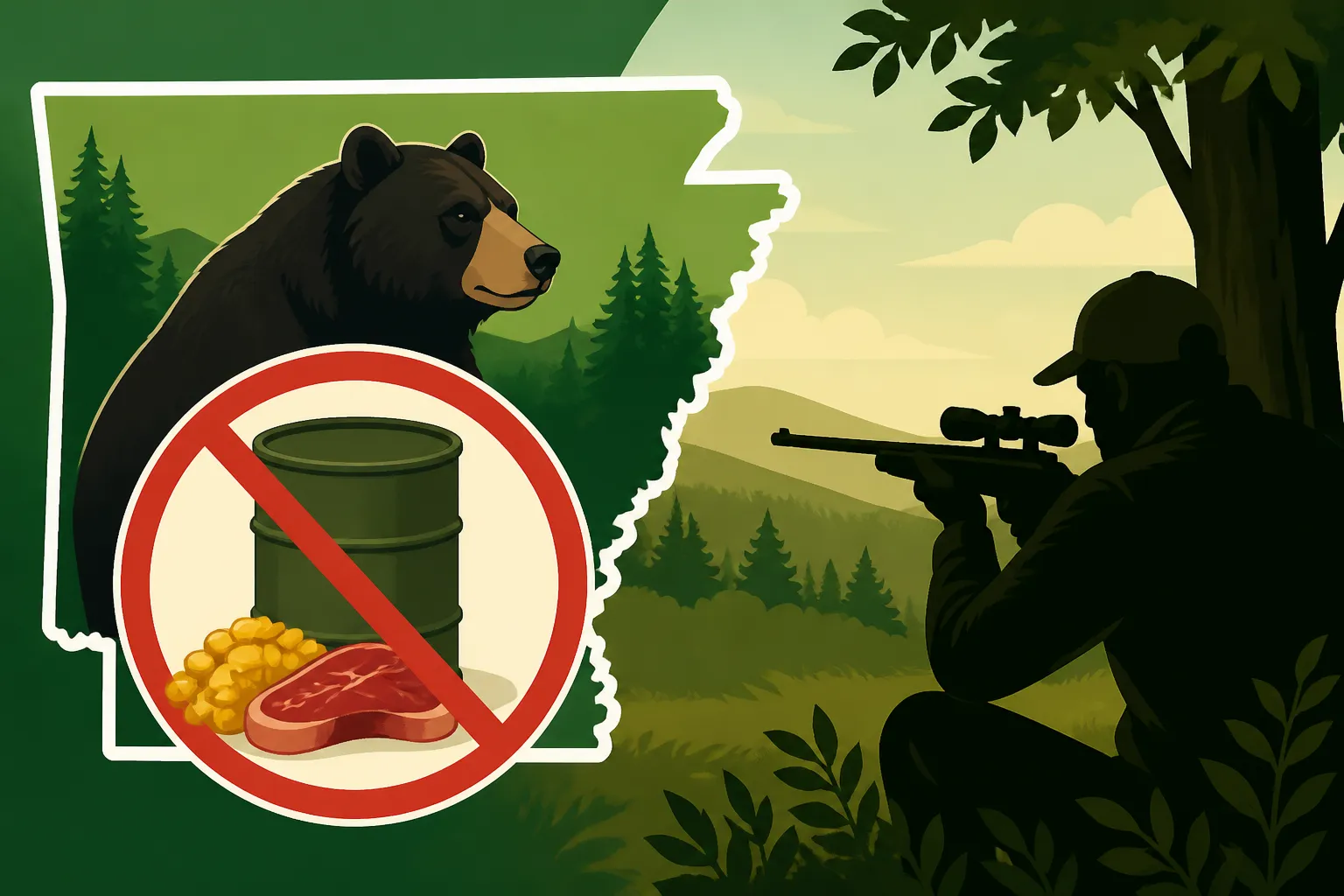
Even on private land where baiting is generally allowed (outside of CWD zones), you can't just use anything. The AGFC has specific prohibitions on certain baiting materials, primarily to prevent disease transmission and to maintain public safety.
Here's a breakdown of what's generally permitted and what is strictly prohibited:
| Category | Permitted Bait Examples (on private land, outside CWD zones) | Prohibited Bait Examples (everywhere or specific zones) |
|---|---|---|
| Food Items | Fruits (apples, berries), vegetables, grains (corn, oats, rice), pastries, molasses, commercial bear attractants (check ingredients) | Domestic animal parts (meat, bones, entrails), CWD-positive carcasses/parts, materials from CWD-infected animals, human food waste containing meat/bones |
| Attractants | Sweet scents (anise oil, maple syrup), certain commercial liquid attractants | Any substance derived from cervids (deer, elk) in a CWD zone, or any material that could spread disease |
| Placement | On private land, with landowner permission, following all local ordinances | On public lands (WMAs, National Forests, NWRs), within CWD Management Zones (most often) |
The key takeaway here is the absolute prohibition on domestic animal parts and any materials from CWD-positive animals or within CWD-infected zones. Using things like old meat scraps or bones from a domestic animal is a big no-no. This rule is in place to prevent the spread of diseases, not just CWD, but also other pathogens that could harm wildlife or even humans. Always err on the side of caution. If you're unsure about a specific bait item, it's best to avoid it or consult the AGFC directly. Remember, the goal is to attract bears safely and ethically, not to introduce risks to the environment or the local wildlife population.
Bear Baiting and Chronic Wasting Disease (CWD) Zones
If you thought the public vs. private land distinction was complex, wait until CWD zones enter the picture. Chronic Wasting Disease is a serious, fatal neurological disease affecting deer, elk, and moose (cervids). It's present in Arkansas, and its management has drastically impacted feeding and baiting regulations, even on private land.
Understanding CWD Zone Restrictions
Arkansas has designated CWD Management Zones, primarily concentrated in the northern and western parts of the state where the disease was first detected and continues to be monitored. If your private land is located within one of these CWD Management Zones, the general allowance for private land bear baiting takes a back seat to CWD prevention efforts. In these zones, the AGFC typically implements year-round feeding and baiting prohibitions or severe restrictions to minimize the congregation of cervids at common food sources. Why? Because CWD spreads through direct animal-to-animal contact and indirectly through contaminated environments (e.g., saliva, urine, feces, or decomposing carcasses containing prions). A bait site acts like a superhighway for these prions.
Even if you're baiting for bears, deer and other cervids will undoubtedly visit that site. This means that placing bait for any animal in a CWD zone, regardless of your target species, is often prohibited or heavily restricted to prevent the unnecessary congregation of deer and thus reduce the risk of CWD transmission. It's a critical measure to protect the long-term health of Arkansas's deer and elk herds, and it impacts bear hunters directly. It's worth noting that while bears are not cervids and do not contract CWD, their presence at a bait site frequented by deer can still contribute to the spread by moving contaminated soil or materials. Before you even consider putting out bait, double-check if your hunting area falls within a CWD Management Zone.
Staying Informed About Zone Changes
CWD management is an ongoing, dynamic process. The boundaries of CWD Management Zones can change, and the specific regulations within those zones can be updated annually based on monitoring efforts and new scientific understanding. What was allowed last year might not be this year. This is where staying informed becomes absolutely paramount. Relying on old information or hearsay is a recipe for a violation.
The best way to stay current is to consult the official AGFC hunting digest every year. It's usually available online, at AGFC offices, and at most license vendors. Pay close attention to the CWD section, which outlines the current zone boundaries and any specific restrictions on feeding and baiting within those areas. Using digital mapping tools can also be a huge advantage here. Services like GoHunt often integrate state wildlife agency land layers and CWD zone boundaries, allowing you to visually confirm whether your hunting property is within a restricted area. This kind of technology can be incredibly useful for planning your hunt, understanding property lines, and ensuring you're compliant with all regulations. It's a small investment for peace of mind and staying on the right side of the law.
Ethical Considerations and Smart Practices for Bear Baiting
Beyond just following the letter of the law, being a responsible hunter means also considering the ethical implications and employing smart practices, especially when it comes to something like bear baiting. It's about respecting the animals, the environment, and your fellow citizens.
Minimizing Human-Bear Conflicts
One of the biggest concerns with bear baiting, particularly near residential areas or frequently used public lands, is the potential for creating human-bear conflicts. When bears repeatedly associate humans or human structures with an easy food source, they can become habituated, losing their natural fear of people. This can lead to bears venturing into yards, rummaging through trash cans, or even becoming aggressive when encountering humans, especially if they're protecting a food source. These habituated bears often end up being "problem bears" that unfortunately may need to be removed or euthanized by wildlife authorities.
As responsible hunters, it's our duty to prevent this. When baiting on private land, ensure your bait site is located well away from homes, public roads, and hiking trails. Choose remote spots where the chances of a non-hunter stumbling upon the site, or a bear, are minimal. Consider the natural travel routes bears take and place your bait where they can access it without crossing into populated areas. Also, be mindful of what you're leaving behind. Clean up any trash or non-food items that might draw attention or create an eyesore. A clean bait site is a responsible bait site.
Strategic Placement and Site Management
Effective bear baiting isn't just about throwing food out; it's a strategic process that requires planning and ongoing management. On private land, choose your bait site wisely. Look for areas with dense cover, natural travel corridors like creek bottoms or old logging roads, and proximity to traditional bear bedding areas or water sources. Using mapping tools, like those offered by GoHunt, can help you identify these features, assess terrain, and mark potential bait sites while also verifying property boundaries. You can use these tools to scout remotely before ever setting foot on the property, saving valuable time and effort.
Once you've chosen a spot, manage it diligently. Consistency is key. Establish a regular schedule for replenishing bait, but don't overdo it. You want to attract bears, not feed the entire forest. Keep the site relatively clean, removing any discarded containers or excessive debris that could deter bears or attract unwanted attention from other animals. Setting up trail cameras can be invaluable for monitoring activity, determining the best times to hunt, and identifying specific bears. Remember that while you're baiting for bear, other species like feral hogs or raccoons will also be attracted. Ensure your setup minimizes impacts on non-target species. This meticulous approach ensures you're maximizing your hunting potential while minimizing any negative environmental impacts.
Importance of Knowing and Checking Regulations
I can't stress this enough: your responsibility doesn't end once you've read this guide. The Arkansas Game and Fish Commission regularly updates its regulations, especially concerning CWD management and specific zone rules. What's legal today might have a minor tweak tomorrow, or a major overhaul next season. Ignorance of the law is never an excuse.
Make it a habit to check the latest AGFC Hunting and Trapping Guide every single year before you even think about heading into the woods. Pay particular attention to the sections on bear hunting, general regulations, and all CWD-related rules, including Arkansas CWD Rules and Carcass Transport and Baiting Rules in Arkansas CWD Zones. Understand the specific Arkansas Bear Seasons and Zone Quotas for the area you plan to hunt. If you're hunting on a WMA, ensure you're familiar with Arkansas WMA Permits and Draw Hunts and any WMA-specific rules. Don't just skim it; read it thoroughly. If you have any doubt, call your local AGFC office or consult with a game warden. They are there to help clarify regulations, not just enforce them. This proactive approach is the hallmark of a truly responsible Arkansas hunter. When you finally get that opportunity to go Black Bear Hunting in Arkansas, you want to ensure it's a completely legal and ethical experience. After you've successfully harvested a bear, don't forget to review the Arkansas Bear Checking Requirements to ensure proper reporting.
Disclaimer
Please remember that hunting regulations, seasons, and zone boundaries can change. Always consult the most current Arkansas Game and Fish Commission (AGFC) hunting digest and official resources before engaging in any hunting activities. This guide is for informational purposes only and does not supersede official AGFC regulations.