Arkansas Antlerless Deer Limit
It's incredibly frustrating, isn't it? You spend hours scouting, set your stand, and finally, a beautiful doe walks into range, only to second-guess yourself about whether you can even take her. Understanding the Arkansas antlerless deer limit can feel like navigating a maze of zones, seasons, and weapon restrictions. This guide is here to untangle all that confusion, helping you confidently fill your freezer and manage the deer herd responsibly, no matter where you hunt in the Natural State.
The Bigger Picture: Why Antlerless Limits Matter
Before we dive into the nitty-gritty of numbers and dates, it’s important to understand why the Arkansas Game and Fish Commission (AGFC) sets antlerless deer limits in the first place. It’s not just about making things complicated for hunters; it’s a crucial tool for sound deer management. Think of it like a farmer managing their crops – you don't just harvest everything without a plan.
Balancing the Deer Population for Health
Deer herds, left unchecked, can grow beyond the carrying capacity of their habitat. This means too many deer competing for limited food resources, leading to malnourished animals, increased disease transmission, and widespread habitat damage. When there are too many deer, especially does, they browse vegetation heavily, which can devastate forests by preventing tree regeneration and impacting other wildlife that rely on the same plants. By managing antlerless harvest, the AGFC aims to keep the population in balance with the available food and cover, ensuring a healthier, more robust herd overall. This also contributes to the quality of future hunting seasons.
Managing Specific Zones and Local Conditions
Arkansas is a diverse state, from the rugged Ozark mountains to the sprawling Delta farmlands. What works for deer management in one area might not be suitable for another. For instance, a zone with agricultural damage might have very liberal antlerless opportunities to reduce crop depredation, while a heavily forested zone struggling with habitat degradation might have stricter limits. These localized regulations, which you can easily find on the AGFC website or with scouting tools like GoHunt, allow wildlife biologists to fine-tune management efforts. It's about recognizing that a one-size-fits-all approach just doesn't work for a state as varied as ours.
Addressing Chronic Wasting Disease Concerns
In recent years, Chronic Wasting Disease (CWD) has become a serious concern in parts of Arkansas, particularly in the Ozarks. While antlerless harvest isn't a direct cure for CWD, targeted removal of deer in affected areas can be part of a broader strategy to reduce deer densities and slow the spread of the disease. Lower deer densities can mean less direct contact between animals, which is how CWD is primarily transmitted. Hunters in CWD Management Zones often have expanded antlerless opportunities as part of these disease management efforts. Understanding these nuances is vital for any responsible hunter, and the AGFC provides extensive information on Chronic Wasting Disease in Arkansas.
Navigating Arkansas's Antlerless Deer Bag Limits
Alright, let's get into the specifics. Arkansas has a statewide annual bag limit of four (4) deer. This is your ceiling for the entire season, regardless of how many zones you hunt or which methods you use. Within this overall limit, the rules for antlerless deer can vary significantly by zone and the specific hunting season. This is where it gets a little tricky, but totally manageable once you understand the framework.
The Statewide 4-Deer Annual Bag Limit
As mentioned, every hunter in Arkansas is generally allowed to harvest a maximum of four deer per license year. This total includes any antlered bucks and antlerless deer you take. So, if you harvest one buck, you have three deer remaining in your bag limit that could be antlered or antlerless, depending on the zone and season rules. The most common scenario for many hunters is taking one or two bucks and then filling the rest of their tags with does, which is a fantastic way to stock the freezer and contribute to herd health. It's always a good idea to review the specific regulations for How Many Deer You Can Take in Arkansas before heading out.
Zone-Specific Antlerless Rules
This is where you really need to pay attention. Arkansas is divided into numerous deer zones, and each zone has its own unique set of regulations, particularly concerning antlered bucks and when antlerless deer can be harvested.
Here's a simplified breakdown, but always double-check the current AGFC regulations for your specific zone:
- Most Zones (e.g., Zones 1, 2, 3, 5, 5B, 6, 7, 8, 9, 10, 12, 13, 14, 15, 16, 17):
- Buck Limit: Typically, two (2) antlered bucks per season. Some zones might have a 3-point rule where one of those bucks must have at least three points on one side.
- Antlerless Limit: You can generally take up to four (4) antlerless deer during archery and crossbow seasons. During modern gun and alternative firearms seasons, antlerless harvest is often restricted to specific "doe days" or specific youth hunts, or it might only be allowed on private land. Some zones are more liberal, allowing antlerless harvest throughout these seasons, while others are very restrictive. It's critical to know your specific zone's regulations.
- Highly Restrictive Zones (e.g., Zone 4A): This zone is often buck-only during modern gun season. Antlerless harvest might be limited to archery/crossbow or youth hunts. These zones usually have very specific management goals, perhaps to increase buck age structure or grow the overall herd.
- CWD Management Zones: These zones often have more liberal antlerless opportunities, sometimes even allowing up to the 4-deer limit to be antlerless during archery and crossbow season, and extended antlerless gun seasons. The goal here is often to reduce overall deer density as part of disease management. Check the AGFC's CWD section for the most current information if you're hunting in one of these areas.
To find your exact zone and its specific rules, the AGFC's interactive map tool or a detailed hunting app like GoHunt is invaluable. Knowing Which Arkansas Zone You Are Hunting is the first step to understanding your limits.
Table: General Antlerless Deer Harvest Rules by Season (Always Confirm AGFC Regulations)
| Season Type | General Antlerless Opportunity |
|---|---|
| Archery/Crossbow | Most liberal. Generally, you can harvest antlerless deer up to your annual 4-deer bag limit during the entire season, provided you respect the buck limits for your zone. |
| Modern Gun | Highly variable by zone. Often restricted to specific "doe days," the last few days of the season, or during youth hunts. Some zones allow antlerless throughout, while others are buck-only. Always check your specific zone's regulations. |
| Alternative Firearms | Similar to modern gun. Antlerless harvest is often restricted to specific days or portions of the season, and rules can vary significantly by zone. |
| Youth Hunts | Typically very liberal. Antlerless deer are usually legal to harvest during designated youth deer hunts, often up to the annual bag limit or specific to the youth hunt's rules. |
| Muzzleloader | Often falls under the "alternative firearms" rules. Antlerless harvest may be restricted to specific days or be more liberal than modern gun, depending on the zone. |
Key Seasons for Antlerless Harvest Opportunities
The season you choose to hunt antlerless deer plays a huge role in your success and legal compliance. Each season offers different opportunities and challenges when targeting does.
Archery and Crossbow Seasons: The Most Liberal Options
If your goal is to harvest antlerless deer, the archery and crossbow seasons are generally your best bet in Arkansas. These seasons are often the longest, starting in late September and running through February in many zones, offering continuous opportunities for antlerless harvest. This extended timeframe allows hunters to manage deer populations on their property or public land effectively. The rules for Bowhunting Arkansas's Five-Month Archery Season typically mean that as long as you have a valid tag and haven't exceeded your annual four-deer limit, and adhere to any specific buck restrictions, you can take an antlerless deer.
- Early Season Opportunities: Hunting Bowhunting Arkansas in September Heat for does can be challenging due to warm weather, but deer patterns are often predictable, revolving around food and water sources. Scouting trails to food plots or oak flats can lead to early season success.
- Mid-Season Advantage: As the rut approaches, does are often moving more, making them more visible. While many hunters focus on bucks during this time, it's also a prime opportunity to fill antlerless tags if you see a good opportunity.
- Late Season Strategy: After the main gun seasons, deer become more patternable again, focusing on available food sources. This is an excellent time for stealthy still-hunting or setting up over food plots for late-season antlerless harvest.
Modern Gun and Alternative Firearms Seasons: Specific Doe Days
This is where the detailed AGFC regulations become absolutely critical. During Arkansas's modern gun and alternative firearms deer hunting seasons, antlerless harvest is often much more restricted than during archery season. Many zones only allow antlerless deer to be taken on specific "doe days," often at the end of a gun hunt, or during a dedicated antlerless-only hunt.
- Understanding "Doe Days": These are specific dates, usually a few days within the broader gun season, when taking an antlerless deer is legal. This is a common strategy employed by the AGFC to ensure buck populations aren't over-harvested while still providing opportunities to reduce doe numbers. If you hunt public land, you'll find similar restrictions, so knowing Modern Gun Tactics on Arkansas Public Land means knowing the specific days for antlerless harvest.
- Alternative Firearms Details: Seasons like muzzleloader and other alternative firearms often have similar restrictions to modern gun, though sometimes with slightly different dates or slightly more liberal opportunities depending on the zone. Always consult the current year's hunting guide for your specific zone to avoid any violations. What Counts as an Alternative Firearm is also clearly laid out in the regulations.
Youth Hunts: Generous Antlerless Opportunities
Arkansas provides fantastic opportunities for young hunters through its dedicated youth deer hunts. These hunts are typically very liberal for antlerless deer, often allowing youth hunters to take antlerless animals throughout the hunt, sometimes even before the regular archery or modern gun seasons open for adults. This is a deliberate strategy to encourage youth participation, offer a high chance of success, and contribute to herd management. It's a wonderful way to introduce new hunters to the sport and the importance of harvesting does. You can find more information on Youth Deer Hunt Dates and Rules in the AGFC handbook.
Checking and Tagging Your Antlerless Deer
You've successfully harvested an antlerless deer – congratulations! Now comes the critical part: correctly checking and tagging your animal. This isn't just bureaucratic red tape; it's essential for biological data collection and ensuring compliance with state regulations.
The Mandatory Checking Process
Every deer harvested in Arkansas, whether antlered or antlerless, must be checked with the Arkansas Game and Fish Commission. This is a mandatory step that provides the AGFC with vital data on harvest numbers, location, and hunter effort, all of which inform future management decisions.
- Methods of Checking: You have a few convenient options. You can use the AGFC's mobile app, call a toll-free number, or report it online through the AGFC website. Make sure you have your license number and the specific details of your harvest (date, time, county, sex of deer) ready. The deadline for checking your deer is midnight on the day of harvest. Missing this deadline can lead to fines. Learning about Arkansas Deer Checking and Tagging is non-negotiable for every hunter.
- What Information is Collected: When you check your deer, you'll report basic information like the date and county of harvest, and whether it was antlered or antlerless. This data helps the AGFC track regional harvest trends and ensures their management strategies are effective.
- Common Mistakes to Avoid: The most common mistake is simply forgetting to check the deer by the deadline. Another is incorrectly identifying the deer's sex during the check-in process. Always double-check your entry before submitting. If you use a tool like GoHunt to mark your harvest location, it can often help you retrieve the necessary county information accurately for checking.
Tagging Your Harvest
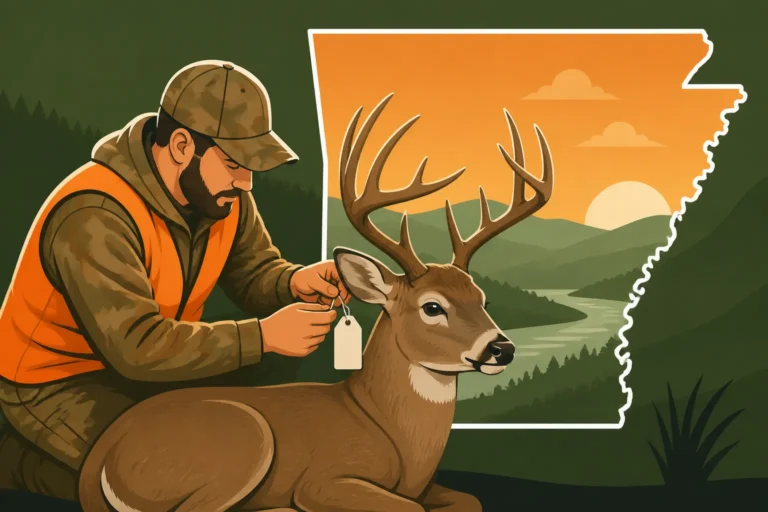
Once you've checked your deer, you'll receive a confirmation number. This number needs to be written on your paper deer tag, which you'll find attached to your hunting license.
- Physical Tag Requirements: The physical tag, clearly marked with the confirmation number, must be affixed to the deer immediately after harvest and before moving it from the kill site. This tag must remain on the deer until it reaches its final destination for processing or storage. This visual tag ensures that wildlife officers can easily identify legally harvested animals.
- Transporting Your Harvest: While transporting your deer, the tag must be securely attached. If you're quartering your deer in the field, ensure that the tag remains with the largest portion of the meat or the head, as specified in the regulations. Be mindful of Arkansas Deer Transport Rules, especially if you're traveling across county lines or out of state, as CWD regulations can impact carcass transport.
Planning Your Antlerless Hunt with Confidence
Successfully hunting antlerless deer isn't just about pulling the trigger; it's about smart planning and adherence to regulations. Knowing your limits and the best times to hunt will make you a more effective and responsible hunter.
Utilizing the AGFC Map Tool and GoHunt
The Arkansas Game and Fish Commission provides an excellent online interactive map tool that shows deer zones, public land boundaries, and specific WMA regulations. This tool is invaluable for planning your hunts, especially when trying to understand zone lines. Additionally, popular hunting apps like GoHunt take this a step further, offering detailed topographic maps, land ownership information, and the ability to overlay hunting zones and specific regulations. Before you even set foot in the woods, use these resources to identify your zone, understand its specific antlerless limits, and mark potential hunting spots. Learning Using the AGFC Map Tool effectively can save you a lot of guesswork.
Scouting for Antlerless Deer
Just like hunting for bucks, effective scouting is key for antlerless success. Does typically follow predictable patterns, especially when feeding or moving between bedding and feeding areas.
- Food Sources: Look for preferred food sources like acorns (especially white oaks in the fall), agricultural fields (soybeans, corn), and browse. Does will often congregate around abundant food sources.
- Water Sources: In hotter weather or drier conditions, water sources become magnets for all deer, including does.
- Thick Cover: Does, particularly those with fawns, will often stick to thicker cover for security. Scouting the edges of clearcuts, dense brush, or creek bottoms can reveal consistent doe travel routes.
- Trail Cameras: Strategically placed trail cameras can help you identify movement patterns, estimate doe populations, and confirm legal shooting hours.
Ethical Considerations for Antlerless Harvest
Remember, harvesting an antlerless deer is an act of wildlife management. Choose your shots carefully, ensuring a clean, ethical kill. Avoid taking multiple does from a small, isolated group if it seems like it would negatively impact the local population too severely unless specifically directed by robust management plans. Focus on culling older does to maintain a younger, more productive breeding population, or remove deer from areas experiencing high deer densities or crop damage. Respect the land and the animals, and always retrieve your game promptly.
Hunting antlerless deer in Arkansas offers a fantastic opportunity to enjoy the outdoors, put healthy protein on the table, and contribute directly to the health and balance of the state's deer herd. By understanding the regulations, utilizing available tools, and practicing ethical hunting, you can have a successful and responsible season.
Disclaimer
Please be aware that hunting regulations, seasons, and limits can change annually. While this guide provides comprehensive information, it is always the hunter's responsibility to consult the most current official Arkansas Game and Fish Commission (AGFC) hunting regulations booklet or website before participating in any hunting activity. This content is for informational purposes only and should not be considered a substitute for the official regulations.