Nontoxic Shot Rules in Arkansas
It's no secret that navigating hunting regulations can feel like trying to untangle a bird's nest after a strong wind – especially when it comes to specific equipment rules. For those of us who cherish our time in the Arkansas woods and wetlands, the shift towards nontoxic shot has brought its fair share of head-scratching and whispered frustrations. This guide is here to cut through the confusion and lay out everything you need to know about nontoxic shot rules in Arkansas, ensuring you stay legal, ethical, and ready for whatever the season brings.
Understanding the "Why": The Environmental Imperative Behind Nontoxic Shot
When you're out there, boots in the mud, decoys set, or perhaps still-hunting through a quiet hardwood bottom, the last thing on your mind might be the tiny pellets inside your shotgun shell. But for wildlife managers and conservationists, those pellets have long been a significant concern. It's easy to dismiss regulations as arbitrary hoops, but understanding the foundational reasons behind nontoxic shot rules can help us all appreciate their importance.
The Silent Threat of Lead to Wildlife
For generations, lead was the go-to material for shotgun pellets. It was dense, cheap, and effective. The problem, however, is that lead is also highly toxic. When hunters fired lead shot over fields, marshes, and timber holes, a significant amount of it would be left behind. Waterfowl, in particular, would often ingest these spent pellets while feeding, mistaking them for grit or seeds. Once ingested, the lead would slowly poison them, leading to sickness, emaciation, and ultimately, death. This wasn't just an occasional problem; studies over the years revealed alarming rates of lead poisoning in ducks, geese, and other migratory birds. Beyond waterfowl, scavengers like bald eagles and other raptors could also be affected by eating birds or other animals that had lead fragments in their bodies, creating a dangerous ripple effect throughout the ecosystem. It's a silent killer that we, as ethical hunters, have a responsibility to mitigate.
Arkansas's Role in National Conservation Efforts
Arkansas, often called the "Duck Capital of the World," plays an incredibly vital role in the health of the Mississippi Flyway. Millions of ducks and geese migrate through or winter in our state, drawn by the flooded timber and agricultural fields of the Delta. Given this immense concentration of waterfowl, any environmental hazard on our landscape has amplified consequences for continental bird populations. The move to nontoxic shot, while driven by federal mandates for waterfowl, aligns perfectly with Arkansas's deep-rooted commitment to conservation. The Arkansas Game and Fish Commission (AGFC) works tirelessly to protect these resources, and requiring nontoxic shot in specific areas is a cornerstone of those efforts. It's not just about compliance; it's about being good stewards of the wildlife we love to pursue. These regulations reflect a broader understanding that healthy habitats and healthy bird populations are intrinsically linked, and responsible hunting practices contribute directly to both.
Where Nontoxic Shot is Absolutely Required in Arkansas
This is where the rubber meets the road, or more accurately, where the shot meets the water. It’s critical to know precisely when and where you must use nontoxic shot, because the penalties for non-compliance can be stiff, and ignorance is rarely an excuse in the eyes of game wardens.
Federal Regulations on Waterfowl and Migratory Birds
The federal government, through the U.S. Fish and Wildlife Service, actually took the first big step on nontoxic shot. Since 1991, it has been illegal to use or possess lead shot for hunting waterfowl (ducks, geese, and coots) anywhere in the United States. This is a nationwide rule, applicable whether you're hunting private land, public land, or even a tiny pond in your backyard. This regulation also extends to certain other migratory game birds, like snipe and rails, though not typically doves or woodcock in Arkansas, which have different rules.
The intent here is clear: to protect the birds that spend a significant portion of their lives around wetlands, where lead shot could accumulate and be ingested. So, if you're chasing greenheads in a flooded timber hole, calling in specklebellies over a cut rice field, or hoping to get a crack at some teal during the early season, your shells absolutely must be nontoxic. This includes any WMA, private lease, or even a farm pond you got permission to hunt. You cannot even possess lead shot while hunting these species. I've seen folks get in a heap of trouble for having a single lead shell in their bag while out duck hunting, even if they claim it wasn't for the ducks. It’s just not worth the risk.
Arkansas's Specific WMA Rules and Exceptions
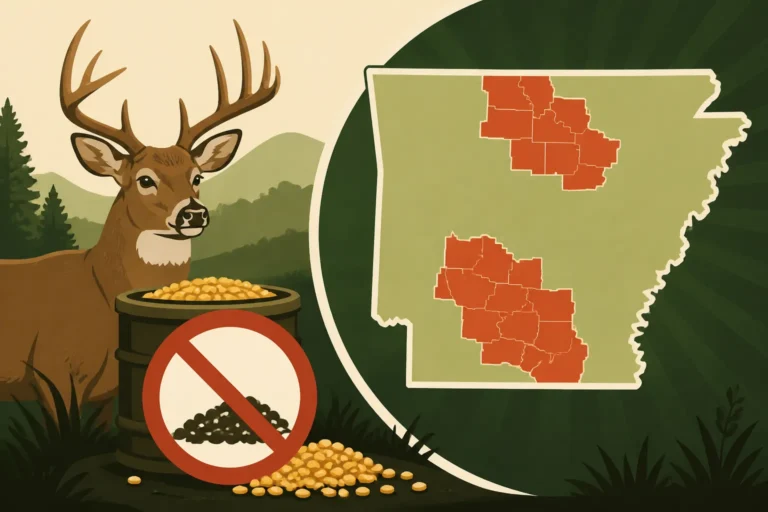
Beyond the federal waterfowl mandate, Arkansas has its own set of rules, particularly concerning our extensive network of Wildlife Management Areas (WMAs). Many WMAs in Arkansas, especially those managed primarily for waterfowl, go a step further than the federal rules. For instance, the renowned Bayou Meto WMA Duck Hunting requires nontoxic shot for all hunting, not just waterfowl. This means if you're deer hunting with a shotgun on Bayou Meto or another designated WMA, you still need to use nontoxic slug or buckshot. This often catches hunters off guard who are used to using lead for deer.
It's imperative to check the specific regulations for every single WMA you plan to hunt. The rules can vary from one WMA to another, even those that seem geographically close. Some WMAs might only require nontoxic shot for waterfowl, while others, like the Freddie Black Choctaw Island WMA, might extend the requirement to all small game as well. Before you even set foot on public land, always consult the current AGFC regulations or use mapping tools like GoHunt, which often integrates WMA boundaries and their specific rules, to ensure you're compliant. Don't rely on what you remember from last year, or what your buddy told you about a different WMA. Rules can change, and being caught with lead shot in a nontoxic-only area can result in fines and even confiscation of your hunting equipment.
Here's a quick look at common scenarios:
| Hunting Scenario | Lead Shot Permitted? | Nontoxic Shot Required? | AGFC WMA Specifics |
|---|---|---|---|
| Ducks, Geese, Coots (Anywhere) | No | Yes | Federal law (1991) mandates this nationwide. |
| Deer (Shotgun/Slug) on Private Land | Yes | No | Lead slugs/buckshot generally permitted. |
| Deer (Shotgun/Slug) on Select WMAs | No (in some cases) | Yes (in some cases) | Crucial: Check individual WMA rules. Many popular waterfowl WMAs like Bayou Meto require nontoxic slugs for deer hunting. |
| Small Game (Squirrel, Rabbit) on Private Land | Yes | No | Lead shot typically allowed. |
| Small Game (Squirrel, Rabbit) on Select WMAs | No (in some cases) | Yes (in some cases) | Some WMAs, particularly those with extensive waterfowl habitat, extend nontoxic requirements to small game as well. |
| Doves, Woodcock, Snipe, Rails (Anywhere) | No (for Snipe/Rails) | Yes (for Snipe/Rails) | Doves and Woodcock typically allow lead. Snipe and Rails are migratory waterfowl, thus requiring nontoxic. |
| Target Shooting / Clay Pigeons | Yes | No | Unless on a range with specific "nontoxic only" rules for environmental reasons (e.g., near wetlands). |
This table is a general guide. Always verify specific regulations with the Arkansas Game and Fish Commission (AGFC) or consult a reliable mapping app like GoHunt for the most up-to-date information regarding your hunting location.
The Growing Trend of Nontoxic for All Hunting
While the federal mandate specifically targets waterfowl and many Arkansas WMAs extend the rule to other species, there's a broader, quiet movement among conservation-minded hunters to voluntarily switch to nontoxic shot for all their hunting. Think about it: if lead is toxic to ducks, it's also toxic to deer, squirrels, and anything else that might ingest discarded gut piles or spent shot. Some hunters are making the ethical choice to use nontoxic shotgun slugs for Modern Gun Deer Hunting in Arkansas or nontoxic pellets for Small Game and Squirrel Hunting in Arkansas, even when not explicitly required.
This trend is driven by a desire to leave the hunting grounds cleaner and safer for all wildlife, minimizing our environmental footprint. While it might cost a bit more, many hunters feel the peace of mind and the contribution to overall conservation efforts are well worth it. It’s also a way to simplify things; if you just buy nontoxic for everything, you never have to worry about accidentally mixing up shells or being caught out of compliance. It definitely takes the guesswork out of an already complex rulebook.
Deciphering Nontoxic Shot Types and Their Performance
Okay, so you know you have to use nontoxic shot in certain situations. But what is nontoxic shot, really? And is it actually going to perform as well as the lead you’re used to? These are valid questions, and thankfully, the technology has come a long way since the early days of steel shot that felt like shooting BBs.
Common Nontoxic Shot Materials and Their Characteristics
The world of nontoxic shot has expanded quite a bit beyond just steel. While steel remains the most common and often most affordable option, there are several other materials that offer varying advantages in terms of density, hardness, and cost.
- Steel Shot: This is the most prevalent nontoxic option. It's affordable and readily available. The main drawback of steel is its lower density compared to lead. This means steel pellets of the same size as lead pellets will be lighter, carrying less energy and slowing down faster. To compensate, hunters often need to use larger steel shot sizes (e.g., #2 steel instead of #4 lead) to achieve similar downrange energy. Steel is also very hard, which means it doesn't deform on impact (leading to clean kills, but also requiring specific chokes, more on that later). Brands like Winchester and Federal offer a wide range of steel loads.
- Bismuth Shot: Bismuth is a softer, denser alternative to steel, much closer to lead in its characteristics. It's about 9.6 g/cc compared to lead's 11.3 g/cc and steel's 7.8 g/cc. This higher density means you can use smaller bismuth shot sizes (closer to lead sizes) and get better energy retention and penetration. Its softness also means it can be used in older shotguns not rated for steel and patterns better through tighter chokes. The downside? It's significantly more expensive than steel. Kent Cartridge and Boss Shotshells are popular bismuth brands.
- Tungsten-Based Alloys: This category includes various blends, often incorporating tungsten, which is incredibly dense (sometimes even denser than lead). Examples include Hevi-Shot, Federal Heavyweight, and Winchester Xtended Range. These materials offer superior knockdown power and range due to their high density and hardness. You can often drop down several shot sizes compared to lead or steel and still get incredible performance. The major drawback is the price tag – these are often the most expensive nontoxic options on the market, sometimes costing several dollars per shell. They are typically reserved for challenging long-range shots or tough birds like Canada geese.
Ballistics and Choke Considerations for Nontoxic Shot
Switching to nontoxic shot, especially steel, isn't just about changing the shell in your gun. You might need to adjust your approach to chokes. Because steel is so hard, it doesn't compress or deform as it travels down the barrel. This means that if you use a full choke with steel shot, you risk over-constricting the pellets, which can lead to poor patterns, increased felt recoil, and, in rare cases, even barrel damage over time with older firearms.
For steel shot, most manufacturers recommend using more open chokes – typically Improved Cylinder or Modified. These chokes allow the steel shot column to pass through with less constriction, resulting in more uniform patterns. If you're used to shooting a tight full choke for ducks with lead, you might find that an Improved Cylinder or Light Modified choke with steel shot gives you a similar effective pattern size.
Bismuth, being softer, behaves more like lead and is generally safe to use with traditional lead-specific chokes, including tighter ones. Tungsten-based loads are also often softer than steel, but due to their extreme density and hardness, it's always best to check the manufacturer's recommendations for choke compatibility. Ultimately, the best practice is to pattern your shotgun with your chosen nontoxic load and choke combination. A few shots at a pattern board will tell you far more than any article could about what truly works best for your gun and your shells. This is especially important for Hunting Arkansas Flooded Green Timber where shots can be close and quick, or for Hunting Rice Fields and Levees where shots might be longer.
Cost Versus Performance: Making the Right Choice
Let's be realistic: nontoxic shot often costs more than lead. This is a common frustration among hunters. Steel shot, while more affordable than bismuth or tungsten, still typically runs higher than your standard lead field loads. The premium materials like bismuth and tungsten can make a serious dent in your wallet, especially if you shoot a lot.
So, how do you balance cost and performance?
- For high-volume shooting or everyday waterfowl hunts: Steel is usually the most economical and perfectly effective choice. Modern steel loads, especially those with faster velocities, are incredibly lethal on ducks and even most geese within reasonable ranges (30-45 yards). You might need to adjust your shot size, as mentioned earlier, and potentially your choke, but it's a reliable workhorse. You'll find plenty of good options at your local Academy Sports + Outdoors or sporting goods store.
- For older shotguns or specific applications: If you have an heirloom shotgun not rated for steel, or if you simply prefer patterns that mimic lead, bismuth is an excellent choice. It offers that extra density and softness without the risk to your barrel, making it ideal for those cherished older firearms or if you prefer a tighter choke. It's also a great option for Hunting Arkansas Reservoir Ducks where longer shots over open water might be more common.
- For ultimate performance or challenging birds: When chasing those high-flying snow geese or needing maximum range and knockdown power for wary mallards, tungsten-based loads truly shine. While expensive, they offer unparalleled performance. Many hunters keep a box of these on hand for specific scenarios or for the last few birds in the bag.
Ultimately, your choice will come down to your budget, your firearm, the species you're hunting, and your typical shooting distances. Don't be afraid to experiment a little to find what works best for you.
Practical Tips and Avoiding Common Mistakes
Beyond knowing the rules and understanding the ammo, there are some practical steps you can take to make sure your transition to (or continued use of) nontoxic shot is smooth and stress-free.
Checking Regulations: Your First Line of Defense
I cannot stress this enough: always double-check the regulations. The AGFC publishes a new hunting guide every year, and rules can, and sometimes do, change. What was legal last season might not be this season, or what applies to one WMA may not apply to another. Use resources like the official AGFC website, their printed guidebooks, or reliable apps. GoHunt is an invaluable tool for this, allowing you to often pinpoint specific land parcels and see their associated hunting rules right there on your phone. Ignorance of the law is not a defense, and a game warden’s patience can wear thin if they encounter multiple hunters unprepared. Make it a habit to review the rules for Arkansas WMA Permits and Draw Hunts or specific waterfowl areas like Dave Donaldson Black River WMA before every outing.
Stocking Up and Staying Prepared
Nontoxic shot, especially in specific gauges or shot sizes, isn't always as readily available as lead shot, particularly in smaller, rural stores. Don't wait until the day before opening weekend to try and buy a case of your preferred shells. Plan ahead. If you find a load that patterns well in your gun and meets your needs, consider buying it in bulk. This also helps mitigate the impact of price fluctuations.
Another key piece of advice: completely clear your hunting vest, bag, and shell boxes of any lead shot if you're going into an area where nontoxic is required. It's incredibly easy to accidentally leave a stray lead shell in a forgotten pocket. This is one of the most common reasons hunters face violations. Before you head out on your Arkansas Duck Season Dates, do a thorough clean-out.
Responsible Hunting Beyond the Shot Shell
While focusing on nontoxic shot is crucial, remember that ethical hunting goes far beyond just your ammunition choice. It's about respecting the game, the land, and your fellow hunters. This includes knowing your effective range for your chosen nontoxic load, practicing your shooting, and only taking clean, ethical shots. Wounded birds are a tragic outcome, and good marksmanship, combined with good equipment, minimizes this.
It also means understanding how Hunting Arkansas Flooded Green Timber or Field and Flooded Rice Duck Hunting in the Delta can impact waterfowl. Your hunting practices, from how you set decoys to how you call, contribute to the overall experience and success of your hunt, and the continued health of the resource. Choosing nontoxic shot is a big step in responsible hunting, but it's just one part of the larger picture of being a truly ethical and conservation-minded hunter in Arkansas.
Disclaimer
The information provided in this guide is for general informational purposes only and is not a substitute for official legal advice or current hunting regulations. Always consult the latest Arkansas Game and Fish Commission (AGFC) regulations and federal migratory bird laws before engaging in any hunting activities. Regulations can change, and it is the hunter's sole responsibility to ensure full compliance with all applicable laws.