Arkansas Doves and Migratory Birds
Hunting migratory birds in Arkansas can feel like chasing ghosts. One day, a field is full of doves, the next, they're gone, following ancient migratory paths to greener pastures. Or you might walk through thickets for woodcock, wondering if they're even in the state. This guide will demystify the rich opportunities for hunting doves, woodcock, snipe, and other migratory birds in Arkansas, helping you understand their habits, preferred habitats, and the best tactics to find them, along with crucial regulations to keep you legal and safe.
Arkansas as a Migratory Bird Mecca
Arkansas sits squarely in the heart of the Mississippi Flyway, a superhighway for migratory birds traveling between their breeding grounds in the north and wintering areas in the south. This geographical advantage means our state isn't just a duck hunter's paradise; it's also a critical stopover and wintering ground for a diverse array of other migratory game birds. From the prolific Mourning Dove that kicks off the season to the elusive American Woodcock and Common Snipe, Arkansas offers unique challenges and rewarding experiences for wing shooters throughout the fall and winter months. Understanding the state's role in these birds' life cycles is key to successful hunting.
Geographical Significance for Migratory Birds
The Mississippi Flyway stretches from the Arctic to the Gulf of Mexico, funneling millions of birds directly over Arkansas. This natural phenomenon makes our state a crucial staging area and wintering destination. The sheer diversity of landscapes, from the vast agricultural fields of the Delta to the dense forests of the Ozarks and Ouachitas, provides a smorgasbord of habitats that migratory birds depend on. These areas offer vital food sources, water, and cover, making Arkansas an indispensable link in their long journeys.
When those first cool fronts start dipping south in late summer and early fall, it's a signal for millions of birds to begin their journey. Arkansas, with its abundant food and water, becomes a magnet. For doves, this means countless acres of harvested grain fields and sunflower patches. For woodcock, it's the moist, young timber bottoms and thickets. Snipe find their haven in the flooded edges of agricultural lands and natural wetlands. Hunters who recognize Arkansas's significance in the flyway can better anticipate when and where these birds are likely to appear, transforming a seemingly random hunt into a strategic pursuit. It's not just about luck; it's about understanding the grand scale of migration.
Habitat Diversity Across the State
Arkansas boasts an incredible array of habitats, each playing a vital role in supporting different migratory bird species. The eastern part of the state, dominated by the rich alluvial soils of the Mississippi Alluvial Plain (often called the Delta), is a mosaic of row crops like rice, soybeans, and corn, interspersed with bottomland hardwood forests and managed wetlands. These agricultural landscapes are a primary draw for doves, which feed heavily on waste grain, and snipe, which forage in flooded stubble fields.
Moving west, the Ozark and Ouachita Mountains present a different picture, characterized by mature hardwood and pine forests, clear streams, and rolling hills. While not traditionally known for the sheer numbers of migratory birds seen in the Delta, these regions offer crucial habitat for species like woodcock, which prefer the dense understory and moist soils found along creek bottoms and in young regenerating timber stands. Even though many hunters focus on Arkansas Waterfowl Seasons and Zones, it's essential not to overlook the equally important, albeit different, habitats that attract other migratory game birds throughout the state. Successfully hunting these birds means carefully considering the specific habitat requirements of your target species and scouting accordingly.
Mourning Doves: The Classic Arkansas Opener
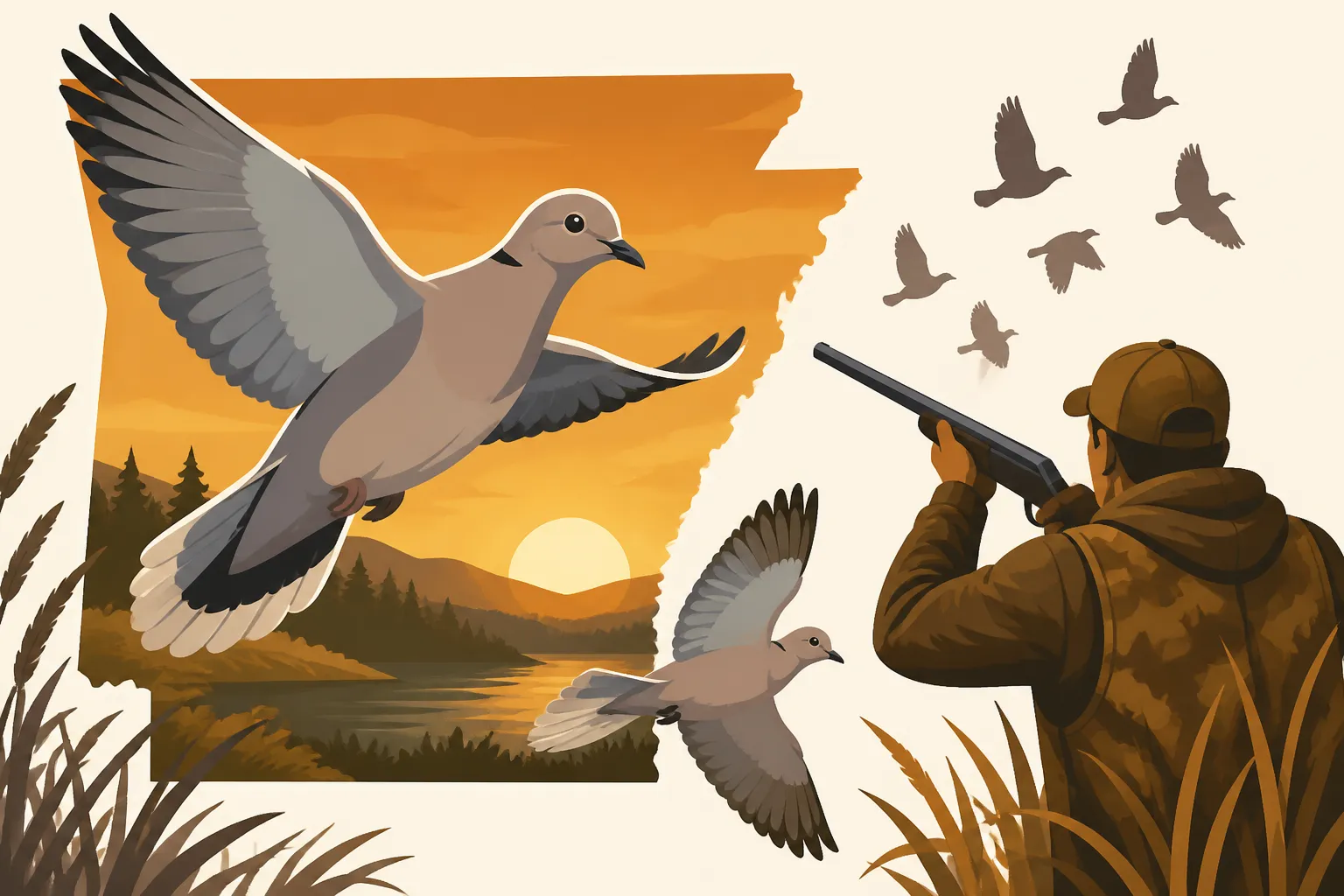
For many hunters, the arrival of September 1st signals one thing above all else: dove season. The Mourning Dove is undoubtedly the most popular migratory bird to hunt in Arkansas, often marking the unofficial kickoff of the broader hunting season. Their swift, erratic flight, coupled with the social atmosphere of field hunting, makes them a beloved quarry. However, these birds are not always easy to hit, and finding them consistently requires a keen understanding of their habits and habitat preferences.
Biology and Life Cycle of Mourning Doves
Mourning Doves are slender, medium-sized birds, typically gray and buff-colored, with a distinctive long, pointed tail. They are named for their mournful cooing call, a sound synonymous with late summer evenings across the state. What makes them such a fantastic game bird is their incredible speed and agility in flight, often reaching up to 55 miles per hour and performing sudden aerial maneuvers that challenge even the most seasoned wing shooters. These birds are primarily ground feeders, favoring seeds from a wide variety of plants, especially those found in agricultural fields and disturbed ground.
Their life cycle is also noteworthy. Mourning Doves are prolific breeders, often raising multiple broods throughout the spring and summer. This high reproductive rate is crucial for sustaining their populations despite hunting pressure and natural predation. They build flimsy nests, typically in trees or shrubs, and both parents share incubation and brooding duties. As summer progresses into fall, juvenile doves join the adults, and flocks begin to form, congregating in areas with abundant food and water, which is exactly what hunters are looking for. Understanding this biology helps hunters predict their movements and feeding patterns.
Scouting and Hunting Tactics for Doves
Successful dove hunting in Arkansas hinges on scouting. Doves are creatures of habit, establishing clear flight paths between feeding areas, watering holes, and roosting sites. The most productive hunting spots are typically large agricultural fields – especially those recently harvested for corn, wheat, sunflowers, or millet. Doves will concentrate on these fields to pick up waste grain. However, simply finding a field isn't enough; you need to identify active feeding areas, often betrayed by tell-tale dust patches, feather piles, or the birds themselves flying in and out.
Tools like GoHunt can be invaluable here, letting you pinpoint specific field edges, power lines, and water sources that might hold birds. Identifying key flight corridors, often marked by a line of trees, a fence line, or a creek, is also critical. These serve as natural highways for doves traveling to and from feeding grounds. Once you've located an active field, the tactic usually involves setting up decoys to attract passing birds, often near a water source or on a prominent snag or fence post within the field. Hunters typically position themselves strategically along these flight paths, using natural cover or a pop-up blind. The trick is to remain hidden and pick your shots wisely, focusing on birds within reasonable range. Don't be afraid to move if your chosen spot isn't producing; doves can be localized.
Season Dates and Bag Limits for Mourning Doves
Arkansas's Mourning Dove season is typically split into several segments, beginning around September 1st and extending through various periods into late fall and early winter. The season structure is designed to coincide with different migration waves and local populations, giving hunters multiple opportunities. For example, the initial September segment is often hot and heavy with local birds, while later segments might see an influx of northern migrants.
It is absolutely crucial to consult the current Arkansas Game and Fish Commission (AGFC) regulations booklet each year for precise dates, shooting hours, and bag limits. While these generally remain consistent, slight changes can occur. Typically, the daily bag limit for Mourning Doves is 15 birds, with a possession limit of three times the daily bag. Always ensure you are familiar with these numbers, as exceeding them can lead to serious penalties. Remember that even though it feels like a casual hunt, it's still regulated with the same seriousness as other game. For more detailed information on bag limits and general harvest data, you might want to look at specific historical data like Arkansas Dove Harvest Numbers.
Eurasian Collared-Doves: An Expanding Opportunity
While the Mourning Dove is the traditional target, another species has rapidly become a significant, often overlooked, migratory bird opportunity in Arkansas: the Eurasian Collared-Dove. These birds are relative newcomers to North America, having expanded their range dramatically across the continent in recent decades, and Arkansas is no exception. They offer a unique hunting challenge and often more liberal regulations than their native counterparts.
Identification and Rapid Spread
Eurasian Collared-Doves are noticeably larger and chunkier than Mourning Doves, possessing a squarer tail and a distinctive black half-collar on the back of their neck. Their plumage is a pale grayish-buff, and they lack the black spots on the wings characteristic of Mourning Doves. Telling them apart is crucial, as regulations can differ significantly. Their rapid expansion across Arkansas and the rest of the United States is a fascinating ecological story; from just a handful of escaped birds in Florida in the 1970s and 80s, they have spread to nearly every state.
This incredible success is attributed to their adaptability, rapid breeding cycle, and ability to thrive in human-altered landscapes. They are often found in suburban areas, small towns, and agricultural settings, particularly around grain storage facilities, feedlots, and residential areas where bird feeders are common. For hunters, this means new opportunities, especially in areas where traditional Mourning Dove habitat might be less accessible. The rapid increase in their numbers has been well documented, and hunters who learn to identify and target them are adding a rewarding dimension to their wing shooting season. If you're looking for more details on their presence, check out resources like Eurasian Collared Doves in Arkansas.
Impact and Hunting Opportunities
The presence of Eurasian Collared-Doves raises questions about their ecological impact on native species, though studies are ongoing. What is clear is that they present an exciting and often less-pressured hunting opportunity. Due to their invasive nature and burgeoning populations, the AGFC typically offers very liberal hunting seasons and bag limits for Eurasian Collared-Doves, often allowing year-round hunting with no bag limit. This makes them a perfect target for honing wing-shooting skills outside of regular dove season or for simply enjoying an impromptu hunt.
Their predictable nature around reliable food sources also makes them somewhat easier to pattern than their more nomadic Mourning Dove cousins. While they might not offer the same explosive, erratic flight, their larger size and tendency to gather in substantial numbers provide ample shooting opportunities. Hunters often find success by focusing on the same types of agricultural fields, feedlots, and grain elevators that attract Mourning Doves, but also by exploring areas closer to human habitation where these adaptable birds thrive. It’s an excellent chance to extend your hunting season and enjoy some high-volume shooting.
Where to Find Them in Arkansas
Eurasian Collared-Doves are incredibly adaptable, meaning you can find them in a variety of settings across Arkansas. Unlike Mourning Doves, which often prefer expansive open fields, collared-doves are frequently associated with human activity. Look for them around grain elevators, poultry farms, cattle feedlots, and even residential areas on the outskirts of towns. They are particularly fond of areas where waste grain or spilled feed is readily available. A local farmer’s corn crib or a feed mill can be a hot spot.
They also congregate around water sources and prominent perching sites like power lines, tall antennas, and dead trees. When scouting, pay attention to these urban-agricultural interfaces. Using mapping apps can help identify agricultural operations or even larger backyard spaces that might hold these birds. Since they are less wary of humans, approaching these areas cautiously can often yield good shooting. Their vocal "coo-COO-coo" call is also a dead giveaway to their presence, making them easier to locate by sound. Keep an eye out for them perched prominently, scanning the area before swooping down to feed.
American Woodcock: Timber Ghosts of Arkansas
Often overshadowed by their more charismatic waterfowl cousins, the American Woodcock offers a truly unique and engaging hunting experience in Arkansas. These small, migratory shorebirds are more akin to upland game, favoring dense, moist timber and providing a challenging hunt for those willing to walk through thick cover. They are true timber ghosts, masters of camouflage and vanishing acts.
Preferred Habitat and Behavior
American Woodcock are fascinating birds with a distinctive appearance, boasting long bills, large eyes, and mottled brown and black plumage that perfectly blends with the forest floor. They primarily feed on earthworms, which they probe for in soft, moist soil using their sensitive bills. Consequently, their preferred habitat in Arkansas consists of young, regenerating hardwood forests, brushy creek bottoms, old fields transitioning back to timber, and moist thickets. They thrive in areas with dense undergrowth that provides both cover and the damp earth necessary for their diet.
During the day, they remain hidden, but in the evenings, they perform elaborate aerial displays known as "sky dances" to attract mates. When flushed, a woodcock erupts from the cover with a distinctive whistling sound made by its wings, flying a short, erratic distance before plummeting back into thick vegetation. This makes for a challenging shot in tight quarters. Their migratory timing, usually peaking in Arkansas during late fall and early winter after the first hard freezes further north, means their presence is often fleeting. Knowing when these birds move through the state is critical for a successful hunt. For specific migration timings, refer to resources on Arkansas Woodcock Migration Timing.
Hunting Strategies for Woodcock
Hunting woodcock in Arkansas is a physically demanding but incredibly rewarding pursuit that often involves covering significant ground in thick cover. It's a game of "walk 'em up," best done with a good bird dog, like a Springer Spaniel or a pointing breed, that can navigate dense brush and locate hidden birds. The dog's nose is invaluable for finding these masters of camouflage. Without a dog, hunters must walk methodically through promising cover, paying close attention to ground sign and anticipating where a bird might flush.
When a woodcock flushes, the key is to react quickly but smoothly, swinging through the bird in the tight windows offered by the timber. Shotguns with open chokes (like improved cylinder or skeet) and smaller shot sizes (like 7.5 or 8) are typically preferred for these close-range, fast-flushing targets. Focus on moist areas near creek beds, at the edges of young clearcuts, or in transition zones where open fields meet dense woods. A good strategy is to hunt after a rain, as the softened soil makes it easier for woodcock to probe for worms. Be prepared for a lot of walking, but the thrill of a woodcock flushing at your feet is unmatched.
Seasons and Limits for Timber Ghosts
Woodcock season in Arkansas typically opens later than dove season, often in November, and runs through early January, aligning with the peak of their migration through the state. Like all migratory game birds, season dates and bag limits are set annually by the AGFC in coordination with federal guidelines. It’s imperative to check the current regulations each year, but generally, the daily bag limit for woodcock is three birds, with a possession limit of nine.
Given their preferred dense habitats, woodcock hunting often takes place on public lands, including national forests and some WMAs, which offer extensive tracts of suitable cover. Tools like GoHunt can be exceptionally useful for identifying areas of young timber, creek drainages, and other prime woodcock habitat on public ground. While not as heavily pursued as doves or ducks, the quiet solitude of a woodcock hunt, often with just a hunter and their dog, provides a refreshing alternative to more crowded hunting scenarios. Always confirm shooting hours and any specific WMA regulations before heading afield, ensuring a safe and legal hunt for these unique timber ghosts.
Common Snipe: The Wading Bird Challenge
If you're looking for a truly challenging wing-shooting experience in Arkansas, look no further than the Common Snipe. These small, secretive wading birds are masters of camouflage, blending seamlessly into their wetland environments. When flushed, they explode into erratic, zigzagging flight that can humble even the most experienced shooter. Hunting snipe is about patience, quick reflexes, and an appreciation for the subtle beauty of marshland environments.
Wetland Habitat and Diet
Common Snipe are small, plump wading birds characterized by their long, straight bills, short legs, and cryptic brown and black streaked plumage. Their preferred habitat in Arkansas includes shallow freshwater marshes, flooded agricultural fields (especially rice stubble), muddy edges of ponds and streams, and damp pastures. Anywhere with soft, mucky soil and shallow water is prime snipe territory. Like woodcock, their diet consists primarily of invertebrates, particularly earthworms and insect larvae, which they probe for in the soft substrate with their specialized bills.
These birds are often overlooked by hunters, as they don't offer the same high-profile appeal as ducks or geese. However, for those who seek a genuine test of skill and an opportunity to explore unique wetland ecosystems, snipe hunting is incredibly rewarding. Their presence is often seasonal, with migratory birds passing through and wintering in Arkansas from late fall through early spring. Understanding their dependence on specific wetland features is key to locating them. You might be interested in Snipe Numbers in the Delta for specific population trends in the region.
The Challenge of the Flush
The primary challenge of snipe hunting lies in their flush. When disturbed, snipe typically hold tight until a hunter is almost upon them, then explode into the air with a piercing "scaaap" call, immediately launching into a dizzying, erratic, zigzagging flight pattern. This makes for an incredibly difficult shot, often compared to trying to hit a corkscrew. Their small size and speed further compound the difficulty, demanding lightning-fast reflexes and precise lead.
Hunting snipe typically involves walking through promising wetland habitat, systematically covering ground to flush birds. It's often a solitary or small-group pursuit, focusing on a calm, measured approach. Shotguns with open chokes (improved cylinder or modified) and smaller shot sizes (7.5 or 8) are ideal for these quick, close-range shots. The key is to stay focused, bring up your gun smoothly, and trust your instincts. Don't get discouraged by misses; hitting a snipe is a badge of honor for any wing shooter. Embrace the challenge, and celebrate every bird in the bag.
Optimal Hunting Conditions and Seasons
Optimal snipe hunting conditions in Arkansas usually involve cooler weather and sufficient moisture to keep the ground soft. After a good rain, especially in late fall or winter, many low-lying fields and marshy areas become ideal for snipe foraging. They prefer areas that are shallowly flooded or simply very wet, allowing them easy access to their invertebrate prey. Focus on the edges of agricultural fields, particularly rice or soybean stubble fields after harvest, that have standing water. Small, often overlooked wet patches in pastures or along creek banks can also be highly productive.
The snipe season in Arkansas typically opens in the fall, often overlapping with the later segments of duck season, and can extend well into January or February. Again, always consult the current AGFC regulations for exact dates and bag limits. The daily bag limit for snipe is usually eight birds, with a possession limit of 24. For those who enjoy Hunting Rice Fields and Levees, often for ducks, keeping an eye out for snipe can add an exciting bonus to the hunt. Remember your federal duck stamp and HIP registration are required even for snipe, as they are a migratory game bird.
Crows and Blackbirds: Overlooked Opportunities
While not traditionally seen in the same light as doves or woodcock, crows and certain species of blackbirds offer unique and often high-volume wing-shooting opportunities in Arkansas. These birds are often considered pest species in agricultural areas, and as such, their hunting seasons are typically very liberal, providing extensive chances for hunters to hone their skills and contribute to wildlife management.
Why Hunt Crows and Blackbirds
Hunting crows and blackbirds goes beyond simply filling a bag; it's a dynamic and engaging form of wing shooting that offers several distinct advantages. First, these birds are intelligent and wary, making them challenging targets. Successfully decoying and calling crows, for instance, requires skill and patience. Second, their populations are robust, and they can cause significant damage to agricultural crops, particularly corn and rice, as well as preying on the nests of other game birds. By hunting them, you're not just enjoying a day afield but also helping to mitigate agricultural losses and support native wildlife populations.
Third, the seasons for crows and blackbirds are often incredibly generous, frequently running for several months or even year-round in certain capacities, sometimes without bag limits. This means hunters have ample opportunities to get out and shoot, practice their calling, and sharpen their shotgun skills during times when other game seasons might be closed. It's an excellent way to extend your time in the field and keep your shooting eye sharp. For more on their movements, explore Arkansas Crow and Blackbird Roosts.
Decoys and Calling Strategies
Effective crow and blackbird hunting often relies heavily on calling and decoying, mimicking the sounds and sights of a feeding or distressed flock. For crows, specialized electronic callers that can produce a variety of crow vocalizations, from distress calls to fighting calls, are highly effective. Combining these calls with a spread of crow decoys, positioned strategically to simulate a feeding or alarm situation, can draw in wary birds from a considerable distance. Many hunters will even include an owl or hawk decoy among their crow spread to trigger a mobbing response, which can bring crows in close.
Blackbirds, especially red-winged blackbirds, grackles, and starlings, often congregate in massive flocks. Hunting these can be opportunistic, focusing on their flight paths to and from roosts or feeding areas, especially in agricultural fields or wetlands. While less common to decoy specifically for blackbirds, setting up in areas they frequent, often near large roosts or feeding locations, can provide high-volume shooting. The key is to scout for these large congregations and position yourself for optimal shooting as they fly in or out.
Seasons and Regulations
One of the most appealing aspects of hunting crows and blackbirds in Arkansas is the extremely liberal season structure. Crows typically have a long season, often extending from early fall well into winter, and sometimes even year-round in certain contexts, with no daily or possession bag limits. Blackbirds, as non-game migratory birds that can cause agricultural damage, often fall under special depredation permits or year-round hunting rules, though specific regulations can vary. It's crucial to check the latest AGFC regulations, particularly the section on "Nongame Migratory Birds," to ensure compliance.
Because of these liberal regulations, hunting crows and blackbirds offers a fantastic opportunity for sustained wing shooting throughout the year. You can experiment with different calling techniques, test new shotguns or loads, and enjoy the outdoors without the pressure of strict bag limits or short seasons. These hunts are often less crowded than typical dove or duck hunts, providing a more relaxed and immersive experience. Always be mindful of local ordinances, especially if hunting near populated areas, and ensure you have permission to hunt on private land.
Conservation and Management Efforts for Migratory Birds
The abundant migratory bird populations in Arkansas are not by accident; they are the result of dedicated conservation and management efforts by state and federal agencies, supported by hunters. These efforts ensure that the flyway remains healthy, habitats are protected, and future generations can continue to enjoy the spectacle and sport these birds provide.
The Role of AGFC and Federal Partners
The Arkansas Game and Fish Commission (AGFC) plays a pivotal role in the conservation and management of migratory birds within the state. This includes conducting population surveys, managing habitats on public lands, and setting state-specific regulations that align with federal frameworks. The AGFC works closely with federal partners like the U.S. Fish and Wildlife Service (USFWS) to ensure that migratory bird populations are sustainably managed across their entire range. This collaboration is essential because migratory birds don't recognize state or international borders.
Federal agencies establish broad guidelines for migratory bird hunting seasons and bag limits based on extensive population data collected across the continent. States like Arkansas then set their specific seasons within these federal frameworks, tailoring them to local conditions and population trends. This multi-layered approach ensures that decisions are based on the best available science and that hunting pressure is managed responsibly. These efforts are not just about game birds; they benefit countless other non-game migratory species that share the same habitats.
Hunter Contributions to Conservation
Hunters are, without a doubt, the single largest financial contributors to wildlife conservation in North America, and this holds true for migratory birds in Arkansas. Every hunter who purchases an Arkansas hunting license contributes funds directly to the AGFC for conservation programs. Beyond state licenses, migratory bird hunters also make two specific, crucial contributions:
-
Federal Duck Stamp: Anyone 16 years or older hunting waterfowl, coots, and rails must possess a valid Federal Migratory Bird Hunting and Conservation Stamp, commonly known as a Federal Duck Stamp. A significant portion of the revenue from these stamps goes directly to acquiring and conserving wetland habitats for the National Wildlife Refuge System. This benefits not just ducks and geese, but all wetland-dependent migratory birds, including woodcock and snipe. This is a critical investment in preserving vital habitat along the entire flyway. Learn more about Arkansas Federal Duck Stamp Rules.
-
HIP Registration: The Harvest Information Program (HIP) is a federal program that requires all migratory bird hunters (including doves, woodcock, and snipe) to register annually. This registration allows the USFWS to collect critical harvest data, which is essential for monitoring populations and setting future hunting regulations. While it might seem like just another step, your HIP registration is vital for the scientific management of these species. For more on this, check out Arkansas HIP Registration for Migratory Birds.
These contributions are direct, tangible investments that fuel habitat protection, research, and management efforts, underscoring the vital role hunters play as conservationists.
Essential Regulations and Ethical Practices
Hunting migratory birds in Arkansas comes with a clear set of rules designed to ensure safety, fair chase, and the long-term health of bird populations. Understanding and adhering to these regulations is not just about staying legal; it's about upholding the ethical traditions of hunting.
Hunter Education and Safety
Safety should always be your top priority when afield. In Arkansas, anyone born on or after January 1, 1969, must complete an AGFC-approved hunter education course to purchase a hunting license. This course covers firearm safety, wildlife identification, hunting ethics, and game laws, providing a foundational understanding for responsible hunting. Even if you're exempt, taking a refresher course is always a good idea. For those needing to fulfill this requirement, information on Arkansas Hunter Education and Safety Rules is readily available.
Beyond formal education, practicing general firearm safety rules is paramount: always treat every firearm as if it's loaded, never point a firearm at anything you don't intend to shoot, keep your finger off the trigger until ready to fire, and be sure of your target and what's beyond it. When hunting doves, especially in crowded fields, clear communication with fellow hunters, knowing your shooting lanes, and never shooting at low-flying birds or birds within another hunter's safe zone is critical. Eye protection and hearing protection are also highly recommended for any shotgun sport.
Tagging, Carcass Transport, and WMA Rules
While migratory birds like doves, woodcock, and snipe do not require physical tagging in the same way deer or bear do, there are important rules regarding their transport and handling. Once you've harvested migratory birds, they must be retrieved and kept separate from other hunters' birds until transported to your personal domicile, or until processing is completed by an AGFC-permitted wild game processor. You must also leave one fully feathered wing attached to all migratory game birds (except doves and pigeons) until the birds are processed at your home or a commercial facility. This allows for species identification by game wardens.
If you are hunting on a Wildlife Management Area (WMA), always check the specific WMA regulations, as these can sometimes differ from statewide rules. Some WMAs may have restrictions on vehicle access, shooting hours, or even specific hunting methods. Using the AGFC's interactive map tool or a service like GoHunt can help you understand WMA boundaries and any specific rules posted for that area. While specific CWD rules primarily pertain to deer and elk, the general principle of responsible game transport applies to all species, minimizing the potential spread of any disease. Always process your game cleanly and responsibly.
Here’s a quick overview table of Arkansas Migratory Game Bird Seasons and Limits (Always consult current AGFC regulations for exact dates and updates):
| Bird Species | Typical Season Start | Typical Season End | Daily Bag Limit (General) | Notes |
|---|---|---|---|---|
| Mourning Dove | Sept. 1 | Varies (Late Fall/Early Winter) | 15 | Often split seasons; check specific segment dates. |
| Eurasian Collared-Dove | Year-round | Year-round | No Limit | Non-native species; often found near human habitation/feed. |
| American Woodcock | November | Early January | 3 | Check specific dates; often late fall/early winter. |
| Common Snipe | November | Late February | 8 | Check specific dates; often late fall/early spring. |
| Crows | Sept. 1 | Late February | No Limit | Often long seasons, check for breaks. |
| Blackbirds (Certain) | Year-round (Depredation) | Year-round (Depredation) | Varies | Consult AGFC for specific rules, often related to agricultural damage. |
Disclaimer: Hunting regulations are subject to change. Always consult the latest Arkansas Game and Fish Commission (AGFC) hunting guide and federal regulations before planning any hunt. This article provides general information and should not be considered a substitute for official legal documents.