What Drove the Arkansas Turkey Decline
It’s a topic that stirs a lot of emotion and frustration among Arkansas hunters: the noticeable decline in our wild turkey populations across many parts of the state. Many of us remember a time when gobblers seemed to be around every corner, and now it feels like you're searching for a needle in a haystack. This guide is here to dig deep into the complex factors that have contributed to this concerning trend, offering insight into what’s truly driving the struggles our beloved wild turkeys face.
The Complex Web of Habitat Loss and Degradation
One of the most significant and often discussed factors impacting wild turkeys in Arkansas, and indeed across much of the Southeast, is the ongoing change in their habitat. Turkeys need a specific mix of open woodlands, dense cover, and reliable food sources throughout the year, and those critical components are constantly shifting. It’s not just about trees disappearing; it’s about the quality and arrangement of what’s left.
Fragmentation of Prime Turkey Range
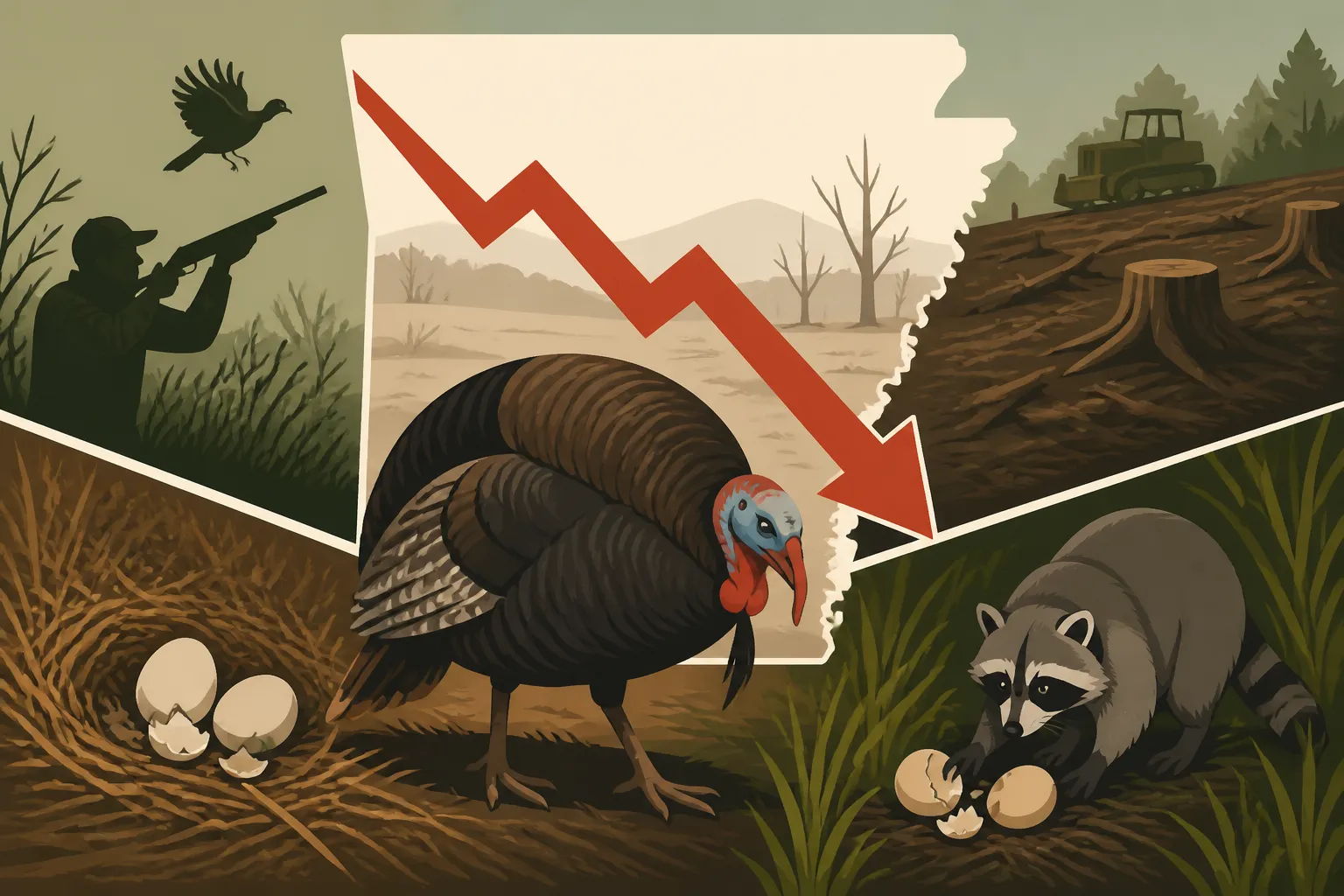
Think about driving through different parts of Arkansas. You see sprawling subdivisions popping up where once there were vast tracts of timber, or massive agricultural fields stretching for miles, leaving only narrow strips of woods. This isn't just a loss of habitat; it's a fragmentation that breaks up large, continuous turkey ranges into smaller, isolated pockets. When habitat is fragmented, it means less space for turkeys to roam, less diversity in their diet, and less genetic exchange between populations. Imagine a hen trying to lead her poults across a busy highway or an expansive clearcut—it’s a perilous journey they shouldn't have to make. This disconnect between suitable patches of habitat makes it harder for turkeys to thrive, especially when you consider their need for space during nesting season and brood-rearing. These changes are stark, and it's easy to see how they impact overall Arkansas Turkey Population Trends.
Changes in Forest Management Practices
Our forests in Arkansas have changed a lot over the decades, and not always in ways that benefit wild turkeys. Historically, natural disturbances like wildfires created a diverse mosaic of forest ages and structures, with open understories and abundant soft mast. Today, fire suppression and intensive timber harvesting practices, particularly in pine plantations, can create a very different environment.
For instance, tightly packed pine plantations, especially those managed on short rotations for timber production, can become biological deserts for turkeys. The canopy closes quickly, shading out vital understory plants that provide forage and insect life for poults. The dense, dark conditions also offer poor visibility for turkeys, making them more vulnerable to predators. While some clearcuts eventually regenerate into good turkey cover, there's often a period of several years where the habitat is severely lacking. Understanding how different forest management styles impact turkey health is crucial, especially when looking at Turkey Tactics in Arkansas Pine Plantations and considering what kind of habitat they truly need to rebound. Even the public lands, while managed for wildlife, have to balance many different objectives, and sometimes the overall habitat quality for turkeys suffers.
Increased Predation and Poor Nest Success
Another major piece of the puzzle, and one that resonates deeply with hunters, is the undeniable impact of predation on turkey populations, particularly on nests and poults. It’s a tough reality to face, but predator numbers in many areas are not what they once were, and turkeys are paying the price.
Surging Predator Populations
We’ve seen shifts in predator populations that have put increasing pressure on turkeys. Animals like raccoons, opossums, skunks, and coyotes are incredibly efficient nest predators, and their numbers have often increased in tandem with human development. These opportunistic predators thrive in fragmented landscapes and often adapt well to areas near human habitation. When a hen lays a clutch of eggs, she's essentially placing all her eggs in one basket, and if a predator finds that nest, the entire reproductive effort for that year can be wiped out in a single night.
Moreover, the problem isn't limited to just nest predation. Poults, especially in their first few weeks of life, are incredibly vulnerable to a wide array of predators, from raptors and snakes to foxes and bobcats. If the cover isn't thick enough for them to hide, or if there aren't enough insects for them to forage on quickly to grow, they don't stand much of a chance. This leads to heartbreakingly low Poult-to-Hen Ratios and What They Mean in many areas, indicating that even if nests hatch, survival rates for young birds are critically low.
The Impact on Nest Predation and Brood Survival
The cumulative effect of increased predator presence and less-than-ideal nesting and brooding cover is devastating. A hen might try to nest three or four times in a season if her initial attempts are predated, but each re-nesting attempt means fewer eggs, a later hatch, and weaker poults going into the fall. This continuous cycle of Nest Predation and Turkey Hatches means that fewer young birds are recruited into the population each year, slowly but surely chipping away at the overall turkey numbers.
Consider a spring morning where a hen has picked what she thinks is a secure spot along a field edge, nestled within some thick briars. If a coyote, prowling that same edge, happens upon her, not only does she lose her nest, but she also expends valuable energy and time that could be spent growing stronger. These everyday occurrences, multiplied across thousands of acres and countless hens, add up to a significant drag on the turkey population. When you're trying to figure out why your favorite public ground seems quieter than it used to be, evaluating predator sign and knowing that tools like GoHunt can help you scout historical aerial imagery for changes in nesting cover can be a great starting point.
Weather Extremes and Environmental Stressors
Beyond habitat and predators, Mother Nature herself can play a huge, often unpredictable, role in the health of our wild turkey populations. Arkansas is known for its sometimes wild weather swings, and these can have direct and indirect impacts on turkeys.
Unpredictable Spring and Summer Weather
Turkey poults are incredibly delicate in their first few weeks of life. They're highly susceptible to cold, wet weather. A prolonged period of heavy rain and unseasonably cool temperatures during the critical hatch and brood-rearing period can decimate a year's class of poults. Their down feathers aren't waterproof, and they can easily succumb to hypothermia. Even if they don't die directly from exposure, the lack of sunshine means fewer insects are active, reducing their vital food source when they need protein the most for rapid growth.
We’ve seen springs where it feels like it rains for weeks on end, and those are often followed by reports of poor Arkansas Brood Survey Results. Conversely, extreme drought can also stress hens and impact the availability of food and water, though the direct mortality from drought for poults isn't usually as high as from cold, wet conditions. The timing of these weather events is critical; a warm, dry spring is often a boon for turkey hatches, while a cold, wet one can spell disaster.
Disease Outbreaks and Other Stressors
While not as widespread as habitat and predation issues, disease can certainly contribute to localized turkey declines. Avian pox and blackhead disease are examples of illnesses that can affect wild turkeys. Though often not causing mass mortality on the scale of, say, Chronic Wasting Disease in deer, these diseases can weaken birds, make them more susceptible to predation, or impact their reproductive success.
Other environmental stressors, like unusually high parasite loads, can also take a toll. A healthy turkey population is usually robust enough to withstand these challenges, but when combined with diminished habitat and high predator pressure, any additional stressor can push a struggling population further into decline. Hunters are always looking at the overall health of the birds they see, and sometimes, a bird that looks a bit 'off' could be suffering from a health issue that impacts the overall herd. This is one of the reasons why the AGFC carefully monitors Arkansas Turkey Population Estimate and general health.
Management Challenges and Hunter Impacts
It's natural for hunters to look at hunting pressure as a potential factor in turkey decline. While harvest management is a critical tool, the science suggests that it’s often more complex than just "too many tags." However, hunter behavior and overall management strategies do play a role.
The Role of Harvest Management
Arkansas, like many states, has adjusted its turkey seasons and bag limits in response to declining numbers. For instance, the move to a one-gobbler limit in many zones and the prohibition of harvesting bearded hens are direct efforts to reduce harvest pressure and protect the breeding potential of the population. This aligns with findings from Why Arkansas Bans Hen Harvest discussions that emphasize the importance of protecting female birds.
The goal of harvest management is to ensure that hunting is sustainable and doesn't hinder the population's ability to reproduce and grow. While hunters often express concern over how many birds are taken, the primary drivers of decline usually stem from habitat and survival rates of poults, not necessarily from hunters taking too many adult gobblers, especially when populations are already low and hard to find. It's not to say that hunter numbers or harvest don't have any impact, but rather that it's often a contributing factor overlaid on a much larger foundational problem. However, tools that help track local harvest trends, like those you might find through a GoHunt subscription, can give hunters a sense of regional differences.
Hunter Behavior and Ethics
Even with conservative regulations, hunter behavior can sometimes inadvertently contribute to pressure on turkeys. Over-calling, pursuing a bird too aggressively, or pushing birds off properties can add stress, especially in areas with high hunter density. While ethical hunters strive to minimize their impact, the sheer volume of people pursuing a declining resource can sometimes amplify existing problems.
It's a reminder that conservation is a shared responsibility. Adhering strictly to regulations, practicing good hunter ethics, and supporting habitat improvement initiatives are all ways hunters can actively contribute to the recovery of our wild turkey populations. We all want to see gobblers thriving, and that means being mindful of our impact and understanding the deeper ecological issues at play.
Key Factors Contributing to Turkey Decline in Arkansas
To summarize the multifaceted challenges, here's a breakdown of the primary drivers of Arkansas's wild turkey decline:
| Factor | Description | Primary Impact |
|---|---|---|
| Habitat Loss | Conversion of forests to agriculture/development, urban sprawl. | Reduced overall turkey range and carrying capacity. |
| Habitat Fragmentation | Breaking up large tracts of suitable habitat into smaller, isolated units. | Limits movement, genetic flow, and increases exposure risk. |
| Forest Management | Dense pine plantations, lack of diverse understory due to fire suppression. | Poor nesting/brooding cover, reduced food, increased predation. |
| Increased Predation | High populations of raccoons, opossums, coyotes, etc. | Severe nest loss, low poult survival rates. |
| Adverse Weather | Cold, wet springs during hatch/brood-rearing period. | Direct poult mortality, reduced insect availability. |
| Disease/Parasites | Localized outbreaks or high parasite loads. | Weakened birds, reduced reproduction, secondary mortality. |
| Harvest Management | Historical harvest rates, although current limits are conservative. | Can contribute if combined with other stressors, especially on hens. |
Moving Forward: What Can Be Done?
Understanding the "why" behind the decline is the first step towards a solution. It's a complex puzzle with no single answer, but rather a combination of factors that, when addressed holistically, can begin to turn the tide.
For us, as hunters and conservationists, this means advocating for sound habitat management practices that prioritize diverse forest structures, supporting initiatives that address predator imbalances, and continuing to practice ethical, conservative hunting. It means learning more about Arkansas Turkey Brood Surveys and staying informed about the health of local populations.
Agencies like the Arkansas Game and Fish Commission are constantly studying these issues, implementing new regulations, and engaging in habitat improvement projects. Their work, combined with the efforts of private landowners and conservation groups, is essential. We all share a common goal: to hear those thunderous gobblers echoing through the Arkansas woods for generations to come.
Disclaimer
This article is for general informational purposes only and does not constitute professional advice. Laws, prices and regulations vary by location and change over time. Consult a qualified professional for guidance on your specific situation.