Arkansas Wildlife Disease Monitoring
One of the most concerning things for any hunter in Arkansas, or anywhere really, is encountering a sick animal in the woods. That gut feeling of seeing something "off" can quickly turn into questions about what it means for the health of the herd, your own safety, and the future of hunting. This guide aims to shed light on how wildlife diseases are monitored across Arkansas, what the Arkansas Game and Fish Commission (AGFC) is doing, and how you, as a vital part of our outdoor community, can contribute to keeping our wild populations healthy.
The Vital Role of Wildlife Disease Monitoring
Wildlife disease monitoring isn't just about collecting data; it's a proactive defense strategy for both the animals we cherish and the hunters who pursue them. It’s about understanding threats, reacting swiftly, and safeguarding the future of our hunting heritage. Without vigilant monitoring, a localized issue could quickly become a widespread crisis.
The implications of wildlife diseases extend far beyond the immediate animal population. They can affect the overall health of ecosystems, impact the local economy tied to hunting and outdoor recreation, and, in some cases, even pose risks to human health. That's why the AGFC takes this responsibility so seriously, working tirelessly to track, understand, and manage these challenges.
Protecting Hunters and Consumers
Let's be frank: no one wants to bring home venison that might not be safe to eat. The concern about zoonotic diseases – those that can spread from animals to humans – is a very real one, and it's something that responsible hunters think about. While the vast majority of game harvested in Arkansas is perfectly healthy, understanding the potential risks and how to mitigate them is crucial.
This protection extends to educating hunters on safe field dressing, butchering, and cooking practices. Knowledge is your best tool for ensuring that the meat from your hunt is handled properly and cooked thoroughly, eliminating any potential risks. Being aware of the signs of disease in the field is the first step in making informed decisions about your harvest.
Safeguarding Arkansas's Deer and Elk Herds
Arkansas is known for its incredible deer hunting and, in specific areas, its burgeoning elk herd. These animals represent not only recreational opportunities but also significant economic drivers for many rural communities. A healthy deer or elk population is a direct reflection of a healthy ecosystem, and diseases can severely disrupt that balance.
Monitoring helps the AGFC understand population dynamics and identify if a disease is causing undue stress or mortality. By detecting issues early, wildlife managers can implement strategies to reduce disease spread, protect vulnerable populations, and ensure that future generations can continue to enjoy the robust wildlife resources we have today. It's about maintaining a sustainable balance that benefits both wildlife and people.
How Arkansas Monitors Wildlife Diseases: A Deep Dive
The Arkansas Game and Fish Commission employs a multi-faceted approach to monitoring wildlife diseases, combining scientific research, field surveillance, and invaluable public input. It’s a complex undertaking that requires constant vigilance and adaptation, because diseases don't follow a calendar or respect boundaries.
This comprehensive strategy involves collecting samples from harvested animals, observing trends in animal health reported by the public, and working with diagnostic labs to identify pathogens. It’s a continuous cycle of data collection, analysis, and strategic response, all aimed at keeping our wildlife strong.
Chronic Wasting Disease CWD Surveillance
Chronic Wasting Disease (CWD) is undoubtedly the most significant wildlife disease challenge facing deer and elk populations across North America, and Arkansas is no exception. It's a progressive, fatal neurological disease that affects cervids (deer, elk, moose, and caribou), and unfortunately, there is no known cure or vaccine. Because of its devastating potential, CWD is a primary focus for AGFC’s monitoring efforts. You can learn more about Chronic Wasting Disease in Arkansas in our dedicated guide.
The AGFC has implemented robust CWD surveillance programs, particularly within designated CWD Management Zones. These programs involve both mandatory and voluntary testing of harvested deer and elk. Hunters often play a critical role by submitting biological samples, such as lymph nodes, at designated CWD testing stations or drop-off locations, allowing wildlife biologists to track the prevalence and spread of the disease. This data helps to understand how widespread the disease is and where it might be emerging next. If you're wondering How Many Arkansas Counties Have CWD, our guide has the details.
These targeted surveillance efforts allow the AGFC to refine its understanding of CWD distribution and intensity. The data gathered from these samples informs critical management decisions, such as adjusting harvest quotas, implementing baiting bans in certain areas, and establishing carcass movement restrictions. Every sample provides a piece of the puzzle, helping to protect the larger herd. For specifics, see Arkansas CWD Testing for Hunters and Arkansas CWD Management Zone Rules.
Other Key Diseases on the Radar
While CWD rightly receives significant attention, it's far from the only disease that the AGFC monitors. A range of other pathogens and conditions can impact Arkansas's wildlife, and maintaining a watchful eye on them is equally important for overall ecosystem health.
Epizootic Hemorrhagic Disease EHD and Blue Tongue Virus BT
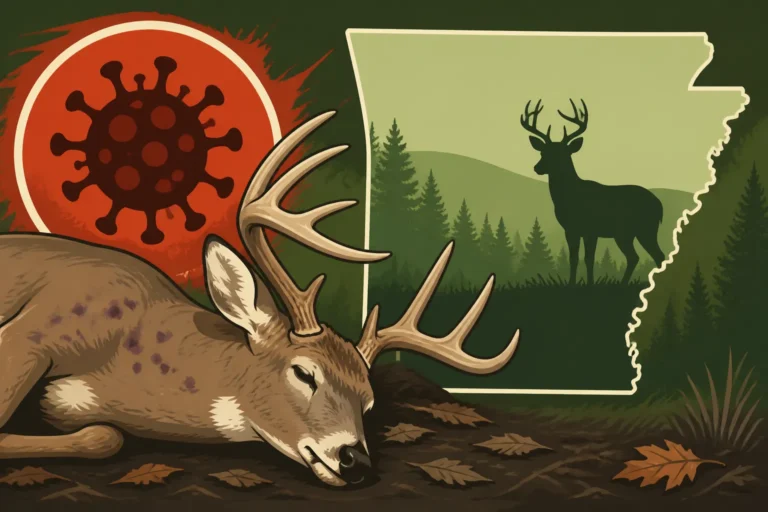
Epizootic Hemorrhagic Disease (EHD) and Blue Tongue Virus (BT) are two common, often fatal, viral diseases that primarily affect deer. They are transmitted by biting midges, tiny insects commonly called "no-see-ums," and typically manifest in late summer and early fall, especially during periods of drought when deer are concentrated near dwindling water sources. Symptoms can include fever, lethargy, excessive salivation, swelling of the head and neck, and lesions on the hooves. Deer affected by EHD or BT often seek water, so you might find deceased deer near streams or ponds. For more details, refer to EHD Die-Offs in Arkansas Deer.
While EHD and BT outbreaks can cause significant localized deer die-offs, especially in areas where deer have not been previously exposed and therefore lack immunity, they are generally not considered a long-term threat to the overall population across the entire state. The AGFC monitors reports of these diseases to track their geographic spread and severity, using the information to understand their impact on localized populations. Hunters are encouraged to report any observations of deer exhibiting these symptoms or unexplained deer mortalities, as this helps biologists map the extent of outbreaks.
Avian Influenza AI
For waterfowl hunters, Avian Influenza (AI) is a disease that always warrants attention. While many strains of AI cause mild or no symptoms in wild birds, some highly pathogenic strains can be devastating. Waterfowl, particularly ducks and geese, can carry and shed the virus without appearing sick, making them potential vectors for spread.
The AGFC, often in collaboration with federal partners, conducts surveillance for AI in wild bird populations, especially during migration periods. Hunters should always exercise caution when handling any wild bird. If you encounter sick or dead birds, particularly in clusters, it’s important to report these observations. While instances of highly pathogenic AI crossing into humans are rare, standard hygiene practices, such as wearing gloves and washing hands thoroughly after handling game, are always recommended.
Rabies and Other Zoonotic Concerns
Beyond game animals, diseases like rabies are always a concern when encountering any wildlife. Rabies is a viral disease that affects the nervous system of mammals and is almost always fatal once symptoms appear. While commonly associated with animals like raccoons, skunks, foxes, and bats, any mammal can contract rabies.
If you encounter a wild animal acting aggressively, disoriented, or exhibiting any unusually tame behavior, it’s critical to keep your distance and report it to the AGFC or local animal control authorities immediately. Never approach or attempt to handle a potentially rabid animal. General vigilance and a healthy respect for all wildlife are the best defense against these less common but serious threats.
The Hunter's Role in Disease Detection and Prevention
As hunters, you are the true frontline observers of Arkansas's wildlife. You spend countless hours in the woods, on the water, and in the fields, often noticing subtle changes that others might miss. Your active participation in disease detection and prevention is not just helpful; it's absolutely crucial to the AGFC's monitoring efforts. Think of yourself as a vital part of the state's biological surveillance network.
This isn't about being a wildlife disease expert; it's about being observant and knowing when and how to report something that doesn't seem right. Every pair of eyes and ears in the field contributes to a healthier, more resilient wildlife population for everyone.
Identifying and Reporting Sick Animals
Knowing what to look for is the first step. While some diseases have very distinct signs, others can be more subtle. Generally, if an animal appears visibly sick, lethargic, emaciated, disoriented, or is behaving in an uncharacteristic way (e.g., a deer that doesn't run when approached, or a bird that can't fly), it warrants attention.
For deer, symptoms might include:
- Extreme weight loss (emaciation)
- Excessive drooling
- Difficulty walking or staggering
- Lack of fear of humans
- A rough coat or poor body condition
For birds, look for:
- Lethargy or weakness
- Tremors or convulsions
- Swelling around the head, eyelids, or joints
- Nasal discharge or diarrhea
If you observe an animal exhibiting these signs, or find multiple dead animals without an obvious cause (like a vehicle collision), it's important to contact the AGFC immediately. The sooner they receive a report, the better their chances are of investigating the situation. When reporting, provide as much detail as possible: the exact location (GPS coordinates are ideal, and using mapping apps like GoHunt to mark the spot can be incredibly helpful), the species, the date and time of observation, and a detailed description of the symptoms or scene. This information is invaluable to biologists. For guidance, see our article on Reporting a Sick Animal in Arkansas.
Best Practices for Hunters to Mitigate Risk
Beyond reporting, there are practical steps every hunter can take to minimize their risk of encountering and potentially spreading wildlife diseases. These are common-sense hygiene practices that should be part of every hunting trip.
Firstly, always wear gloves when field dressing any animal. This is a simple but effective barrier against potential pathogens. Use clean knives and equipment, and thoroughly wash everything with soap and hot water after use. Properly dispose of all remains – ideally by burying them deeply or bagging them for municipal waste, especially in areas with CWD concerns, to prevent scavengers from spreading potential prions. Arkansas Deer Transport Rules are also crucial, particularly if you are moving a harvested deer between different zones or across state lines.
Secondly, ensure your meat handling practices are top-notch. Rapid cooling of harvested game is essential, especially in Arkansas's often warm hunting weather. Proper processing and storage are also critical. When cooking, always ensure game meat is cooked to the appropriate internal temperature to kill any bacteria or viruses that might be present.
Finally, consider your impact on disease spread. Cleaning your boots, ATVs, and other equipment of any soil, vegetation, or animal remains before moving between different hunting areas is a good practice. This simple act helps prevent the unintended transport of disease agents or invasive species. Always be mindful of Baiting Rules in Arkansas CWD Zones and other regulations designed to minimize congregating animals, which can facilitate disease transmission. By adhering to these practices and staying informed (and using resources like GoHunt to stay on top of local regulations and CWD zones), you become an active participant in protecting Arkansas’s wildlife health.
Understanding Specific Disease Management Strategies
Monitoring wildlife diseases isn't an end in itself; it's the foundation upon which effective management strategies are built. The data gathered from surveillance informs critical decisions made by the AGFC, allowing them to adapt their approach to specific disease threats and ensure a healthier future for Arkansas's wildlife. This dynamic process ensures that management efforts are targeted, science-based, and responsive to evolving challenges.
The goal is always to minimize the impact of diseases on wildlife populations and reduce potential risks to humans. This often involves a multi-pronged approach, combining regulatory changes, habitat management, public education, and sometimes even direct intervention.
CWD Management Strategies in Arkansas
Given the serious nature of Chronic Wasting Disease, the AGFC has implemented a robust and comprehensive CWD management plan. The primary goals are to slow the spread of the disease, reduce its prevalence in affected areas, and protect unaffected populations as much as possible. This is a long-term endeavor, and success relies heavily on hunter cooperation and understanding.
Key components of CWD management in Arkansas include:
- Increased Harvest Quotas: In CWD Management Zones, regulations might allow for increased harvest of deer, particularly antlerless deer, to help reduce overall deer density. Lower densities can potentially reduce contact rates between animals, thereby slowing disease transmission. Our guide on Arkansas CWD Management Zone Rules provides detailed information on these regulations.
- Baiting Bans: Prohibiting the use of bait and mineral licks in CWD Management Zones is a critical step. These attractants can concentrate deer, increasing nose-to-nose contact and the likelihood of CWD transmission through saliva, urine, or feces.
- Carcass Movement Restrictions: Strict rules are in place regarding the transport of deer carcasses, especially out of CWD Management Zones. These regulations aim to prevent hunters from inadvertently moving infected material to unaffected areas. Only specific parts, such as deboned meat, clean antlers, and hides, may be transported across zone lines.
- Educational Outreach: The AGFC invests heavily in educating hunters and the public about CWD, its risks, and the importance of compliance with regulations. Informational campaigns, workshops, and readily available resources are all part of this effort. Staying informed about current regulations is easily done through official AGFC channels, and mapping tools like GoHunt can further assist hunters in understanding which zones they are in and what rules apply.
Collaborating for a Healthier Future
Wildlife disease management is never a solo act. It requires extensive collaboration among various agencies, scientific institutions, and, perhaps most importantly, the public. In Arkansas, the AGFC works closely with the Arkansas Department of Health, universities, and federal partners to share information, conduct research, and coordinate responses. This network of expertise ensures that decisions are based on the latest scientific understanding and best practices.
Ongoing research plays a vital role, exploring new detection methods, understanding disease ecology, and even investigating potential vaccines or treatments where applicable. These efforts require significant funding and dedicated scientific minds, all working towards common goals.
Ultimately, the future health of Arkansas's wildlife depends on a shared commitment. Hunter education, such as that provided through courses required for new hunters (see Arkansas Hunter Education and Safety Rules), goes beyond just firearm safety; it instills an ethic of responsible wildlife stewardship. By staying informed, adhering to regulations, and actively reporting observations, every hunter becomes an indispensable part of the solution, helping to ensure that our wild resources remain robust and healthy for generations to come.
Common Wildlife Diseases in Arkansas: Symptoms and Management Overview
Understanding the basics of common wildlife diseases helps hunters identify potential issues and take appropriate action. This table summarizes some key information:
| Disease | Primary Species Affected | Common Symptoms | Transmission | Hunter/Public Action |
|---|---|---|---|---|
| Chronic Wasting Disease (CWD) | Deer, Elk | Extreme weight loss, excessive drooling, lethargy, loss of fear of humans, stumbling, poor body condition. | Direct contact (saliva, urine, feces), contaminated environment (soil). | Report sick animals; get harvested deer/elk tested in CWD zones; follow carcass transport and baiting rules. |
| Epizootic Hemorrhagic Disease (EHD) / Blue Tongue (BT) | Deer | Fever, swollen head/tongue, ulcers in mouth, internal hemorrhaging, seeking water, found dead near water, hoof lesions. | Biting midges (no-see-ums). | Report clusters of sick/dead deer; do not eat sick animals (though not a human health risk). |
| Avian Influenza (AI) | Waterfowl, other birds | Lethargy, neurological signs (tremors, lack of coordination), swelling of head/neck, respiratory distress. | Direct contact with infected birds or contaminated surfaces/water. | Report sick/dead birds (especially clusters); wear gloves when handling birds; cook meat thoroughly. |
| Rabies | All mammals | Aggressive behavior, excessive drooling, disoriented behavior, paralysis, unusual tameness. | Bites from infected animals. | NEVER approach or handle; report immediately to AGFC or animal control. |
Disclaimer
This article is for general informational purposes only and does not constitute professional advice. Laws, prices and regulations vary by location and change over time. Consult a qualified professional for guidance on your specific situation.