Bringing Dogs to an Arkansas Lodge
For many of us, our hunting dogs aren't just pets; they're vital partners in the field, treasured members of the family, and integral to the entire hunting experience. But when you're planning a trip to an Arkansas hunting lodge, the logistics of bringing your canine companion can be a real headache. From varying lodge policies to the practicalities of travel and on-site care, it's easy to feel overwhelmed trying to ensure your dog has a safe, comfortable, and productive trip. This guide aims to clear up all those questions, helping you find dog-friendly lodges and prepare thoroughly for a successful Arkansas hunt with your best four-legged friend by your side.
Understanding Lodge Policies on Canine Guests
Navigating the world of hunting lodge pet policies can sometimes feel like trying to hit a duck in a hurricane – confusing and often frustrating. You'd think a place catering to hunters would universally welcome hunting dogs, but that's just not always the case. It's crucial to do your homework long before you even think about packing a leash.
Why Lodge Policies Vary So Widely
The reality is that lodge policies on dogs can differ dramatically from one establishment to the next, even within the same region of Arkansas. Some lodges proudly market themselves as "dog-friendly" or "retriever-ready," boasting dedicated kennels, washing stations, and even dog-specific gear. These places understand that a well-behaved hunting dog is part of the package for many clients, especially those pursuing waterfowl in the Delta or small game in the Ozarks. For them, accommodating dogs is a competitive advantage, attracting a loyal clientele who wouldn't dream of leaving their trusted companion behind. You might even find some outfitters, particularly those specializing in waterfowl, that have their own seasoned dog handlers and don't allow outside dogs at all to avoid conflicts or maintain a specific hunting dynamic.
On the flip side, many lodges, especially those that cater to a broader range of outdoor enthusiasts or have more upscale accommodations, might have very strict "no pets" policies. This isn't usually a personal slight against your beloved retriever; it's often rooted in practical concerns. Insurance liabilities are a big one – dog bites or property damage can lead to costly claims. Hygiene and cleanliness are also major factors; managing dog hair, muddy paws, and potential accidents can be a huge undertaking for cleaning staff, not to mention concerns about allergies for future guests. Noise is another consideration, as a barking dog can quickly disrupt the peace and quiet for other hunters trying to relax after a long day in the field. Some lodges simply aren't set up structurally to accommodate animals, lacking appropriate outdoor space or kennel facilities. It's important to respect these varied reasons, even if they're not ideal for your hunting plans.
Key Questions to Ask Before Booking
When you're researching potential lodges, don't just glance at their website. Pick up the phone and have a direct conversation with the lodge manager or booking agent. This is where you get into the nitty-gritty and ensure there are no surprises when you arrive. You might use platforms like BookYourHunt to discover initial options, but a direct call is non-negotiable for dog specifics.
Here are some absolutely essential questions to ask:
- "Do you allow hunting dogs on the premises, and specifically, in the lodge itself?" This clarifies the fundamental policy.
- "Do you have dedicated kennel facilities, and if so, what are they like?" Ask about sizing, whether they're heated/cooled, individual runs, and if they're secure. You want to know if your dog will be comfortable and safe.
- "Are there any areas where my dog is not allowed?" This could be dining areas, certain common rooms, or even specific sleeping quarters.
- "Can my dog be in my room with me?" If so, are there any restrictions, like requiring a crate? Some places might allow crated dogs in rooms but not loose dogs.
- "Are there any extra fees for bringing a dog?" Many lodges charge a cleaning fee or a per-night fee to offset potential cleaning costs.
- "Are there specific rules about leashes, exercise areas, or waste disposal?" You need to know where your dog can relieve itself and if there are designated spaces.
- "What is your policy on dogs in the hunting blind or boat?" This is critical. Some guides welcome working dogs, others prefer their own, and some strictly prohibit outside dogs to maintain control or prevent conflicts.
- "Are there any breed restrictions or size limitations?" While less common for hunting lodges, it's worth asking.
- "Do you have a recommended local vet contact in case of an emergency?" This shows foresight and responsibility on your part.
Getting clear, direct answers to these questions will save you a lot of grief down the road. Don't assume anything; confirm every detail.
Common Restrictions and How to Navigate Them
Even at dog-friendly lodges, there are almost always rules in place to ensure a harmonious environment for all guests and to protect the lodge's property. Understanding these common restrictions and preparing to abide by them will make your stay much smoother.
- Leash Rules: Expect your dog to be on a leash any time it's outside a designated kennel area or your private room. This prevents accidental encounters with other guests, their dogs, or local wildlife, and is simply good etiquette.
- Designated Relief Areas: Lodges often have specific areas where dogs are allowed to relieve themselves, and you will almost certainly be expected to clean up after your dog immediately. Carry plenty of waste bags and be diligent about it. No one wants to step in an unpleasant surprise.
- Noise Control: A barking dog is a quick way to sour the mood at any lodge. If your dog is prone to excessive barking, especially when left alone, you might need to reconsider bringing them or ensure you can manage their vocalizations effectively. This might mean extra training before the trip or ensuring they're never left unattended if they have separation anxiety.
- Crate Requirement: Many lodges that allow dogs in rooms will require them to be crated when you are not in the room. This protects the lodge's furnishings from chewing, scratching, or accidents, and keeps your dog safe from potential hazards. Even if not required, it's a good practice for your dog's comfort and security in an unfamiliar environment.
- Interaction with Other Dogs: Be prepared for your dog to encounter other hunting dogs or local resident dogs. Ensure your dog is well-socialized and can behave calmly around others. Keep them under control at all times to prevent squabbles.
- Damages: You are ultimately responsible for any damage your dog causes to lodge property. Be prepared for this possibility, and ensure your dog is well-behaved enough to minimize the risk.
Navigating these restrictions successfully comes down to preparation, respect for the lodge's rules, and proactive management of your dog's behavior. A little effort on your part goes a long way in ensuring a positive experience for everyone involved. For general advice on preparing for your trip, you might also find insights in Scouting Arkansas Public Land Before Season useful, even if you're on private land, as it touches on preparation for the outdoors.
Essential Preparations for Traveling with Your Hunting Dog
Bringing your dog on an Arkansas hunting trip is more than just loading them into the truck; it requires careful planning to ensure their health, safety, and readiness for the rigors of the field. Just like you'd prep your gear and study the regulations, your canine partner needs their own suite of preparations.
Health and Vaccination Requirements
Before you even think about hitting the road, your dog’s health needs to be top-notch. Arkansas’s environment, particularly the Delta region, can be tough on dogs, with unique challenges like heat, humidity, and abundant insects.
- Mandatory Vaccinations: Ensure your dog is up-to-date on all core vaccinations. This includes rabies, distemper, parvovirus, and adenovirus. Many lodges, especially those with communal kennels or where dogs will interact, will require proof of these. It's also highly advisable to get your dog vaccinated for kennel cough (Bordetella). Even if your dog won't be in a traditional kennel, exposure to other dogs at a lodge or in travel can lead to this highly contagious respiratory infection.
- Heartworm and Flea/Tick Prevention: This is absolutely critical for Arkansas. Mosquitos, which transmit heartworm, are prevalent, especially in the state's wetland areas. Regular, effective heartworm prevention is non-negotiable. Similarly, fleas and ticks are abundant, carrying diseases like Lyme, Ehrlichiosis, and Anaplasmosis. Use a veterinarian-recommended flea and tick preventative that offers broad-spectrum protection. Check your dog thoroughly after every outing in the field.
- General Health Check-up: Schedule a full veterinary check-up a few weeks before your trip. Your vet can confirm your dog is fit for travel and hunting, address any minor issues, and provide a health certificate if required by the lodge or for interstate travel (though usually not for travel within Arkansas if you're a resident). Discuss any concerns about physical exertion, especially if you plan on intensive hunting, like Running Deer Dogs in Arkansas. Make sure your dog is at a healthy weight and conditioning for the work ahead.
- Medications and First-Aid: Pack any prescription medications your dog takes regularly, with enough for the entire trip plus a few extra days. Crucially, assemble a comprehensive canine first-aid kit. This should include antiseptic wipes, sterile gauze, vet wrap, medical tape, tweezers, a tick remover, saline solution for eye flushing, pain relief (ONLY vet-prescribed or recommended for dogs), a blunt-tipped scissors, and a styptic powder for nail/pad injuries. You never know when a minor cut or scrape might happen.
Travel Logistics and Gear for Your Canine Partner
Traveling with a hunting dog means bringing a fair bit of specialized gear, and planning the journey itself to be as stress-free as possible for your companion.
- Crate Training and Safe Travel: If your dog isn't already crate-trained, start now. A comfortable, secure crate is invaluable for travel safety in your vehicle, providing a safe den-like space at the lodge, and often a requirement for unattended dogs in lodge rooms. Ensure the crate is well-ventilated and large enough for your dog to stand up, turn around, and lie down comfortably. Secure the crate in your vehicle so it doesn't slide around during braking or turns. Consider short practice drives to get your dog accustomed to being in the vehicle and crate for longer periods.
- The Ultimate Packing List:
- Food and Water: Pack your dog's regular food in an airtight container. Sudden changes in diet can cause stomach upset. Bring plenty of fresh water, especially for the field, and collapsible bowls.
- Leash, Collar, and ID Tags: A strong leash and collar with up-to-date ID tags (including your cell phone number) are essential. Consider a GPS collar for peace of mind, especially if hunting in dense cover.
- E-collar and Whistle: If you use them for training and control in the field, make sure they're charged/have fresh batteries.
- Dog Bed/Blanket: A familiar scent from home can help your dog feel more secure in a new environment.
- Towels: Lots of them! For muddy paws, wet coats, and wiping down your dog before entering the lodge or vehicle.
- Cleaning Supplies: Poop bags, a small brush or comb for burrs, and a bottle of enzyme cleaner for any accidents.
- Proof of Vaccinations: Keep a copy of your dog's vaccination records easily accessible.
- Researching Gear: Online resources and dedicated hunting forums are great places to check out what other hunters recommend for canine gear. You might find mentions of specialized tracking devices, durable vests for protection in heavy cover, or cooling vests for early-season hunts. Brands like GoHunt often feature gear reviews and lists that could include items beneficial for hunting dogs, from first-aid kits to protective boots.
Behavioral Training and Socialization
A well-trained and socialized dog is not only a more effective hunting partner but also a more welcome guest at any lodge. This is where your investment in training really pays off.
- Obedience and Steadiness: Basic obedience commands (sit, stay, come, heel) are fundamental. For hunting dogs, "whoa" or "stay" commands are critical for remaining steady in the blind or before a flush. A dog that breaks early, barks excessively, or won't hold still can ruin a hunt for everyone. Practice these commands diligently in various environments, simulating hunting conditions as much as possible. Silence in the blind is paramount, especially for duck hunting, where movement and noise can flare birds. If you're heading to the Delta, understanding Hunting Arkansas Flooded Green Timber means knowing that quiet dogs are a must.
- Socialization with Other Dogs and People: Your dog will likely encounter other dogs (both hunting companions and lodge pets) and a variety of people (lodge staff, guides, other hunters). Ensure your dog is comfortable and well-behaved around strangers and other canines. Aggression or extreme shyness can lead to stressful situations. Controlled introductions and positive reinforcement are key. If your dog has any known behavioral issues, address them with a professional trainer before traveling.
- Addressing Potential Anxiety: New environments, strange smells, unfamiliar routines, and the presence of other dogs can trigger anxiety in some dogs. A well-secured crate often serves as a comforting "den." You can also bring familiar toys or blankets from home. Consider consulting your vet about calming aids if your dog is particularly prone to travel or separation anxiety. The goal is a calm, confident dog that can adapt to the lodge environment without undue stress, allowing you to focus on the hunt.
| Category | Key Questions to Ask Lodge Management | What to Look For |
|---|---|---|
| Basic Policy | Do you allow hunting dogs? Are there any breed/size restrictions? | Clear "yes" or "no," no ambiguity. Specifics on accepted breeds if any. |
| Accommodation | Can my dog stay in my room? Must they be crated? Do you have kennels? | Dedicated kennel facilities (heated/cooled, individual runs) are a plus. |
| Fees & Rules | Are there extra fees? What are the leash/cleanup rules? | Transparent pricing. Clear instructions on waste disposal and dog behavior. |
| Hunting Protocol | Is my dog allowed in the blind/boat? Will they hunt with guide's dogs? | Understanding if your dog can actively participate or must stay behind. |
| Emergency Prep | Do you have a local vet contact? What's your emergency protocol for dogs? | Willingness to assist and provide local resources in case of injury/illness. |
| Amenities | Do you have wash-down stations? Dog runs? | Extra amenities show a true commitment to accommodating canine guests. |
Lodge Kennel Facilities and On-Site Dog Management
Once you've arrived at your Arkansas lodge with your dog, the next phase is managing their daily life and ensuring they are comfortable, safe, and ready for the field. This goes beyond just having them present; it's about integrating them smoothly into the lodge's operations and your hunting routine.
Types of Kennel Setups You Might Encounter
The term "kennel" can mean vastly different things depending on the lodge you choose. It's why those initial questions during booking are so important.
- Dedicated Outdoor Kennels: Many waterfowl lodges, particularly those in the Delta, will have purpose-built outdoor kennels. These are often individual, chain-link runs, sometimes covered and frequently equipped with concrete pads for easy cleaning. The best ones will offer both shaded and sunny areas, and some might even be heated for cold winter nights or have fans for warmer days. These provide a secure, dog-specific area, keeping lodge interiors clean and minimizing interaction with non-dog guests. You'll typically be responsible for feeding and watering your dog in these kennels.
- Designated Indoor Spaces: Some lodges, especially smaller ones or those not exclusively focused on waterfowl, might offer designated indoor spaces. This could be a heated garage, a mudroom, or a separate kennel building adjacent to the main lodge. These offer better protection from the elements and can be more comfortable in extreme weather. They might have individual crates or shared, larger pens.
- "Your Crate in Your Room": For lodges that are "dog-friendly" but lack extensive dedicated kennel facilities, the policy might simply be that your dog is allowed in your private room, but must be crated when you're not present. This is a common compromise, offering convenience for you but ensuring the lodge's property is protected. It means you'll need to bring your own travel crate, which you should be doing anyway for vehicle travel.
- No Dedicated Facilities: In some cases, a lodge might allow dogs but have no specific kennel facilities. This means your dog will stay with you in your room, likely crated, and all exercise and relief will need to happen outside, with you being extra diligent about cleanup. This scenario often requires the most proactive management from you to prevent issues.
Understanding these options helps you choose a lodge that aligns with your and your dog's comfort levels, and ensures you pack appropriately.
Daily Routine and Handling at the Lodge
Establishing a consistent routine for your dog at the lodge is key to their comfort and good behavior. Hunting days are often long and demanding, so your dog needs their schedule too.
- Feeding Schedules: Try to stick to your dog's regular feeding schedule as much as possible. If hunts start before dawn, feed them well in advance or after the morning hunt. Pack enough food for the entire trip, plus a buffer, as you might not find your specific brand locally. Provide ample fresh water, especially during and after hunts, as exertion and travel can lead to dehydration.
- Relief Breaks and Exercise: Even with the earliest morning departure, ensure your dog gets a chance to relieve themselves before heading out. Upon returning from the hunt, especially if they've been crated for hours, the first priority should be a long relief break and a chance to stretch their legs. Many lodges will have open areas where dogs can be exercised on-leash, or sometimes off-leash if explicitly permitted and safe. Remember, working dogs need to burn off energy just like you do.
- Leaving Dogs Unattended: This is a big one. If you're going to dinner, sitting by the fire in a common area, or heading out for a non-dog activity, you need to know the lodge's policy on leaving your dog unattended. If they must be crated in your room, ensure they are comfortable and not prone to destructive behavior or excessive barking when alone. Always inform lodge staff if your dog will be alone for an extended period, especially if you're leaving the property.
- Interaction with Lodge Staff: Many lodge staff members are dog-lovers themselves, but not all are equipped or tasked with dog care. Be clear about your expectations. Unless specifically offered as a service, assume you are 100% responsible for your dog's care. However, if a guide or lodge staff member is experienced with dogs, they might offer helpful advice or even lend a hand if needed. A little courtesy, like a tip for staff who go above and beyond for your dog, is always appreciated, similar to Tipping Guides and Dog Handlers.
Managing Your Dog During the Hunt
The hunt itself is the ultimate test of your dog's training and the lodge's compatibility. This is where seamless integration is paramount.
- Rules for Dogs in Blinds or Boats: This is probably the most critical discussion to have with your guide or lodge ahead of time. Some guides prefer to use their own highly trained dogs and will explicitly forbid outside dogs in the blind to maintain their control and avoid distractions. Others welcome a well-behaved dog but will have strict rules: no barking, no whining, stay absolutely steady, no breaking on the shot, and remain within a designated area. For green timber hunts, space can be tight, so a large, rambunctious dog might be a non-starter. If your dog isn't used to tight quarters or sitting still for hours, you might need to adjust your expectations or seek out a different type of hunt.
- Working Alongside Guide's Dogs: If the guide has their own dog, you need to ensure your dog is capable of working cooperatively and deferring to the guide's dog if necessary. This often means your dog taking a secondary role or simply observing, particularly on retrieves. Conflicts between dogs in a confined blind can be dangerous and ruin the hunt.
- Post-Hunt Care for Working Dogs: After a grueling hunt, especially in cold water or through thick brush, your dog will need immediate care. Have towels ready to dry them off thoroughly to prevent hypothermia or skin issues. Check their paws for cuts, abrasions, or burrs. Look for any other injuries, particularly to their legs or eyes. A warm, dry, comfortable place to rest is essential for their recovery, much like Field Dressing in Arkansas Heat requires careful consideration for game meat. Ensure they have access to plenty of fresh water to rehydrate.
Dealing with Potential Challenges and Emergencies
Even with the best preparation, hunting can be unpredictable, and bringing a dog adds another layer of potential challenges. Knowing how to react calmly and effectively to unforeseen issues can make all the difference.
Common Canine Ailments and Injuries on a Hunt
Arkansas hunting conditions, whether the wet, cold environment of a duck blind or the thick brush of a deer woods, present unique risks for your dog. Being aware of these common issues allows for quick identification and treatment.
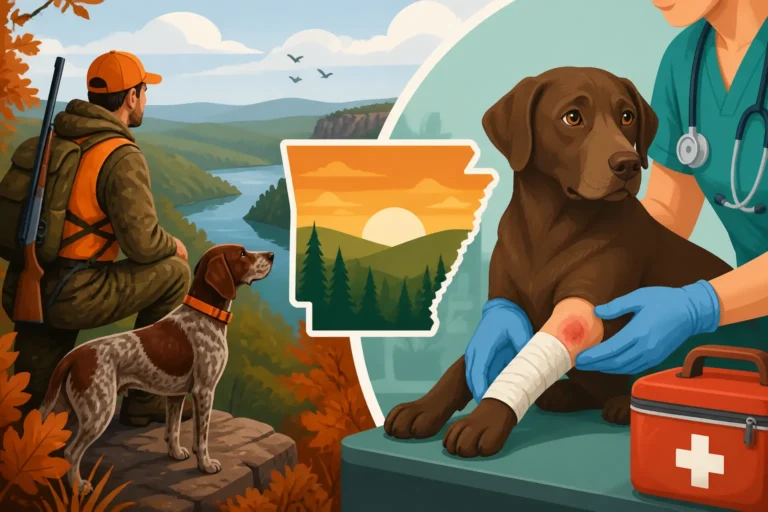
- Cuts, Scrapes, and Pad Injuries: These are almost inevitable for a working dog. Sharp stumps in flooded timber, briars in a thicket, or rough terrain on a long retrieve can lead to cuts on paws, legs, or chest. Pad injuries, from simple abrasions to deeper lacerations or torn pads, are painful and can sideline a dog. Carry antiseptic wipes and vet wrap in your first-aid kit, and inspect paws regularly. Dog boots can offer protection in particularly harsh environments.
- Dehydration and Heat Exhaustion: Especially during early archery season or mild fall days, dogs can quickly overheat. They don't sweat like humans do; they primarily cool themselves through panting. Signs of heat exhaustion include excessive panting, lethargy, bright red gums, vomiting, or staggering. Always provide plenty of fresh, cool water. If you suspect heat exhaustion, get your dog to a cool, shaded area, offer water, and apply cool (not icy) water to their belly and armpits. This is critical when Bowhunting Arkansas in September Heat.
- Hypothermia: Conversely, duck hunting in freezing temperatures, especially with repeated entries into cold water, can lead to hypothermia. Signs include shivering, lethargy, cold skin/ears, and a low body temperature. Dry your dog immediately after retrieves, consider a neoprene vest, and provide a warm, dry resting spot.
- Bug Bites and Parasites: Mosquitoes are abundant, bringing the risk of heartworm. Ticks are also prevalent and can transmit various diseases. Beyond preventative medications, daily checks for ticks are essential. Chiggers and fleas are also a nuisance. Pack insect repellent safe for dogs.
- Snake Bites: While less common, venomous snakes like cottonmouths (water moccasins) and rattlesnakes are present in Arkansas. If your dog is bitten, seek immediate veterinary attention. Try to identify the snake if safe, but do not delay treatment. Consider snake avoidance training if your dog frequently hunts in areas with high snake populations.
- Burrs and Foxtails: These irritating plant materials can embed themselves deeply in fur, between paw pads, and even migrate into ears, noses, or eyes, causing severe infections if not removed. A good brush and tweezers are essential for daily grooming.
Vet Care and Emergency Protocols Near the Lodge
Knowing what to do in a severe emergency is paramount. Don't wait until something happens to figure it out.
- Locate the Nearest Vet Clinic: Before you leave home, identify the closest veterinary clinic to your hunting lodge. Note their hours, emergency contact information, and whether they handle after-hours emergencies. If your lodge is in a remote area, the nearest vet might be a significant drive away. This information should be readily available on your phone and ideally, printed out.
- Inform Lodge Staff: Make lodge staff aware that you are traveling with a dog and inquire about their emergency protocol. They might have established relationships with local vets or know the quickest route to care.
- Pet Insurance Considerations: If you have pet insurance, ensure it covers emergency care while traveling. If you don't, be prepared for potentially significant veterinary bills in an emergency. It's an expense many hunters don't factor in but is crucial for a beloved hunting partner.
- Transportation: Plan how you would transport your injured or sick dog. Will they fit in your vehicle if they need to lie down? Is your crate large enough for an emergency trip?
Handling Behavioral Issues and Conflicts
Even the best-trained dogs can have off days or react unexpectedly in new situations. Proactive management of behavior is crucial to a stress-free trip for everyone.
- Addressing Barking or Whining: A dog that barks excessively, especially when left alone, can disrupt other guests and create tension. If your dog is prone to this, ensure they are thoroughly exercised before being crated, and consider enrichment toys to keep them occupied. If persistent, you might need to leave them in the vehicle (if safe and weather-appropriate) or, in extreme cases, arrange for alternative boarding.
- Aggression or Fear: If your dog shows any signs of aggression towards other dogs or people, or extreme fear that leads to destructive behavior, it's a serious concern. Remove your dog from the situation immediately. This might mean keeping them isolated in your room, crated, or even cutting your trip short if their behavior cannot be safely managed. Your responsibility is to prevent harm or distress to others.
- Respecting Other Hunters' Experiences: Remember that other hunters at the lodge are there for their own experience, which might not include dealing with an unruly dog. Be a responsible dog owner. Keep your dog under control, clean up after them diligently, and be considerate of noise levels. A well-behaved dog enhances the hunting experience; a problematic one detracts from it, for everyone. If you're encountering situations with other dogs or hunters, effective communication and control are key, just like understanding the nuances of Rattling Volume in Thick Cover requires careful consideration.
Packing Up and Heading Home: Post-Hunt Dog Care
The hunt might be over, but your responsibilities to your canine hunting partner continue through the journey home and into their recovery. Proper post-hunt care ensures they stay healthy and happy, ready for the next adventure.
Post-Hunt Recovery and Health Checks
The journey home can be as demanding as the hunt itself, and your dog will likely be tired. Just as you'd focus on recovering from a strenuous trip, your dog needs the same attention.
- Thorough Inspection: Before you even leave the lodge, and again once you're home, give your dog a top-to-tail inspection. Check every inch of their body for:
- Injuries: Look for new cuts, scrapes, bruises, or tender spots. Pay close attention to paw pads, ears, and underarms, where briars and sharp objects can easily cause damage.
- Ticks and Fleas: Even with preventative measures, some determined parasites can hitch a ride. Use a tick remover to carefully extract any you find, and follow up with your vet if you notice a rash or unusual behavior.
- Burrs and Foxtails: These pesky plant seeds can burrow into fur, eyes, ears, and between toes, causing irritation and potential infection. A good brushing and careful examination are essential.
- Signs of Illness: Monitor for coughing, sneezing, vomiting, diarrhea, lethargy, or loss of appetite. These could indicate kennel cough, gastrointestinal upset from travel, or exposure to other illnesses.
- Gradual Return to Normal Activity: Don't expect your dog to bounce back to full energy immediately. They've likely exerted themselves physically and mentally. Allow for a few days of rest and light activity, gradually returning to their normal exercise routine. This prevents injury and burnout. Ensure they have access to plenty of fresh water and their regular, high-quality food.
- Monitoring for Lingering Issues: Continue to observe your dog closely for several days after returning home. Any persistent limping, excessive scratching, changes in appetite, or unusual behavior warrants a call to your veterinarian. Early detection of issues like joint strain, skin infections, or tick-borne illnesses can lead to faster, more effective treatment. Sometimes, issues that seem minor in the excitement of the hunt can become more pronounced once the adrenaline wears off.
Cleaning Up After Your Dog at the Lodge
Leaving the lodge in pristine condition, especially when you've brought a dog, is not just good manners; it reflects positively on all dog-owning hunters and helps ensure that lodges remain dog-friendly for future guests.
- Leaving the Room/Kennel Spotless: Before checking out, thoroughly clean your room or any kennel space your dog occupied. This means vacuuming up all dog hair – and trust me, there's always more than you think! – wiping down surfaces, and checking for any muddy paw prints or other debris. Use any cleaning supplies the lodge provides, or bring your own pet-safe cleaners for any accidents.
- Disposing of Waste Properly: Double-bag all dog waste and dispose of it in designated outdoor bins. Never leave it in interior trash cans or, worse, just lying around the property. This is a basic courtesy that makes a huge difference to lodge staff and other guests.
- Pre-Departure Inspection: Before you pack up the last of your gear, do a final sweep of the room and kennel area. Look under beds, behind furniture, and in corners for any forgotten toys, treats, or hidden messes. A little extra effort here ensures you leave a positive impression.
Future Bookings and Feedback
Your experience, both good and bad, can contribute to the community of dog-owning hunters and help lodges improve their services.
- Providing Feedback to the Lodge: If you had a positive experience, let the lodge management know! Mention how much you appreciated their dog-friendly policies, their facilities, or specific staff members who were helpful. Positive feedback encourages them to continue or even enhance their dog services. If you encountered challenges, offer constructive criticism privately. For example, "The kennels were great, but a dedicated wash-down area would be a huge improvement," or "My dog loved the room, but better signage for relief areas would be helpful." This constructive input can be invaluable for the lodge.
- Sharing Experiences with Other Hunters: Share your experiences on hunting forums, social media, or with fellow hunters. Recommending a truly dog-friendly lodge can help other hunters find suitable accommodations. Conversely, if a lodge was not as dog-friendly as advertised, sharing that information can save others a headache. Reviews on platforms like BookYourHunt or GoHunt can be particularly useful for this. Be honest, fair, and objective in your reviews, focusing on facts and specific policies rather than emotional reactions. This collective feedback helps shape the hunting travel industry for the better, making it easier for all of us to enjoy Arkansas Deer Camp Traditions with our loyal companions.
Disclaimer
This article is for general informational purposes only and does not constitute professional advice. Laws, prices and regulations vary by location and change over time. Consult a qualified professional for guidance on your specific situation.