Deer Meat Yield From an Arkansas Buck
It's a question every hunter asks, usually right after they pull the trigger: "How much actual meat am I going to get from this deer?" We've all been there, standing over a beautiful Arkansas buck, mentally calculating the freezer space needed, only to find the actual boneless yield can sometimes feel a bit… understated compared to the animal's live weight. It's a common frustration, and understanding the journey from field to freezer is key to managing expectations and maximizing your venison. This guide will break down the factors influencing your deer meat yield from an Arkansas buck, helping you get the most out of your harvest.
Understanding Deer Meat Yield: More Than Just Weight
The number on the scale when a deer is alive is vastly different from the actual pounds of boneless venison you'll ultimately put in your freezer. It's a common misconception that a deer's live weight directly translates to a high percentage of edible meat, and this can lead to some head-scratching moments when you pick up your processed deer.
Live Weight Versus Dressed Weight Versus Boneless Meat
Let's clarify some terms because they're often used interchangeably, leading to confusion.
- Live Weight (or On-the-Hoof Weight): This is the deer's weight when it's alive, walking around in the woods. If you've ever seen a game camera photo of a big buck and tried to guess its weight, you're estimating its live weight. For a typical Arkansas buck, this might range anywhere from 120 pounds for a young Ozark deer to well over 200 pounds for a mature Delta monarch. This weight includes everything – bones, hide, internal organs, blood, and all the non-edible parts.
- Dressed Weight (or Field Dressed Weight): This is the weight of the deer after it has been field dressed. Field dressing involves removing the internal organs (stomach, intestines, heart, liver, etc.). This step is crucial for cooling the carcass and preserving the meat, especially during the warmer early archery days in Arkansas. It significantly reduces the overall weight, typically by about 20-30% of the live weight. So, a 180-pound live weight buck might "dress out" to around 130-145 pounds.
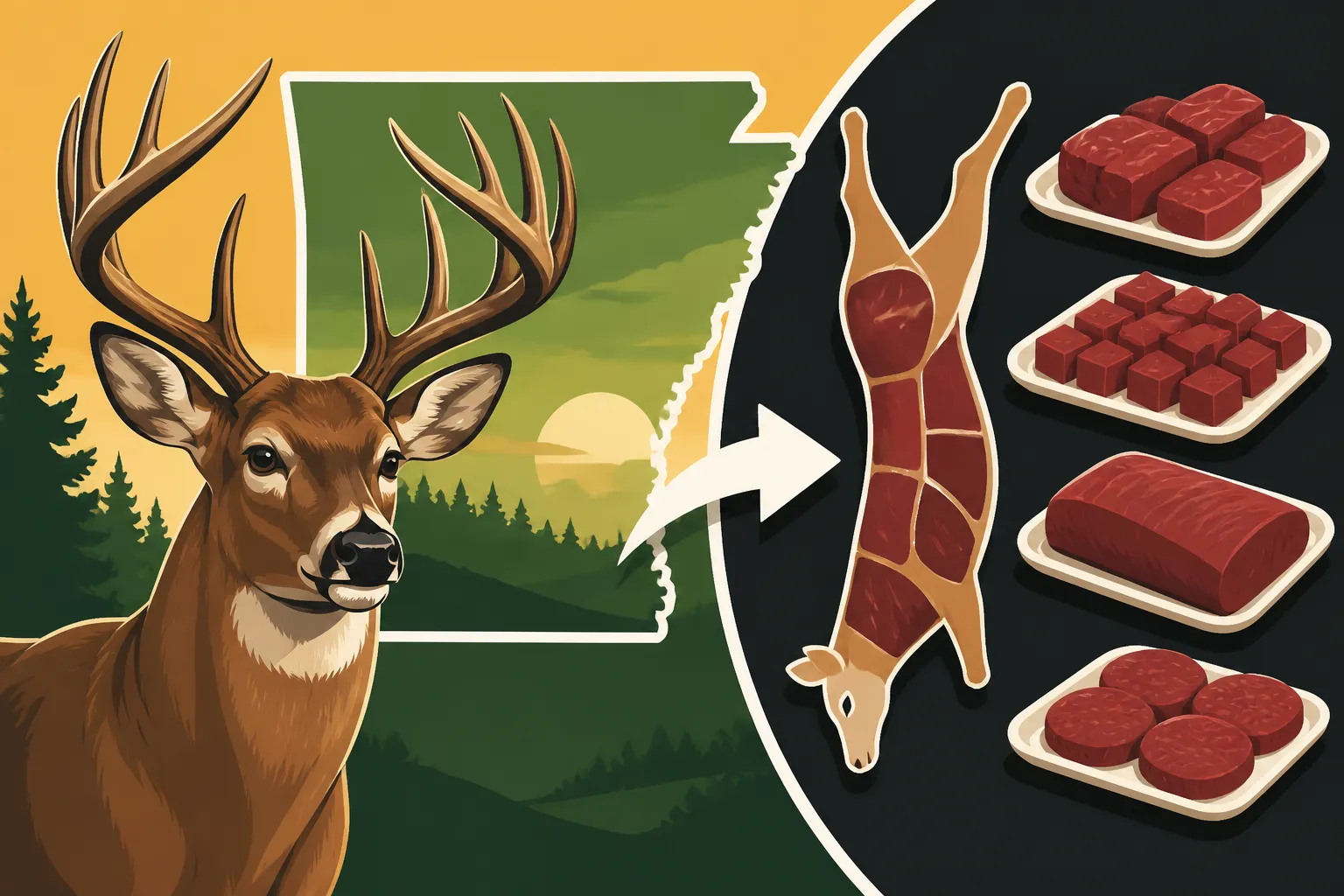
- Boneless Meat Yield: This is the golden number for most hunters – the actual amount of lean, boneless venison ready for your grinder, stew pot, or steak searing. This is what you take home from the butcher, or what you meticulously package after butchering it yourself at camp. This yield is a percentage of the dressed weight, and it's always going to be the lowest number, understandably.
The "Magic" Percentage: Why It's Not a Fixed Number
Many hunters try to find a single, universal percentage to calculate their boneless meat yield, but the truth is, there isn't one. While rough estimates exist, relying on a single "magic number" can be misleading because so many variables are at play. You might hear folks say, "You'll get about 30-40% of the live weight," or "Around 50-60% of the dressed weight." These are starting points, but they don't tell the whole story.
For instance, two bucks with the same live weight might yield different amounts of meat due to their body condition, fat content, and even their bone structure. A healthy, well-fed buck from the rich agricultural lands of the Delta, full of fat reserves before the rut, might yield a bit more than a lean, run-down buck from the rugged Ozark mountains that just finished a brutal rut. Understanding these nuances is key to realistic expectations and truly appreciating every pound of venison you take home.
Factors Affecting Initial Weight: Age, Sex, Health, Time of Year
The starting point for your meat yield discussion is always the deer itself.
- Age and Sex: Younger deer, even if they look substantial, typically have more bone and less muscle mass for their size compared to a mature buck. Bucks, especially mature ones, generally carry more muscle mass than does. A truly mature buck in its prime will simply have more meat on its frame.
- Health and Nutrition: A healthy deer that has had access to good forage will be heavier and typically yield more meat. Think about the difference between a deer thriving in a lush soybean field in eastern Arkansas compared to one struggling through a drought in a sparse Ozark forest. The nutritional plane directly impacts muscle development and fat reserves.
- Time of Year (Rut Condition): This is a huge one in Arkansas. A buck taken in early September during the Bowhunting Arkansas in September Heat will likely be in prime physical condition, carrying good fat stores before the rigorous demands of the breeding season. Its muscles are developed, and it hasn't yet exhausted itself. Fast forward to December or January, especially after the peak of the rut in Arkansas's different zones like the Hunting the Arkansas Rut by Zone, and that same buck might have dropped significant weight, burned through fat reserves, and lost muscle mass from all the chasing and fighting. His yield will be noticeably lower.
Key Factors Influencing Your Arkansas Venison Yield
Beyond the deer's inherent characteristics, the choices you make in the field and during processing play a massive role in how much venison ends up in your freezer. It’s not just about harvesting the animal, but about respecting it through careful handling.
Shot Placement and Damage
This is probably one of the most critical factors for maximizing meat yield. A well-placed shot is not only ethical but also preserves more meat.
- Heart/Lung Shots: A double-lung or heart shot is generally preferred. While it damages vital organs, it typically doesn't destroy large amounts of edible muscle tissue. The deer usually expires quickly, reducing stress on the animal, which can improve meat quality. This is ideal for minimizing waste.
- Shoulder/Front Leg Shots: While effective in anchoring a deer, a shot that hits the shoulder blade or upper leg can absolutely ruin a significant portion of what would otherwise be prime stew meat or roasts. The bone fragments and bullet fragments contaminate the surrounding muscle, making it unusable. A bullet through the shoulder, especially with a high-velocity modern rifle, can easily cost you 5-10 pounds of usable meat, sometimes more.
- Gut Shots: Unfortunately, these happen. While a gut shot is recoverable if you track diligently, it presents challenges for meat quality. The rupture of the stomach or intestines can contaminate the abdominal cavity with digestive fluids, which can quickly taint the meat if not meticulously cleaned and cooled immediately. This necessitates careful trimming and can still result in some lost meat.
Field Dressing and Cooling
The clock starts ticking the moment a deer hits the ground, especially in Arkansas's often-warm weather. Rapid and proper field dressing and cooling are paramount to meat preservation and yield.
- Immediate Field Dressing: As soon as it's safe and practical, field dress your deer. This removes the internal heat source, allowing the carcass to cool down much faster. Neglecting this step, especially on a warm September afternoon, can lead to bacterial growth and spoilage, turning usable meat green and gamey. For comprehensive advice, check out our guide on Field Dressing in Arkansas Heat.
- Proper Cooling: Once field dressed, the goal is to get the carcass cooled as quickly as possible. In cooler months, hanging the deer in a shaded, well-ventilated spot might suffice. However, during warmer parts of the season, like early archery or even a warm spell in November, you'll need ice. Packing the cavity with ice or submerging the carcass in an ice-filled cooler can be essential. Failing to cool the meat rapidly can result in significant trim loss due to spoilage, reducing your overall yield. Our tips on Cooling Meat in an Arkansas November can be a lifesaver.
Processing Method
How the deer is butchered makes a substantial difference in the final boneless yield.
- Butcher Efficiency: A skilled butcher knows how to maximize yield by carefully deboning and trimming. They can work quickly and efficiently, ensuring minimal waste. They understand how to get every usable muscle group off the bone, even smaller ones you might overlook if you're new to home processing.
- Home Processing: If you're processing your deer at home, your skill and patience will dictate the yield. While rewarding, beginners often leave more meat on the bone or trim off too much usable fat and connective tissue. Investing in good knives and watching some tutorials can significantly improve your home butchering efficiency, and you can learn a lot from resources like Butchering a Deer at Camp.
- Trim Fat: Deer fat has a distinct flavor that some find unpalatable. Most hunters opt to trim off as much fat as possible from the venison, especially if it's destined for steaks or roasts. While this is good for flavor, it does reduce the total weight of the usable meat you take home. If you're grinding, you might add a small percentage of beef or pork fat for flavor and moisture, which is a common practice.
Deer Condition: Delta Giants Versus Ozark Leaner Deer
The regional differences in Arkansas's deer populations directly impact their size and condition, and thus, their meat yield.
- Delta Deer: The deer in Arkansas's Delta region, with its rich agricultural lands and abundant food sources like soybeans, corn, and rice, tend to be larger-bodied and heavier than their Ozark counterparts. They often carry more fat reserves, leading to heavier dressed weights and potentially higher meat yields. These are the deer that contribute to stories about Where Arkansas's Biggest Bucks Come From. Their diet and genetics allow them to put on more muscle and fat, meaning more venison for your freezer. If you're using a scouting tool like GoHunt, you might notice larger body size reported in Delta counties.
- Ozark/Ouachita Deer: Deer in the rugged Ozark and Ouachita mountains, while still offering fantastic hunting, often have to work harder for their forage. They tend to be leaner, more athletic, and typically smaller-bodied. A 150-pound Ozark buck might be considered a very good animal, while a 150-pound buck in the Delta could be a younger deer. Consequently, their boneless meat yield, while still substantial and delicious, will often be a lower absolute number than a comparable Delta buck, even if the percentage of dressed weight is similar.
Estimating Your Boneless Meat: Practical Guidelines
So, how much can you actually expect? While there's no single perfect answer, we can offer some practical rules of thumb to give you a more realistic expectation for your Arkansas buck. Remember, these are estimates, and your specific results may vary.
Rules of Thumb for Dressed Weight
Generally, the dressed weight of a deer (after field dressing) is approximately 70-80% of its live weight. This is a good first step in getting a more accurate estimate of your meat yield.
- Average Dressed Weight Calculation: Take the estimated live weight and multiply by 0.70 to 0.80.
- Example: A 180-pound live weight buck (a solid animal in many parts of Arkansas) would likely have a dressed weight between 126 and 144 pounds.
From that dressed weight, you can then estimate the boneless meat yield. A common rule of thumb is that the boneless meat yield will be about 50-65% of the dressed weight. This accounts for bone, hide, damaged meat, and trimming.
Using Dressed Weight for a More Accurate Estimate
While knowing the live weight is fun for bragging rights, the dressed weight is far more valuable for estimating actual meat yield. If you can weigh your deer after field dressing – either on a hanging scale at camp or at a local check station – you'll get a much more reliable prediction.
Here's a general breakdown of boneless meat yield as a percentage of dressed weight:
- Average Boneless Yield: 50-65% of dressed weight.
- Lower end (50%): Often applies to younger deer, deer with significant shot damage, or if you prefer very lean meat with aggressive fat trimming.
- Higher end (65%): More common for mature, healthy deer with minimal shot damage, and efficient processing.
Let's look at what that means in practical terms.
| Deer Type (Live Weight) | Estimated Dressed Weight (70-80% of Live) | Estimated Boneless Meat Yield (50-65% of Dressed) |
|---|---|---|
| Yearling Buck (120-140 lbs) | 84-112 lbs | 42-73 lbs |
| Average Mature Ozark Buck (150-180 lbs) | 105-144 lbs | 52-94 lbs |
| Large Delta Buck (190-230 lbs) | 133-184 lbs | 66-120 lbs |
Note: These are approximations. Actual yield will depend on numerous factors as discussed.
Real-World Examples: An Ozark Buck Versus a Delta Buck
Let's imagine you've successfully tagged two different bucks in Arkansas:
- The Ozark Hunter: You've been scouting diligently, using tools like GoHunt to understand terrain and cover in the mountains, and finally tagged a nice 3.5-year-old buck in the Boston Mountains. You estimated his live weight at 160 pounds. After field dressing, he weighs 120 pounds on your hanging scale. Based on the 50-65% rule, you can expect to get between 60 pounds (if there was some shot damage or you're very meticulous with trimming) and 78 pounds of boneless venison. This is a fantastic amount of meat from an Ozark deer, especially if he was taken after some tough rut activity.
- The Delta Hunter: Down in the Delta, after patterning a big deer with help from Reading Aerial Photos for Delta Deer, you connected with a heavy-bodied 4.5-year-old buck in an area rich with agriculture. You believe he might push 200 pounds live weight. You get him on a scale after field dressing, and he registers a solid 155 pounds. Applying the same 50-65% rule, you're looking at a yield of between 77.5 pounds and 100.75 pounds of boneless meat. That extra body weight and good nutrition truly pays off in the freezer!
These examples highlight why knowing the dressed weight is far more informative than just guessing at live weight when it comes to predicting your take-home venison.
Maximizing Your Harvest and Minimizing Waste
Every hunter wants to get the most edible meat possible from their deer, not just for the freezer but as a sign of respect for the animal and the hunt. A few key practices can make a significant difference.
The Importance of Immediate Field Dressing
We touched on this, but it cannot be overstated: the speed and efficiency of your field dressing are paramount. If you're fortunate enough to hunt close to home or camp, you might have the luxury of a short drag. But often, especially when hunting on Scouting Arkansas Public Land Before Season or deep in remote timber, it's a longer haul. The longer the internal organs remain inside, particularly in warm weather, the faster the carcass's core temperature rises, creating a perfect breeding ground for bacteria.
Even a short delay can start the process of spoilage, which you’ll then have to trim away, losing precious meat. Get in there, get the guts out, and open up that chest cavity as quickly and cleanly as possible. This step alone can save you many pounds of perfectly good venison. It’s part of your responsibility after taking an animal and ensures that your effort in securing an White-Tailed Deer Across Arkansas truly translates to a quality meal.
Proper Cooling and Transport
Once field dressed, the next challenge is getting the animal cooled down. Arkansas weather can be notoriously unpredictable; a crisp fall morning can quickly turn into a warm, sunny afternoon.
- Immediate Cooling: In cold weather, hanging a deer in the shade may be enough. But if temperatures are above 40 degrees Fahrenheit, you need ice, and lots of it. Pack the body cavity with ice, close it with a zipper tie, or place the entire carcass in a game bag within a cooler filled with ice. Air circulation is also important if hanging.
- Transport Considerations: During transport, keep the deer out of direct sunlight. Don't throw it in the back of your truck for a long drive home on a warm day without proper cooling measures. If using a truck bed, cover it with a tarp, or better yet, quarter the deer and place it in coolers with ice. Tools like those from GoHunt can help you plan your journey and stops if you need to access ice along the way. Your care during transport can prevent spoilage that leads to trimming and lost yield. Remember also to adhere to Arkansas Deer Checking and Tagging requirements during this process.
Smart Butchering Techniques
Whether you take your deer to a professional processor or handle it yourself, the method of butchering greatly impacts your yield.
- Professional Processor: A good, reputable butcher has the experience and tools to efficiently break down a carcass and minimize waste. They know exactly how to get all the muscle groups off the bone and how to handle trim for grinding. Don't be afraid to ask about their process and what you can expect in terms of cuts and yield.
- DIY Butchering: If you're going the do-it-yourself route, take your time. Watch instructional videos, invest in sharp knives, and have a clean workspace. The biggest mistake home butchers make is leaving too much good meat on the bones or being too aggressive with trimming, removing usable muscle along with fat or fascia. Consider saving bones for stock if you have the space. Taking pride in your Butchering a Deer at Camp skills not only saves money but also ensures you're maximizing every ounce of meat.
Utilizing All Edible Parts
Beyond the prime cuts, many hunters utilize other parts of the deer, further increasing their "yield."
- Organ Meats: The heart and liver are excellent table fare for many hunters. The heart, often forgotten, is a lean, flavorful muscle. The liver is also highly nutritious. While not adding significant weight to your overall boneless meat poundage, they represent additional edible portions of your harvest that are often discarded by those less familiar with their culinary value.
- Bones for Broth: Deer bones, especially those from larger parts of the carcass, can be roasted and simmered to create a rich, flavorful venison broth. This broth can then be used in soups, stews, or to cook rice, adding depth to countless meals. It’s a wonderful way to extract every last bit of goodness from your harvest, ensuring nothing goes to waste.
Disclaimer
This article is for general informational purposes only and does not constitute professional advice. Laws, prices and regulations vary by location and change over time. Consult a qualified professional for guidance on your specific situation.