What a Self-Guided Hunt Does Not Include
So, you're thinking about that quintessential Arkansas hunting adventure, maybe a self-guided trip into the timber or out to the fields. It sounds liberating, doesn't it? Just you, your gear, and the wild. But here's the thing: many hunters, especially those new to self-guided pursuits or those used to the all-inclusive ease of an outfitter, often underestimate the sheer volume of responsibilities that fall squarely on their shoulders. This guide is here to lay out exactly what a "self-guided hunt" truly means you're taking on – beyond just pulling the trigger.
Understanding the "Self" in Self-Guided Hunting
When you opt for a self-guided hunt in Arkansas, the word "self" isn't just a suggestion; it's the core of the entire experience. It means you are the guide, the scout, the logistics coordinator, the chef, the clean-up crew, and sometimes, the mechanic. It's a completely different ballgame than arriving at a lodge where everything is prepared, from your blind to your breakfast. It's about immersion and independence, but that comes with a significant increase in tasks and personal accountability.
Gear, Logistics, and Transportation
Forget about someone else ensuring your blind is brushed in perfectly, your decoys are set, or your treestand is in a prime location near a fresh rub line. On a self-guided hunt, all of that falls to you. You're responsible for every piece of gear, from your calls and scent control to your waders, rain gear, and first-aid kit. Did you pack enough hand warmers for that January goose hunt? Is your ATV properly maintained to get you down that muddy logging road? These are questions you have to answer and prepare for.
Think about the sheer amount of equipment involved, especially for diverse Arkansas hunting scenarios. If you're chasing ducks in flooded timber, you'll need waders, a boat or ATV with a trailer, decoys, a way to transport them, a dry bag for electronics, and maybe a portable blind. For deer in the Ouachitas, you're looking at treestands, climbing sticks, ropes, safety harness, game carts, knives, flashlights, and the right clothing for fluctuating temperatures. You need to plan your routes to and from your hunting spot, ensuring you have reliable transportation that can handle the terrain, whether it's navigating backroads or getting through dense forest. This also includes contingency plans for breakdowns or getting stuck. No guide is coming to pull you out of the mud; that's on you. This level of logistical planning and self-reliance is a huge part of the reward, but it can be overwhelming if you're not ready for it.
Scouting and Game Knowledge
This is perhaps the biggest shift. A guided hunt often means years of a guide's experience distilled into one prime location, with knowledge of current game movement, feeding patterns, and weather impacts. On a self-guided hunt, you are the chief scout. This means boots-on-the-ground reconnaissance, pouring over maps, and often, a hefty dose of trial and error. You're looking for everything from fresh rubs and scrapes for deer to recent acorn drops and water levels for ducks. Knowing the subtle nuances of Reading an Ozark Bench for Deer or understanding Reading Water in the Arkansas Delta becomes your homework, not your guide's.
You'll spend hours studying topographical maps, aerial photographs, and public land boundaries. Utilizing resources like the AGFC Map Tool becomes critical. You're not just looking for a place to sit; you're deciphering the landscape, predicting game movement, identifying bedding areas, travel corridors, and feeding grounds. For deer hunters, understanding Hunting the Arkansas Rut by Zone means knowing when and where to focus your efforts. For duck hunters, it's about predicting where birds will want to be based on wind, water, and food availability, then setting up accordingly, possibly even scouting multiple spots to have a backup plan. This isn't just a one-time thing; scouting needs to be ongoing, even during your hunt, as conditions and game behavior change. It demands a deep connection to the environment and a willingness to learn continuously.
Essential Costs and Responsibilities You'll Shoulder
When you're comparing the cost of a guided hunt to a self-guided one, it's easy to look at the upfront fee and think you're saving a fortune. And while you certainly can save money, a self-guided hunt involves numerous expenses and responsibilities that are typically rolled into an outfitter's package. Ignoring these can lead to unexpected costs and frustrations in the field.
Licenses, Tags, and Permits
One of the first things you'll realize is that nobody is handling your paperwork. You are solely responsible for understanding and purchasing the correct Arkansas Hunting Licenses and What They Cost, along with any specific tags, stamps, or permits required for the species you're pursuing and the area you're hunting. This isn't just about having a license; it's about having the right license, federal and state waterfowl stamps if you're duck hunting, and potentially WMA permits if you're on specific public lands.
Navigating the various options can be a maze, especially for non-residents. Do you need a general hunting license, a deer tag, a bear tag, or a combination? Are you hunting in a CWD management zone that requires specific rules for carcass transport? You need to confirm the dates for Arkansas Deer Seasons and Zone Limits or Arkansas Waterfowl Seasons and Zones and ensure your chosen dates align with your tags. Forget to get a specific WMA permit, and you could be facing a fine. It's not just the cost of these items, but the proactive research and timely acquisition that falls to you. Many resources like GoHunt and BookYourHunt can help research license requirements and opportunities, but the actual purchase and adherence remain your responsibility.
Food, Lodging, and Amenities
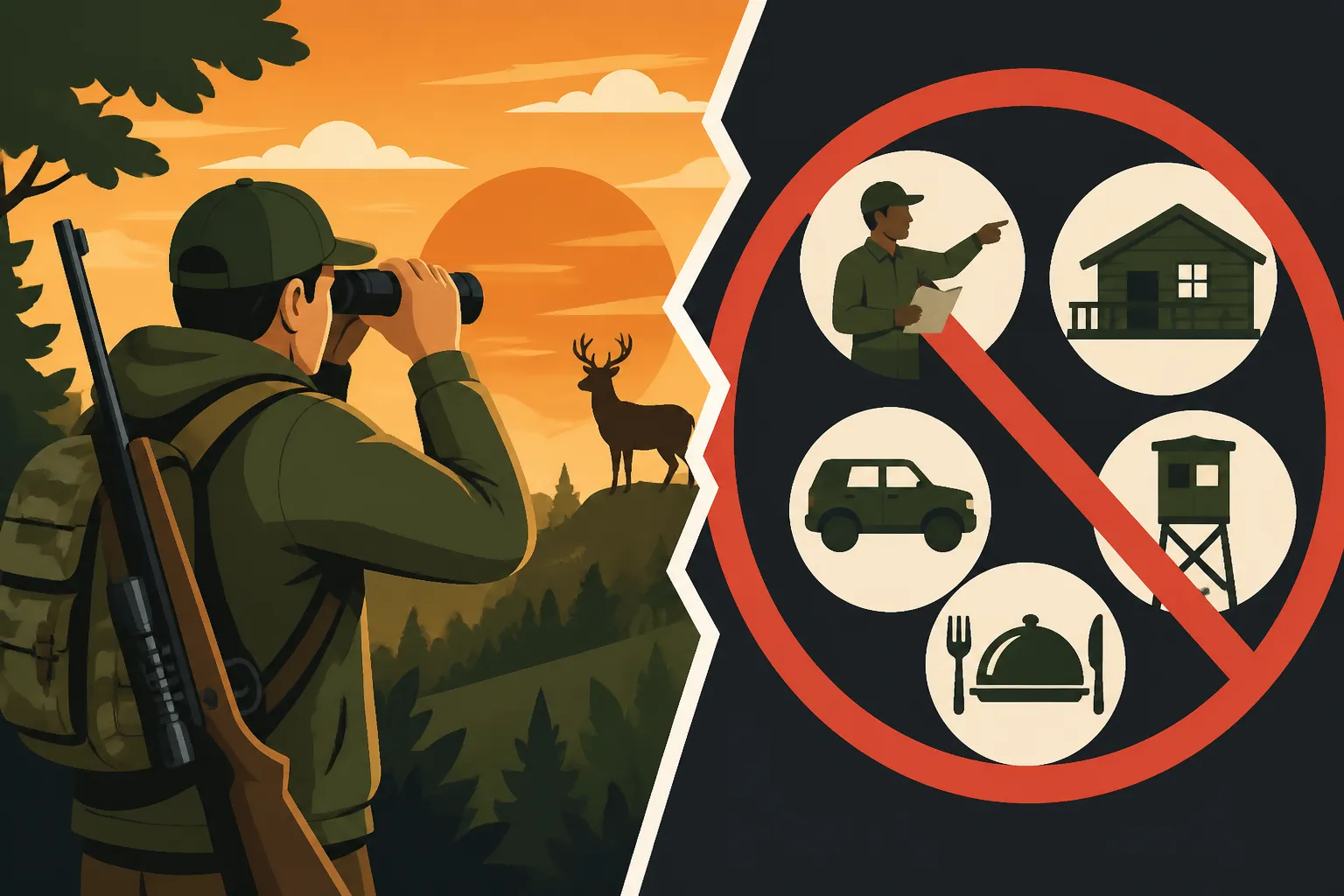
Think about all those comfortable amenities often provided by an outfitter: hot meals, a warm bed, a place to clean up, and a communal space to tell hunting stories. None of that is included in a self-guided hunt unless you arrange it yourself. You're either camping, booking a motel, or staying with friends or family. This means factoring in hotel costs, campground fees, or the expense of equipping a camping setup. You'll be cooking your own meals, packing lunches, and ensuring you have enough water and snacks for long days in the field.
Even simple things like coffee in the morning or a place to dry wet clothes become your problem to solve. If you're car camping or staying in a motel, you need to consider how far that is from your hunting spot, the impact of travel time, and the security of your gear. If you're truly roughing it, you need to understand backcountry safety, fire regulations, and how to stay comfortable in potentially harsh Arkansas weather. This also means packing a cooler with ice, especially if you're dealing with game, and having a plan for showering and staying clean throughout your trip. The overall comfort and sustenance of your hunt are entirely dependent on your planning and execution.
Post-Harvest Processing and Care
Congratulations, you've successfully harvested an animal! Now what? On a guided hunt, a guide or lodge staff might handle the field dressing, transport the animal, and even arrange for processing. Self-guided means the real work often begins after the shot. This is where physical effort, knowledge, and quick decision-making are paramount, especially given Arkansas's often warm hunting conditions.
Field Dressing, Butchering, and Storage
Once an animal is down, the clock starts ticking. You'll be responsible for Field Dressing a Deer in Warm Weather or any other game you take. This means having the right tools—sharp knives, gloves, a bone saw—and the knowledge to perform the task efficiently and hygienically. Then comes the monumental task of physically moving the animal. Hauling a mature whitetail buck out of an Ozark hollow or dragging a big gobbler across a CRP field is tough work, and you need a plan for it, whether that's a game cart, a sled, or just sheer brute force and a buddy.
After getting it out, you'll need to know how to properly chill the meat to prevent spoilage, especially if you're not taking it to a professional processor immediately. This could mean quartering the animal and putting it on ice, or having a cooler large enough to fit it whole, as discussed in Cooling Meat in an Arkansas November. If you plan to butcher it yourself, you need the tools, space, and sanitation practices to do so safely. If you're relying on a local processor, you need to research their hours, services, and pricing in advance, as they can get extremely busy during peak seasons.
Taxidermy and Shipping Considerations
Beyond the meat, if you've harvested a trophy animal you want mounted, you're responsible for its proper care from the field to the taxidermist. This includes caping the animal correctly, salting and preserving the hide, and ensuring the antlers or cape are transported safely. You'll need to research local taxidermists and understand their turnaround times and costs. This is an added expense and responsibility that isn't included in the "free" aspect of a self-guided hunt.
For waterfowl, if you want a mount, you'll need to know how to properly care for the bird in the field, often by keeping it dry and cool, and then freezing it whole until you can get it to a taxidermist. And if you're traveling from out of state, you need to understand the regulations for transporting game across state lines, both for meat and for trophy parts. Shipping frozen meat or a prepared cape can be complex and costly. These are all details that a good outfitter often guides you through or handles directly, but on a self-guided trip, the onus is entirely on you to know and execute.
The Value of Preparation and Research
Successfully navigating a self-guided hunt in Arkansas isn't just about showing up with a gun and a license. It’s about the extensive groundwork you lay beforehand, which directly impacts your safety, success, and overall enjoyment. This preparation is a continuous process, demanding time and dedication.
Utilizing Digital Resources and Local Knowledge
In today's age, technology is an indispensable tool for the self-guided hunter. Long before you even set foot in Arkansas, you should be immersed in digital reconnaissance. This means poring over detailed aerial imagery, topographical maps, and public land mapping applications like those provided by the AGFC, often through services like GoHunt or apps that overlay property lines. You'll be identifying potential access points, pinpointing likely bedding and feeding areas, marking water sources, and understanding the contours of the land. Knowing Hunting Arkansas Cutovers and Clearcuts from an aerial perspective can give you a huge advantage.
Beyond maps, seek out local knowledge. Online forums, social media groups dedicated to Arkansas hunting, and even just stopping at local diners or gas stations in small towns can yield invaluable insights. Remember, while an outfitter provides current, direct intel, as a self-guided hunter, you're piecing together the puzzle yourself. You need to understand general patterns for species like White-Tailed Deer Across Arkansas or Wild Turkeys in Arkansas. This comprehensive research helps you create a strategic hunting plan, identifying primary and secondary spots, and understanding potential hunting pressure on public lands.
Time Commitment and Physical Demands
Let's be real: a self-guided hunt often demands a significant time commitment, not just for the hunt itself, but for the entire preparation phase. This isn't a "show up and hunt" scenario. It's weeks, if not months, of planning, scouting, and physical conditioning. If you're hunting public land, whether it's an Ozark WMA or the Ouachita National Forest Hunting, you might have to walk further than you'd expect to get away from other hunters. This means carrying all your gear, negotiating tough terrain, and doing it all day, every day.
The physical demands are often much higher than on a guided hunt where you might be driven close to your stand or blind. Are you prepared to hike several miles in waders with a decoy bag for a Green Timber Duck Hunting in Arkansas adventure? Can you climb in and out of a treestand safely multiple times a day? Can you handle the physical exertion of retrieving a downed animal, potentially over long distances or difficult terrain? Even just setting up camp, cooking meals, and performing all the necessary chores takes energy. Being self-guided truly means being self-sufficient, and that requires investing the time and effort into both the mental and physical aspects of the hunt.
| Aspect of Hunt | Included in Most Guided Hunts | Not Included in a Self-Guided Hunt (Your Responsibility) |
|---|---|---|
| Pre-Hunt Planning | Scouting, stand/blind setup, daily hunt plan | Extensive scouting, map work, strategic planning |
| Licenses & Permits | Often advised, sometimes purchased for you | Researching, purchasing, and carrying all required permits |
| Gear | Sometimes provided (decoys, blinds, calls) | All personal and hunting-specific equipment, maintenance |
| Transportation | Field transport (ATV, boat) to/from hunting spot | All personal transport, vehicle maintenance, field access |
| Lodging & Meals | Accommodation, all meals, amenities | Booking lodging/camping, meal prep, food storage |
| Game Knowledge | Guide's expertise on current game movement | Personal knowledge of species, patterns, habitat, weather |
| Field Execution | Guide's direction, calling, animal recovery | Navigating, calling, tracking, ethical shot placement |
| Post-Harvest | Field dressing, game retrieval, processing aid | All field dressing, game retrieval, meat care, processing |
| Trophy Care | Basic caping, referral to taxidermist | Proper caping, preservation, transport to taxidermist |
| Safety | Guide's oversight, emergency communication | Personal safety protocols, first aid, emergency plan |
Disclaimer
This article is for general informational purposes only and does not constitute professional advice. Laws, prices and regulations vary by location and change over time. Consult a qualified professional for guidance on your specific situation.