White Rock WMA and the Ozark Forest
Hunting the vast expanses of the Ozark National Forest can feel like trying to find a needle in a haystack, especially if you're looking for specific, well-managed hunting opportunities. It’s easy to get overwhelmed by the sheer scale of the landscape, and knowing where to focus your efforts to find quality game without getting lost in the crowd is a common frustration. This guide is here to help you navigate those challenges, highlighting the unique opportunities available within the White Rock WMA, a true gem nestled in the heart of the Ozarks, and equipping you with the knowledge to make your next hunt a success.
Understanding the Ozark National Forest's Hunting Landscape
The Ozark National Forest is a sprawling, rugged wonderland, offering incredible public land hunting opportunities but also presenting a unique set of challenges. It's a place where preparation truly makes the difference between a memorable hunt and a frustrating trek.
The Sheer Scale and Diversity of the Ozarks
When we talk about the Ozark National Forest, we’re discussing a massive tract of public land. It encompasses over 1.2 million acres, sprawling across several counties in northern Arkansas. Just thinking about that acreage can be daunting for any hunter. This isn't your flat, easy-to-read Delta timber; this is a landscape defined by steep ridges, deep hollows, rocky creeks, and a mix of hardwood forests, pine stands, and cedar thickets. The terrain is relentless, demanding both physical stamina and a keen understanding of how game uses such varied habitats. You'll find everything from towering oaks dropping acorns to dense brush where deer love to bed. Understanding the Ozark National Forest Acreage gives you a sense of the scale, but experiencing it firsthand reveals its true complexity.
This diversity of habitat means you can find a wide array of game. White-tailed deer are, of course, a primary draw, but the Ozarks are also home to a significant wild turkey population, especially in spring. For the more adventurous, black bear populations are thriving, offering a unique big game pursuit. Beyond that, small game like squirrels and rabbits are abundant, providing plenty of action. Each species utilizes the varied terrain differently, so scouting for deer sign along a ridge top might be vastly different from finding turkey strut zones in an open bottomland or bear scat near a persimmon patch. The steepness and rockiness of the ground mean game often concentrates in pockets where food, water, and cover are readily available, making these micro-habitats crucial to locate.
Navigating Public Land Challenges and Opportunities
Hunting in such a vast national forest, while exciting, comes with its own set of navigational and tactical hurdles. Unlike a private lease where you know every nook and cranny, public land in the Ozarks can be unpredictable. You might encounter well-maintained forest service roads, but just as often, you'll find yourself on primitive two-tracks that dead-end or on foot, pushing through areas with no defined trails. It's crucial to be aware of Ozark Forest Road Closures in Season, as what was open for scouting in August might be closed off come deer season, forcing you to adjust your access plans.
The opportunities, however, far outweigh the challenges for those willing to put in the work. The sheer size means that with enough effort, you can often find unpressured pockets of woods, even during peak hunting seasons. Tools like onX Hunt become invaluable here. Before you even set foot on the ground, you can layer satellite imagery with public land boundaries, topo maps, and even private land ownership to identify potential access points, terrain features that might funnel deer, or secluded benches where turkeys might roost. While you're on the ground, the GPS functionality of an app like onX Hunt allows you to drop pins on fresh sign, mark promising stand locations, and navigate back to your vehicle with confidence, even in the densest thickets or after dark. Without such tools, navigating the vast and often featureless terrain, especially off-trail, can quickly lead to disorientation and a wasted hunt.
White Rock WMA: A Gem Within the Forest
Among the sprawling acres of the Ozark National Forest, certain areas stand out due to their unique management and accessibility. The White Rock Wildlife Management Area (WMA) is one such place, offering a concentrated, often more productive, hunting experience within the larger forest setting.
Location, Access, and General Terrain
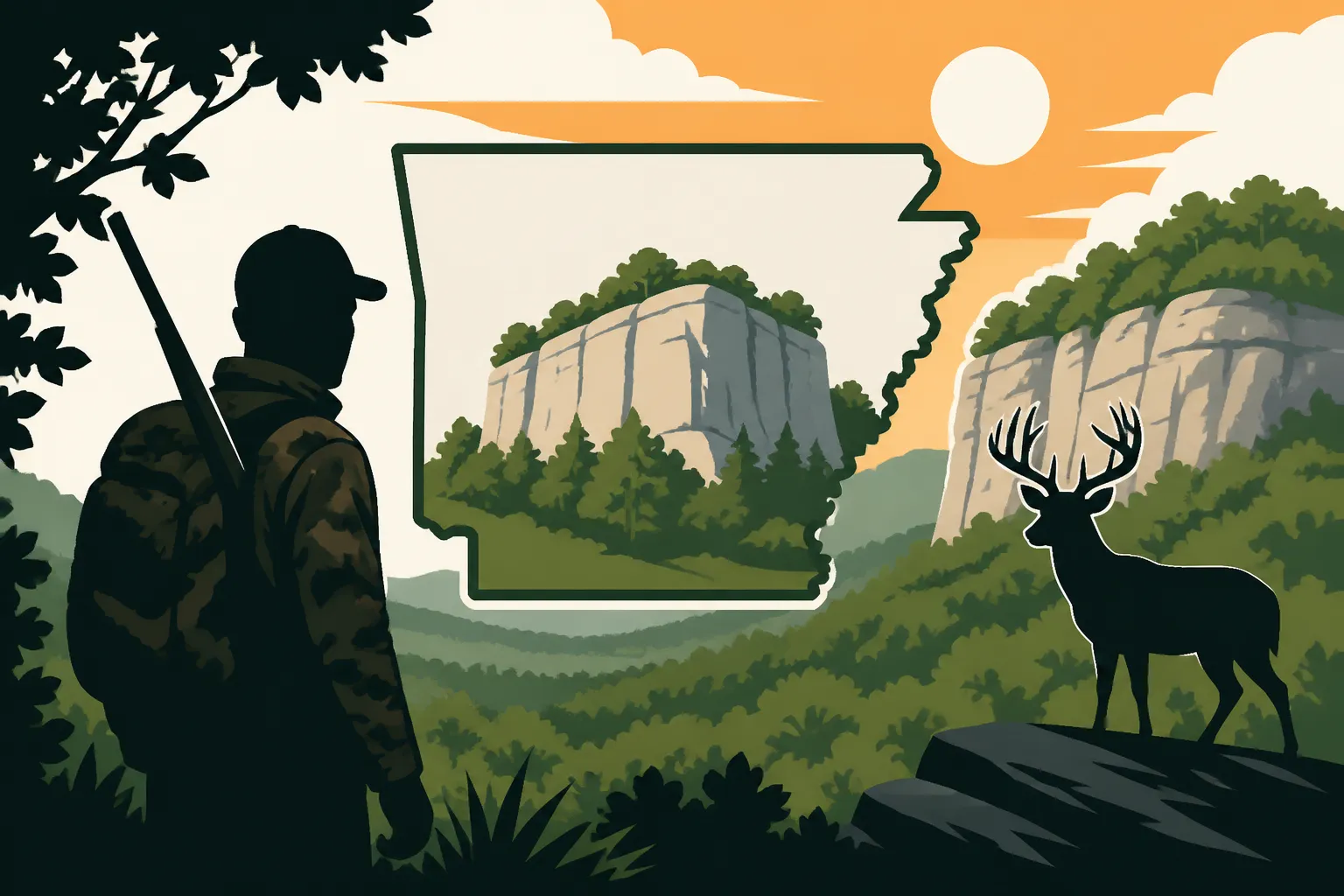
White Rock WMA is situated in the western part of the Ozark National Forest, primarily in Franklin and Crawford counties. Its proximity to communities like Winslow and Mountainburg makes it relatively accessible, yet it retains a wild and rugged feel. The WMA essentially encompasses the high ridges and deep valleys around the historic White Rock Mountain, including the popular White Rock Mountain Recreation Area. This means the terrain is characterized by incredibly steep ascents and descents, rocky outcrops, and stunning scenic overlooks that also serve as excellent vantage points for scouting.
Access to White Rock WMA typically involves driving paved and gravel forest roads, many of which can be challenging, especially after heavy rains. The main roads lead to various parking areas and trailheads, from which hunters must often hike significant distances into the rugged interior. Compared to some other parts of the national forest, White Rock often benefits from more focused wildlife management efforts, creating better habitat and potentially higher game densities in certain zones. Knowing the White Rock WMA Acreage is a starting point, but understanding its topographical makeup and access routes is key to formulating a successful hunting plan. Hunters should expect to put in some serious legwork here, but the reward can be finding game in truly breathtaking, wild settings.
Species and Habitat Management at White Rock
The primary game species in White Rock WMA mirror those of the broader Ozark National Forest: white-tailed deer, wild turkeys, and black bears. However, the intensity of management within the WMA can sometimes lead to localized improvements in habitat and, consequently, better hunting opportunities. The Ozark National Forest, including White Rock, often sees timber stand improvement projects, which involve thinning dense timber to allow more sunlight to reach the forest floor. This promotes the growth of understory vegetation—crucial browse for deer and soft mast for turkeys and bears. Prescribed burns are also sometimes used to invigorate native grasses and forbs, creating diverse feeding areas.
These habitat enhancements play a direct role in how game uses the landscape. Deer, for instance, might be drawn to areas with new growth following a timber harvest or a recent burn, as these spots offer both food and thicker cover for bedding. Turkeys will frequent areas with an open understory, making it easier for them to move and forage for insects and acorns. For bear hunters, understanding the timing of soft mast crops like blackberries or hard mast like acorns is paramount, as bears will key in on these food sources, especially in the rugged hollows and along the benches of White Rock. These management practices, when understood, can guide your scouting efforts and help you predict game movement patterns in this challenging environment. When you're Hunting Ozark Ridges and Hollows for Deer, knowing where these managed areas are can give you a significant advantage.
Strategies for Deer Hunting in White Rock WMA and the Ozarks
Deer hunting in the Ozarks, and particularly in a rugged area like White Rock WMA, is a marathon, not a sprint. It demands dedication, physical fitness, and an ability to adapt to changing conditions and challenging terrain.
Scouting and Pre-Season Preparation
Successful deer hunting in this region starts long before opening day. Pre-season scouting is not just recommended; it's absolutely essential. The Ozarks are vast, and deer density can vary dramatically from one ridge to the next. You need to identify key areas where deer are consistently moving, feeding, and bedding. Begin your scouting with detailed topographic maps and aerial imagery. Modern mapping apps, such as GoHunt or onX Hunt, allow you to study contour lines to find benches, saddles, and drainages that deer use as travel corridors. Look for natural pinch points where terrain features force deer movement into a concentrated area. These tools are far more effective than just blindly walking the woods.
Once you have identified potential hotspots from your armchair scouting, it's time to hit the ground. Focus on finding fresh deer sign: rubs, scrapes, tracks, and droppings. During the late summer and early fall, as acorns begin to drop, locate productive oak stands, particularly white oaks, as these are often preferred food sources. Don't overlook secondary food sources like persimmons or green browse in logging clearings. Identifying bedding areas, typically dense thickets on south-facing slopes for warmth, or secluded benches offering good visibility, is also critical. Understanding Reading an Ozark Bench for Deer can be the difference between seeing a deer and just hiking. Remember, deer will often travel between these bedding and feeding areas along the paths of least resistance, which in the Ozarks often means contouring ridges or following creek bottoms.
Tactics for Different Seasons
The Ozarks offer varied deer seasons, each requiring a slightly different approach to be successful in White Rock WMA.
Archery Season (September-February): Bowhunting Arkansas's Five-Month Archery Season means you'll deal with everything from early-season heat to late-season cold. Early in the season, focus on shaded creek bottoms and near consistent water sources, as deer will seek relief from the warmth. As the pre-rut and rut approach in late October and November, expand your focus to ridge tops and saddles, where bucks will be actively searching for does. Still-hunting slowly and quietly through the hardwoods, pausing frequently to glass ahead, can be very effective. Setting up treestands or ground blinds along known travel corridors between bedding and feeding areas, especially near fresh rubs or scrapes, offers good ambush opportunities.
Modern Gun Season (November-December): This is often the busiest time in White Rock WMA. Pressure from other hunters can shift deer patterns significantly. During Arkansas Modern Gun Deer Hunting, deer may become more nocturnal or seek refuge in the densest, most inaccessible cover. Tactics should adjust accordingly. Focusing on steep, brushy draws or thickets that other hunters might avoid can pay off. Small, quiet deer drives with a couple of hunters can be effective in pushing deer from thick bedding areas towards waiting standers. Alternatively, finding a secluded ridge or hollow far from vehicle access and simply waiting patiently can yield results, especially during the mid-day hours when many hunters are back at camp.
Alternative Firearms Season (October, December): This season, typically for muzzleloaders, can offer a unique opportunity. While the deer behavior will largely mimic the periods it falls within (pre-rut in October, post-rut in December), the lower number of hunters using alternative firearms compared to modern gun season can mean less pressure. This might allow deer to stick to more predictable patterns. The slower pace of reloading a muzzleloader encourages more thoughtful shot selection and a greater appreciation for the hunt. Hunters should still employ similar scouting and tactical approaches as during archery or modern gun season, focusing on terrain features and food sources, but with the added benefit of potentially encountering less disturbed deer.
Turkey and Bear Hunting in this Rugged Landscape
Beyond deer, the Ozark National Forest and White Rock WMA offer exhilarating opportunities for turkey and bear hunting, each with its own set of challenges and rewards.
Chasing Gobblers in Ozark Hardwoods
Spring turkey hunting in the Ozarks is an experience all its own. The terrain itself presents a major factor. Turkeys will often roost in tall timber along ridge lines, and calling them off the roost can be tricky due to steep elevations and tricky thermals. That early morning gobble might sound close, but the sound can carry and echo, making it difficult to pinpoint the exact location of the bird. You'll need to use your ears, but also your knowledge of the terrain to anticipate where a gobbler might want to fly down. Setting up on the same contour as a roosted bird, or slightly below him, can sometimes entice him to come to your calls once he hits the ground.
Patience and persistence are key. Calling Arkansas Gobblers in the Ozarks demands a diverse range of calls. You might start with soft tree yelps from below the roost, then switch to excited hen yelps and cutts once the bird is on the ground. Be prepared to move, but move cautiously. Gobblers in the Ozarks can be notoriously wary, often circling to get a visual on the calling hen. Look for benches or flat spots along ridges where they might strut and display. Always set up with good back cover and a clear shooting lane, anticipating their approach. The physical demand of covering steep ground in pursuit of a reluctant gobbler adds to the challenge and the satisfaction when you finally seal the deal.
Pursuing Black Bears in the Ozarks
Arkansas has a robust and growing black bear population, and the Ozark National Forest, including White Rock WMA, is prime bear country. Bear hunting here is a unique and thrilling experience, far different from deer or turkey hunting. Bears are highly intelligent and possess an incredible sense of smell, making close encounters challenging. Hunting bears in Arkansas often revolves around identifying their natural food sources. In the early season, bears will key in on soft mast like berries (blackberries, blueberries, wild grapes) in clearings and along forest edges. As fall progresses, acorns become the primary draw, and finding a productive white oak or red oak ridge can be the key to success.
Successful Black Bear Hunting in Arkansas involves extensive scouting for fresh bear sign: tracks in muddy creek beds, claw marks on trees, overturned rocks, and scat. Look for these signs around known food sources. Bear seasons are typically short and often quota-based, meaning a zone can close quickly once the harvest limit is met. It’s absolutely critical to stay updated on the current regulations and whether the bear zone you're hunting is still open. Hunters should be prepared for the physical challenge of retrieving a bear from rugged terrain, and have a plan in place for processing the animal quickly to preserve the meat and hide, especially in warmer early season conditions.
Essential Gear and Safety Considerations
Hunting in the rugged Ozarks, particularly in a remote area like White Rock WMA, requires careful preparation regarding both your gear and your personal safety. Being well-equipped can prevent a minor inconvenience from turning into a dangerous situation.
Must-Have Gear for Ozark Hunts
Your gear needs to be robust and reliable. First and foremost, a good pair of waterproof, ankle-supporting hiking boots is non-negotiable. The steep, rocky, and often wet terrain will punish lesser footwear. Layered clothing suitable for fluctuating temperatures is also crucial, as mornings can be cold and afternoons surprisingly warm, even in late fall. A durable backpack to carry your essentials is a must.
Beyond the basics, navigation tools are paramount. While a smartphone with a mapping app like GoHunt or onX Hunt is incredibly powerful, never rely solely on it. Carry a physical map and compass, and know how to use them. A portable battery bank for your phone is also a lifesaver. Other essential items include plenty of water (more than you think you'll need, especially on steep climbs), a headlamp or flashlight with extra batteries, a basic first-aid kit, a sharp knife, paracord, a fire-starting kit, and signaling devices like a whistle. For game retrieval, a good game cart might be useful if the terrain allows, but often, quartering an animal and packing it out is the only option in the steepest areas. Consider a sturdy frame pack if you anticipate harvesting a deer or bear far from an access road.
Safety on Rugged Public Land
Safety should always be your top priority. The remoteness of White Rock WMA means that help can be a long way off. Always let someone know exactly where you are going, your planned route, and when you expect to return. Stick to your plan as much as possible, and if you deviate, update your contact person. The steep, uneven terrain presents a significant risk of falls and injuries, so watch your footing, especially when carrying a heavy pack or harvested game.
Be prepared for sudden weather changes common in the Ozarks, from unexpected thunderstorms to rapid temperature drops. Carry rain gear and extra layers even on seemingly nice days. If you find yourself lost, stay calm, consult your map and GPS, and if necessary, stay put and signal for help. Firearm safety is always paramount; treat every weapon as loaded, know your target and what's beyond it, and keep your finger off the trigger until ready to shoot. During modern gun seasons, Arkansas Hunter Orange Rules mandate wearing at least 400 square inches of hunter orange above the waist, visible from all sides, to ensure you are seen by other hunters. Never take shortcuts with safety when you're deep in the Ozark woods.
Rules, Regulations, and Respecting the Resource
Hunting in a Wildlife Management Area within a National Forest means you're operating under a specific set of rules designed to protect both the wildlife and the public land experience. Understanding and adhering to these regulations is not just about legality; it's about being a responsible conservationist.
Understanding WMA and National Forest Specific Rules
While the Ozark National Forest has general hunting regulations, White Rock WMA will have its own set of rules, often supplementing or slightly modifying the broader forest guidelines. It’s absolutely essential to check the current Arkansas Game and Fish Commission (AGFC) regulations specifically for White Rock WMA before each hunting season. These rules can cover anything from specific hunting dates for certain species within the WMA, weapon restrictions, vehicle access limitations, or even special permit requirements. For example, some WMAs might have different rules regarding ATV use, camping locations, or the placement of permanent treestands compared to general National Forest land.
Knowing Arkansas WMA Rules and Permits is a non-negotiable part of your planning. Always ensure you have the correct licenses and stamps for your desired game and season, and that any required WMA permits are in hand. These regulations are designed to manage hunter pressure, protect sensitive habitats, and ensure sustainable wildlife populations. Disregarding them can lead to fines, loss of hunting privileges, and damage to the reputation of all hunters. Taking the time to read the WMA-specific regulations and understand the boundary lines of the WMA within the larger National Forest on your mapping app can save you a lot of headache and keep you on the right side of the law.
Practicing Ethical Hunting and Leave No Trace
Beyond the written rules, ethical hunting and a commitment to Leave No Trace principles are critical when utilizing public land like White Rock WMA. This means more than just following the law; it means acting as a steward of the land. Always pack out everything you pack in—and then some. Pick up any trash you find, whether it's yours or not. Leave no trace of your presence, whether it's a forgotten snack wrapper, empty shell casings, or flagging tape. The goal is for the next person to enjoy the same wild, untainted experience you did.
Respecting boundaries, both marked and unmarked, is also paramount. Private land often borders public forest, and inadvertently trespassing, even with the best intentions, can create friction and jeopardize future public land access. Utilize your mapping apps to clearly identify property lines. When it comes to game, make every effort to recover any animal you shoot. Tracking wounded game, even into thick cover or across property lines (with permission), is an ethical obligation. Lastly, always consider how your actions impact other users of the forest, whether they are hikers, campers, or fellow hunters. By practicing patience, courtesy, and a deep respect for the resource, you help ensure that White Rock WMA and the entire Ozark National Forest remain vibrant hunting grounds for generations to come.
General Rules Comparison: Ozark National Forest vs. White Rock WMA
While White Rock WMA is within the Ozark National Forest, WMA-specific rules often add layers of regulation. Here’s a general comparison to highlight common differences, but always consult the current AGFC regulations for the most accurate and up-to-date information for your specific hunt.
| Feature / Rule Area | General Ozark National Forest (typically) | White Rock WMA (typically, but verify) |
|---|---|---|
| Hunting License | State hunting license required. | State hunting license + WMA permit (if required) + applicable stamps. |
| Vehicle Access | Generally allows vehicles on designated forest roads; some seasonal closures. | May have more restrictive vehicle access, especially during wet seasons or in certain zones. |
| Camping | Dispersed camping allowed (check specific rules for fire, duration). | Designated camping areas may be required; specific rules on duration/fires. |
| Permanent Stands/Blinds | Generally prohibited or requires removal after season. | Generally prohibited; often only temporary, portable stands allowed for the season. |
| Baiting | Prohibited for deer/bear; check for predator baiting rules. | Prohibited for deer/bear; strict rules on feeding any wildlife. |
| ATV/OHV Use | Restricted to designated trails; may require specific permits. | Often more restricted, may be limited to administrative use or specific trails. |
| CWD Zones | Subject to statewide CWD regulations (e.g., carcass transport). | Subject to statewide CWD regulations, plus any WMA-specific CWD rules. |
| Species-Specific Seasons | Follows statewide regulations for species, zones. | May have unique or abbreviated season dates, bag limits, or weapon restrictions. |
Disclaimer
This article is for general informational purposes only and does not constitute professional advice. Laws, prices and regulations vary by location and change over time. Consult a qualified professional for guidance on your specific situation.