Crowley’s Ridge Hunting Ground
Hunting Crowley's Ridge can feel like a totally different world compared to the vast bottomland timber or sprawling Ozark mountains of Arkansas. This ancient "island" of elevated terrain, surrounded by the flatness of the Delta, presents its own unique set of puzzles and frustrations for hunters. If you've ever found yourself scratching your head trying to navigate the patchwork of private and public ground, or wondering where the deer and turkeys hide in this mixed habitat, you're in the right place. This guide is dedicated to helping you unravel the mysteries of hunting Crowley's Ridge, offering practical strategies to make your next trip more successful and less bewildering.
Understanding the Unique Landscape of Crowley's Ridge
Crowley's Ridge isn't just another rise in the landscape; it's a geological anomaly that dramatically shapes the hunting experience in eastern Arkansas. Formed by ancient winds depositing loess soil, this narrow, elevated strip stands in stark contrast to the surrounding flat alluvial plains of the Mississippi Delta. This unique formation means that even though you're in the Delta region, the terrain and habitat you encounter are surprisingly varied and can feel more akin to hill country in some respects.
Geographical Formation and Habitat Diversity
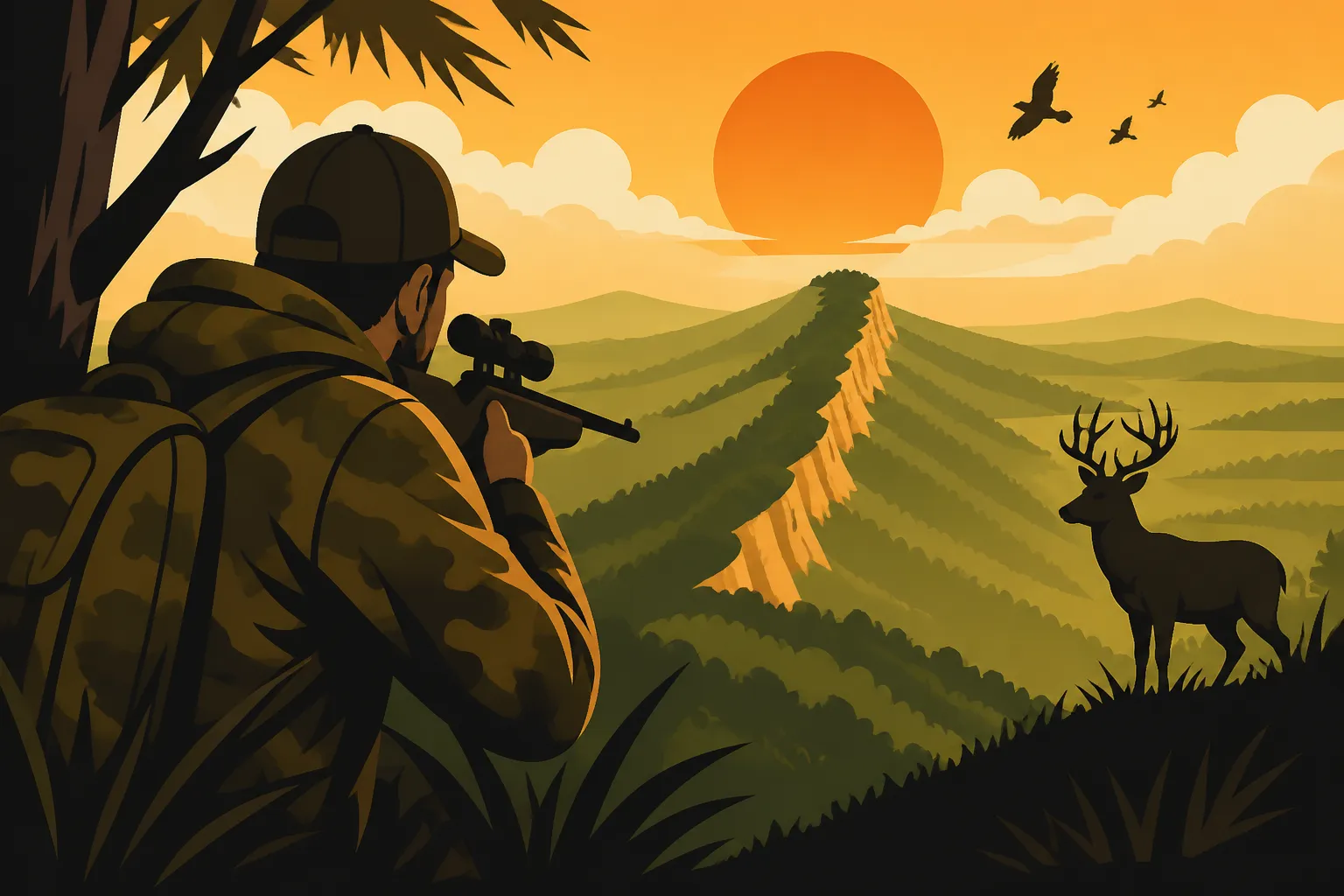
Imagine an island of rolling hills, covered in a mix of hardwoods and some pine, rising out of a vast, flat agricultural sea. That's essentially Crowley's Ridge. The deep, rich loess soils support a diverse forest, often featuring mature oaks, hickories, and other mast-producing hardwoods, which are absolute magnets for wildlife, especially deer and turkeys. You'll also find some shortleaf pine plantations, creating a patchwork of habitat types within relatively small areas. This natural diversity is a lifeline for wildlife, offering a variety of food sources and cover types that shift throughout the seasons. But it's also highly fragmented by human development – homes, small towns, and, of course, the ever-present agricultural fields that butt right up against the timbered hillsides. Hunters here have to contend with steep ravines and surprisingly rugged draws, a far cry from the flat, flooded timber often associated with eastern Arkansas.
Key Game Species Present
While the Delta is famous for its ducks and the Ozarks for their turkeys, Crowley's Ridge holds a strong population of white-tailed deer and wild turkeys, along with abundant small game like squirrels and rabbits. Deer thrive on the diverse food sources, from acorns in the hardwoods to browse along the field edges and even crops themselves. Turkeys roost in the mature timber and forage along the ridge tops and field perimeters, providing exciting spring hunting opportunities. Small game finds haven in the dense undergrowth and mature trees. Occasionally, you might even encounter some waterfowl on the few small lakes, reservoirs, or drainage ditches that dot the ridge and its immediate surroundings, though it's not a primary waterfowl destination like the rest of the Delta. This variety means you can often focus on multiple species if you plan your season right. For anyone interested in the broader picture of Arkansas game, understanding White-Tailed Deer Across Arkansas or Wild Turkeys in Arkansas can provide valuable context to the populations found specifically on the Ridge.
The Impact of Fragmentation and Private Ownership
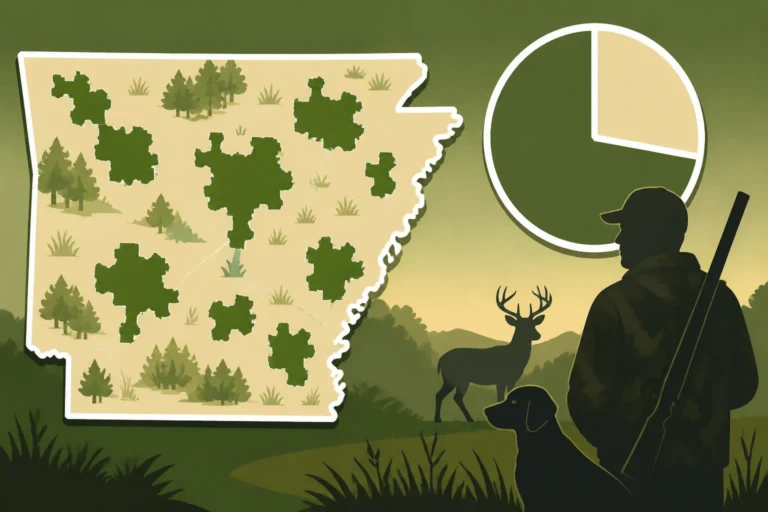
Perhaps the biggest frustration for hunters on Crowley's Ridge is the sheer fragmentation of the landscape. Unlike vast national forests, public hunting land on the Ridge comes in smaller, often disconnected parcels, frequently surrounded by private property. This can make access tricky, limiting where you can park, walk, or even retrieve game. The pressure on these smaller public tracts can be intense, as local hunters converge on the accessible areas. Navigating this means a lot of careful scouting and a keen eye for property boundaries. It also means that cultivating good relationships with private landowners, where possible, can unlock significant additional hunting opportunities. Without those connections, you're often left working harder for your deer or turkey, trying to find those overlooked pockets of public land.
Navigating Public Hunting Opportunities on the Ridge
Given the fragmented nature of Crowley's Ridge, finding and effectively utilizing public hunting opportunities requires a strategic approach. It's not always about finding the biggest piece of public land, but often about finding the best piece for your specific hunting style, and knowing how to access it ethically and legally.
Specific Wildlife Management Areas on Crowley's Ridge
While Crowley's Ridge isn't blanketed with huge blocks of public land, several important Wildlife Management Areas (WMAs) and segments of national forest land provide crucial hunting access. These can include portions of the St. Francis National Forest that technically touch the southern end of the Ridge, as well as smaller WMAs directly on or adjacent to the main body of the Ridge. Each WMA might have slightly different regulations regarding hunting methods, vehicle access, or even specific season dates, so it's absolutely vital to check the current Arkansas Game and Fish Commission (AGFC) regulations for the specific area you plan to hunt. These WMAs are often managed for a variety of species, but deer and turkey are typically the primary draws. Remember, these areas are often heavily used, especially during opening weekends. For a deeper dive into general WMA rules, check out Arkansas Wildlife Management Areas.
Access Challenges and Hunter Pressure
One of the undeniable realities of hunting public land on Crowley's Ridge is the significant hunter pressure. Because the public tracts are relatively small and often bordered by dense populations, these areas can see a lot of foot traffic and competition, particularly during peak seasons like the modern gun deer opener or the first week of turkey season. Parking areas fill up fast, and you might find other hunters working the same draws or ridge lines you're interested in. This means you have to be willing to work a little harder, walk a little further, and think a little differently to find unpressured game. Sometimes, the key isn't finding a secret spot, but finding an area that's just inconvenient enough that most hunters skip it. Stealth and patience become even more critical when hunting pressured ground.
Using Mapping Tools for Public Land
This is where technology becomes your absolute best friend. Forget crumpled paper maps; modern mapping applications are indispensable for hunting Crowley's Ridge. Tools like onX Hunt and GoHunt provide incredibly detailed satellite imagery, topographic maps, and crucially, property ownership overlays that clearly show public and private land boundaries. This allows you to identify public access points, track your location precisely to avoid trespassing, and even pinpoint potential bedding areas, travel corridors, and food sources before you ever set foot in the woods. You can mark waypoints for potential stand locations, observe drainages and changes in elevation, and plan your entry and exit routes meticulously. Understanding exactly where you are and where the boundaries lie is not just smart; it's essential for ethical and legal hunting on the Ridge. Many hunters also find Using the AGFC Map Tool helpful for official AGFC boundaries and specific WMA regulations.
Strategies for Deer Hunting on Crowley's Ridge
Deer hunting on Crowley's Ridge demands a nuanced approach, blending tactics suited for hilly terrain with an understanding of how deer utilize agricultural interfaces. It's a game of finding overlooked pockets and understanding the daily patterns dictated by food, cover, and pressure.
Targeting Hardwood Bottoms and Acorn Flats
The hardwood timber on Crowley's Ridge is a deer magnet, especially when the acorn crop is good. Focus your scouting efforts on identifying oak stands, particularly red oaks and white oaks, which produce favored mast. Deer will gorge themselves on acorns, making these areas prime feeding grounds. Look for fresh droppings, disturbed leaves, and rubs or scrapes indicating consistent deer activity. Hardwood bottoms, nestled in the ravines and folds of the Ridge, offer both food and thermal cover, often acting as safe havens during daylight hours. Setting up a stand or ground blind on the downwind side of a heavily used acorn flat, especially near a transition to thick cover, can be incredibly effective. Remember that deer patterns will shift as acorns are consumed or if pressure increases, so stay adaptable. For more general advice on deer movement, consider Hunting Ozark Ridges and Hollows for Deer, as many principles apply here too.
Hunting Ridge Tops and Transition Zones
While bottoms provide food, ridge tops and the transition zones along their edges are vital travel corridors and observation points for deer. Bucks especially will cruise these elevated areas, using the wind to their advantage and keeping an eye on the surrounding landscape for threats or does. Look for subtle benches or saddles along the ridges—these act as natural funnels that concentrate deer movement. A well-placed stand in one of these natural pinch points, especially one that allows you to observe multiple directions, can be a deadly tactic. Also, pay close attention to where thickets and dense cover meet more open timber; these "transition zones" are where deer often feel secure enough to move during daylight. Understanding how Reading an Ozark Bench for Deer applies to the Ridge's topography can give you a real edge.
Understanding Deer Movement Near Agricultural Fields
Crowley's Ridge is surrounded by agriculture, and deer on the Ridge are highly attuned to these abundant food sources. While deer might spend their nights feasting in corn, soybean, or rice fields, they almost always retreat to the security of the timbered ridges during the day. The key is to intercept them as they transition between these two worlds. Look for trails leading from the woods into the fields, especially those near thick cover or brushy fence lines. Morning hunts might focus on catching deer returning to their bedding areas, while evening hunts are best positioned to intercept them heading out to feed. Wind direction is paramount here; deer will almost always approach a field with the wind in their face or crossing, allowing them to scent-check for danger. A good mapping app like onX Hunt can help you scout these field edges and pinpoint prime ambush locations, showing crop types from satellite imagery.
Turkey and Small Game Hunting on Crowley's Ridge
Beyond deer, Crowley's Ridge offers fantastic opportunities for wild turkeys and a traditional small game experience, reminiscent of hunting simpler times. The mixed habitat provides ideal conditions for these species, making the Ridge a delightful destination for diverse hunting pursuits.
Spring Turkey Tactics on the Ridge
Spring turkey hunting on Crowley's Ridge is an exhilarating experience. The gobblers here love to roost in the tallest timber along the ridge lines, often near open fields where they can fly down and strut. Mornings often start with locating a gobbler on the roost, either by listening from a distance or by using locator calls. Once you've heard one, the challenge is to get into a favorable setup, preferably with some cover behind you, and position yourself to intercept him as he flies down or works his way along the ridge. Calling Arkansas Gobblers in the Ozarks offers relevant insights into general turkey calling techniques that apply well here. Turkeys on the Ridge are not always easy; they can be pressured and will often "hang up" just out of range. Patience, realistic calling, and knowing when to make a move (or not) are crucial. Remember that the varied terrain means scouting for natural obstacles like deep ravines or thick brush that might prevent a gobbler from approaching directly. Always consult the Arkansas Turkey Seasons and Limits for the current year.
Squirrel and Rabbit Hunting in Ridge Timber
If you're looking for a more relaxed hunt, or perhaps an opportunity to introduce a new hunter to the woods, Crowley's Ridge offers excellent squirrel and rabbit hunting. The mature oak and hickory forests provide abundant mast for squirrels, making them relatively easy to locate once the nuts start dropping. Still-hunting through these woods, especially on crisp fall mornings, while listening for cutting sounds or watching for movement in the canopy, is a time-honored tradition. For rabbits, focus on brushy areas, hedgerows, thickets, and the edges of timber where cover is dense. Running a good beagle through these areas can be incredibly productive and a blast to experience. These hunts provide a fantastic way to enjoy the beautiful scenery of the Ridge and fill a pot with some delicious wild game. You can learn more about general squirrel hunting tactics in Squirrel Hunting Arkansas Hardwoods.
Opportunities for Predators and Furbearers
The healthy populations of deer, turkey, and small game on Crowley's Ridge mean that predators and furbearers are also present and often quite active. Coyotes and bobcats are the primary targets for predator hunters, offering a thrilling challenge, especially in the off-season. Calling these animals in, using various vocalizations to mimic their prey, can be a rewarding pursuit. The mixed habitat of timber and agricultural fields provides excellent cover and abundant food for these opportunistic hunters. Raccoons and opossums are also common, providing opportunities for night hunting with hounds, a popular pastime in many parts of Arkansas. While not as heavily targeted as deer or turkey, pursuing predators can be an excellent way to extend your time in the woods and contribute to local wildlife management efforts. For insights into hunting these animals, look into Coyote and Bobcat Calling in Arkansas.
Overcoming Challenges and Maximizing Success
Hunting Crowley's Ridge presents unique challenges that can frustrate even seasoned hunters. But with the right mindset, thorough preparation, and adaptable tactics, you can turn these obstacles into opportunities for a more rewarding hunt.
Dealing with Limited Public Access and High Pressure
The reality of limited public access and high hunter pressure on Crowley's Ridge requires a proactive strategy. First, embrace the idea of "off-peak" hunting. If you can hunt during weekdays, especially outside of opening weekends, you'll encounter significantly less competition. Second, be willing to walk further. Many hunters stick close to parking areas and easy-to-access trails. By putting in a little extra mileage, you can often reach pockets of public land that see far less pressure, where game might feel more secure during daylight hours. Lastly, consider hunting during less conventional times, like midday, when many hunters are back at camp or home. Deer and turkeys often resume activity during these quiet periods.
The Importance of Scouting and E-Scouting
Scouting, both in person and digitally, is paramount on Crowley's Ridge. Before you even leave home, use mapping tools like onX Hunt or GoHunt to thoroughly e-scout. Look for changes in elevation, pinch points, saddles, and potential bedding areas away from roads and known trails. Identify water sources, dense cover, and likely travel corridors between food and bedding. Once you hit the ground, confirm these observations. Look for fresh tracks, rubs, scrapes, and turkey sign. Pay attention to the types of mast trees present. Scouting during the off-season, without the pressure of hunting, allows you to observe natural animal behavior and identify those subtle features that can make all the difference. This meticulous preparation is what separates successful hunters from those who just wander the woods hoping to stumble upon game. For general scouting tips, Scouting Arkansas Public Land Before Season is an excellent resource.
Ethical Considerations and Respect for Private Land
Given the patchwork nature of Crowley's Ridge, respecting private property boundaries is not just a legal requirement, but an ethical imperative. Always know exactly where you are using your mapping app and ensure you have permission before setting foot on private land. This includes retrieving game. If a deer or turkey crosses onto private property, you must obtain permission from the landowner before pursuing it. Trespassing, even accidentally, can lead to fines, loss of hunting privileges, and damage to the reputation of all hunters. Building positive relationships with landowners in the area, even if you don't hunt their property, can foster goodwill and potentially open doors in the future. Remember, we are guests in the woods, whether on public or private land, and our actions reflect on the entire hunting community. For details on how to approach landowners, refer to Getting Private Land Permission in Arkansas.
Comparing Public Land Hunting Opportunities on Crowley's Ridge
To summarize some of the key characteristics and challenges of hunting the public lands found on or near Crowley's Ridge, here's a quick overview:
| Characteristic | Description | Impact on Hunter |
|---|---|---|
| Land Ownership | Predominantly private, with scattered, smaller public WMAs (e.g., portions of St. Francis NF, local WMAs like Crowley's Ridge WMA). | Requires meticulous e-scouting with apps like onX Hunt to identify boundaries. Permission is often needed for access or game retrieval. High hunter density on public tracts. |
| Habitat Diversity | Mixed hardwoods (oaks, hickories) dominate ridges and draws, interspersed with pine and surrounded by vast agricultural fields. | Offers varied food sources (mast, crops) and cover for diverse game species (deer, turkey, small game). Hunters must adapt tactics to different microhabitats. |
| Terrain | Rolling hills, steep ravines, and defined ridge lines, a sharp contrast to the surrounding flat Delta. | Demands physical fitness and strategic approach to travel corridors and thermal drafts. Can offer natural funnels for deer movement. |
| Hunter Pressure | Can be very high due to limited public acreage and proximity to population centers. Concentrated on accessible areas, especially during peak seasons. | Requires hunters to seek out less-accessible areas, hunt off-peak times, and be willing to walk further. Stealth and patience are paramount. |
| Game Species | Excellent deer (white-tailed), strong turkey populations, abundant squirrels and rabbits, with opportunities for coyotes and bobcats. Limited waterfowl. | Provides diverse hunting opportunities beyond just deer. Specific tactics are needed for each species, leveraging the unique ridge habitat. |
| Access | Often limited to specific parking areas, with foot travel or ATVs on designated routes. Many public tracts are landlocked or have limited entry points. | Detailed scouting using mapping tools is essential to find entry points and plan routes. Be prepared for longer walks to escape crowds. Respect designated access rules. |
Disclaimer
This article is for general informational purposes only and does not constitute professional advice. Laws, prices and regulations vary by location and change over time. Consult a qualified professional for guidance on your specific situation.