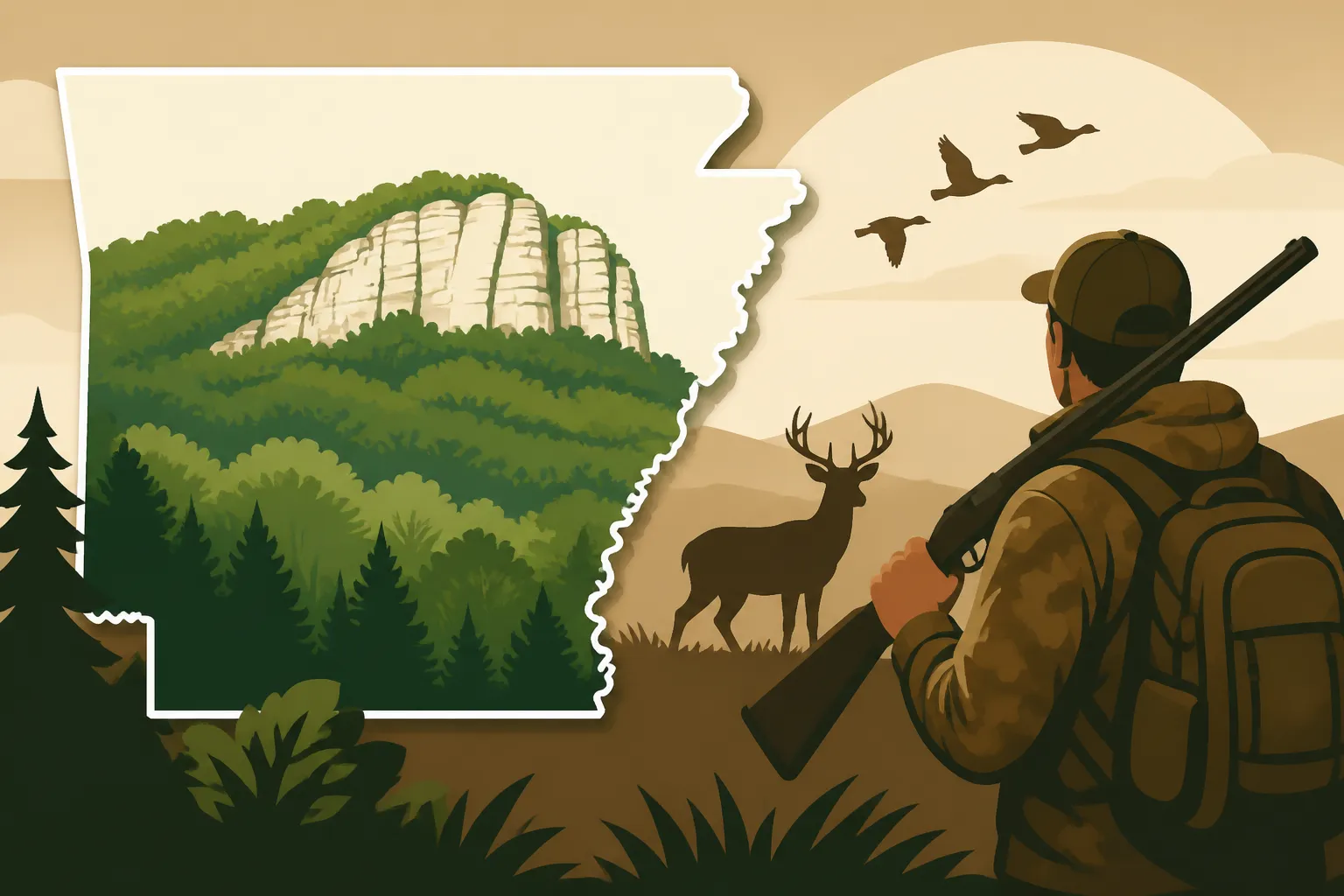
White Rock WMA Acreage
One of the biggest hurdles many hunters face when looking at public land in Arkansas is simply comprehending the sheer scale of some of our Wildlife Management Areas, and White Rock WMA is a prime example. You might see a number on a map, but what does 290,000+ acres really mean for your hunting plans? It means opportunity, certainly, but also a healthy dose of challenge and the need for solid preparation. This guide is all about helping you understand the immense footprint of White Rock WMA and how to effectively navigate and hunt its vast Ozark landscape.
Unpacking White Rock WMA: Size and Setting
When you first start looking at a map of public hunting ground in Arkansas, especially in the rugged northwest part of the state, names like White Rock WMA jump out at you, not just for their scenic beauty but for their impressive size. We're talking about a substantial chunk of the Ozark National Forest that's managed for public hunting and recreation. The sheer volume of land can be intimidating, but it's also what makes it such a special place for those seeking a true wilderness experience.
Location and Geographic Context
White Rock WMA is nestled squarely within the Boston Mountains region of the Ozark National Forest. This isn't your flat delta hunting ground; it's characterized by steep, rugged terrain, deep hollows, high ridges, and a dense forest canopy dominated by oaks, hickories, and pines. Rivers and clear-running creeks cut through the landscape, creating dramatic elevation changes that can test even the most seasoned hunter's stamina. The WMA lies primarily in Franklin, Johnson, and Crawford counties, stretching across a significant portion of this mountainous domain. It's a place where you truly feel immersed in nature, far from the hustle and bustle, which is exactly why many of us are drawn to it. Understanding its position within the larger Ozark National Forest is key, as many of the forest's general regulations and characteristics apply directly here. Ozark National Forest Hunting details some of these broader considerations.
Size and Its Significance
So, let's talk numbers: White Rock WMA encompasses over 290,000 acres. That's a staggering amount of habitat. To put it in perspective, that's roughly the size of two major U.S. cities combined, but instead of buildings, you get endless timber, rock outcroppings, and hidden drainages. This immense acreage means several things for the Arkansas hunter. First, it offers unparalleled opportunities for solitude. Unlike smaller, more easily accessible WMAs, you can truly get away from other hunters here if you're willing to put in the effort. Second, it supports a diverse range of wildlife due to its varied habitat, from mature timber to younger regrowth areas and riparian zones along creeks. Lastly, it demands a different kind of preparation. You're not just walking a short trail; you're often venturing miles deep into rugged country, so understanding Ozark National Forest Acreage in its broader context helps appreciate the scale of White Rock.
The Ozark Landscape: How White Rock's Acres Shape the Hunt
The vast acreage of White Rock WMA isn't just a number; it fundamentally dictates the kind of hunting experience you'll have. The topography, the forest composition, and the sheer challenge of traversing this land define success as much as, if not more than, your hunting skills alone.
Hunting Pressure and Solitude
One of the biggest advantages of such a massive WMA is the potential for escaping hunting pressure. On smaller public tracts, especially during popular seasons like modern gun deer season, it can feel like you're tripping over other hunters around every bend. White Rock's sprawling 290,000+ acres, however, allows for dispersal. Those who are willing to hike further, climb steeper ridges, and dive into deeper hollows will often find themselves in untouched territory. This doesn't mean it's devoid of hunters, especially near main roads and easy access points, but the further you get from the truck, the more likely you are to find the peace and quiet that many of us crave in the woods. This solitude often translates to less pressured animals, which can be a game-changer for elusive species like mature bucks or wary gobblers.
Habitat Diversity
Within White Rock WMA's extensive boundaries, you'll find a remarkable array of habitats. The dominant feature is dense, mature hardwood forest, primarily oaks and hickories, which are critical for providing mast crops that deer, bear, and turkeys rely on. You'll also encounter stands of pine, particularly on drier slopes and ridge tops. The deep hollows often hold a cooler, more moist environment, fostering different undergrowth and providing thermal cover. Clear-cuts and timber regeneration projects, scattered throughout the WMA over time, create dense thickets that serve as ideal bedding and sanctuary areas for deer. This mosaic of habitat means that hunters need to be adaptable and scout different areas based on the season and the game they're pursuing. A deer might be focused on acorns on a ridge in October, but seeking thermal cover in a hollow during a cold snap in December.
Access Points and Interior Travel
Given its size, accessing the deeper reaches of White Rock WMA can be a challenge. Numerous Forest Service roads crisscross the WMA, providing primary access points. However, many of these roads are unimproved, can become impassable after heavy rains, and some are seasonally closed. This means planning your entry and exit routes is crucial. Once you leave the road, you're often facing steep, unforgiving terrain. Navigating without established trails, crossing creeks, and climbing significant elevation are the norms. This ruggedness can be a deterrent for some, but for those prepared for the physical demands, it's an opportunity to reach areas that see less human disturbance. Always consider your physical capabilities and the time it will take to hike in and out, especially when planning a day hunt or even an overnight trip, like Camping on Arkansas WMAs often entails.
Maximizing Your Success in White Rock's Expansive Habitat
Hunting White Rock WMA effectively means embracing its scale and understanding how to apply hunting tactics in such a large, wild environment. It's not about finding a spot, but understanding the patterns within vast ecosystems.
Deer Hunting Strategies
Deer hunting in White Rock's expansive acreage requires patience and smart scouting. With so much cover, deer don't necessarily feel compelled to move great distances during daylight hours unless pushed. Focus on pinch points where terrain funnels deer, like saddles between ridges, creek crossings, or the narrow points of a finger ridge extending into a hollow. Food sources, especially oak flats laden with acorns, are always prime areas, but remember that acorns aren't everywhere, every year. Scouting for fresh sign—tracks, rubs, scrapes, and droppings—is paramount. In areas with steep elevation changes, understanding Wind and Thermals in Ouachita Hollows becomes critical, as rising and falling air currents can carry your scent in unexpected ways. Still-hunting along ridge lines or slowly still-hunting through hollows can also be effective, allowing you to cover ground quietly and efficiently.
Turkey Hunting Challenges
Spring turkey hunting in White Rock WMA is a rewarding but challenging endeavor. The vast, mountainous terrain can make locating gobblers a daunting task. They often roost in tall trees along ridge tops or steep hillsides, and their calls can carry for incredible distances in the open woods. The key is to cover ground, listen intently, and be prepared to move quickly once you hear a gobble. Learning to navigate the rugged landscape is part of the fun, but it also means you might have to climb a significant amount of elevation to get into position on a bird. Decoy placement, especially in the dense woods, needs careful consideration to ensure visibility. Remember that these birds are wild and wary, so realistic calling and stealth are your best allies. For more specific insights, Spring Turkey Hunting in the Arkansas Ozarks offers additional tips.
Black Bear Presence
White Rock WMA is prime black bear country, lying within the bear zones of the Ozarks. With its vast, undeveloped forests and abundant natural food sources like acorns and berries, the WMA provides excellent habitat for these magnificent animals. While bear hunting season is specific and often quota-based, simply knowing that bears are present influences how you might hunt other game, and certainly how you handle your camp and food. Finding bear sign—tracks, scat, claw marks on trees—is common, especially in areas with good mast crops. Hunters pursuing bear here often focus on dense, remote areas where natural food sources are plentiful. If you're considering a bear hunt, Black Bear Hunting in Arkansas is an essential read for understanding regulations and tactics.
Small Game Potential
Beyond big game, White Rock WMA also offers opportunities for small game hunting. Squirrels, particularly gray and fox squirrels, thrive in the expansive oak and hickory forests. Focusing on mature hardwood stands, especially those with an abundance of mast, can yield excellent results. Early season squirrel hunting, before the leaves fully drop, adds an extra layer of challenge. Rabbit hunting, while less common in the deep woods, can be found in areas of younger growth, thickets, and along the edges of timber regeneration projects. White Rock's sheer size means that these populations, while perhaps not as dense as in some agricultural areas, have vast tracts of undisturbed habitat to flourish. Small Game and Squirrel Hunting in Arkansas provides more context on these pursuits.
Navigating the Vastness: Essential Tools and Tactics
Hunting 290,000+ acres isn't something you do effectively by just walking into the woods. It requires planning, the right tools, and a good dose of perseverance. Forget the days of simple paper maps; modern technology is your best friend here.
Digital Mapping Tools
This is where tools like onX Hunt and GoHunt become absolutely indispensable. These apps on your smartphone or GPS device overlay public and private land boundaries, topo maps, aerial imagery, and even layers showing timber cuts or food sources. When you're dealing with hundreds of thousands of acres, knowing exactly where you are, where the WMA boundary is, and where key terrain features lie can make all the difference. I've spent countless hours pouring over satellite imagery on onX Hunt, marking potential bedding areas, travel corridors, and remote clearings before I ever step foot on the ground. GoHunt offers similar robust mapping features and can be a huge asset for pre-season scouting, helping you visualize the landscape from your couch. Using the AGFC Map Tool is another fantastic resource, often integrated into these apps or available directly through the Arkansas Game and Fish Commission.
Physical Navigation Challenges
Even with the best digital tools, the physical act of navigating White Rock WMA is demanding. The terrain is steep and rugged, with numerous drainages, rock slides, and thick brush. GPS is critical, but don't rely solely on your phone; a backup battery pack and even a traditional compass and paper map are wise precautions. Knowing how to read a topo map and understand contour lines will help you anticipate elevation changes and identify potential access routes that aren't immediately obvious. The phrase "it's all uphill both ways" often feels true in the Ozarks! Always tell someone your plans, especially if you're venturing deep into the WMA, and carry essential survival gear.
Scouting Before You Go
Given the monumental size of White Rock WMA, effective scouting is absolutely critical. You can't just show up on opening morning and expect to find game in such a vast area. Start with e-scouting on your digital mapping app, identifying promising areas based on terrain features, habitat types, and access. Look for logging roads, old clear-cuts, and areas with water sources. Then, if possible, conduct multiple boots-on-the-ground scouting trips before the season opens. This allows you to verify what you saw on the map, locate fresh sign, and identify actual travel routes for animals. It's a huge investment of time, but it pays dividends when the season starts. For more general advice on preparation, check out Scouting Arkansas Public Land Before Season.
Regulations and Respect: Hunting Responsibly in White Rock WMA
Hunting White Rock WMA, like any public land, comes with a set of rules and a responsibility to respect the land and fellow users. Its immense size doesn't exempt you from adherence; in fact, it often makes understanding and following regulations even more important.
General WMA Rules to Remember
As part of the Ozark National Forest, White Rock WMA follows the general regulations set forth by the Arkansas Game and Fish Commission (AGFC) for Wildlife Management Areas, along with specific federal forest regulations. Always consult the current AGFC regulations guidebook for the most up-to-date information, as rules can change seasonally. Key regulations often include:
- License and Permits: Ensure you have the appropriate Arkansas hunting license and any required WMA permits. Arkansas WMA Permits and Draw Hunts can clarify additional requirements.
- Hunter Orange: Adhere to hunter orange requirements during modern gun seasons.
- Vehicle Use: Understand where ATVs and other vehicles are permitted. Many forest roads are seasonal or closed to motorized vehicles.
- Camping: If you plan to camp, know the rules regarding dispersed camping versus designated campgrounds.
- Stands and Blinds: There are typically regulations regarding the placement and removal of stands and ground blinds on public land. Blinds and Stands on Arkansas Public Land provides more details.
- Baiting: Baiting is generally prohibited on public lands, including WMAs. Baiting Rules on Arkansas Public Land is an important read.
| Aspect | Description | Impact on Hunter |
|---|---|---|
| Acreage | Over 290,000 acres of primarily forested, rugged terrain. | Offers solitude; requires extensive scouting and navigation; supports diverse game populations. |
| Terrain | Steep ridges, deep hollows, rocky slopes, numerous creeks. Part of the Boston Mountains of the Ozarks. | High physical demand; challenges navigation; critical to understand thermals and wind; creates natural funnels and bedding areas. |
| Habitat | Mix of mature hardwoods (oak, hickory), pine stands, regenerated timber (clear-cuts), and riparian zones. | Game distribution varies by season/food source; requires adaptable hunting strategies; good cover for deer, turkey, bear, and small game. |
| Access | Numerous Forest Service roads, some unimproved or seasonally closed. Limited formal trails once off major roads. | Vehicle choice important; plan entry/exit carefully; expect long hikes; digital maps (onX Hunt, GoHunt) are essential. |
| Primary Game | White-tailed deer, wild turkey, black bear, squirrels, rabbits. | Opportunities for multiple species; specific tactics needed for each in this environment; healthy populations often due to low pressure in remote areas. |
| Hunter Pressure | Generally lower than smaller WMAs, especially deeper in the interior; higher near easily accessible roads. | Solitude is achievable with effort; less pressured animals further from access; choose your effort level to match desired experience. |
Specific Considerations for Large WMAs
Hunting a WMA the size of White Rock also presents some unique challenges and considerations. Disorientation can happen quickly in dense timber and rugged, repetitive terrain. Always trust your compass or GPS, even if you think you know the way. Weather can change rapidly in the mountains; a sunny morning can turn into a cold, rainy afternoon, or even snow in the late season. Be prepared for all conditions. Because you can get so far off the beaten path, self-sufficiency is key. Carrying enough water, food, first-aid supplies, and emergency gear isn't just a recommendation, it's a necessity. Finally, be mindful of your impact. Pack out everything you pack in, practice ethical shot placement, and leave the woods as good as—or better than—you found them. The vastness of White Rock is a gift; it's up to us to treat it with the respect it deserves.
Disclaimer
This article is for general informational purposes only and does not constitute professional advice. Laws, prices and regulations vary by location and change over time. Consult a qualified professional for guidance on your specific situation.