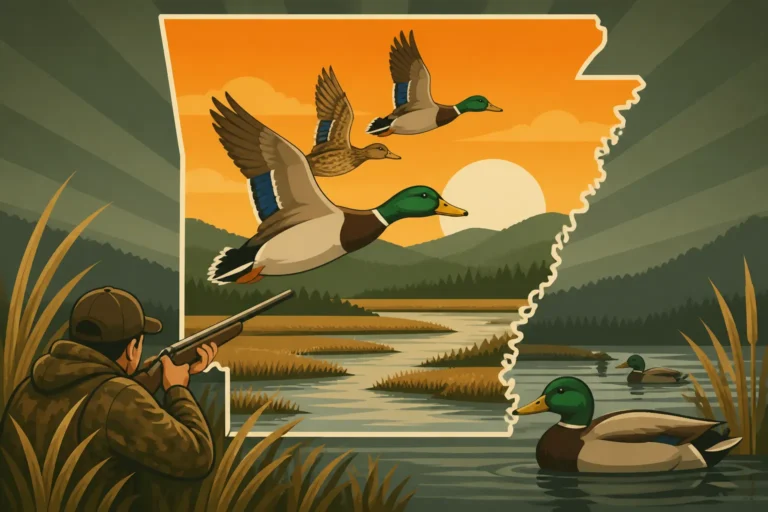
Wood Ducks and Bottomland Timber
There’s a unique charm and challenge to hunting wood ducks in Arkansas, especially when you venture deep into the bottomland timber. Unlike their mallard cousins, wood ducks often prefer the quieter, thicker confines of flooded woods, presenting a distinct set of puzzles for the avid hunter. This guide dives deep into the world of the "woodie," offering insights into their behavior, preferred habitats, and the most effective strategies for pursuing them in the rich, watery woodlands of the Natural State.
Understanding the Wood Duck: Arkansas's Jewel of the Timber
The wood duck, with its striking iridescent plumage and distinctive squealing call, is often considered one of the most beautiful waterfowl species. Beyond their stunning appearance, wood ducks possess a fascinating set of behaviors and preferences that set them apart from other dabblers found in Arkansas. They are a true treasure of the timber, preferring the intimate cover of flooded forests over wide-open fields or sprawling reservoirs.
Wood Duck Habits and Behavior
Wood ducks are creatures of routine, often flying predictable patterns between roosting, feeding, and resting areas. Unlike the big, noisy flocks of mallards that might descend upon a harvested rice field, woodies typically move in smaller, more agile groups. You'll rarely see hundreds of wood ducks piled into a single spot, but rather smaller flights of a dozen or two, silently slipping through the tree canopy. They are early risers and late flyers, making the most of the twilight hours at dawn and dusk. This crepuscular activity means that the most productive hunting times for wood ducks often align with the first and last legal shooting hours. They're quick, acrobatic flyers, darting through dense trees with surprising agility, which makes them a challenging and rewarding target for any hunter. Their diet is primarily acorns, seeds, and insects found within the timber, rather than agricultural grains. This preference for natural forage ties them intrinsically to the health and availability of flooded bottomland forests.
During the breeding season, wood ducks are cavity nesters, utilizing hollow trees for their broods, which is a key reason why mature bottomland timber is so critical to their life cycle. This dependence extends to their foraging habits; they’ll pick up acorns directly from the water's surface or dabble for insects in the shallows beneath a dense canopy. Understanding these fundamental behaviors is the first step in unlocking successful timber hunting. It helps you anticipate their movements, choose the right setup, and ultimately connect with these elusive birds. Their quickness and tendency to weave through trees also demand a different style of shooting compared to open-water duck hunting, favoring quick reflexes and a tighter shot pattern.
Identifying Wood Duck Habitat in Arkansas
If you want to find wood ducks, you need to find the right kind of timber, specifically bottomland timber. In Arkansas, this means looking for areas with mature hardwoods that flood during the duck season, providing both shelter and abundant food sources. Think dense stands of water oaks, willow oaks, pin oaks, and cypress trees. These are the classic trees that drop acorns into the water, providing a natural buffet for wood ducks. Look for areas with a varied understory as well, offering cover and diverse food options.
Crucially, wood ducks thrive in areas with shallow, slow-moving or stagnant water. They aren't typically found in deep, fast-flowing rivers or vast, open lakes, though they might use protected coves or backwaters. Instead, they prefer the flooded swamps, sloughs, and green tree reservoirs where the water depth is often no more than a few feet, allowing them to easily dabble for food. These areas provide protection from predators and wind, creating a calm sanctuary. You'll often find them in isolated pockets of water deeper within the woods, away from major boat traffic or open water. Locating these specific types of habitat is paramount, whether you're scouting public lands like the state's many Wildlife Management Areas (WMAs) or gaining access to private timber tracts. The more intricate and diverse the timber, with a mix of cover and open pockets, the more appealing it will be to wood ducks.
Why Bottomland Timber is Prime Wood Duck Real Estate
The connection between wood ducks and Arkansas's bottomland timber is undeniable. This specific ecosystem provides everything these beautiful birds need to thrive: food, shelter, and nesting opportunities. It's not just a place they visit; it's their home. Understanding why this habitat is so crucial helps hunters focus their efforts and appreciate the delicate balance of these natural areas.
Water Levels and Food Sources
The magic of bottomland timber for wood ducks truly comes alive when the water rises. Whether from seasonal rains or controlled flooding in managed impoundments, the presence of shallow water transforms the forest floor into a smorgasbord. Acorns, specifically those from red oaks like willow oaks, pin oaks, and water oaks, are a primary food source. These acorns drop from the trees into the flooded understory, making them easily accessible for dabbling wood ducks. Unlike mallards, which might tip up in deeper water, woodies prefer the shallower depths where they can readily reach sunken acorns. This makes understanding Reading Water in the Arkansas Delta crucial for success.
Beyond acorns, flooded timber provides a rich environment for aquatic insects, invertebrates, and seeds from various understory plants. The slow decay of organic matter in the water also fuels a food chain that benefits these ducks. Areas with fluctuating water levels can be particularly productive, as receding water exposes new feeding grounds, while rising water brings fresh nutrients and access to previously dry areas. The specific timing and depth of the water are often more important than the acreage of the timber itself. Too deep, and the acorns are out of reach; too shallow, and there might not be enough food or cover. The ideal conditions are often just a few inches to a couple of feet of standing water, creating that perfect balance.
The Role of Old-Growth Timber
While any flooded timber can attract wood ducks, old-growth timber or mature stands of hardwoods offer distinct advantages. Older trees often have more cavities, which are essential for wood duck nesting. These natural hollows provide safe, protected sites for hens to lay their eggs and raise their broods. The density of the canopy in mature timber also offers excellent concealment from aerial predators and provides a sheltered, calmer environment for the ducks.
Furthermore, older trees generally produce more abundant and consistent acorn crops. A healthy stand of mature oak trees can be a magnet for wood ducks for years, establishing a traditional feeding and resting area. The root systems of these older trees also contribute to the stability of the soil, which can influence how water collects and holds in the timber. This isn't to say that younger, regenerating timber is devoid of wood ducks – they will certainly use such areas if food and cover are present. However, for consistent, high-quality wood duck habitat, especially for nesting, the presence of old-growth timber is incredibly valuable. Many of Arkansas's premier duck hunting areas, particularly those managed for timber hunting, prioritize the health and longevity of these mature hardwoods, understanding their vital role in supporting not just mallards, but especially the elusive wood duck. Understanding Green Tree Reservoir Management in Arkansas provides further insight into how these critical habitats are maintained.
Scouting for Wood Ducks in the Timber
You can't shoot ducks where they ain't, and nowhere is that truer than with wood ducks in the timber. Successful wood duck hunting relies heavily on thorough scouting. These birds are creatures of habit, but their habits are often subtle and require keen observation. Don't just show up on opening day hoping for the best; put in the legwork beforehand, and you'll significantly increase your odds.
Reading Water and Topography
Scouting for wood ducks in timber isn't just about finding water; it's about finding the right water in the right place. Begin by studying topographical maps and aerial imagery. Look for low-lying areas, old sloughs, oxbow lakes, and depressions that are likely to hold water after rains or seasonal flooding. Pay attention to contour lines—a subtle dip in the terrain can mean the difference between dry ground and a prime feeding flat once water levels rise. Tools like GoHunt's mapping features can be invaluable here, allowing you to overlay topo maps with satellite imagery to identify potential flood zones, standing timber, and subtle elevation changes that might indicate productive areas.
Once you’ve identified potential spots on a map, the real work begins on the ground (or in the water). During the pre-season, or even during the season before you hunt, walk or paddle these areas. Look for signs of water lines on trees, indicating historical flood levels. Identify natural drainage patterns and bottlenecks that could funnel water and, consequently, ducks. Observe the type of timber present; are there abundant oak trees dropping acorns? Are there open pockets within the dense timber that might serve as a landing zone? The more you understand the interplay between water, elevation, and tree species, the better you’ll become at predicting where wood ducks will concentrate. These scouting efforts are critical for identifying Entry Routes Through Flooded Timber and planning your access.
Listening for the Squealers
The wood duck's distinctive call is your best friend when scouting. Unlike the quack of a mallard, a wood duck's call is a high-pitched, almost squealing "oo-eek, oo-eek." They are particularly vocal at dawn and dusk as they fly to and from their roosting and feeding areas. One of the most effective scouting methods is simply to be present in the timber at these times and listen.
Position yourself strategically near potential roosting or feeding areas before sunrise or sunset. Remain still and quiet, allowing the natural sounds of the forest to reveal themselves. When you hear those tell-tale squeals, it's a strong indicator that wood ducks are using that particular piece of timber. Note the direction of their flight, the general height they are flying, and where they seem to be landing or taking off. Often, you'll hear a flurry of calls as they pitch into a hidden pocket of water. These "listening posts" can quickly narrow down vast timber tracts to specific, productive areas. Remember that wood ducks often pick the most secluded, thickest parts of the timber for roosting, so their sounds might come from deep within what seems like impenetrable woods. Repeated observations over several days can confirm consistent flight paths and preferred areas, giving you the confidence to set up a successful hunt.
Using Technology for Timber Scouting
In today's hunting world, technology can be a huge asset for timber scouting, especially when trying to decipher the intricacies of flooded woods. Beyond traditional topographical maps, modern apps and platforms offer incredible detail that can save you countless hours of walking. As mentioned earlier, tools like GoHunt provide satellite imagery that can reveal hidden sloughs, breaks in the canopy, and even areas of thinner timber that might allow for easier access or better shooting lanes.
Use these mapping tools to mark potential entry points, identify possible routes through the timber that avoid deep water or thick brush, and pinpoint specific stands of acorn-producing oaks. Many platforms allow you to measure distances, mark waypoints for potential stand locations, and even track your own movements through the woods. This is especially helpful in dense timber where it's easy to get disoriented. You can also use weather apps to track recent rainfall and predict rising or falling water levels, directly impacting wood duck access and food availability. Before venturing into unfamiliar timber, having a well-marked map on your phone or GPS device can be a game-changer for safety and efficiency, ensuring you spend less time searching and more time observing. It’s also invaluable for understanding Scouting Arkansas Public Land Before Season, helping you to mentally plan your hunt before you ever step foot in the woods.
Effective Hunting Strategies for Timber Ducks
Hunting wood ducks in bottomland timber is a unique experience that requires a specialized approach. It's often intimate, challenging, and incredibly rewarding. Forget wide-open spreads and long-range shooting; timber hunting is about precision, stealth, and adapting to the close quarters of the flooded woods.
Decoy Spreads and Calling Techniques
When it comes to decoys for wood ducks in timber, less is often more. A large, sprawling spread suitable for a big open field will look unnatural and cluttered in the tight confines of flooded woods. Instead, focus on a small, realistic spread of 6-12 wood duck decoys, perhaps a few mallards mixed in for contrast. Place them in a natural-looking cluster in a small opening or eddy where the water is calm. Wood duck decoys are often most effective when placed near cover, mimicking ducks loafing or feeding in a secluded spot. Consider using a jerk cord on one or two decoys to add realistic motion, which can be incredibly enticing in still water. When thinking about Decoy Numbers for Timber Holes, remember that tight spaces benefit from subtlety.
Calling for wood ducks is also different from calling for mallards. While mallard calls are loud and boisterous, wood duck calls are typically quieter and more subtle. The most effective call is often a soft, rhythmic "oo-eek, oo-eek" on a specialized wood duck call, mimicking their contented squeal. Use it sparingly, especially when ducks are flying high or seem hesitant. Once they commit and begin to drop into the timber, you might use a soft chuckle or feeding call to draw them closer. A common mistake is overcalling; a few well-placed, authentic calls are far more effective than a barrage of noise. Knowing Calling Ducks in Tight Arkansas Timber is a skill developed over many hours in the blind.
Entry and Exit Considerations
One of the most overlooked aspects of timber hunting, especially for wood ducks, is how you get in and out of your spot. Wood ducks are notoriously wary, and any disturbance, whether visual or auditory, can easily spook them. This is why planning silent entry and exit routes is paramount. Ideally, you want to approach your hunting area long before legal shooting light, under the cover of darkness. This often means wading in, sometimes through thick brush and shallow water, so appropriate waders and headlamps are essential. For a good guide on this, check out Entry Routes Through Flooded Timber.
Avoid using noisy boats or ATVs unless absolutely necessary and ensure they are parked far enough away that their sounds won't carry to your hunting spot. If you must use a boat, paddle or use an electric trolling motor silently once you're close to your destination. The same goes for exiting; wait until the ducks have cleared out or until late morning when activity has naturally subsided before making a ruckus. Disturbing the birds on your way out can educate them and make them much harder to hunt in the future. Stealth is your biggest asset in the timber, both during the hunt and during your movements to and from your stand.
Stand Placement and Concealment
Choosing the right stand location and ensuring superior concealment are critical for timber duck hunting success. Unlike field hunting where large blinds might be acceptable, timber hunting demands a more natural approach. Look for natural cover—a cluster of trees, a downed log, or a thicket of brush—that breaks up your outline. Your goal is to blend seamlessly into the environment. When considering Setting Up on a Canopy Opening, remember that wood ducks will drop into any available clear space.
Think about your backdrop: a dark, shadowy area will conceal you better than being silhouetted against a brighter background. Build a simple blind out of natural materials like branches and palmettos, or simply stand perfectly still against a tree. Pay close attention to the sun's position; you want the sun at your back, not in the ducks' eyes or yours. Face the direction you expect the ducks to approach from, which is often into the wind.
Elevating yourself slightly, perhaps on a small portable seat or by standing on a submerged log, can give you a better line of sight over the water and allow for clearer shots over the brush. However, always prioritize concealment. If elevating means exposing yourself, it's not worth it. The key is to disappear into the timber, becoming just another part of the flooded woods until it's time to rise and take your shot. This careful planning and execution will pay dividends when those fast-flying woodies zip through the canopy.
| Wood Duck vs. Mallard Hunting in Timber | Wood Duck Approach | Mallard Approach (in Timber) |
|---|---|---|
| Typical Group Size | Small flights (2-12 birds) | Larger flights (10-50+ birds) |
| Preferred Habitat | Dense, shallow, flooded hardwoods, sloughs | Flooded hardwoods, but also open holes within timber |
| Flight Pattern | Fast, agile, darting through trees, often low | Can be higher, will circle openings, but also timber-level |
| Calling Style | Soft, subtle "oo-eek" squeals, minimal calling | Aggressive hail calls, feeding chuckles, greeting calls |
| Decoy Spread | Small (6-12), mostly wood duck decoys, natural cluster | Larger (12-24+), mostly mallard decoys, open spread |
| Shot Opportunities | Quick, close-range shots, often through branches | Closer-range shots as they commit, more time to shoot |
| Light Preference | Strong preference for low light (dawn/dusk) | Strong at low light, but also active mid-morning |
| Stealth Required | Extremely high – easily spooked | High – will flair from movement |
Disclaimer
This article is for general informational purposes only and does not constitute professional advice. Laws, prices and regulations vary by location and change over time. Consult a qualified professional for guidance on your specific situation.