Gray Versus Fox Squirrels in Arkansas
For many hunters in Arkansas, a squirrel hunt is often the first foray into the woods, a cherished tradition that teaches patience, woodsmanship, and the satisfaction of a successful harvest. Yet, for all the commonality of squirrel hunting, it's easy to mistake one species for the other, or more importantly, to misunderstand the subtle differences that can make or break a hunt. This guide will dive deep into the distinct characteristics, preferred habitats, and behaviors of Arkansas's two most popular game squirrels – the gray squirrel and the fox squirrel – helping you better identify, locate, and ultimately outsmart them in the field.
Understanding the Physical Distinctions
While both gray and fox squirrels are tree squirrels found across Arkansas, they possess several key differences in appearance that, once you know what to look for, make them quite easy to tell apart. These aren't just minor variations; they reflect deeper biological differences that influence everything from their preferred diet to how they interact with their environment.
Size and Body Shape
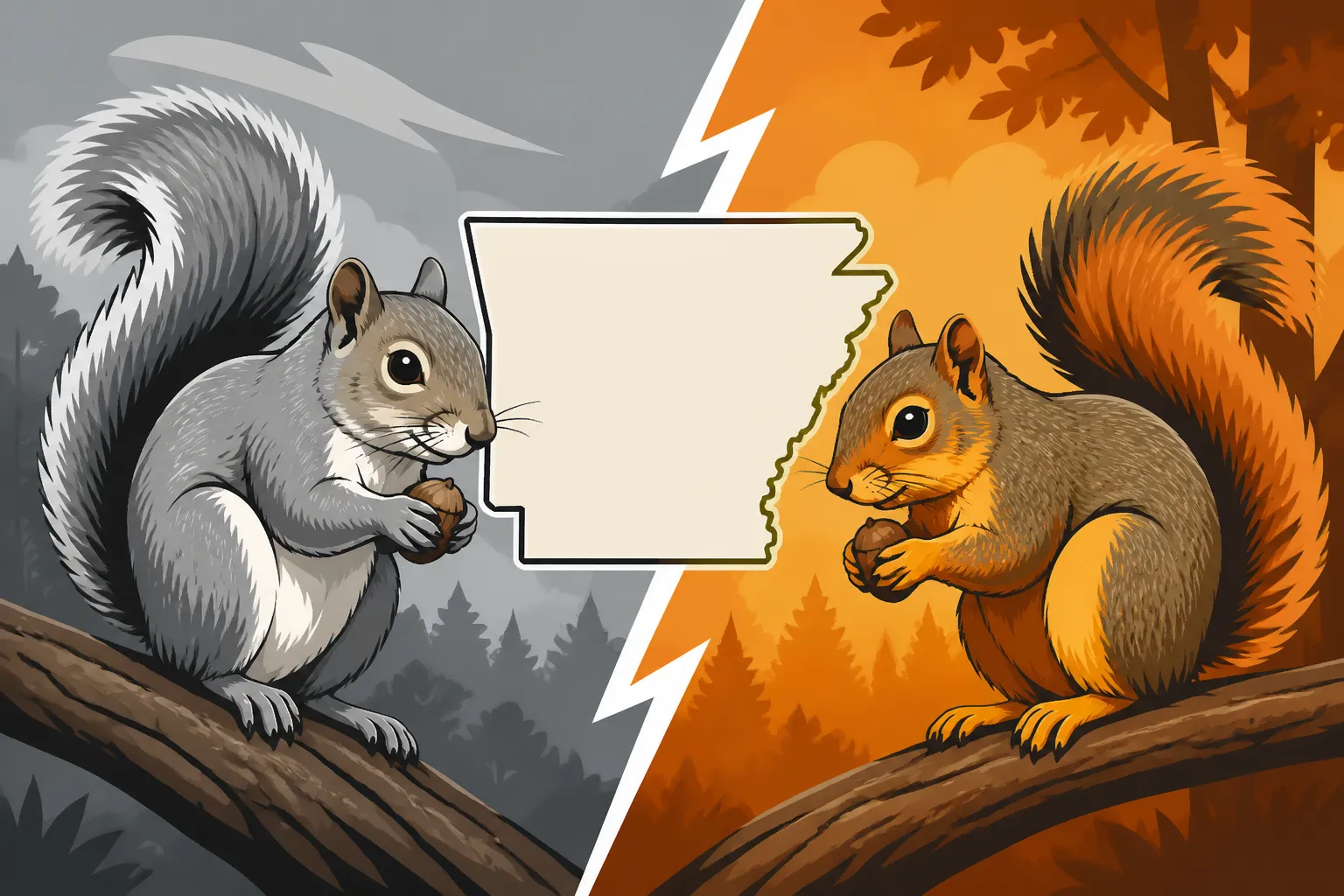
The most immediate distinction you'll likely notice between the two species is their overall size. Gray squirrels are generally smaller and more slender. Think of them as the more agile, acrobatic members of the squirrel family. An adult gray squirrel typically weighs between 1 and 1.5 pounds and measures about 18 to 20 inches from nose to tail tip. Their bodies are built for quick bursts of speed and nimble movements through dense tree canopies.
Fox squirrels, on the other hand, live up to their name in size. They are significantly larger, often appearing chunky and robust. An adult fox squirrel can weigh anywhere from 1.5 to over 3 pounds, and stretch up to 25 inches in total length. Their bigger frame gives them a somewhat slower, more deliberate movement compared to their gray counterparts, though they are still remarkably quick when they need to be. This size difference isn't just cosmetic; it impacts their caloric needs and how they forage, often leading them to different food sources and territories.
Coat Coloration and Markings
Beyond size, their fur offers clear identification markers. Gray squirrels, as their name suggests, typically have a coat that is predominantly gray, often with a brownish or reddish tint along their back and flanks. Their belly is usually white or light gray. What truly stands out on a gray squirrel is its tail – a magnificent, bushy plume, often edged with white, that it uses for balance, communication, and warmth.
Fox squirrels display a much wider range of coloration, making identification a bit trickier but still distinct. Their fur can vary from a grizzled gray-brown to a striking reddish-orange or even black, particularly on their undersides, which stand in stark contrast to the white belly of a gray squirrel. You might see fox squirrels with rusty red bellies and flanks, or even completely black phases in some areas. Their tail is also bushy, but typically a rich reddish-orange or tawny color, often without the distinct white edging seen on a gray squirrel's tail. These color variations can sometimes lead to confusion, especially with lighter-colored fox squirrels, but the reddish undertones are usually a giveaway.
Head and Ear Features
Take a closer look at their heads, and you'll find more subtle cues. Gray squirrels tend to have a more refined, delicate head shape with proportionally smaller ears. In winter, you might notice tufts of white fur behind their ears, which can be a helpful identifying feature. Their eyes are typically dark and round, giving them a curious, alert expression.
Fox squirrels, due to their larger overall size, naturally have a more robust head. Their ears are often a bit larger than a gray squirrel's, and while they might also have some winter ear tufts, they are usually less pronounced than those on a gray. One characteristic often associated with fox squirrels is a patch of white fur around their nose and mouth, sometimes extending up towards their eyes, which can create a "mask-like" appearance. This facial marking is a very reliable indicator when present.
Here's a quick comparison table to keep in mind:
| Feature | Gray Squirrel | Fox Squirrel |
|---|---|---|
| Average Weight | 1 – 1.5 lbs | 1.5 – 3 lbs (or more) |
| Average Length | 18 – 20 inches | 20 – 25 inches |
| Body Build | Slender, agile | Robust, stocky |
| Main Color | Predominantly gray, brownish/reddish tint | Varied: grizzled gray-brown, reddish-orange, black |
| Belly Color | White or light gray | Rusty red, tawny, or even black |
| Tail Color | Gray, bushy, often white-edged | Reddish-orange, tawny, bushy, less white-edged |
| Ear Tufts | Prominent white tufts in winter (behind ears) | Less prominent |
| Facial Marks | Generally uniform gray | Often white patch around nose/mouth |
Habitat Preferences and Range in Arkansas
Knowing what a gray and fox squirrel look like is only half the battle. To successfully hunt them, you need to understand where they prefer to live. While there's some overlap, these two species generally gravitate towards different types of Arkansas woodlands, which significantly impacts how and where you'll find them.
Gray Squirrel Strongholds: Dense, Mature Hardwoods
Gray squirrels are creatures of dense, mature forests. If you're hunting in areas with extensive, unbroken tracts of hardwood timber, especially in the Ozarks or Ouachitas, you're likely in prime gray squirrel country. They thrive in forests with a high canopy, preferring trees like oaks, hickories, and beech that produce abundant mast crops. These squirrels are often found in bottomland hardwood forests along rivers and creeks, where the timber is old and the understory can be thick. You might be still-hunting Arkansas pine country, but if there's an older hardwood creek bottom running through it, that's where the gray squirrels will concentrate.
Their preference for mature hardwoods provides them with several advantages:
- Mast Production: Old growth oaks and hickories are prodigious producers of acorns and nuts, which form the bulk of a gray squirrel's diet, especially in the fall and winter.
- Tree Cavities: Mature trees offer plenty of natural cavities for denning and nesting, crucial for shelter from predators and harsh weather.
- Canopy Travel: The interlocking canopies of dense forests allow gray squirrels to travel extensively from tree to tree without ever touching the ground, a key evasive tactic.
When scouting for gray squirrels, look for tell-tale signs like freshly cut nut shells at the base of trees or in mossy logs, especially around groups of mature oaks and hickories. You'll also want to pay attention to the sounds of falling nuts and the rustling of leaves in the canopy above. Remember that Squirrel Hunting Arkansas Hardwoods often yields the best results for these quick, agile tree dwellers.
Fox Squirrel Territory: Open Woods and Edges
Fox squirrels, with their larger size and more terrestrial tendencies, are more adapted to open woodlands, forest edges, and even agricultural areas that border timber. You'll find them more commonly in mixed pine-hardwood forests, woodlots interspersed with fields, and in the more fragmented landscapes of the Delta or south Arkansas. They are perfectly at home in areas where the forest canopy is less continuous, forcing them to spend more time on the ground foraging.
Good places to look for fox squirrels include:
- Pine Plantations: While they prefer some hardwoods, fox squirrels will readily utilize pine plantations, especially those with an older growth understory or nearby oak stands. Hunting Turkeys in Ouachita Pine often reveals good fox squirrel populations as well.
- Field Edges: Look for them along the tree lines that border agricultural fields, particularly corn or soybean fields, where they can forage for dropped grains.
- Scattered Timber: They thrive in areas with scattered large trees, fence rows, and small woodlots, places where a gray squirrel might feel too exposed.
When scouting for fox squirrels, you might notice them more readily on the ground, scurrying across open patches or along logging roads. They're often seen on the larger branches of trees, moving with a slower, more deliberate pace. Their preference for these more open habitats means they often have to contend with different predators than gray squirrels, and their larger size can be a defensive advantage in such environments. Reading Cuttings Under an Oak is still important, but you'll find their activity spread out more broadly.
Behavioral Traits and Hunting Implications
Beyond their physical appearance and habitat choices, gray and fox squirrels exhibit distinct behaviors that can greatly influence your hunting strategy. Understanding these nuances will help you predict their movements and increase your chances of success.
Gray Squirrel Agility and Evasion
Gray squirrels are masters of the canopy. Their primary defense mechanism is speed and agility in the trees. When startled, a gray squirrel will often "hide" by flattening itself against a tree limb or quickly circling the trunk, always keeping the tree between itself and the perceived threat. They can leap incredible distances between branches and scramble up and down trees with astonishing speed. This arboreal lifestyle means they spend a significant amount of time in the higher reaches of the forest.
For the hunter, this translates to a need for keen observation and patience.
- Still-Hunting: Moving slowly and quietly through mature hardwood forests, pausing frequently to listen and scan the canopies, is often the most effective method for gray squirrels. Listen for the rustling of leaves, the chatter of other squirrels, or the tell-tale thump of a falling nut.
- Patience at the Tree Base: If a gray squirrel "woods up" a tree and you lose sight of it, don't give up. Sit quietly at the base of the tree for a few minutes. Often, curiosity will get the better of it, and it will eventually peek around the trunk or resume its activities. A good pair of binoculars can also be invaluable for picking them out of dense foliage.
- Calling: Some hunters have success with squirrel calls that imitate a squirrel's chatter or distress, drawing them out of hiding. This can be particularly effective during the early season or when squirrels are actively feeding.
Their reliance on speed and cover means you'll often be taking shots at moving targets or trying to catch them when they pause momentarily. Ethical hunting demands you only take shots you're confident in, especially high in the canopy.
Fox Squirrel Terrestrial Habits and Foraging
Fox squirrels, while still very capable climbers, spend a considerably greater amount of time on the ground. Their larger size means they're less adept at navigating the very smallest branches, and they're often seen foraging on the forest floor for nuts, seeds, mushrooms, and even insects. When alarmed, a fox squirrel might run along the ground for a short distance before eventually climbing a tree, often choosing a larger, more isolated one. They are also known to bury caches of food in the ground, a behavior essential for winter survival.
Hunting fox squirrels often involves different tactics:
- Spot and Stalk: In more open woodlots or along field edges, you might spot a fox squirrel on the ground from a distance. A slow, careful stalk can bring you within shooting range. Using a good rangefinder is critical in these situations.
- Ambush Points: Identifying natural travel corridors, such as game trails along a fence row or the edge of a timber block bordering a cornfield, can create excellent ambush opportunities. Find a comfortable spot with good visibility and wait for them to appear.
- Focus on the Ground: While gray squirrels demand eyes in the canopy, for fox squirrels, you'll need to pay close attention to the forest floor and lower branches. Look for movement in the leaf litter.
- Patience, Again: Even though they spend more time on the ground, fox squirrels can still be wary. If one sees you, it might freeze or move to the backside of a tree. Give it time, and it might reappear or move on.
The greater time fox squirrels spend on the ground also means they are more vulnerable to terrestrial predators, and their excellent eyesight helps them detect danger from a distance. Always be aware of your surroundings, especially if you're Hunting Arkansas Cutovers and Clearcuts, where visibility might be more open.
Why Distinguishing Them Matters to Hunters
At first glance, it might seem like a squirrel is just a squirrel when you're out hunting for small game. After all, both provide delicious table fare and a rewarding challenge. However, understanding the differences between gray and fox squirrels isn't just about showing off your nature knowledge; it can directly impact your hunting success and overall experience in the Arkansas woods.
Tailoring Your Hunting Strategy
As we've explored, gray and fox squirrels have distinct preferences for habitat and exhibit different behavioral patterns. Knowing which species you're primarily targeting allows you to tailor your strategy for maximum effectiveness. If you're heading into a dense, mature bottomland hardwood forest, you'll be expecting to find gray squirrels high in the canopy. This means you'll likely want to carry a lighter, more agile firearm, like a .22 rifle or even a small gauge shotgun, capable of quick swings and accurate shots at elevated, often fast-moving targets. You'll move slowly, listening intently, and constantly scanning the upper reaches of the trees.
Conversely, if your chosen spot is a more open pine-hardwood mix bordering a field, or a woodlot with scattered, large trees, you're more likely to encounter fox squirrels foraging on the ground or perched on thicker limbs. Here, a rifle with a scope might be more advantageous for longer, more deliberate shots at a relatively stationary target. You'll spend more time looking at the forest floor and along lower branches, perhaps even setting up in a spot with good visibility over a potential feeding area. This strategic thinking, informed by species identification, is a hallmark of an experienced hunter and can drastically improve your harvest rates. Utilizing tools like GoHunt maps or aerial photography can help you identify these specific habitat types before you even step foot in the woods, allowing you to prepare accordingly.
Enhancing Your Woodsmanship
Being able to identify the specific species of squirrel you encounter sharpens your overall woodsmanship skills. It forces you to pay closer attention to the subtle details of your surroundings – the types of trees, the density of the canopy, the presence of specific food sources, and even the sounds and movements of the wildlife. This heightened awareness translates to better success not just with squirrels, but with other game species as well. For example, understanding what constitutes prime gray squirrel habitat can also give you clues about where to look for other forest-dwelling creatures that share similar preferences, such as turkeys or deer that feed on acorns.
Furthermore, observing the behavior of each species helps you understand the interconnectedness of the ecosystem. You might notice how a particular acorn crop favors one species over another in a given year, or how different squirrel species react to varying levels of hunting pressure. This kind of ecological understanding deepens your appreciation for nature and makes you a more knowledgeable and effective hunter.
Meeting Bag Limits and Regulations
While both gray and fox squirrels typically fall under the same general small game regulations in Arkansas, including combined bag limits, there might be specific instances or future regulation changes where distinguishing between species could become more important. For instance, if populations of one species were to decline in a particular region, specific limits might be implemented. While this is not currently the case for squirrels in Arkansas, staying informed and being able to correctly identify your harvest is always a responsible practice for any hunter.
It also speaks to the broader principle of ethical hunting and responsible resource management. Knowing what you're harvesting, rather than just pulling the trigger on "a squirrel," demonstrates a respect for the game and the regulations designed to protect wildlife populations. This level of detail helps ensure sustainable hunting opportunities for future generations, continuing the tradition of Small Game and Squirrel Hunting in Arkansas.
The Joy of the Squirrel Hunt
Ultimately, the act of squirrel hunting in Arkansas is about more than just filling a bag; it's about connecting with the natural world, honing your outdoor skills, and enjoying the simple pleasure of a day in the woods. Whether you're chasing the high-flying gray squirrels through dense hardwood canopies or stalking the ground-dwelling fox squirrels along the edges of a pine stand, each presents its own unique challenge and reward.
Taking the time to learn the differences between these two fascinating species, both in appearance and behavior, will not only make you a more effective hunter but also a more appreciative observer of Arkansas's rich wildlife. So next time you're out there, pause for a moment, look closely, and listen. The woods are full of stories, and knowing the players makes those stories all the more vivid and exciting. Whether you're using detailed maps from GoHunt or simply your own two eyes, the quest to understand the nuances of the game you pursue makes every outing a richer experience.
Disclaimer
This article is for general informational purposes only and does not constitute professional advice. Laws, prices and regulations vary by location and change over time. Consult a qualified professional for guidance on your specific situation.