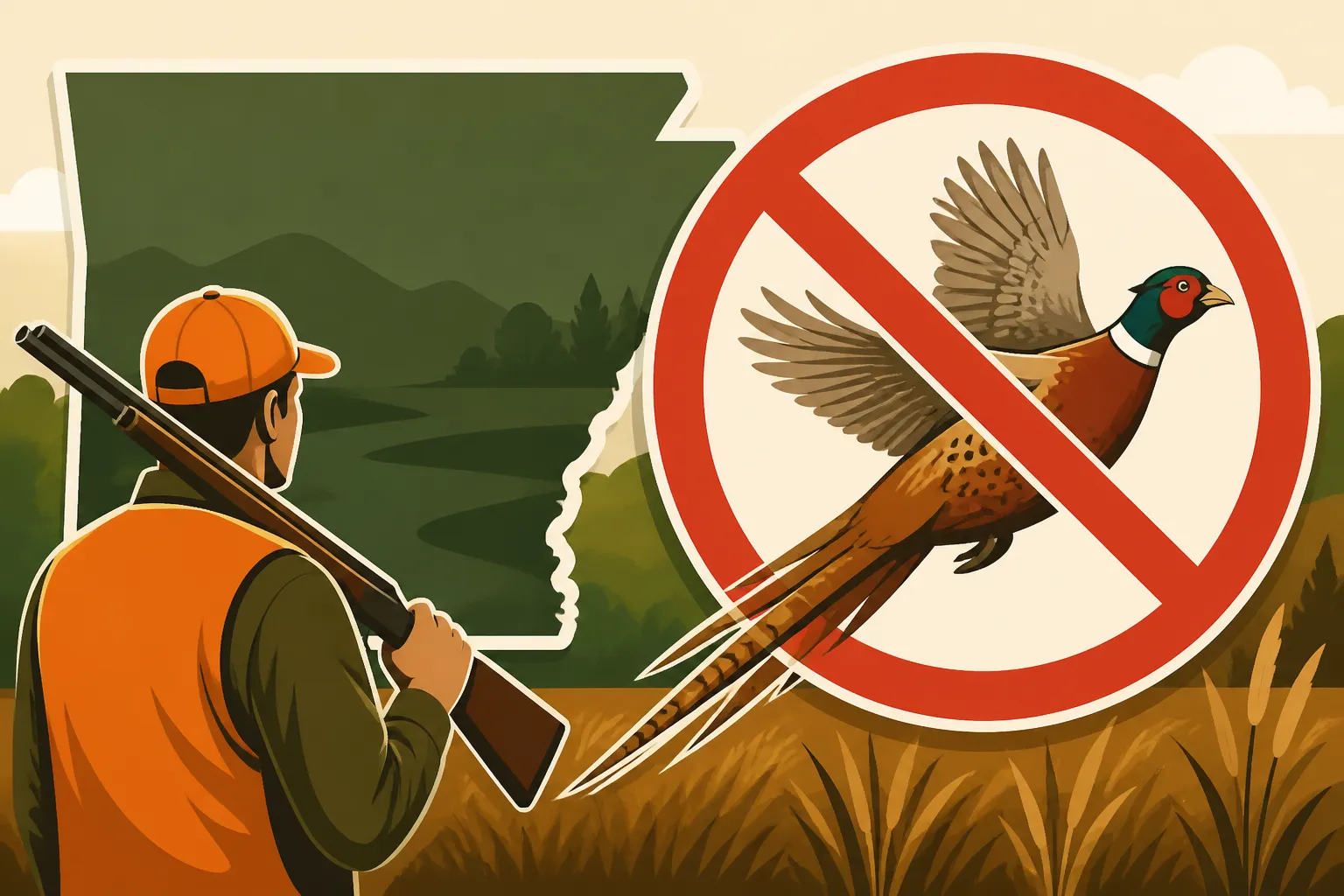
Why Arkansas Has No Pheasant Season
If you’re a hunter who grew up chasing ring-necked pheasants in places like the Dakotas, Iowa, or Kansas, you might look at Arkansas’s expansive agricultural fields and think, “Surely there must be pheasants here!” It’s a natural assumption, especially when you see the endless rows of beans and rice. But the reality is, Arkansas doesn't have a wild pheasant population, and consequently, no pheasant hunting season. This guide will dive deep into why this iconic game bird hasn't found a permanent home in the Natural State, exploring the crucial habitat requirements, the challenges Arkansas presents, and why efforts to introduce them have never really taken hold.
The Core Question: Why No Pheasants in Arkansas?
The simplest answer to why Arkansas lacks a pheasant season is that ring-necked pheasants are not native to this state, and more importantly, the environmental conditions here just aren't quite right for them to establish self-sustaining wild populations. It’s a frustration many hunters, particularly those who’ve moved here from traditional pheasant country, often express. You see the open fields, the fencerows, and the occasional brushy creek bottom, and it feels like pheasant habitat. However, a deeper look reveals that the subtle nuances of habitat, climate, and historical land use in Arkansas don't align with what these hardy birds need to truly thrive, reproduce, and expand their numbers year after year.
Unlike species such as White-Tailed Deer Across Arkansas or Wild Turkeys in Arkansas, which are native and well-adapted to the diverse landscapes here, pheasants simply haven't been able to make Arkansas their permanent home, despite some historical attempts at introduction. It's not for a lack of desire on the part of hunters, but rather a testament to the specific and often demanding ecological needs of the ring-neck. This isn't just about having food; it's about having the right kind of food, the right kind of cover, and the right kind of climate conditions all year long, especially during critical nesting and winter survival periods.
Habitat Requirements of Ring-necked Pheasants
To understand why pheasants don't call Arkansas home, it helps to first understand what they absolutely do need to flourish. These birds are creatures of specific landscapes, and their survival hinges on a delicate balance of diverse habitat components available year-round. It's far more complex than just having a field to run in.
Dense Nesting and Brood-Rearing Cover
One of the most critical factors for pheasant survival is ample, undisturbed nesting cover. We're talking about vast expanses of tall, dense grasses, native prairies, hayfields, or undisturbed Conservation Reserve Program (CRP) lands. Hens need secure spots to lay their eggs, hidden from predators and protected from agricultural disturbances like mowing or spraying during the nesting season (typically late spring to early summer). Once the chicks hatch, these same areas provide crucial brood-rearing cover, filled with insects for protein-rich diets and protection from aerial predators.
In many parts of Arkansas, especially the fertile Delta, agricultural practices are often "clean-farmed." Fields are intensively managed, leaving little unkempt ground. While you might find some ditches or fencerows, these are often too narrow, too linear, and too frequently disturbed to provide the consistent, broad patches of secure nesting cover pheasants require. For instance, while you might find a bit of cover when Hunting Doves on an Arkansas Field, it's rarely the persistent, dense cover pheasants need for nesting and survival over winter.
Winter Thermal and Escape Cover
Beyond nesting, pheasants need substantial winter cover that can provide protection from extreme weather, especially snow and ice, and offer refuge from predators. This often includes dense cattail marshes, thickets of multiflora rose, large patches of heavy brush, or unplowed cornfields that remain standing through the cold months. This cover is vital for thermal regulation and evading raptors or ground predators when other vegetation has died back or been harvested.
Arkansas's winters are generally milder than the traditional pheasant belt, but we still get cold snaps and occasional ice. However, the type of winter cover isn't widespread. While our Arkansas Wetland Acres Managed for Ducks provide incredible habitat for waterfowl, they don't typically offer the upland, dense, brushy cover pheasants need to weather cold spells. The landscape might have some woody cover, but often not in the expansive, connected patches that offer true pheasant protection.
Reliable Food Sources and Grit
Pheasants are omnivores, and their diet consists of grains, seeds, insects, and tender plant shoots. They thrive in areas with diverse agricultural crops like corn, soybeans, and wheat, alongside weed seeds and insects from fallow fields or field edges. They also need access to grit – small pebbles or sand – to help grind their food in their gizzards.
While Arkansas certainly has abundant agricultural crops, especially in the Delta, the primary crops like rice, soybeans, and cotton don't always offer the same diversified year-round food matrix or readily available weed seeds as corn and small grain rotations common in prime pheasant states. Furthermore, the intensity of farming often means fewer "waste" grains are left behind, and extensive use of herbicides can reduce the availability of weed seeds and insects. Understanding the availability of food sources is crucial for any game species, and tools like GoHunt can help hunters analyze habitat composition and potential food plots for species that do thrive here.
Arkansas's Landscape and Climate Challenges
Arkansas is a beautiful state with incredible natural resources, but its unique geography and climate present significant hurdles for a non-native species like the ring-necked pheasant. These factors combine to create an environment that, while perfect for many native game animals, simply doesn't align with the pheasant's ecological niche.
Climate: Hot, Humid Summers and Mild Winters
Pheasants generally prefer climates with cold, snowy winters that trigger their need for dense thermal cover and more moderate, less humid summers. Arkansas, by contrast, is known for its long, hot, and often very humid summers. This isn't just uncomfortable for humans; it can be stressful for ground-nesting birds and young chicks, potentially impacting brood survival and overall bird health. The high humidity can also foster disease or parasite issues that pheasants in drier, cooler climates might not face as severely.
Our winters, while they can have cold snaps, are typically milder and often lack the consistent, deep snow cover that pheasants in northern states are adapted to. This means that the specific benefit of dense winter cover as a refuge from heavy snow isn't as critical, and pheasants might disperse more widely, becoming more vulnerable to predation without the concentration effect that deep snow can create.
Dominant Landscapes Not Suited for Pheasants
Arkansas boasts incredibly diverse landscapes, from the rugged mountains of the Ozarks and Ouachitas to the flat, fertile plains of the Delta. Each of these regions, while rich in wildlife for native species, poses challenges for pheasants.
- The Delta: While agriculturally intensive, the Delta’s dominant crops (rice, soybeans, cotton) and farming practices don't consistently provide the varied, dense, and undisturbed cover pheasants need. Much of the timber in the Delta is managed as Green Timber Duck Hunting in Arkansas, where water levels fluctuate, making it unsuitable for a primarily upland bird. Even when rice fields are harvested, as explored in Hunting Rice Fields After Harvest, the remaining stubble might offer some food, but it rarely provides the long-term, multi-layered cover pheasants need for year-round survival and nesting.
- Ozarks and Ouachitas: These regions are predominantly heavily forested, characterized by steep terrain, rocky outcrops, and dense hardwoods or pine plantations. A ground-dwelling bird that thrives in open grasslands, pheasants simply cannot adapt to this environment. If you've spent any time Hunting Ozark Ridges and Hollows for Deer, you know how thick and vertical the landscape can be – a far cry from a pheasant's preferred rolling plains. Similarly, Hunting South Arkansas Pine Country for deer involves navigating thick stands of timber, not the open fields and brushy edges pheasants require.
- Predation Pressure: Arkansas supports a healthy population of predators perfectly suited to hunting ground-dwelling prey. Coyotes, bobcats, foxes, raccoons, and opossums are abundant across the state. Without extensive, high-quality, continuous escape cover, a non-native, ground-nesting bird like the pheasant would face immense predation pressure on eggs, chicks, and adult birds. This is a significant factor, as managing Coyote and Bobcat Calling in Arkansas is a popular hunting activity for a reason – these predators are widespread and effective. For another ground-nesting bird, the Arkansas Bobwhite Population Trend shows how even native species struggle with habitat loss and predator pressure.
Efforts and Realities: Can Pheasants Be Introduced?
The idea of introducing a popular game bird like the pheasant to new areas is certainly appealing, and various state wildlife agencies and private groups have attempted it over the years. However, the reality of establishing a self-sustaining wild pheasant population in Arkansas faces significant practical and ecological hurdles.
Historical Attempts and Their Outcomes
While there have been localized efforts over time, often driven by private individuals or smaller clubs, widespread, successful pheasant introductions in Arkansas have never materialized. Birds released into unsuitable habitat tend to suffer high mortality rates from predation, lack of appropriate food and cover, and stress from an unfamiliar environment. They might survive for a short period, and even reproduce once, but without the consistent ecological support system, the population eventually dwindles and disappears. This is a common pattern for many non-native species when introduced outside their natural range without ongoing, intensive management.
The Cost-Benefit Analysis of Wildlife Management
Wildlife agencies, like the Arkansas Game and Fish Commission (AGFC), must allocate their limited resources to manage and conserve species that either thrive naturally in the state or have a realistic chance of successful restoration. This means focusing on native species like deer, turkey, quail, and various waterfowl, where habitat improvements and management efforts yield measurable and sustainable results. For example, substantial efforts are dedicated to Arkansas Quail Restoration Efforts because quail are native to Arkansas and respond positively to targeted habitat work.
Introducing pheasants would require a massive, sustained investment in habitat conversion, ongoing stocking programs, and intensive predator control, with a low probability of achieving a truly wild, self-sustaining population that could support a public hunting season. From a conservation standpoint, it makes more sense to invest in species that are ecologically aligned with Arkansas's natural environment.
The Challenge of Self-Sustaining Populations
The ultimate goal for any game bird introduction is to create a self-sustaining population that reproduces naturally without continuous human intervention. For pheasants in Arkansas, achieving this is incredibly difficult. Even if specific habitat pockets could be created on a small scale, maintaining the necessary conditions over large enough areas to support a viable population for public hunting would be an immense, ongoing challenge.
You might find private hunting clubs or shooting preserves that release pen-raised pheasants for "put-and-take" hunting experiences. This is an entirely different scenario from a wild pheasant season, as these birds are managed more like livestock for a single recreational purpose and do not represent a wild population. When considering any hunting trip, whether guided or self-guided, understanding the species you're pursuing and their local population dynamics is critical, and resources like GoHunt can provide invaluable data and insights for planning your hunts effectively. For instance, you could use mapping tools to scout for areas that might theoretically hold pheasants, only to find that the landscape is dominated by Arkansas Feral Hog Problem, which would certainly not help any ground-nesting birds.
Comparison Table: Pheasant Habitat Requirements
To further illustrate the disconnect, here’s a comparison of ideal pheasant habitat characteristics versus general conditions in Arkansas:
| Habitat Factor | Ideal Pheasant Range (e.g., Midwest/Northern Plains) | Arkansas (General Conditions) |
|---|---|---|
| Native Status | Introduced, but well-established and naturalized | Non-native, not naturalized |
| Nesting Cover | Expansive, undisturbed dense grasses, CRP, hayfields, natural prairie | Limited, fragmented; often mowed, grazed, or clean-farmed |
| Winter Thermal Cover | Large blocks of cattails, heavy brush, standing corn, woody draws | Patchy, less dense; winters often not severe enough to force concentration |
| Food Sources | Diverse grains (corn, wheat), weed seeds, insects in varied rotation | Monoculture-dominated (rice, soybeans, cotton), fewer varied seeds |
| Climate | Cold, snowy winters; moderate, drier summers | Mild to occasional cold winters; long, hot, humid summers |
| Predator Pressure | Present, but balanced by extensive, high-quality cover | Significant, can overwhelm fragmented cover resources |
| Successful Intro. | Yes, self-sustaining populations widespread | No, efforts have not led to self-sustaining populations |
Ultimately, while the thought of pheasant hunting in Arkansas might be a fun daydream, the ecological realities of the state simply don't align with what these beautiful birds need to thrive in the wild. Our focus remains on managing and enjoying the incredible native species and established populations that truly call Arkansas home, like our robust deer, turkey, and waterfowl populations, or even other small game like Bobwhite Quail in Arkansas and Small Game and Squirrel Hunting in Arkansas.
Disclaimer
This article is for general informational purposes only and does not constitute professional advice. Laws, prices and regulations vary by location and change over time. Consult a qualified professional for guidance on your specific situation.