Hunting Upper Buffalo Wilderness
Hunting in a designated wilderness area like the Upper Buffalo Wilderness can feel incredibly daunting. You might envision impenetrable thickets, endless miles from any road, and a complete lack of deer or turkey because of the sheer remoteness and difficulty. It's easy to get discouraged before you even start, thinking it's only for the most extreme backcountry pros. But don't let the "wilderness" label scare you off entirely; this guide will walk you through what to expect and how to approach hunting within the Upper Buffalo Wilderness in Arkansas, helping you understand its unique challenges and rewarding opportunities.
Understanding the Upper Buffalo Wilderness
When you hear "wilderness," your mind probably conjures up images of vast, untouched landscapes, and you're not wrong. But it's important to differentiate exactly what that means in the context of hunting, especially in Arkansas. The Upper Buffalo Wilderness isn't just "rough country"; it's a federally designated area with specific rules that shape how you can hunt there.
Designated Wilderness Area vs. General Public Land
The Upper Buffalo Wilderness, managed by the U.S. Forest Service within the Ozark National Forest, holds a special designation under the Wilderness Act. This means it's managed to preserve its wild character, free from permanent improvements and motor vehicle access. Think of it as public land with an extra layer of protection, designed to offer a truly primitive, unmechanized experience. This is different from a typical Wildlife Management Area (WMA) or even general National Forest land where you might find more roads, designated campsites, or less restrictive access. For instance, while you might be able to use a side-by-side or e-bike on some National Forest trails, those are strictly off-limits in a designated wilderness. This distinction is crucial because it directly impacts your hunting methods, gear choices, and overall approach. You'll truly be relying on your own two feet and the gear you can carry.
The Landscape and Terrain Challenges
Nestled in the rugged Ozark Mountains of northwest Arkansas, the Upper Buffalo Wilderness is characterized by steep, heavily forested ridges, deep hollows, and dramatic limestone bluffs carved by the Buffalo River and its tributaries. Elevations can vary dramatically, meaning you'll be doing a lot of climbing and descending. The forest cover is dense, primarily composed of oaks, hickories, and pines, often interspersed with thick undergrowth. Water sources, though plentiful, can be tricky to navigate, with creek beds that range from dry to raging depending on recent rainfall. This isn't flat Delta farmland; it's a vertical world that demands physical fitness and careful navigation. Expect rocky terrain, slippery leaves, and limited visibility in many areas, making for a physically demanding but incredibly rewarding hunting experience. It’s the kind of place where a good topo map and an app like onX Hunt are invaluable for understanding the contours before you even step foot in it.
Legal Hunting Opportunities and Species
Despite its wilderness designation, the Upper Buffalo Wilderness is open to public hunting, offering opportunities for several popular game species. However, the "wilderness" rules do impose some unique limitations you absolutely need to be aware of. You're not just hunting public land; you're hunting wilderness public land.
General Hunting Regulations Within Wilderness Boundaries
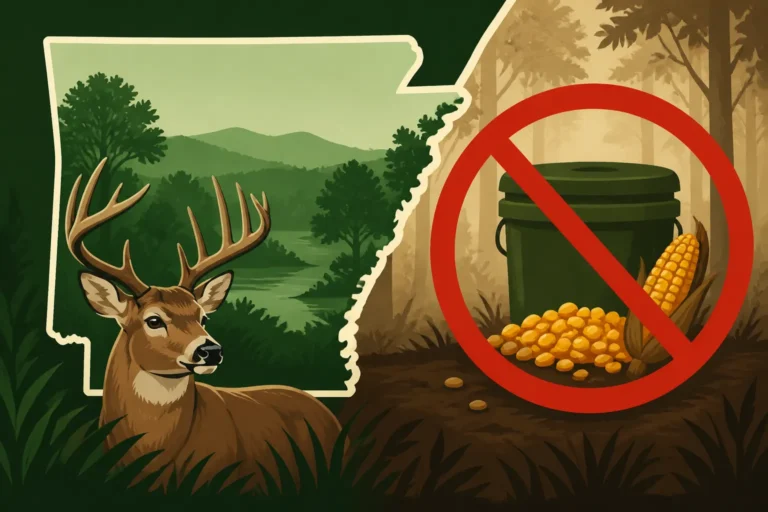
Because it's within the Ozark National Forest, state hunting regulations for Arkansas apply here, including specific deer zones, turkey seasons, and general bag limits. You'll still need your valid Arkansas Hunting Licenses and What They Cost and adhere to all statewide rules. However, federal wilderness rules layer on top of those. For example, motor vehicles, including ATVs and electric bicycles, are prohibited. You can't use chainsaws for clearing trails or setting up camp. Permanent structures like fixed stands or blinds are not allowed, and you're often limited to temporary setups. The use of game cameras or trail cameras is typically forbidden in federal wilderness areas, which is a big shift from many other public lands where they're commonplace for scouting. And critically, most wilderness areas prohibit the use of manufactured baits or feeding of wildlife. Always double-check the latest rules with both the Arkansas Game and Fish Commission (AGFC) and the U.S. Forest Service before heading out, as regulations can change.
Key Game Species to Pursue
The primary game species you'll encounter in the Upper Buffalo Wilderness are white-tailed deer, wild turkeys, and black bears.
- White-Tailed Deer: This area is part of the broader White-Tailed Deer Across Arkansas population, though deer densities might be lower than in agricultural areas. What they lack in numbers, they often make up for in wildness and potentially larger body size due to less human pressure. Hunting deer here usually means glassing steep slopes, carefully still-hunting ridge lines, and understanding how deer use the rugged topography for bedding and feeding. Acorns from the prevalent oaks are a major draw, especially in the fall.
- Wild Turkeys: The Ozarks are classic turkey country, and the Wild Turkeys in Arkansas thrive in these mountainous forests. Spring turkey hunting can be exhilarating but also incredibly challenging. Gobblers here are often pressured and highly responsive to changes in terrain and calling. Locating them on steep, echoing hillsides requires patience and careful scouting to understand their roosting and strutting areas.
- Black Bears: Arkansas has a robust Black Bears in the Arkansas Ozarks and Ouachitas population, and the Upper Buffalo Wilderness is prime bear habitat. Hunting black bears here often involves finding natural food sources like acorns, persimmons, and berries, as baiting is generally prohibited in wilderness areas. This type of bear hunting is truly a spot-and-stalk or ambush game, focusing on travel corridors or feeding areas. Knowing Arkansas Black Bear Numbers Today can give you confidence in the population, even if they're elusive.
Special Considerations for the Buffalo National River
It’s crucial to understand that while the Upper Buffalo Wilderness is within the Ozark National Forest, it also directly borders and encompasses portions of the Buffalo National River corridor. The Buffalo National River is managed by the National Park Service, and hunting regulations within the actual National River boundaries can be different from adjacent National Forest or wilderness lands. Generally, hunting is not permitted directly within the immediate river corridor or developed recreational areas of the National River. Always consult the Buffalo National River's specific regulations in addition to state and Forest Service rules. You might be hunting legally on one side of a creek that's technically within the wilderness, but a few hundred yards closer to the river might put you in a no-hunting zone. Detailed maps, like those available through GoHunt or onX Hunt, are essential for identifying these boundary lines with precision.
Effective Hunting Strategies for Wilderness Terrain
Hunting the Upper Buffalo Wilderness isn't your typical stand hunt in a managed timber block. It demands a different mindset, a higher level of physical preparedness, and a keen understanding of how animals use this wild environment.
Scouting and Navigation in Remote Areas
Scouting in a wilderness area is paramount, but it has to be done differently. Forget about driving roads to glass fields or relying heavily on trail cameras. Instead, focus on using aerial maps and topographic features to identify potential travel corridors, bedding areas, and food sources. Look for saddles between ridges, benches, and the heads of hollows where deer might funnel. Steep south-facing slopes can warm up quicker, attracting deer in cooler weather. Spend time on foot, looking for old rubs, scrapes, and tracks. Water sources, especially during dry spells, can be game magnets. Understanding Wind and Thermals in Ouachita Hollows is critical, as the complex terrain creates unpredictable air currents that can easily give away your position. Before you ever hit the ground, pour over your maps, whether paper or digital like onX Hunt, to identify key elevation changes, drainage systems, and potential access points. This kind of pre-scouting will save you countless wasted steps in the woods.
When actually navigating, map and compass skills are non-negotiable, even if you rely heavily on GPS. Batteries die, devices fail. Always have a physical backup. Mark your intended route, key terrain features, and points of interest. Being able to read a topo map and understand contour lines will literally keep you from getting lost and help you navigate the steep climbs and descents efficiently.
Still-Hunting and Stand Placement Adaptations
Still-hunting is often the most productive tactic in the Upper Buffalo Wilderness. Moving slowly, stopping frequently to glass and listen, and covering ground quietly allows you to encounter animals naturally in their environment. This is where your fitness pays off. Focus on Reading an Ozark Bench for Deer, paying attention to subtle changes in elevation that might hold a bedding buck or a strutting gobbler.
If you choose to use a stand, it must be temporary and removable. Lightweight climbing stands or saddle hunting setups are ideal because you'll likely be packing them in a long way. Setting up over a fresh sign near a known food source like an acorn flat, or along a heavily used travel corridor connecting bedding and feeding areas, can be effective. However, unlike areas with limited cover, in the wilderness, you often have plenty of natural screening. Use it to your advantage to break up your silhouette. Remember, you're competing with very little human scent or disturbance here, so minimizing your impact is key. Don't be afraid to experiment with different setups; what works on a small WMA might not be as effective in this expansive, untouched landscape.
Packing In, Packing Out, and Dealing with Game
One of the biggest logistical challenges of hunting the Upper Buffalo Wilderness is the "pack in, pack out" philosophy. Everything you bring in, including trash, must come out with you. This means your gear needs to be light, efficient, and well-thought-out.
| Category | General Public Land (e.g., WMA with vehicle access) | Upper Buffalo Wilderness Hunting |
|---|---|---|
| Access | Vehicle, ATV/UTV, e-bike often allowed on trails | Foot travel only; no motorized vehicles |
| Camping | Designated campsites, sometimes dispersed camping | Dispersed, primitive camping only |
| Trail Cameras | Often allowed (check specific WMA rules) | Generally prohibited |
| Permanent Stands | Prohibited (most public land); temporary only | Prohibited; temporary setups only |
| Baiting | Varies by zone/WMA (check regulations) | Generally prohibited |
| Gear Focus | Convenience, heavier equipment | Lightweight, essential, durable |
| Game Retrieval | Vehicle access possible, carts, drag sleds | Manual drag, quartering, backpack frame |
| Navigation | GPS common, less reliance on topo | GPS with topo, map & compass essential |
| Experience | Can be pressured, some amenities | Primitive, less pressure, self-reliance |
The most significant "pack out" concern is, of course, your harvested game. If you're lucky enough to harvest a deer, turkey, or bear deep in the wilderness, you'll need a solid plan for Getting a Deer Out of an Ozark Hollow. This almost certainly means quartering the animal and packing it out on your back, potentially over several trips. A good game bag system and a robust backpack frame are indispensable. You'll need to be proficient in field dressing and butchering in the field, carrying the necessary knives and saws. Consider bringing a robust cooler and plenty of ice for the meat once you get it back to your vehicle, especially if hunting in warmer early season conditions. The reward of a successful hunt in such a wild place is immense, but the work required to get your meat home is equally substantial.
Planning Your Wilderness Hunting Adventure
A successful hunt in the Upper Buffalo Wilderness starts long before you ever leave home. It requires meticulous planning, a focus on self-sufficiency, and a healthy respect for the wild.
Access Points and Trailheads
Access to the Upper Buffalo Wilderness is primarily via designated trailheads that branch off forest service roads surrounding the area. These roads can sometimes be rough and require a high-clearance vehicle, especially after heavy rains. Many popular access points lead directly into the wilderness, but always double-check your maps (like your Scouting Arkansas Public Land Before Season efforts with the AGFC Map Tool) to ensure you're entering where you intend and not accidentally trespassing or entering a restricted zone. Parking is often limited to small gravel pull-offs, so arrive early, especially on opening weekend. Be prepared for a hike of varying length and difficulty just to reach your desired hunting grounds. It's not uncommon to walk several miles just to get away from the immediate pressure of other hunters.
Essential Gear for Remote Hunts
Because you'll be carrying everything on your back, gear selection is critical. Think lightweight, durable, and multi-functional.
- Navigation: GPS device with extra batteries, a physical map (Ozark National Forest maps are great), and a compass. Apps like onX Hunt or GoHunt with downloaded offline maps are also invaluable.
- Shelter: A lightweight tent, tarp, or bivy sack if you plan to overnight.
- Sleep System: Sleeping bag appropriate for expected temperatures and a sleeping pad.
- Cooking: Small stove, fuel, and dehydrated food.
- Water: Water filter or purification tablets, and at least two liters of carrying capacity.
- First Aid: Comprehensive kit for cuts, sprains, blisters, and emergency situations.
- Lighting: Headlamp with extra batteries.
- Knives/Tools: Field dressing kit, multitool, small saw.
- Game Retrieval: Game bags, rope, and a sturdy pack frame if you anticipate success.
- Clothing: Layered system for varying weather, rain gear, sturdy hiking boots with good ankle support. Don't forget your Arkansas Hunter Orange Requirements during modern gun seasons.
Emergency Preparedness and Safety
Safety in the wilderness is largely your responsibility. Cell service is often nonexistent or spotty at best, so don't count on your phone for emergencies. Carry a satellite communication device (like a Garmin inReach or Zoleo) for emergency messaging. Let someone know your exact hunting plans, including your intended route, where you'll be parking, and when you expect to return. Stick to your plan.
Be prepared for sudden weather changes, which are common in the Ozarks. A warm, sunny morning can turn into a cold, rainy, or even snowy afternoon, particularly in late fall or early spring. Carry extra layers, even if the forecast looks mild. Always know how to identify and react to venomous snakes (copperheads, timber rattlers), which are present in the region. Understanding basic survival skills – fire starting, shelter building, signaling – can literally save your life if you become disoriented or injured. The beauty of the Upper Buffalo Wilderness is its wildness, but that wildness demands respect and preparation.
Disclaimer
This article is for general informational purposes only and does not constitute professional advice. Laws, prices and regulations vary by location and change over time. Consult a qualified professional for guidance on your specific situation.