How Far to Walk From the Parking Lot
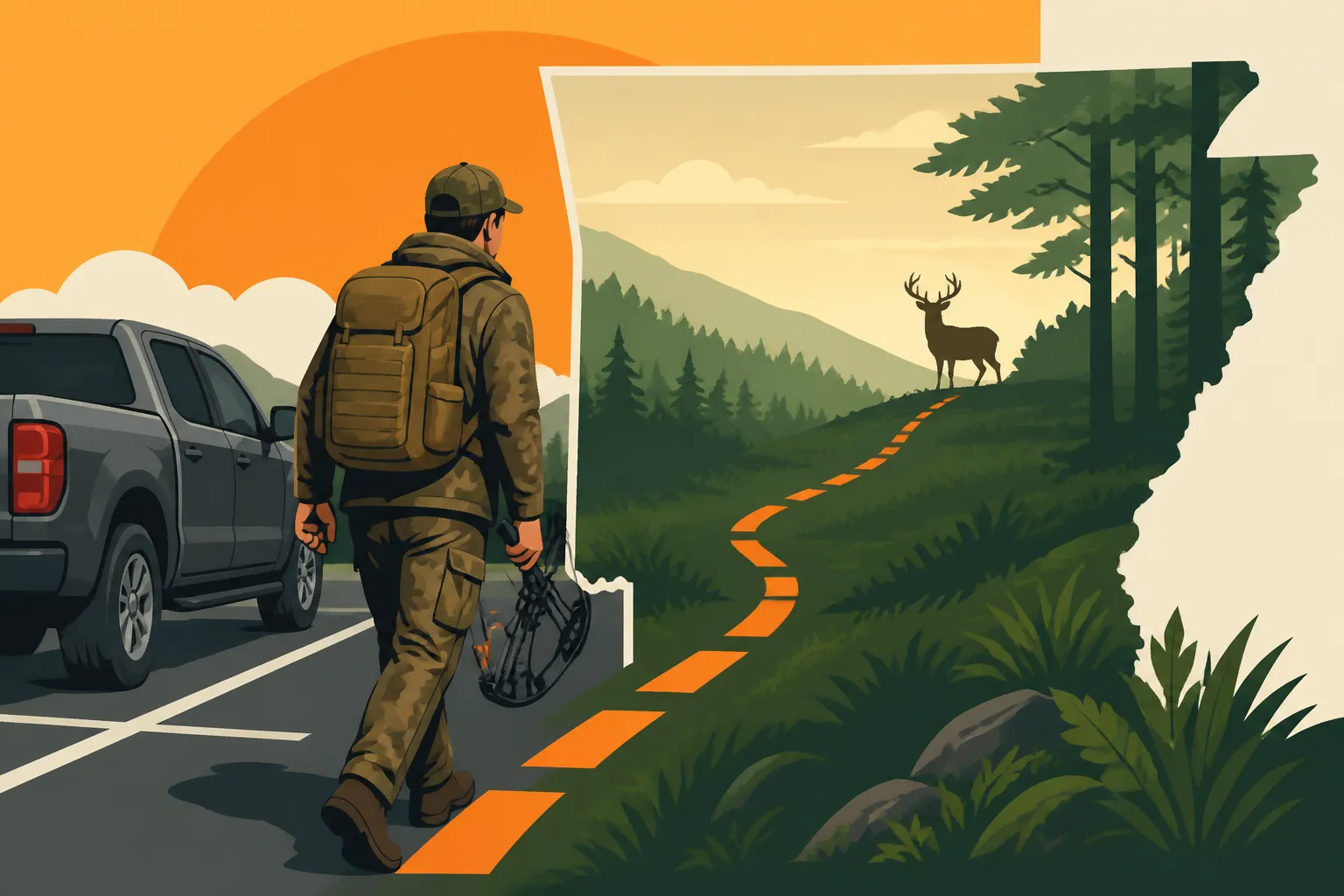
One of the biggest frustrations for any hunter, especially on Arkansas's public lands, is pulling into a parking lot only to find it packed with trucks. You know what that means: every prime spot close to the road is likely to be crawling with other folks. The real trick to consistent success, and frankly, a more enjoyable hunt, often comes down to how far you're willing to walk from that crowded parking lot. This guide aims to help you figure out that sweet spot, balancing effort with the potential for untouched ground and less pressured game.
The Psychology and Reality of Hunter Pressure on Public Land
Let's be honest, most people are looking for convenience. After a long week, the idea of a short stroll from the truck to a treestand is mighty appealing. This isn't a criticism; it's just human nature. But it's also a fundamental truth that savvy hunters can exploit. Deer, turkeys, and even ducks quickly learn where the pressure is heaviest. They adapt, shifting their patterns and bedding areas away from easily accessible spots. If you're willing to put in a little extra legwork, you're immediately cutting yourself off from a significant chunk of the hunting population and stepping into areas where game animals feel safer.
The "Half-Mile Rule" and Beyond
You'll often hear experienced public land hunters talk about the "half-mile rule" or the "mile mark." This isn't a hard-and-fast law, but it's a good general guideline born from observation. Most hunters, carrying their gear, will venture about a quarter to a half-mile from their vehicle. Beyond that, the number of people drops off significantly. Go a mile in, and you might find yourself completely alone, even on a popular Wildlife Management Area (WMA).
Think about it: hauling a stand, climbing sticks, a backpack, and maybe a thermos of coffee through thickets or over ridges isn't a walk in the park. After a half-mile, the novelty wears off for many. This creates a natural "sanctuary effect" for game in these deeper, less-visited pockets. These animals aren't necessarily bigger or smarter, but they've learned that humans rarely penetrate their inner sanctum.
How Game Reacts to Pressure
Deer are especially sensitive to human intrusion. During opening weekend of modern gun season, for example, high-traffic areas on WMAs can quickly become deer deserts. Animals will often stage in thick cover just beyond the common walking distance, waiting for darkness or for hunters to move on. They'll use these less-pressured zones as bedding areas and travel corridors, only venturing into more exposed or accessible food sources when they perceive less danger.
Ducks, too, respond to pressure. On popular green timber WMAs, hunters often crowd the easily accessible holes. Ducks will quickly abandon these spots, flying to more secluded timber blocks or even to private land nearby. If you can find a slough or a timber hole that requires a longer, more difficult wade or boat ride, you might find birds that are less "educated" and more willing to decoy. Hunting Pressure on Arkansas WMAs is a topic we've covered, and it highlights just how much these animals learn from our movements.
Factors Influencing Your Optimal Walking Distance
Determining the "right" distance to walk isn't a one-size-fits-all answer. Arkansas offers an incredibly diverse range of hunting environments, from the steep, rocky Ozark Mountains to the flat, flooded timber of the Delta. Each presents its own challenges and opportunities for the hunter willing to explore beyond the parking lot.
Terrain and Accessibility
The type of terrain you're traversing dramatically impacts how far you can reasonably walk, both in terms of effort and time.
- Flat Delta Bottomlands: In the Delta, especially during duck season, a half-mile walk can feel like two miles if you're slogging through knee-deep mud or wading waist-deep water with decoys and a shotgun. However, if you're hunting field edges for deer, a mile on relatively flat ground might be quite manageable. The challenge here is often water depth and footing, not elevation. For deer, a longer walk might lead you to a secluded block of timber or a distant food plot away from road noise. Reading Aerial Photos for Delta Deer can help identify these hidden gems.
- Ozark and Ouachita Mountains: These areas demand a different kind of endurance. A mile walk in the mountains might involve significant elevation changes, rocky terrain, and navigating dense brush. What feels like a short distance on a map can be an hour-long ordeal on foot. However, these natural barriers also deter other hunters, meaning even a quarter-mile up a steep ridge could put you in unpressured territory. Finding a hidden bench or a secluded hollow often requires breaking a sweat. Hunting Ozark Ridges and Hollows for Deer offers more insight into this challenging but rewarding environment.
- Pine Plantations and Cutovers: These areas, often found in the Ouachitas or parts of South Arkansas, can be deceptively tough. Walking through thick saplings or over logging debris can be slow and noisy work. A mile here might feel longer than a mile on a cleared forest road. However, these impenetrable thickets are also where deer often bed and feel secure, offering excellent opportunities if you're willing to push through. Hunting Arkansas Cutovers and Clearcuts explores tactics for these specific habitats.
Type of Game Pursued
Your target species also plays a huge role in how far you need or want to walk.
- Deer: For deer, a longer walk is almost always a benefit on public land. Whether it's to get deeper into bedding cover, to reach a remote acorn flat, or simply to escape the scent and sound of other hunters, distance is your friend. You're looking for areas where deer feel comfortable enough to move naturally during daylight hours. This often means getting at least three-quarters of a mile, if not a mile or more, away from any easy access point. This extra effort can pay off with a less wary animal. Bowhunting Arkansas's Five-Month Archery Season often requires this kind of deep penetration to find mature bucks.
- Ducks: Duck hunting often involves specialized gear like waders, decoys, and sometimes even boats or kayaks. This significantly limits how far most hunters will travel from a launch point or road. If you can get into a timber hole that requires a truly difficult wade, or paddle a canoe into a backwater slough that's too shallow for a motor and too far for an easy walk, you stand a much better chance of finding unpressured birds.
- Small Game: For squirrel or rabbit hunting, you might not need to walk miles, but moving a few hundred yards past the initial burst of activity near the parking area can lead to more relaxed animals. Small game often holds tighter when it hasn't been disturbed.
Time of Season and Day
The season and even the time of day can influence optimal walking distance.
- Early Season (September/October): The weather is often warm, and deer patterns are more predictable, often centered around food and water. A longer walk might be less appealing physically due to the heat, but getting away from early-season pressure can still be crucial. Consider walking deeper in the pre-dawn cool. Bowhunting Arkansas in September Heat makes planning routes and carrying less gear paramount.
- Mid-Season (Rut): During the rut, bucks are on the move, sometimes covering vast distances. This means that even a "pressured" area might see a new buck cruise through. However, the best spots will still be those where deer feel secure enough to engage in rutting behavior naturally, which is often deeper in.
- Late Season (December/January): Colder weather means less human activity, but also tougher conditions for walking. Game animals are focused on food and thermal cover. A longer walk might be necessary to find these critical resources, especially if easily accessible areas have been hunted out.
- Mid-day Lulls: Many hunters pack it in by mid-morning. If you can push deeper during the mid-day hours, you might catch deer moving between bedding and feeding areas, or simply using quieter routes.
Tools and Strategies for Planning Your Trek
Before you even tie your boots, you should be using modern tools to scout and plan your walking routes. Gone are the days of just "winging it" or relying solely on paper maps, though a good paper map is still invaluable.
Digital Mapping Applications
Modern mapping apps are indispensable for public land hunting. Applications like onX Hunt and GoHunt allow you to:
- Identify Public vs. Private Land: Crucial for knowing where you can legally step. These apps clearly delineate property lines, so you don't accidentally trespass after a long walk.
- Measure Distances: You can plot a route from your parking spot directly to your desired hunting area and see the exact distance. This helps you gauge the feasibility of your walk and set realistic expectations.
- Analyze Topography: See elevation changes, creek bottoms, ridge lines, and saddles. This helps you understand how difficult a walk will be and identify natural funnels or pinch points for game. Knowing the contour lines helps you plan the path of least resistance or the path that gives you a strategic advantage.
- View Satellite Imagery: Get a bird's-eye view of the terrain. Identify dense cover, clearcuts, mature timber, water sources, and even subtle changes in vegetation that might not be obvious on a topographic map. You can often spot old logging roads or faint trails that could be shortcuts or excellent travel corridors for game.
- Mark Waypoints: Drop pins for potential stand locations, rub lines, scrapes, water sources, or specific trees. This allows you to plan your route to hit these features efficiently.
- Download Offline Maps: Essential for areas with no cell service, which is common in many remote parts of Arkansas. Make sure you download your hunting area maps before you leave home. Using the AGFC Map App Offline is another excellent resource for this.
Let's say you're looking at a WMA in the Ouachitas. You might use onX Hunt to zoom in, seeing the steep contours of a certain ridge. You notice a logging road that ends abruptly about three-quarters of a mile from the main public access. Beyond that road, the satellite imagery shows a dense, unlogged pocket of hardwoods bordering a steep creek bottom. This is the kind of area that screams "less pressured." Without the app, you might never know that road existed, or how manageable the walk truly is until you're already hiking.
Scouting on Foot and Reading Sign
While maps are great, there's no substitute for boots on the ground. Pre-season scouting, even without a weapon, can save you countless hours during the actual hunt.
- Walk Potential Routes: Take a walk, even if it's just a mile or two, without your hunting gear. Pay attention to how long it actually takes, what the terrain is really like, and identify any obstacles. Is that "seasonal creek" a raging river after a rain? Is that thicket truly impenetrable or just dense enough to deter others?
- Look for Natural Barriers: Creeks, steep bluffs, dense briar patches, or areas of standing water can all be excellent barriers that discourage other hunters. If you can find a way to navigate these, you'll likely find less-pressured areas on the other side.
- Identify Game Sign: Look for tracks, scat, rubs, scrapes, and feeding areas. Does the sign suddenly become more abundant a half-mile in? Are there fresh tracks leading away from the parking lot deeper into the woods? This is your confirmation that the animals are using those deeper areas. Scouting Arkansas Public Land Before Season is a foundational step.
Balancing Effort with Reward: When is a Long Walk Worth It?
This is where the rubber meets the road. A long walk isn't always the answer, but understanding when it is can make all the difference.
The Trade-Off: Energy vs. Opportunity
Every hunter has a different physical capacity. A 2-mile hike with a treestand might be a casual morning for some and an impossible feat for others. Be realistic about your own fitness level. It's far better to make a realistic, slightly shorter deep push than to overcommit, exhaust yourself, and be unable to get out or pack out an animal.
However, the opportunity cost of not walking further can be significant. If you constantly hunt within a quarter-mile of easy access, you're constantly competing with other hunters and likely seeing more nocturnal or wary animals. The mental reward of finding a truly unpressured area, seeing game that hasn't been spooked, and having a more solitary experience often outweighs the physical exertion.
Practical Considerations for the Long Haul
If you commit to a long walk, plan accordingly:
- Lighten Your Load: Every ounce counts. Only carry essential gear. Can you leave that extra layer in the truck and pick it up if you need it? Can your stand be lighter?
- Hydration and Nutrition: Especially in Arkansas's warm early seasons or during intense effort, staying hydrated is crucial. Pack water and a few snacks.
- Packing Out Game: This is the often-overlooked elephant in the room. If you shoot a deer a mile or two back in, are you prepared to quarter it and pack it out in sections? Do you have a game cart that can handle the terrain? Do you have help? Getting a Deer Out of an Ozark Hollow is a prime example of planning for the recovery.
- Emergency Preparedness: Longer walks mean you're further from help. Carry a first-aid kit, a headlamp (even if you plan to be out before dark), and ensure someone knows where you're going and when you expect to be back.
Consider this scenario: You're deer hunting a large WMA. The main access road has several parking areas, each with clear trails leading in a few hundred yards. Using GoHunt, you've identified a deep valley that seems to funnel deer, but it's a solid 1.5 miles from the nearest parking spot, crossing two small creeks and climbing a moderate ridge. Most hunters won't make that trek. You decide to go for it, packing light, taking your time, and planning to quarter any deer you get. The payoff might be the biggest buck you've ever seen, feeding undisturbed.
| Factor | Shorter Walk (<0.5 Mile) | Longer Walk (>0.5 Mile) |
|---|---|---|
| Hunter Pressure | High; frequent encounters, educated game | Low; less competition, unpressured game |
| Effort & Time | Less demanding, quicker access | More demanding, longer travel time |
| Gear Required | Can carry more comfort items, heavier stand | Must be lightweight, minimalist approach |
| Game Recovery | Easier to retrieve game, less physical strain | Significantly harder, often requires quartering/game cart |
| Solitude/Experience | Less private, more noise from others | High solitude, immersive wilderness experience |
| Likelihood of Success | Lower for mature, wary animals; higher for general harvest | Higher for quality encounters with less wary game |
| Required Scouting | Less detailed route planning needed | Extensive map scouting (e.g., onX Hunt), likely foot recon |
| Emergency Prep | Quicker access to vehicle/help | Must be self-sufficient, plan for contingencies |
The Final Takeaway: The More You Walk, The More You See
Ultimately, the answer to "how far to walk from the parking lot" is often: "further than you think you need to." It's not about being a hardcore athlete, but about being willing to put in that extra bit of effort and strategic planning to find those pockets of unpressured game. It's about respecting the animals' natural inclination to avoid human activity and using that knowledge to your advantage.
Arkansas's public lands offer incredible opportunities, but they require a certain level of dedication. By understanding hunter psychology, leveraging mapping tools like onX Hunt or GoHunt, and being realistic about your capabilities, you can unlock vast tracts of hunting ground that many others overlook. That extra half-mile, or even a full mile, can transform a frustrating hunt into a memorable and successful one. Finding Ground Others Walk Past truly is the secret sauce for public land success.
Disclaimer
This article is for general informational purposes only and does not constitute professional advice. Laws, prices and regulations vary by location and change over time. Consult a qualified professional for guidance on your specific situation.