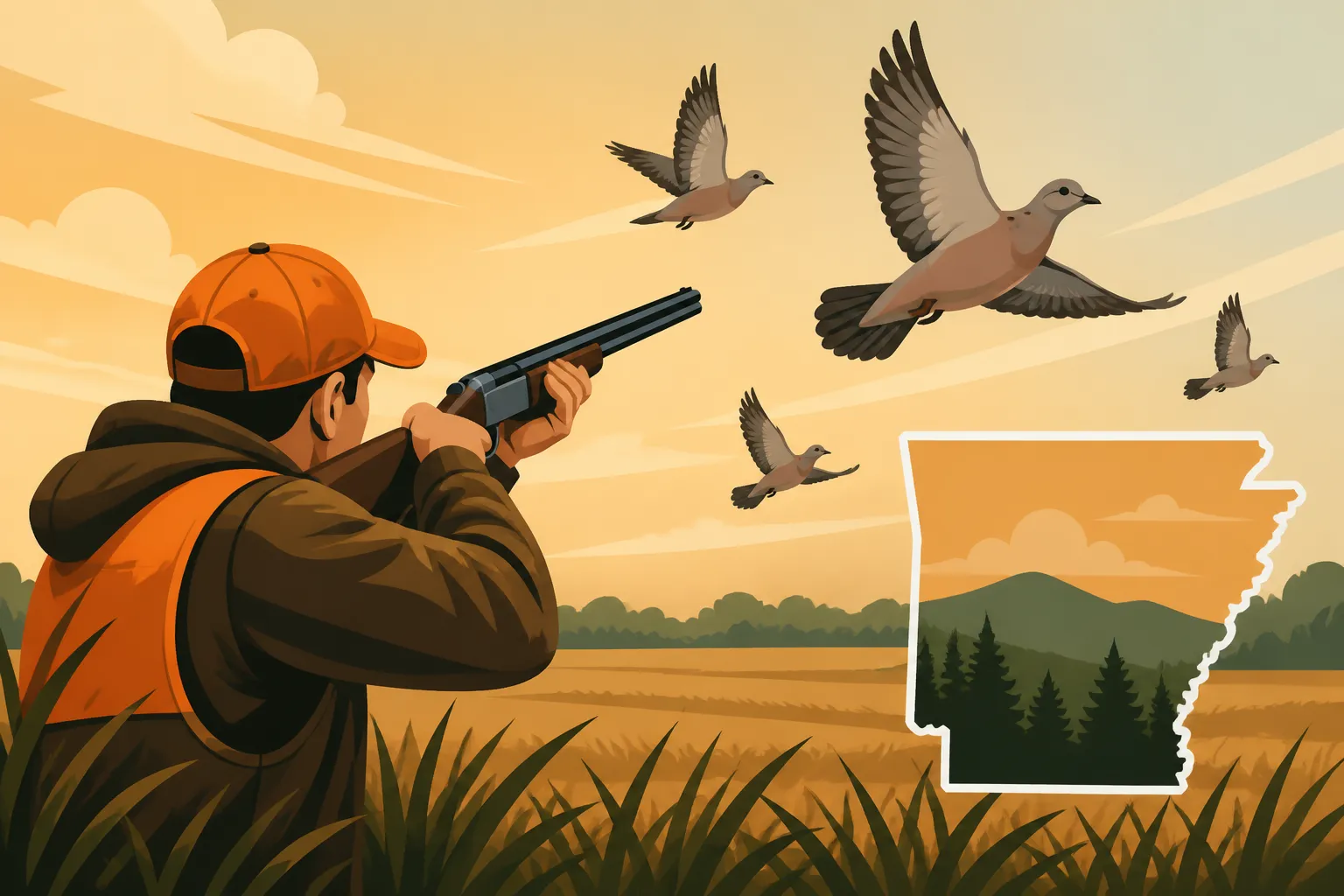
Hunting Doves on an Arkansas Field
There’s nothing quite like that first September afternoon in an Arkansas dove field, but let’s be honest, it can also be a frustrating affair. You’ve driven out, set up your stool, and watched countless birds whizz by just out of range, or perhaps you’ve seen more hunters than doves. This guide is all about cutting through that frustration, offering practical, on-the-ground advice for successfully hunting doves on an Arkansas field, from pinpointing the right spots to making the most of every shot.
Understanding Arkansas Dove Fields and Their Appeal
Arkansas is blessed with abundant agricultural land, and where there are fields, there are often doves. However, not all fields are created equal, and understanding what makes a particular spot a magnet for doves is key to consistent success. It’s not just about finding a cut field; it’s about finding the right cut field, at the right time.
The Different Types of Fields Doves Love
Doves are creatures of habit, and their habits are largely dictated by food sources and water. In Arkansas, that means looking at the state’s dominant agriculture. You’ll typically find doves congregating in fields that offer easily accessible seeds.
- Cut Corn and Milo: These are classic dove fields. Once the combines roll through, they leave behind shattered kernels and seeds that are a feast for doves. The stubble provides some cover, but the real draw is the sheer volume of food. Look for fields that have been harvested recently, as fresh pickings are always better. A lot of hunters focus on corn in the Delta, and for good reason – the sheer scale of those fields can hold thousands of birds.
- Wheat Stubble: After the spring wheat harvest, these fields are often left with a scattering of grains and exposed soil. Doves absolutely flock to them. The lighter stubble makes it easy for doves to land and feed, and these fields are often the earliest producers in the season. Many of the early season hunts in late August or early September around central Arkansas will feature these types of fields.
- Sunflowers: If you can find a sunflower field that’s been cut or disced, you’ve hit the jackpot. Doves are notoriously fond of sunflower seeds, and a well-managed field specifically for dove hunting can provide incredible action. The key here is often private land, as commercial sunflower fields might be harvested differently or not made available for hunting.
- Disced Ground and Bare Dirt: Sometimes, it’s not just the crop, but the ground itself. Doves need grit to digest their food, and freshly disced or tilled fields, especially those near water or roosting trees, can be huge attractants. The exposed, loose soil makes it easy for them to pick up grit. Sometimes, a farmer will disc a small strip next to a standing crop specifically to create this type of appeal.
- Water Sources: Regardless of the crop, doves need to drink, often twice a day. A field adjacent to a pond, slough, or even a muddy puddle can significantly increase its attractiveness. Doves will fly from feeding grounds to water, and setting up along these flight paths can be incredibly effective.
Scouting the Best Locations Before the Season Opens
You wouldn’t go deer hunting without scouting, and dove hunting is no different. Pre-season legwork is absolutely critical. Starting a week or two before the season opener is ideal, giving you time to observe patterns without spooking birds too much.
Drive country roads, especially in prime agricultural areas like the Arkansas Delta or the more rural parts of the Ozark foothills. What you’re looking for is dove sign: birds perched on power lines, telephone wires, or dead trees near fields. Pay attention to their flight paths – where are they coming from, and where are they going? Are they heading to a specific field to feed, or to a water source to drink? Look for white droppings on the ground, which indicate consistent dove activity.
Don't just drive past; pull over, get out, and glass fields with binoculars. You might spot groups of doves feeding on the ground. Pay attention to the type of crop that was harvested. Is it wheat, corn, milo, or perhaps even a patch of wild sunflowers? The timing of the harvest is also crucial. A field cut too early might have had all its seeds picked clean by opening day, whereas a newly cut field could be a fresh hotbed of activity.
Mapping tools are invaluable here. Applications like GoHunt provide detailed satellite imagery and property line information, helping you identify potential fields and understand land ownership. This is especially helpful if you’re trying to find public access or identify landowners to ask for permission. For public land hunters, scouting is even more vital, as the best spots on WMAs can get pressured quickly. You might want to refer to our guide on Scouting Arkansas Public Land Before Season for broader public land scouting tips that apply well to doves too.
Essential Gear and Setting Up for Success
Once you’ve done your scouting and identified a promising field, it’s time to think about gear and setup. Unlike some other forms of hunting, dove hunting doesn't require a mountain of specialized equipment, but a few key items and strategies can dramatically improve your chances.
Choosing the Right Shotgun and Ammunition
Doves are small, fast, and agile, making them challenging targets. Your shotgun choice and ammunition are paramount.
- Shotgun: A 12-gauge or 20-gauge shotgun is typically preferred. Twelve gauges offer a denser pattern and more pellets, which can be an advantage for fast-flying doves. A 20-gauge is lighter and can be easier for smaller-framed shooters or those who prefer less recoil, especially if you’re planning on shooting a couple of boxes of shells. Semi-automatic shotguns or over/under models are popular, as they allow for quick follow-up shots on multiple birds or if you miss the first. When it comes to choke, a Modified or Improved Cylinder is often ideal. These chokes provide a good balance of pattern density and spread, effective for birds coming in at various distances without being too tight for closer shots or too open for those longer ones.
- Ammunition: For doves, lead shot is still permissible, unlike waterfowl where Nontoxic Shot Rules in Arkansas apply. The most common and effective shot sizes are 7.5 or 8. These smaller pellets create a dense pattern, increasing the likelihood of hitting a bird. You’ll want to bring plenty of shells – it's not uncommon for hunters to go through several boxes in a good day, especially on opening weekend. Dove hunting can be a high-volume shooting sport, so be prepared!
Decoy Strategies and Concealment
Doves are visual birds, and good decoys can make a significant difference. However, even the best decoys won't work if you're not properly concealed.
- Decoys: The market is full of dove decoys, but the most effective are often spinning-wing decoys. Brands like Mojo Outdoors have popularized these, and their fluttering wings mimic doves landing, drawing in birds from a distance. Place these in open areas where they are highly visible, perhaps 15-20 yards from your shooting position. Static decoys, clipped to fence lines or small branches, can also add realism to your spread. A good strategy is to set up a few spinning-wing decoys with some static decoys nearby, creating the illusion of a feeding or resting flock. Pay attention to wind direction; spinning wing decoys often work best with a bit of breeze.
- Concealment: Doves have excellent eyesight. Wearing camouflage is essential, but it’s just the start. You need to break up your outline. Natural cover is always best – the edge of a tree line, a brush pile, or tall stubble within the field. If natural cover isn't available, a portable pop-up blind can be a lifesaver. Simple camouflage netting draped over a stool can also work wonders. The key is to blend in with your surroundings, not stand out. Don't underestimate how well doves can spot a hunter, especially if you're silhouetted against the sky. Sitting still and minimizing movement until the birds are committed to your setup is crucial.
Mastering In-Hunt Tactics for Arkansas Doves
You’ve scouted, geared up, and found your spot. Now, it’s about making the most of the actual hunt. Doves are fast and unpredictable, which is part of what makes them so much fun to hunt, but also a challenge.
Reading Dove Flight Patterns and Positioning
Doves often follow predictable patterns, and understanding these can put you in the prime intercept zone.
- Morning vs. Evening Flights: Doves typically feed heavily in the early morning and late afternoon/evening. Midday can be slower as they digest and water. On opening day, especially, morning flights can be chaotic and fast as birds leave their roosts. Evening flights are often more concentrated as they head back to roosts or water. Position yourself where you can intercept these flight lines. Sometimes, this means sitting along a treeline, near a fence row, or between a feeding field and a water source.
- Approach Angles and Wind: Doves will almost always approach a field or water source into the wind. This allows them more control for landing. Set up with the wind at your back, so incoming doves are flying towards you and into the wind. This not only makes them slow down slightly but also positions them for a more consistent shot. Observe how the birds are entering and exiting the field; they often use the same lanes repeatedly. These lanes, whether along a field edge, a patch of taller weeds, or even a slight dip in the terrain, are your hotspots.
- Sun Position: Always try to position yourself with the sun at your back, facing away from the incoming birds. This not only makes it harder for them to see you but also puts them in stark relief against the sky, making them easier to spot and track. Nothing is more frustrating than squinting into the sun trying to find a streaking dove.
Ethical Shooting and Shot Selection
Dove hunting is often about high-volume shooting, but responsible hunting practices remain paramount. This means knowing your limits and making ethical shots.
- Pass Shooting vs. Decoying: Pass shooting involves intercepting doves as they fly over, often high and fast. Decoying involves using decoys to draw birds in closer, making for easier, more ethical shots. While pass shooting can be thrilling, it often leads to longer shots and a higher chance of crippling birds. Whenever possible, try to work birds into your decoys. This improves your success rate and reduces the chances of losing downed birds.
- Wing Shooting Tips: For those fast-flying doves, proper wing shooting technique is essential. Lead the bird – doves are much faster than they appear. Swing through your target, pulling the trigger just as the barrel overtakes the bird, and continue your swing. Practice is key, and a clay pigeon thrower before the season can significantly sharpen your skills. Aim for clean, quick kills. If you have any doubt about making an ethical shot, hold off. Remember that Arkansas Legal Shooting Hours must be observed strictly.
- Avoiding Sky-Busting: This is a cardinal sin in dove hunting. "Sky-busting" refers to shooting at birds that are too far out of range. It results in missed shots, wasted ammunition, and, worse, crippled birds that are never recovered. It also makes for a frustrating experience for other hunters, as it spooks birds away before they can work into a reasonable range. Be patient. Let the birds come in. Wait for an ethical shot within your effective range.
Retrieving Birds and Following Regulations
Once you’ve made a successful shot, retrieving your bird quickly and safely is vital. This is especially true given the warm temperatures often experienced during the Arkansas Dove Opener and Later Splits.
- The Importance of a Good Retriever: A well-trained retrieving dog is arguably the best piece of equipment for dove hunting. Doves can fall into thick cover or disappear in tall stubble, and a dog can find them quickly, minimizing lost birds. If you don't have a dog, mark where your bird falls with a hat or a piece of flagging tape, and go directly to that spot. Take note of any prominent landmarks.
- Bird Limits and Checking In: Arkansas has daily bag limits for doves. Currently, the daily bag limit for mourning and white-winged doves is 15, with a possession limit of 45. For Eurasian Collared Doves in Arkansas, there is no daily bag or possession limit. It's crucial to correctly identify your birds, especially if you're taking advantage of the unlimited collared dove opportunity. Before you head out, make sure you've completed your HIP registration, which is required for all migratory bird hunters in Arkansas. You don't want a game warden to find you non-compliant on a fun day out.
Post-Hunt Care and Regulatory Considerations
Your hunt doesn't end when the shooting stops. Proper care of your birds and adherence to regulations ensure a quality experience and respect for the game.
Handling Your Harvest in Arkansas Heat
Early dove season in Arkansas often means warm, even hot, weather. This can quickly spoil game meat if not handled correctly.
- Cooling Birds Quickly: As soon as you retrieve a bird, get it into a cooler with ice. This is non-negotiable in Arkansas’s early September heat. A dove vest with a game pouch might be convenient, but if you're not putting those birds on ice quickly, you're risking spoilage. You can refer to our detailed article on Field Dressing in Arkansas Heat for more general tips applicable to small game like doves, emphasizing rapid cooling. Some hunters even bring a bucket of ice water to drop birds into immediately.
- Preparing for Transport: Field dressing doves is quick and easy. Many hunters simply breast out the birds to save space and reduce weight, especially if they have a long drive home. A small pair of game shears can make this task even faster. Once breasted, place the meat directly into a Ziploc bag and then onto ice. This method ensures the meat stays cool and clean until you can get it home for final preparation.
Staying Compliant with Arkansas Dove Regulations
Beyond the daily bag limits and shooting hours, there are other regulations to keep in mind to ensure you're always hunting legally and responsibly.
- HIP Registration: As mentioned earlier, if you plan to hunt any migratory birds in Arkansas, including doves, you must register with the Harvest Information Program (HIP). This is a federal requirement used to survey migratory bird harvest and is separate from your state hunting license. It's usually a quick online process when you purchase your license.
- Hunter Education and Safety: If you're a younger hunter or new to the sport, make sure you meet Arkansas's hunter education requirements. Safety is paramount, especially in a dove field where multiple hunters might be present. Be aware of your surroundings, your shooting lanes, and always know what's beyond your target. Remember, Arkansas Hunter Orange Requirements are typically for deer and bear modern gun seasons, but it's always wise to wear some blaze orange if you are walking through dense cover to retrieve birds or when moving to and from your vehicle, especially on public land.
- Carcass Transport Rules: While less stringent for doves than for deer regarding CWD, it’s still good practice to know the general rules for transporting game. If you're traveling across state lines, check the regulations of your destination state. Generally, breasted-out doves are much easier to transport than whole birds.
By meticulously scouting, preparing your gear, understanding dove behavior, and adhering to all regulations, you’ll not only increase your chances of a successful hunt but also ensure a safe and enjoyable experience in the Arkansas dove fields.
| Field Type | Dove Attractiveness | Best Setup Considerations |
|---|---|---|
| Cut Corn/Milo | High | Wide visibility, need good decoys, near roost/water |
| Wheat Stubble | High (early season) | Good for natural ground blinds, hunt transition areas |
| Sunflowers (cut/disc) | Very High | Often private, position for incoming flight paths, consider blinds |
| Disced Ground/Dirt | Medium-High | Critical if grit source, combine with food or water sources |
| Field Edges/Fence Rows | High | Natural cover often available, intercepting travel lanes |
| Near Water (ponds/sloughs) | Very High | Prime for evening hunts, focus on approach/departure routes |
Disclaimer
Please remember that hunting regulations, seasons, and bag limits can change. Always consult the latest Arkansas Game and Fish Commission (AGFC) regulations guide before heading afield to ensure compliance.