Bowfishing Arkansas Rivers and Oxbows
The frustration of a slow fishing day, where traditional rods and reels just aren't cutting it, or the craving for an active, engaging way to harvest some rough fish, can really take the shine off a trip to the water. But what if there was a way to combine the thrill of archery with the excitement of fishing? This guide is all about diving deep into the exhilarating world of bowfishing in Arkansas, covering everything you need to know to get started and find success on our abundant rivers and oxbows.
The Allure of Bowfishing in Arkansas
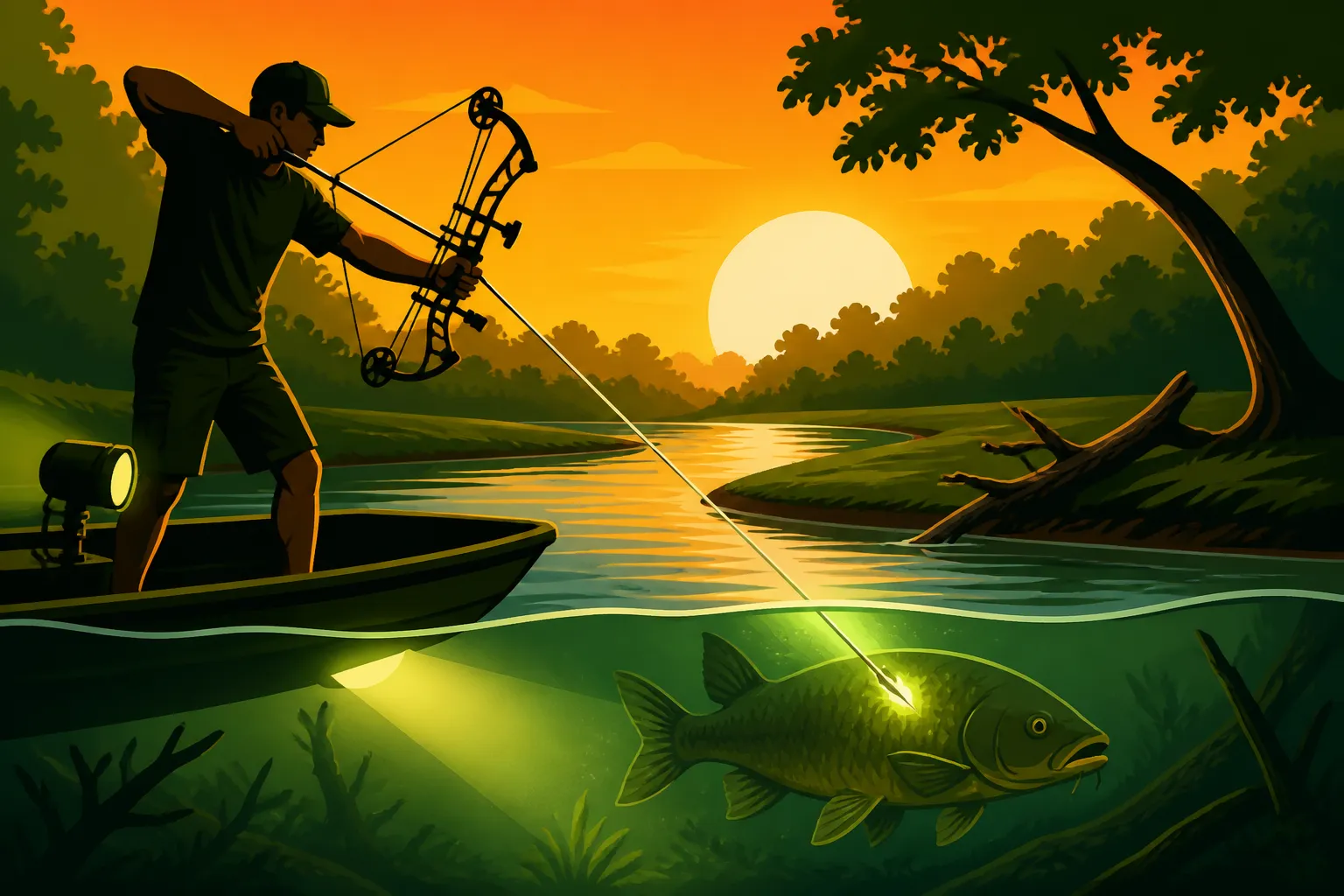
There’s something truly primal and incredibly satisfying about bowfishing. It’s not your grandpa’s cane pole and bobber, that’s for sure. It’s an active pursuit that requires stealth, precision, and quick reflexes, a real test of skill that connects you to the water in a whole new way. Many hunters find bowfishing a fantastic way to extend their time outdoors beyond deer or turkey seasons, keeping those archery muscles toned and the hunting spirit alive.
Why Bowfishing Appeals to So Many
For many, bowfishing is a unique blend of hunting and fishing that offers a different kind of challenge. You're not waiting for a bite; you're actively stalking, spotting, and shooting. It's incredibly visual, allowing you to see your target before you shoot, which adds a whole new dimension compared to blind casting a line. This visual aspect also means it's an excellent activity for those who love to be hands-on and constantly engaged. Plus, it's often done at night under bright lights, creating an almost surreal experience on the water, especially in the quiet backwaters of the Delta. It’s also a fantastic way to introduce new folks, especially younger hunters, to the outdoors because the action can be fast-paced and exciting, which helps hold their attention. Unlike typical game fish, most bowfishing species are prolific, meaning there's less pressure on delicate ecosystems when you're targeting them, and often you're helping to manage populations of non-native or overpopulated species.
Top Species for Bowfishing in Arkansas
Arkansas's waters are teeming with a variety of fish that make excellent targets for bowfishing. The most popular by far are common carp, often found in large numbers and growing to impressive sizes. They put up a good fight and can be quite challenging to hit. Another favorite is the gar, with its prehistoric look and tough scales, offering a truly unique trophy. Longnose, shortnose, and spotted gar are all fair game. Buffalo fish, especially bigmouth and smallmouth buffalo, are also prime targets, particularly in the state's deltaic regions. Flathead catfish and grass carp are also on the list for many bowfishermen. Each species presents its own set of challenges, from the elusive nature of a gar hiding in cover to the sheer power of a large carp. Knowing what you're targeting can help you fine-tune your approach and gear. Remember, you can't bowfish for game fish like bass, crappie, or catfish in most situations; check the Arkansas Game and Fish Commission (AGFC) regulations for specifics.
Essential Gear for Arkansas Bowfishing
Getting set up for bowfishing doesn't have to be overly complicated, but having the right equipment makes a world of difference. It’s a specialized pursuit, so you’ll need more than just your regular hunting bow. Safety and efficiency are key, especially when you're shooting arrows into water from a moving boat.
Bows, Reels, and Arrows
First, you'll need a dedicated bowfishing bow. While you can convert some hunting bows, many choose specific bowfishing models that are simpler, often a recurve or compound set at a lower draw weight (usually 30-50 pounds) for quick, repetitive shots. Brands like PSE Archery and Cajun Archery make excellent dedicated bowfishing setups. The reel is critical; it’s not a fishing reel in the traditional sense. You'll use a specialized bowfishing reel, either a bottle-style reel or a spincast reel adapted for bowfishing. Bottle reels are simple and reliable, allowing you to manually retrieve the line quickly. Spincast reels, often mounted on a special adapter, offer a push-button release and mechanical retrieve, which some prefer for speed.
The arrows themselves are heavy-duty, solid fiberglass or carbon, designed to penetrate fish and not float away. They don't have fletchings like hunting arrows, as they're not meant for aerodynamic flight over long distances. Instead, they have a heavy, barbed point that grips the fish. The arrow is attached to your reel line via a special safety slide, which is crucial to prevent the line from tangling in your bowstring and causing the arrow to "snap back" at you – a very dangerous situation. Always ensure your safety slide is correctly installed and functioning. Having a few spare arrows is always a good idea, as they can get lost or damaged on a rough shot.
Lights, Boats, and Safety Equipment
For many, the best bowfishing happens after dark. This means serious lighting is a must. Most dedicated bowfishing boats are equipped with powerful generator-powered lights, typically halogen or LED, mounted around the deck to illuminate the water. These lights allow you to spot fish easily, as they tend to be more active and shallower at night. If you’re just starting, a few powerful portable LED lights can work from a smaller jon boat, but a dedicated setup truly enhances the experience.
Speaking of boats, a flat-bottomed jon boat is the most common vessel for bowfishing, allowing you to navigate shallow waters and stand easily for shots. Many bowfishing boats feature elevated shooting platforms to give hunters a better vantage point, especially in murky water. Safety equipment is paramount. Always wear a life vest, especially when standing and moving on a boat at night. A first-aid kit, a sharp knife for dispatching fish, and a cooler full of ice for your catch are also essential. Remember that navigating at night requires extra caution, so always have proper navigation lights and a good understanding of the waters you're in. Before heading out, consider reviewing Arkansas Boating Safety Education to ensure you're fully prepared.
Navigating Arkansas's Prime Bowfishing Waters
Arkansas is blessed with an abundance of rivers and oxbows, many of which are absolutely phenomenal for bowfishing. Understanding where to go and what conditions to look for can significantly increase your chances of success. Our state’s diverse waterways offer unique opportunities, from swift-moving rivers to slow, stagnant backwaters.
Best Rivers for Bowfishing
The grand Mississippi River, forming Arkansas's eastern border, is an absolute powerhouse for bowfishing. Its vast stretches and numerous backwater sloughs are prime habitat for carp and buffalo. Access can be tricky, but the rewards are often huge fish. Further inland, the Arkansas River, winding its way through the heart of the state, offers excellent opportunities. Its navigable pools and numerous sandbars provide diverse habitats. Look for areas with slower current, shallow flats, and submerged cover. The White River and its tributaries, particularly in the lower delta region, are also fantastic, though you'll need to pay close attention to water levels and currents. Other rivers like the St. Francis and the Black River in eastern Arkansas, especially around areas like the Dave Donaldson Black River WMA, also hold a significant population of rough fish that are ideal for bowfishing. Always check local river conditions, including current speed and clarity, as these can drastically affect your visibility and the presence of fish.
Exploiting Oxbows and Backwaters
Oxbow lakes are truly hidden gems for bowfishing in Arkansas. These crescent-shaped lakes, formed when a river channel changes course, often become isolated from the main river. They tend to have calmer, shallower water and abundant vegetation, creating perfect conditions for carp, gar, and buffalo to congregate. Good examples include many of the oxbows found off the Arkansas River or the lower White River. These areas often warm up faster in spring, attracting fish into the shallows to spawn.
Backwater sloughs, bayous, and flooded timber are another goldmine. During periods of higher water, fish will often move into these calmer, nutrient-rich areas to feed and spawn. These shallow zones make spotting fish much easier, especially at night when the lights can penetrate the clear water. Accessing these areas can sometimes require a smaller boat or even wading, but the payoff can be incredible. A helpful tool like GoHunt can provide detailed maps, showing you historical flood lines and contours that might indicate prime oxbows or backwaters. Just remember that navigating these intricate waterways requires good mapping and careful attention to your surroundings to avoid getting stuck or lost, particularly after dark. Knowing the Arkansas WMA Waterfowl Permit Rules might also give you insights into access points for many of these prime backwater areas, as these zones often overlap with duck hunting grounds.
Techniques and Best Practices for Success
Bowfishing is a unique skill that takes practice. Unlike traditional archery where you aim directly at the target, the refraction of light in water means you need to adjust your aim significantly. Mastering this "aim low" principle is key to hitting your target.
The Art of Aiming Below the Fish
This is arguably the most challenging and critical aspect of bowfishing. When you look at a fish in the water, light refraction makes it appear shallower than it actually is. Therefore, you must always aim below where you see the fish. The deeper the fish and the sharper your angle to the water, the more you need to aim low. For a fish that looks to be a foot deep, you might need to aim six inches below it. For one that looks only six inches deep, perhaps two or three inches low. It's an intuitive skill that develops with experience. Start by practicing on submerged targets that aren't fish to get a feel for how much to compensate. The clearer the water, the less severe the refraction, but always aim low.
Another tip: don't rush your shot. Take a steady aim, focus on that point below the fish, and make a smooth release. A common mistake is getting excited and shooting too quickly, hitting over the fish every time. Remember, the fish aren't usually going to bolt away as fast as a deer might when you draw your bow. They are often cruising slowly or even holding still, especially at night. Patience and a calm draw will serve you well.
Night vs. Day Bowfishing Strategies
While both day and night bowfishing can be productive, they demand different strategies.
Night Bowfishing: This is where bowfishing truly shines, both literally and figuratively. The darkness allows your powerful lights to illuminate the water, revealing fish that would be camouflaged during the day. Fish often move into shallower areas to feed at night, making them more accessible. The calm of the night also means less boat traffic and generally calmer waters. You'll often motor slowly along banks, through flooded timber, or across shallow flats, constantly scanning the water under your lights. Fish will often hold still or move slowly, making for easier shots. However, night bowfishing requires more specialized gear (lights, generator) and extra caution regarding navigation and safety.
Day Bowfishing: Day hunts can be productive, especially in clear, sunny conditions. You'll typically cruise slowly, looking for dark shapes, fins, or movement in shallow water. Polarized sunglasses are essential to cut through glare and spot fish. Look for fish cruising just under the surface, basking in the sun, or holding tight to structure like logs or grass beds. Spawning season can be particularly good for day bowfishing, as many rough fish will be in very shallow water, sometimes even with their backs breaking the surface. The challenge during the day is dealing with reflections, shadows, and the natural camouflage of the fish. Sometimes, an elevated platform can help you see past the surface glare.
| Species Name | Common Habitat | Preferred Time to Target | General Size Range | Difficulty for Bowfishing | Notes |
|---|---|---|---|---|---|
| Common Carp | Rivers, Oxbows, Ponds | Day/Night (both excellent) | 5-30+ lbs | Easy to Moderate | Abundant, strong fighters, good eating |
| Gar (Longnose, Spotted, Shortnose) | Rivers, Backwaters, Sloughs | Day/Night | 3-15+ lbs | Moderate to Difficult | Prehistoric, tough scales, unique trophy |
| Buffalo (Bigmouth, Smallmouth) | Rivers, Oxbows, Flooded Fields | Day/Night | 10-50+ lbs | Moderate | Strong swimmers, found in schools |
| Grass Carp | Rivers, Lakes, Ponds | Day | 10-40+ lbs | Moderate | Vegetarians, often in clear water |
| Flathead Catfish | River Channels, Deep Holes | Night | 5-40+ lbs | Difficult | Regulated, check AGFC for specific rules |
Handling Your Catch and Responsible Practices
Once you've shot a fish, the fight isn't over! Retrieve your arrow carefully, securing the fish. Many bowfishermen use a short billy club or a specialized tool to dispatch fish quickly and humanely. For larger fish, a sturdy net can be helpful.
Responsible practices are crucial. While most bowfished species are non-game and often considered rough fish, it’s vital to respect the resource. If you're not going to eat the fish, consider what you'll do with it. Burying them away from water, composting them, or using them for fertilizer are all options. Never just dump fish back into the water or leave them on the bank to rot, as this can create unsanitary conditions and attract unwanted wildlife. Some fish, like carp and buffalo, are surprisingly good eating, especially when prepared properly (e.g., smoked, ground into patties). If you're new to the area, consulting a tool like GoHunt might offer insights into local regulations or disposal options, alongside showing public and private access. Always check the latest Arkansas Game and Fish Commission regulations regarding legal species, shooting hours, and any specific gear restrictions before you head out. Understanding the state's Arkansas Hunting Licenses and What They Cost will also be vital for ensuring you have the correct permits for any fishing activity.
Bowfishing is a dynamic and exciting way to experience Arkansas's incredible waterways. Whether you're chasing monster carp under the stars or stalking gar in the midday sun, the thrill of the hunt combined with the challenge of the shot makes for an unforgettable adventure. With the right gear, a little practice aiming low, and a good understanding of our rivers and oxbows, you'll be well on your way to becoming a successful Arkansas bowfisherman. For those looking to combine their passions, it's also worth noting how well this complements other hunting seasons, perhaps after a morning of Hunting Arkansas Reservoir Ducks.
Disclaimer
Please note that hunting and fishing regulations in Arkansas can change. Always consult the official Arkansas Game and Fish Commission (AGFC) website or their latest guidebooks for the most current rules and regulations before planning any outdoor activity. This information is for general guidance and educational purposes only.