Arkansas Waterfowl Seasons and Zones
It’s no secret that Arkansas is a bucket-list destination for waterfowl hunters. The sheer number of ducks and geese that funnel into our state each fall and winter is legendary. But navigating the complex web of seasons, zones, and regulations can feel like trying to call ducks in a hurricane. Don’t worry, you’re not alone in feeling overwhelmed. This comprehensive guide is here to untangle it all, so you can focus on what matters: chasing those greenheads and specklebellies.
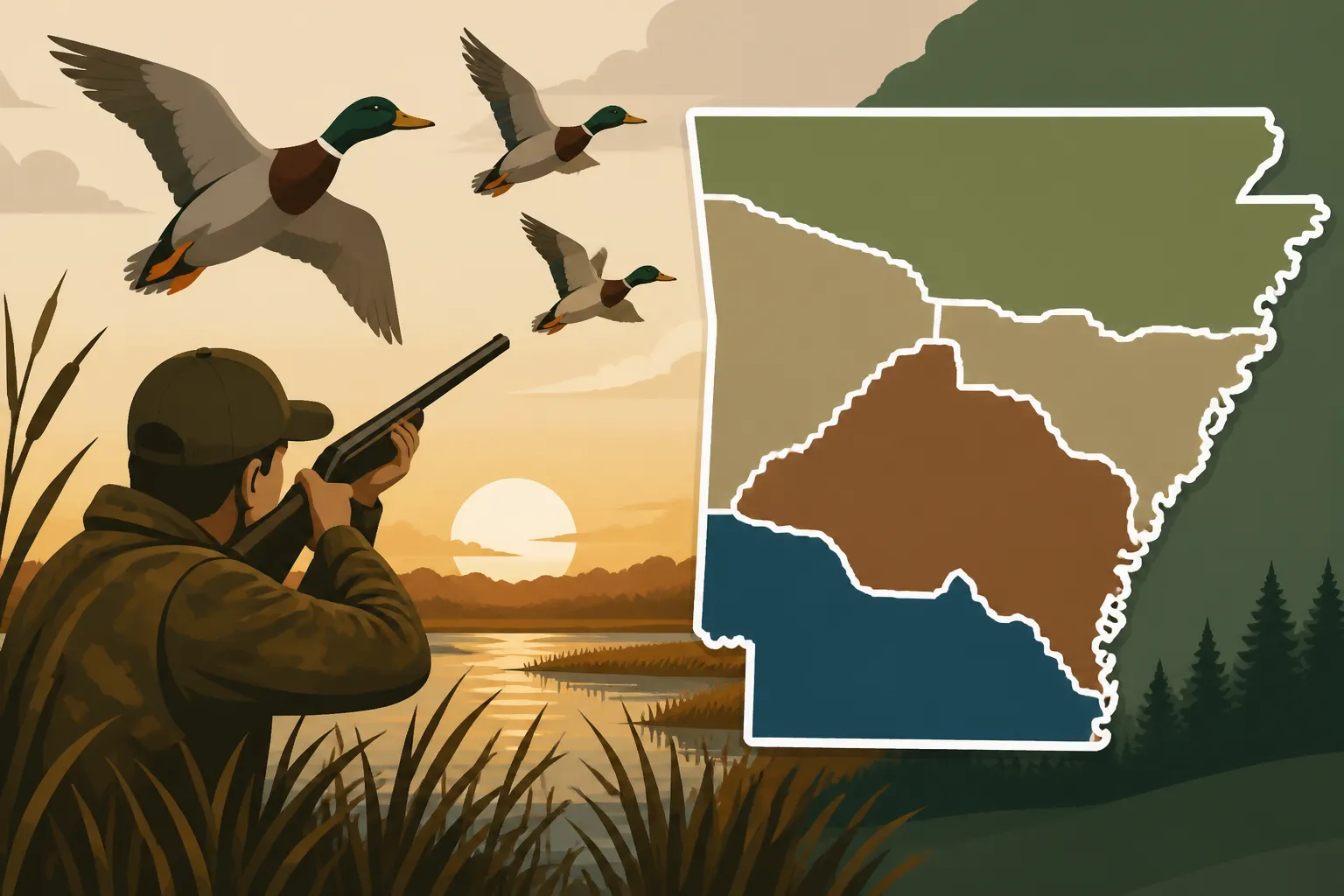
Understanding Arkansas's Waterfowl Zones
When you first dive into the Arkansas Game and Fish Commission (AGFC) regulations, you’ll quickly notice that our state isn’t just one big hunting area. It’s broken down into specific waterfowl zones, each with its own set of rules and season dates. This isn’t just for fun; there’s a real method to the madness, driven by biology, geography, and hunter opportunity.
Why Zones Exist and How They're Determined
The primary reason for dividing Arkansas into waterfowl zones is to better manage the resource and provide optimal hunting opportunities. Our state is incredibly diverse, from the mountainous Ozarks and Ouachitas to the sprawling flatlands of the Mississippi Alluvial Valley (the Delta). Each of these regions experiences different migration patterns, habitat availability, and levels of hunter pressure. For example, ducks often hit the northern parts of the state earlier, driven by cold fronts, while the southern regions might hold birds later into the season. The AGFC works closely with federal wildlife agencies to establish these zones based on years of migration data, bird banding studies, and habitat assessments. It’s about trying to match hunting seasons with the peak presence of migratory birds in a particular area, ensuring a sustained and healthy population for years to come. It’s a delicate balance, and these zones help them strike it.
A Breakdown of the Primary Waterfowl Zones
Historically, Arkansas has generally operated with two, sometimes three, major waterfowl zones for ducks and sometimes a broader structure for geese. These zones are usually defined by major highways or county lines, making them relatively easy for hunters to identify on a map. For ducks, the most common setup involves an East Zone and a West Zone, sometimes with a “White River Zone” or "Mississippi Alluvial Valley Zone" that encompasses the prime habitat of the eastern Delta.
The East Zone, for instance, typically covers the vast, flat agricultural lands and river bottoms of eastern Arkansas, including the renowned duck hunting mecca of Stuttgart and the surrounding Grand Prairie. This zone is a magnet for migratory waterfowl due to its abundance of flooded rice fields, moist-soil units, and bottomland hardwoods. The West Zone encompasses the more rolling terrain, timber, and less intensely farmed areas, including parts of the Arkansas River Valley and some of the smaller river systems further west. While still offering good hunting, it generally experiences different bird concentrations and migration timing compared to the East. For geese, the zones can sometimes be more consolidated or even statewide, depending on the species and management goals. The exact boundaries can shift slightly from year to year, so always, always check the current AGFC regulations before heading out.
How Zone Boundaries Impact Your Hunt Planning
Knowing which waterfowl zone you’re hunting in is absolutely critical, as season dates can vary by several days or even a week or two between zones. Imagine planning a trip to a certain area, only to realize on opening morning that the season hasn’t started in that specific zone, or worse, has already closed! This is a common pitfall for hunters who don't meticulously check the regulations. If you hunt near a zone boundary, you need to be especially careful. A farm on one side of a highway might be in the East Zone, while a field directly across the road falls into the West Zone, each with its own specific season dates.
This is where detailed mapping tools become invaluable. Using the AGFC’s online map tool or a service like GoHunt can help you pinpoint exactly which zone a particular piece of land falls into. This is not just about avoiding violations; it's about maximizing your time afield when the birds are there and the season is open. It might even influence where you lease land or scout for public opportunities. A slight shift in a zone line could mean the difference between a great opening day and a frustrating wait.
Navigating the Arkansas Duck Seasons
Arkansas’s duck season structure is designed to give hunters opportunities throughout the migratory period, from the arrival of early birds to the cold-weather push of late-season mallards. This often means a “split season” approach, which can sometimes confuse new hunters or those coming from states with continuous seasons.
The Traditional Split Season Approach
For decades, the AGFC has implemented a split season for ducks, breaking the overall season into two or three distinct segments. The rationale behind this is multi-faceted. First, it acknowledges the wave-like nature of duck migration; early season birds, often resident wood ducks or early mallards, might be available before the big push of northern migrants arrives. A short early season allows hunters to target these birds. Second, a mid-season closure, even for a few days or a week, can give birds a much-needed rest from hunting pressure. This is particularly important for birds that have been heavily hunted further north and are looking for sanctuary. Finally, the later splits are designed to align with the arrival of the main migration from the North and the coldest weather, when ducks are most concentrated and often most active in feeding areas.
A typical split might look something like this: an opening segment in late November or early December, a short closure around mid-December, then a longer, continuous segment from mid-December through late January. These splits can vary annually, so consulting the official Arkansas Duck Season Dates is paramount. It’s an approach that attempts to maximize hunting opportunity while minimizing over-stressing the resource, a delicate balancing act that is constantly being evaluated by wildlife managers.
Key Species-Specific Season Details
While the general duck season framework applies to most species, there are always important nuances and special seasons to be aware of. For instance, the bag limit for mallards often has restrictions on the number of hens you can harvest, and other species like pintails, black ducks, and canvasbacks can have even more restrictive limits or shorter seasons within the main framework. This is all part of adaptive management, responding to population data for specific species.
One of the most anticipated special seasons is the September Teal Season. This early, short season specifically targets Blue-winged, Green-winged, and Cinnamon Teal before the main duck migration begins. It’s an exciting opportunity to get out in the blind early, often in warmer weather, and enjoy fast-paced shooting. The rules for teal season are very specific: only teal may be harvested, and the season typically runs for about 9-16 days in early September. Understanding these species-specific regulations is crucial, as misidentifying a duck in flight could lead to a violation. Always ensure you can confidently identify your target species before taking a shot.
Monitoring Season Changes and Closures
The AGFC is constantly monitoring waterfowl populations, habitat conditions, and hunting pressure throughout the season. While the announced season dates are generally firm, there can be rare instances of emergency closures or adjustments. For example, severe drought conditions might lead to a lack of water, concentrating birds in specific areas and making them overly vulnerable, or conversely, widespread flooding might open up vast new areas for birds and disperse them. Disease outbreaks, while less common, could also prompt localized closures.
It’s always a good practice to check the AGFC website regularly for any in-season announcements or advisories. Subscribing to their email newsletters or following their social media channels can also be a great way to stay informed. Don't rely solely on what you heard at the coffee shop, as regulations can change. The dynamic nature of waterfowl hunting means that staying informed isn't just a suggestion, it's a necessity for a legal and successful hunt.
Diving into Arkansas Goose and Speck Seasons
While ducks often steal the spotlight, Arkansas is also a major destination for goose hunting, particularly for the highly sought-after specklebellies and the sheer volume of light geese. These seasons often run on slightly different schedules and with different regulations than duck seasons, adding another layer of planning for waterfowl enthusiasts.
Regular Goose Seasons for Dark Geese
Dark geese, primarily Canada Geese, are a popular target for many hunters in Arkansas. Their seasons are often either concurrent with parts of the regular duck season or immediately follow them, stretching into late January or early February. While Canada Geese aren't as abundant in the Arkansas Delta as they are in some northern states, there are definitely good hunting opportunities, particularly in agricultural areas and around larger bodies of water where they roost.
The daily bag limits for Canada Geese are typically set at a reasonable number, reflecting their population status. Hunters need to be vigilant about identifying Canada Geese versus other dark geese, and especially ensuring they don't accidentally harvest protected species. Many hunters who chase ducks will take advantage of the concurrent goose seasons to fill out their strap, adding a different kind of challenge to the hunt. Always refer to the Arkansas Goose and Speck Seasons in the current AGFC regulations for precise dates and limits.
The Iconic Specklebelly Hunts
Few birds evoke as much excitement in Arkansas as the White-fronted Goose, affectionately known as the "speck" or "specklebelly." Their distinctive call, often described as a high-pitched "clack-clack," and their striking plumage make them a favorite target. Specks migrate through Arkansas in significant numbers, often arriving earlier than the main mallard migration and staying later. This allows for a more liberal and often longer season for them compared to ducks.
Specklebelly season dates typically open around the same time as the first duck split and often run continuously, or with very short closures, well into late January or even early February. The daily bag limit for specks is usually quite generous, allowing hunters to target them specifically or combine them with duck hunts. Many dedicated speck hunters set up in harvested rice and soybean fields, using large spreads of full-body decoys and flagging to draw these wary birds in. Their meat is also highly prized, making them a dual delight for hunters.
Light Goose Conservation Order
The Light Goose Conservation Order (LGCO) is a truly unique opportunity in Arkansas, designed to help manage the overpopulation of Snow, Ross's, and Blue Geese. These geese have exploded in numbers in recent decades, to the point where their massive flocks are causing significant damage to their arctic breeding grounds. The LGCO aims to reduce their population pressure.
This conservation order allows for an extended season, often from early February through late March, after all other waterfowl seasons have closed. During the LGCO, hunters are permitted to use special methods: unplugged shotguns (meaning no three-shot limit), electronic calls to mimic the cacophony of thousands of geese, and often extended shooting hours from half-hour before sunrise to half-hour after sunset. There are also no daily bag or possession limits. This isn't your traditional waterfowl hunt; it's a high-volume, often fast-paced experience aimed at managing a challenging wildlife issue. Hunting under the LGCO requires specific permits and adherence to special rules, all detailed in the AGFC regulations. It's a testament to how hunting can be a vital tool in wildlife conservation.
Daily Limits, Possession Limits, and Hunter Education
Understanding the numerical rules – how many birds you can shoot and how many you can keep – is just as important as knowing when and where you can hunt. Couple that with the foundational requirement of hunter education, and you have the bedrock of responsible waterfowl hunting in Arkansas.
Understanding Daily Bag Limits for Ducks
Daily bag limits are the maximum number of ducks you can harvest in a single day. However, it's rarely a simple total. The AGFC regulations specify a total duck limit (e.g., six ducks), but within that total, there are often species-specific restrictions. For example, you might be allowed six ducks total, but only four mallards, and within those mallards, perhaps only two hens. Further restrictions might apply to more sensitive species, such as one pintail, one canvasback, two redheads, or two wood ducks. The specific numbers for each species can and do change from year to year based on population surveys and federal frameworks, so checking the current Arkansas Duck Daily Bag Limit is non-negotiable before each season.
These rules are designed to protect vulnerable species while allowing for a reasonable harvest of more abundant ones, primarily the ubiquitous mallard. It means you need to be able to identify birds in flight and make quick decisions, often under challenging conditions. It emphasizes the importance of good shot selection and knowing your targets to avoid accidental violations.
Possession Limits and Transport Rules
While daily bag limits govern what you can take home from a single day's hunt, possession limits dictate the total number of migratory birds you can have in your physical possession, whether in the field, in your cooler, or at home. For ducks and geese, the possession limit is typically three times the daily bag limit. So, if the daily limit is six ducks, you could possess 18 ducks. This allows hunters on multi-day trips to accumulate birds without breaking the law.
When transporting your harvested waterfowl, there are strict rules designed to aid in species identification and law enforcement. Generally, at least one fully feathered wing or the head must remain attached to the bird while it is being transported from the field to your home or final destination. This allows game wardens to identify the species and determine if bag limits have been met. Once you reach your home or the place where the birds will be consumed or processed, you can then fully pluck or clean them. While not directly related to waterfowl, general transport rules also apply to other game, for instance, there are very strict Arkansas CWD Rules and Carcass Transport for deer, emphasizing the importance of knowing rules for each species.
Essential Hunter Education and Safety Rules
Safety is paramount in any hunting pursuit, and waterfowl hunting is no exception. The AGFC mandates hunter education for specific age groups. Generally, any hunter born after December 31, 1968, must complete a hunter education course before they can purchase a hunting license in Arkansas. There are some exceptions, such as those who qualify for a deferred hunter education option, or those hunting on their own land. But for most, especially those new to the sport or visiting from out of state, the course is a requirement. You can find detailed information on Who Must Take Arkansas Hunter Education through the AGFC.
These courses cover critical topics like firearm safety, ethical hunting practices, wildlife identification, and state regulations. Beyond the formal education, always remember the cardinal rules of gun safety: treat every firearm as if it's loaded, never point a firearm at anything you don't intend to shoot, keep your finger off the trigger until ready to fire, and be sure of your target and what's beyond it. While less common for waterfowl, which often involves camouflaged blinds, it's also worth noting that for other hunting, Arkansas Hunter Orange Rules may apply, further underscoring the AGFC's commitment to safety across all hunting seasons.
Licenses, Stamps, and Permits: Your Ticket to the Hunt
Before you even think about setting foot in a duck blind, you need to make sure your paperwork is in order. Arkansas, like most states, has a system of licenses, stamps, and permits that fund wildlife conservation and regulate hunting. Missing even one piece of this puzzle can turn a dream hunt into a legal nightmare.
Decoding General License Requirements
Every hunter in Arkansas, with very few exceptions (like certain landowners hunting their own property), needs a valid hunting license. For Arkansas residents, there are several options, from a basic hunting license to a comprehensive Sportsman's License that often bundles various tags and stamps. Non-residents have their own set of options, including annual licenses or shorter-term licenses specifically for deer or all game, which can save money if you're only visiting for a few days. You can learn more about the various options and their costs at Arkansas Hunting Licenses and What They Cost and specifically for residents, Arkansas Resident License Options.
It’s important to purchase the correct license well in advance of your hunt. The AGFC website is typically the easiest place to do this online, ensuring you have a digital copy readily available. Don’t wait until the morning of your hunt to realize your license has expired or that you’ve bought the wrong one – a common, frustrating mistake that can ruin an entire trip. Services like GoHunt often integrate license purchase information, making it easier to keep track of deadlines and requirements.
Federal and State Duck Stamps and HIP Registration
Beyond a general hunting license, waterfowl hunters have additional requirements that directly contribute to wetland conservation. The Federal Migratory Bird Hunting and Conservation Stamp, universally known as the Federal Duck Stamp, is mandatory for all waterfowl hunters aged 16 and older. This stamp is an iconic symbol of conservation, with 98% of the purchase price going directly to acquire and protect wetland habitat for waterfowl and other wildlife. You can purchase these at post offices, many sporting goods stores, or online.
In addition to the federal stamp, Arkansas requires its own state-specific Arkansas Waterfowl Stamp for all waterfowl hunters. Like the federal stamp, funds from this go directly to state-level wetland habitat projects and management. Finally, every migratory bird hunter in Arkansas must register with the Harvest Information Program (HIP). This is not a physical stamp, but a simple registration process conducted annually through the AGFC or license vendors. HIP helps wildlife agencies gather vital harvest data, which is crucial for setting future season dates and bag limits. You’ll receive a HIP registration number that must be carried with your license.
WMA Permits and Special Draw Hunts
If your waterfowl hunting plans include any of Arkansas’s public Wildlife Management Areas (WMAs), you might need additional permits. Many WMAs, especially those with prime waterfowl habitat and managed hunt units, require a WMA General Use Permit. Some of the most popular WMAs, particularly those offering green timber hunting or controlled flooded field access, operate on a draw hunt system. These coveted spots require hunters to apply well in advance, often in late summer or early fall, for a chance to hunt during specific dates.
These draw hunts are designed to distribute hunting pressure, enhance quality, and manage specific resources. The application process, deadlines, and drawing odds can be complex, and competition is often fierce for the best opportunities. Knowing the details of Arkansas WMA Duck Hunt Draws is essential for anyone hoping to experience these unique public land hunts. This is another area where a platform like GoHunt can be incredibly helpful, often providing consolidated information on application periods and success rates for various WMA draws across the country, including those in Arkansas.
Localized Factors Affecting Waterfowl Seasons and Success
While regulations set the framework, the actual success of your waterfowl hunt in Arkansas is heavily influenced by dynamic, real-world factors. Understanding these environmental and biological elements can give you a significant edge, helping you predict bird movements and plan your strategy.
The Critical Role of Water Levels and Habitat
In a state famous for its flooded timber and rice fields, water is king. The presence, depth, and timing of water on the landscape profoundly dictate where ducks and geese will stage, feed, and rest. A dry early fall can delay bird migrations or push them further south if traditional resting and feeding areas aren’t flooded. Conversely, widespread heavy rainfall or river flooding can create vast, new hunting opportunities, but can also disperse birds across a wider area, making them harder to concentrate.
The AGFC and private landowners spend countless hours managing moist-soil units, green timber reservoirs, and agricultural fields to provide optimal waterfowl habitat. These efforts are often tied to specific water levels. Understanding Reading Water in the Arkansas Delta – whether it’s gauges on major rivers or the depth in a particular flooded timber hole – is a skill that separates successful hunters from those who consistently come up empty. Birds follow the food and water, so knowing where those resources are available is key.
Understanding Migration Patterns and Timing
Waterfowl hunting is, at its heart, about being in the right place at the right time to intercept migrating birds. The timing of cold fronts in the flyway states to the north, especially Missouri, Illinois, and the Dakotas, directly influences when the bulk of the Mallards in the Arkansas Delta and other species will push south. A mild fall might mean a delayed migration and fewer birds early in our season, while an early, harsh winter up north can trigger a massive influx of ducks and geese.
Successful hunters are constantly monitoring weather patterns, not just in Arkansas, but across the Mississippi Flyway. They’re also paying attention to scout reports, aerial surveys (if available), and social media discussions to get a real-time pulse on bird movements. While the AGFC sets season dates based on long-term averages, migration is a dynamic phenomenon. Being aware of current conditions helps you decide whether to focus on early-season resident birds, prepare for a mid-season push, or plan for the late-season freeze-out that can concentrate thousands of birds into open water. GoHunt's community features can sometimes provide insights into these broader migration trends.
Impact of Hunting Pressure and Refuge Systems
Arkansas’s reputation as a duck hunting mecca means it attracts a tremendous amount of hunter pressure, both from residents and non-residents. This pressure, especially on popular public lands like Arkansas WMAs With the Most Acres or on opening weekends, can significantly impact bird behavior. Heavily pressured birds become warier, changing their flight patterns, feeding times, and preferred resting areas. They quickly learn to avoid blinds, often flying high or shifting to areas with less activity.
This is where the role of refuge systems becomes critical. Arkansas National Wildlife Refuges like Dale Bumpers White River NWR or Cache River NWR serve as vital resting and feeding sanctuaries where hunting is restricted or prohibited. These refuges act as magnets, holding large numbers of birds that can then be targeted by hunters on surrounding private lands or WMAs when they leave the refuge to feed. Understanding the proximity of these refuges and how birds move between them and adjacent hunting areas is a key strategic consideration. Sometimes, the best hunting isn't directly on the refuge boundary, but rather along the flight paths birds take to and from the sanctuary.
Planning Your Arkansas Waterfowl Adventure
Hunting Arkansas waterfowl is an experience like no other, but it requires meticulous planning and preparation to maximize your chances of success and ensure a safe, ethical, and legal trip. From the gear you pack to the tools you use, every detail counts.
Essential Gear and Preparations
Waterfowl hunting in Arkansas can be a demanding endeavor, especially if you’re wading flooded timber or enduring a bitter cold front in a field blind. Proper gear isn't just about comfort; it's about safety and effectiveness. High-quality waterproof waders are non-negotiable, often waist-high or chest-high depending on where you plan to hunt. Layered, waterproof, and windproof clothing is essential to stay warm and dry in often harsh conditions. Don't forget insulated gloves, a warm hat, and waterproof boots if you're not in waders.
Your shotgun needs to be reliable, and crucially, you must use nontoxic shot. Lead shot is prohibited for all waterfowl hunting throughout the nation, and Arkansas is no exception. Steel, bismuth, or tungsten loads are required. Ensure your gun is patterned correctly for the nontoxic loads you plan to use. You'll also need a sufficient spread of decoys, quality calls, and safety gear like a life vest if hunting from a boat, and a first-aid kit. Knowing Nontoxic Shot Rules in Arkansas in detail will ensure you load up with the correct ammunition.
Utilizing Digital Tools for Season Planning
In the modern hunting era, digital tools have become indispensable for planning and executing a successful waterfowl hunt. The AGFC website is your primary source for up-to-date regulations, season dates, zone maps, and WMA-specific rules. They also offer a robust mobile app that can provide offline map access, crucial when you're in areas with no cell service.
Beyond the official resources, platforms like GoHunt provide advanced mapping layers, drawing odds for WMA permits, and community forums where hunters share real-time scouting reports and migration insights. These tools can help you analyze aerial imagery to identify potential Entry Routes Through Flooded Timber, locate hidden potholes, or determine Where Delta Bucks Bed in Standing Water which may also hold ducks. They are invaluable for scouting public lands, finding potential access points, and avoiding high-pressure areas. Leveraging these digital resources can transform your planning, helping you find those hidden gems and increase your chances of Finding Ground Others Walk Past that might be overlooked by others.
Ethical Hunting and Conservation Practices
At the core of all hunting in Arkansas is a commitment to ethics and conservation. Waterfowl hunters are direct contributors to conservation through the purchase of licenses and duck stamps, but responsible behavior in the field is equally vital. This includes ethical shooting practices, meaning only taking shots at birds within your effective range to minimize crippling. Swift and thorough retrieval of all downed birds is paramount; wasting game is both unethical and illegal.
Respecting private property and public lands is also crucial. Always know your boundaries, especially when hunting near private land. If you need to retrieve a downed bird from private property, always seek permission from the landowner first. Violating these rules can not only result in fines and penalties, but also damage the reputation of all hunters. Understanding Arkansas Wildlife Violation Penalties helps underscore the importance of abiding by all regulations. By adhering to these ethical standards, waterfowl hunters ensure the longevity of their cherished tradition and contribute positively to Arkansas’s rich wildlife heritage.
Arkansas Waterfowl Seasons and Permit Summary
Here’s a quick overview of typical Arkansas waterfowl season structures and essential permits. Remember, always check current AGFC regulations for precise dates, zone boundaries, and limits, as these can change annually.
| Category | Item | Typical Season Structure/Requirement | Notes |
|---|---|---|---|
| Duck Seasons | General Duck Season | Split season (e.g., Nov-Dec, Dec-Jan, Jan-Jan) by East/West Zones. | Dates vary by zone. Species-specific bag limits apply within overall daily limit. |
| September Teal Season | Approx. 9-16 days in September. | Only blue-winged, green-winged, and cinnamon teal allowed. Specific bag limit for teal. | |
| Goose Seasons | Dark Geese (Canada) | Often concurrent with duck season or extending slightly beyond. | Specific daily bag and possession limits. |
| Specklebelly Geese | Often longer, more continuous season from early Nov/Dec to late Jan/early Feb. | Generous daily bag limit. Very popular in agricultural fields. | |
| Light Goose (LGCO) | Feb-March, after regular seasons. | Electronic calls, unplugged shotguns, extended hours, no bag limits. Requires specific permit. | |
| Licenses & Stamps | Hunting License | Required for all hunters (resident/non-resident options). | Purchase online via AGFC or approved vendor. |
| Federal Duck Stamp | Required for all waterfowl hunters 16+. | Funds habitat conservation. | |
| Arkansas Waterfowl Stamp | Required for all waterfowl hunters. | Funds state wetland management. | |
| HIP Registration | Required annually for all migratory bird hunters. | Free, used for harvest data collection. | |
| Special Permits | WMA General Use Permit | Required for hunting on most WMAs. | Check specific WMA regulations, some require draw permits. |
| WMA Draw Hunt Permits | Application periods typically late summer/early fall. | Required for designated managed waterfowl units on popular WMAs (e.g., Bayou Meto). |
Disclaimer
The information provided in this guide is intended for general informational purposes only and is not a substitute for the official regulations published by the Arkansas Game and Fish Commission (AGFC). Hunting regulations, season dates, bag limits, and zone boundaries can change annually and sometimes even mid-season. It is the sole responsibility of every hunter to consult the most current AGFC hunting guide and proclamations before participating in any hunting activity. Failure to do so may result in legal violations and penalties.