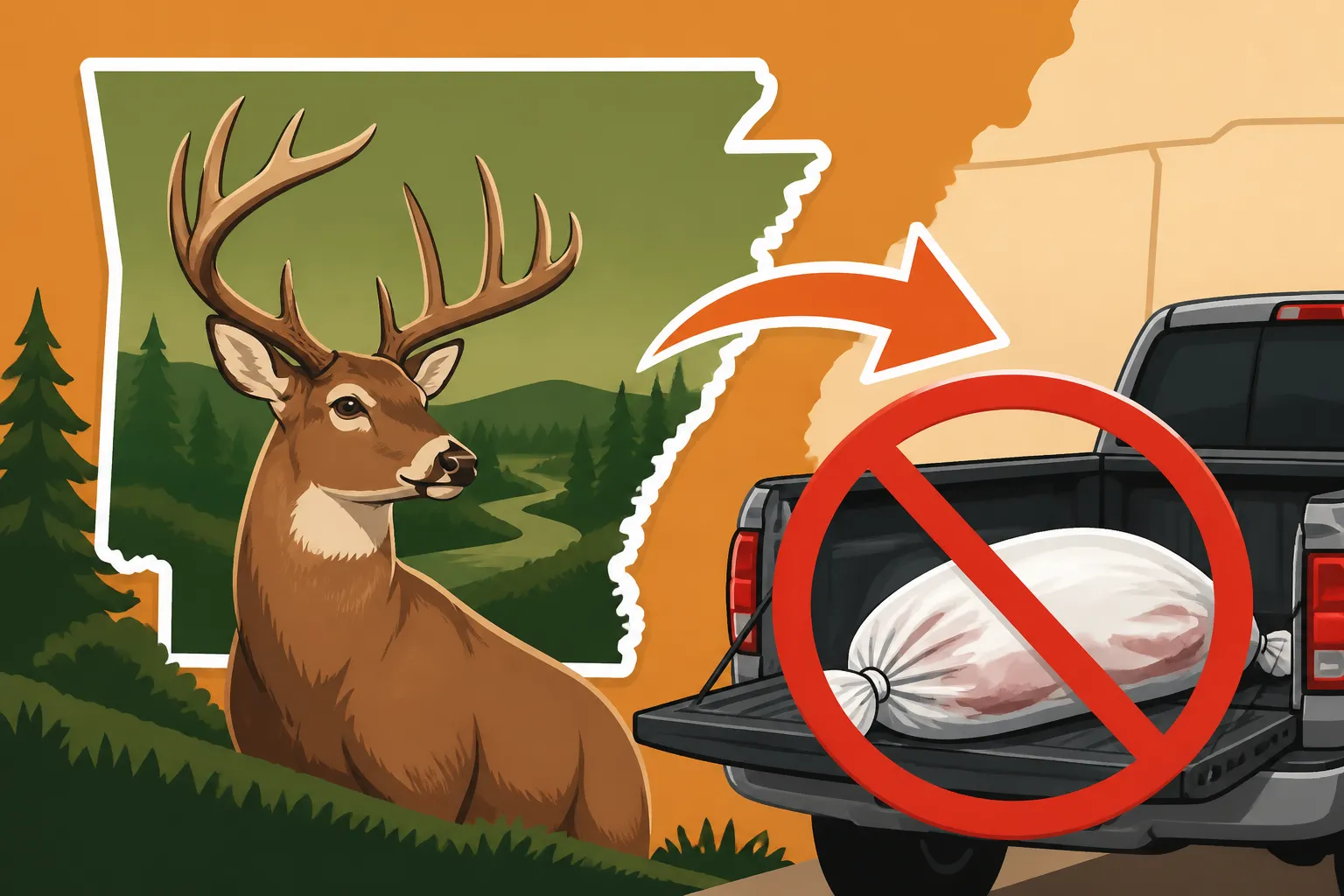
Carcass Transport Rules Out of Arkansas
You've just had an incredible hunt in Arkansas, maybe you finally tagged that buck you've been after in the Ozarks or filled an antlerless tag in the Delta. But as the adrenaline fades, a new kind of worry starts to set in: "How on earth do I get this deer home, especially if I'm crossing state lines?" It's a question that can quickly turn excitement into anxiety, as confusing regulations and the fear of doing something wrong can cast a shadow over an otherwise successful trip. This guide is here to walk you through the labyrinth of carcass transport rules out of Arkansas, making sure your hard-earned harvest makes it home legally and safely.
Understanding the "Why" Behind Carcass Transport Rules: Chronic Wasting Disease
Before we dive into the nitty-gritty of what you can and can't transport, it's crucial to understand why these rules exist in the first place. This isn't just about making things difficult for hunters; it's a critical effort to prevent the spread of Chronic Wasting Disease (CWD). Imagine spending countless hours scouting, practicing, and finally connecting with an animal, only to find out you can't take the parts you want back to your home state. It's truly frustrating, but these regulations are put in place for a very important reason: protecting deer herds across the country.
CWD is a neurological disease that affects cervids, including deer, elk, and moose. It's always fatal, and there's no vaccine or cure. What makes it particularly concerning for wildlife managers and hunters alike is that it's caused by abnormal proteins called prions, which can persist in the environment for years and are highly resistant to degradation. These prions are concentrated in certain parts of an infected animal's body, like the brain, spinal cord, and lymphatic tissues. When hunters transport a whole carcass from an area where CWD is present, there's a risk that these infectious prions could be introduced to new areas, either through discarded carcass parts or infected soil. That's why Arkansas, like many other states, has stringent rules about moving deer, especially across state lines. Arkansas has its own active CWD Management Zones, and these specific areas heavily influence the transport restrictions. For a deeper dive into these regulations, you can read our comprehensive guide on Arkansas CWD Rules and Carcass Transport.
What is Chronic Wasting Disease?
Chronic Wasting Disease is often likened to "Mad Cow Disease" in cattle, though it only affects cervids. It's not a bacterial or viral infection; rather, it's a transmissible spongiform encephalopathy (TSE) caused by misfolded prion proteins. These prions accumulate in the brain and spinal cord, causing lesions and eventually leading to severe neurological degeneration. Animals affected by CWD become emaciated, exhibit abnormal behaviors, lose coordination, and eventually die. The disease has a long incubation period, sometimes years, meaning an infected animal can appear healthy for a significant time before symptoms show. This makes detection and containment incredibly challenging.
The prions shed by infected animals can contaminate soil, plants, and water, creating a persistent environmental reservoir. This is why minimizing the movement of high-risk carcass parts is so vital. Bringing a whole carcass from a CWD-positive area to a CWD-negative area, even if the animal itself isn't infected, carries the risk of transporting these environmental prions. It's a complex issue with no easy answers, and the rules are designed to be a strong preventative measure. Hunters really are on the front lines of helping control this disease, even if it means extra work after a successful harvest.
Arkansas's CWD Management Zones and Their Impact
Arkansas has designated specific areas as CWD Management Zones (CMZs). These zones are typically counties where CWD has been detected in wild deer or elk, or counties adjacent to them where there's a high risk of spread. The rules for transporting deer and elk parts out of Arkansas are much stricter if your harvest originates from one of these CMZs. You can review a current list of these affected areas in our article on the Arkansas CWD Counties List.
The Arkansas Game and Fish Commission (AGFC) regularly updates these zones based on ongoing surveillance and testing. It's absolutely critical to know if the county you're hunting in is part of a CMZ, as this knowledge will dictate your post-harvest processing. If you're using a planning tool like GoHunt, make sure to cross-reference the county maps with the latest AGFC regulations. While the rules can be a hassle, they are paramount for responsible hunting and conservation. Ignoring them could not only lead to fines but also inadvertently contribute to the spread of a devastating disease.
General Arkansas Carcass Transport Rules Within the State
Before you even think about crossing state lines, there are fundamental rules for transporting deer within Arkansas. These apply to all hunters, regardless of whether you're a resident or a nonresident, and they're the first hurdle to clear after a successful hunt. Getting these basics right ensures you're compliant before considering the additional complexities of interstate travel. It's about respecting the animal and the regulations, from the moment it hits the ground until it's properly processed.
Once you've downed an animal, the clock starts ticking for proper tagging and checking. No matter how excited you are, these steps are non-negotiable. It's the moment your successful harvest officially becomes part of the state's management data, and it's also your legal proof of ownership. Don't let the thrill of the hunt overshadow these crucial administrative tasks.
Basic Tagging and Checking Requirements
Every deer harvested in Arkansas must be immediately tagged with your license tag. This tag needs to be filled out completely with the date, time, and county of harvest, then attached to the deer. This is your proof that the animal was legally harvested under your license. Don't skip this step, even if you're just dragging the deer a few hundred yards to your truck. The AGFC takes tagging very seriously, and improper tagging can lead to significant penalties.
After tagging, the next step is checking your deer. This typically needs to be done within 24 hours of harvest. In Arkansas, you can check your deer online through the AGFC website or their mobile app. You'll need information from your tag and license to complete the process. This system helps the AGFC collect vital harvest data, which they use to manage deer populations and set future seasons. This process is fully explained in our guide to Arkansas Deer Checking and Tagging. Once checked, you'll receive a confirmation number that serves as your final proof of compliance. Keep this number handy, as it's often required if you ever need to prove the legality of your harvest later on.
Transporting Whole Carcasses Within Arkansas
Once tagged and checked, you can transport a whole deer carcass within the state of Arkansas. This is a significant difference from interstate travel. For example, if you hunt in an Ozark county and want to drive your whole deer to a processor near Little Rock, that's perfectly fine, provided you've met the tagging and checking requirements. The same applies if you're taking it home to process yourself.
However, even when transporting within the state, it's wise to ensure the carcass is transported in a way that minimizes blood and tissue leakage, especially if you're coming from a CWD Management Zone. While not explicitly illegal, leaving a trail of biological material, especially in public areas, is generally poor practice and can contribute to CWD spread. Consider using game bags, tarps, or even a specialized deer carrier to keep things clean and contained. This just shows good stewardship and respect for public health and wildlife. Also, remember to factor in the challenge of Field Dressing a Deer in Warm Weather if your hunt occurs during the earlier seasons; proper cooling is essential to preserve the meat.
Specific Rules for Transporting Carcasses Out of Arkansas
Now, let's get to the heart of the matter: what you can and cannot take with you when you leave Arkansas with your deer or elk harvest. This is where the CWD regulations really kick in, and misunderstanding them can lead to serious trouble, not just in Arkansas but also in your home state or any states you travel through. The fundamental principle is to only transport parts that are considered low-risk for CWD transmission.
The rules are designed to minimize the movement of high-risk tissues like brain, spinal cord, and lymphatic material, which are known to concentrate CWD prions. This often means doing more processing at your hunt camp or a local facility than you might be used to. It's an extra step, for sure, and after a long day of hunting, it can feel like a chore. But it's absolutely necessary to comply with the law and protect other deer populations. You really need to prepare for this extra work before you even leave for your hunt.
What You Can Take Out of Arkansas
Generally, the AGFC allows the transport of several specific, low-risk parts of a deer or elk carcass out of the state, even from a CWD Management Zone. These items are considered safe because the high-risk CWD prions are largely removed during processing.
Here’s what’s typically allowed:
- Deboned Meat: This is the most common and safest way to transport your harvest. All meat must be completely removed from the bone. This means no spinal column, brain matter, or other central nervous system tissues remain attached.
- Clean Skull Plates: Skull plates that include the antlers are generally allowed, provided all brain matter and visible tissue have been removed. This usually involves a thorough cleaning, sometimes boiling or pressure washing. It needs to be bone-dry and free of any soft tissue.
- Antlers: Detached antlers are always allowed. If you're only interested in the rack, you can saw them off at the pedicle.
- Hides: Capes and hides are allowed, as long as they are free of any head or spinal column material. This usually means the hide is fleshed and either frozen, tanned, or thoroughly salted.
- Finished Taxidermy Products: If you have a taxidermist in Arkansas process your deer into a finished mount (e.g., a shoulder mount), this is allowed, as the mount will no longer contain any high-risk tissues.
- Teeth: Individual teeth can be transported.
Think about it this way: if it could potentially harbor prions, it's probably restricted. If it's pure meat, bone, or skin without any central nervous system components, it's likely okay. This means you should be prepared to perform some serious butchering on site or have a plan with a local processor. Our guide on Butchering a Deer at Camp offers some excellent tips if you plan to do this yourself.
What You Cannot Take Out of Arkansas
This is just as important, if not more so, than what you can take. Transporting any of the following items out of Arkansas (especially from a CWD Management Zone) is illegal and can result in confiscation, fines, and potentially even revocation of hunting privileges.
Here's what is generally not allowed:
- Whole Carcasses: You cannot transport an entire deer or elk carcass out of Arkansas. This means no whole animals, even field-dressed ones.
- Heads with brain material: Unless the skull plate is completely cleaned and free of brain and nervous tissue, you cannot transport a whole head.
- Spinal Columns: The backbone, including the vertebrae, is a high-risk material and cannot be transported.
- Any Central Nervous System Tissue: This includes brain, spinal cord, and any associated soft tissues.
- Lymphatic Tissues: This includes lymph nodes, spleen, and tonsils. These are often difficult for an amateur to remove completely, which is why deboned meat is generally the safest bet.
The rules really aim to isolate and remove the parts most likely to carry CWD. It's a pain, no doubt, especially if you're used to just loading up your truck and driving home. But it's a necessary step to protect wildlife health in other states. It's wise to check the Arkansas Deer Transport Rules for full clarity on intrastate rules, which differ from interstate rules.
The Importance of Your Destination State's Rules
Here's the kicker: Arkansas's rules are only half the battle. You also need to be intimately familiar with the CWD carcass import regulations of your home state, and any states you might be driving through. It's not uncommon for a state to have even stricter rules than Arkansas, or simply different ones. For instance, some states might only allow deboned meat, while others might permit a clean skull plate but only if it's from a non-CWD positive area.
Tools like GoHunt often have state-by-state breakdowns of CWD regulations, which can be incredibly helpful for planning. Before you even set foot in Arkansas, use resources like GoHunt or the official wildlife agency websites of your destination states to confirm exactly what they will allow. Imagine successfully navigating Arkansas's rules, only to have your meat or trophy confiscated at a border checkpoint because your home state has different restrictions. It's a double layer of bureaucracy, but it's essential for a smooth, legal trip home. Don't assume; verify every single time.
Preparing Your Harvest for Interstate Travel
Okay, so you've understood why the rules exist and what you can and can't take. Now for the practical part: how do you get your deer or elk into a transportable condition? This often means getting hands-on with processing at your camp or finding a local professional. It’s an integral part of the hunt now, so budgeting time and resources for this is key.
This step can be intimidating, especially if you're new to extensive field processing. But with the right tools and a little know-how, it's totally achievable. Many hunters find a sense of accomplishment in processing their own game, connecting with the entire process from field to table. Don't be afraid to ask experienced hunting buddies for tips or even to practice on a smaller animal first.
Deboning Meat: The Safest Bet
Deboning your meat on-site is almost always the safest and most legally compliant way to transport your harvest out of Arkansas. It completely removes the spinal column, ribs, and other bone structures that could harbor CWD prions. It also makes the meat much more compact and easier to cool and pack.
Here’s a basic approach to deboning in the field:
- Quartering: After field dressing, separate the deer into four quarters (two front, two hind) and remove the backstraps and tenderloins.
- Meat Removal: Work on a clean surface. Using a sharp knife, carefully slice the muscle groups away from the bone. Take your time to get as much meat as possible, but ensure no bone fragments or connective tissues (especially near the spinal column) remain.
- Trim and Clean: Remove any bruised meat, hair, or dirt. Trim off excess fat and silver skin if you desire.
- Package: Place the deboned meat into clean game bags, coolers, or vacuum-seal bags. Label everything clearly. It's crucial to keep the meat cool, especially if you're Cooling Meat in an Arkansas November or earlier in the season.
- Dispose of Carcass: Properly dispose of the remaining carcass parts (bones, head, hide, entrails) at a designated CWD carcass disposal site if you're in a CMZ, or bury them deeply on private land with permission. Never dispose of high-risk parts along roadsides or in general trash bins in a CMZ.
If you're not comfortable doing this yourself, many small towns in Arkansas have local meat processors who are well-versed in CWD regulations. They can debone and package your meat for transport. This might be a cost-effective and stress-free option, especially for non-residents.
Preparing Skull Plates and Antlers
If you want to keep the skull plate with antlers, it needs to be thoroughly cleaned. This means absolutely no brain matter, visible tissue, or spinal column attachment.
- Cut: Using a saw, cut the skull plate away from the rest of the skull. A common cut goes horizontally across the top of the eye sockets.
- Clean: Scrape, pick, and wash away all brain tissue and any soft tissue from the skull plate. Hot water and a stiff brush can help. Some hunters will boil the skull plate, but be careful not to damage the antlers. The goal is pristine, bone-white bone.
- Dry: Allow the skull plate to dry completely before packing.
If you only want the antlers, you can simply saw them off at the pedicle (the bony base where they attach to the skull). Detached antlers are generally the easiest trophy component to transport. For those considering a more elaborate trophy, finding reputable Taxidermists in Arkansas Hunting Towns who understand the regulations is a wise move.
Handling Hides and Capes
Hides and capes for taxidermy are allowed, provided they are free of any head or spinal column material.
- Cape/Hide Removal: Carefully skin the animal, ensuring you don't cut into the meat. If you're doing a shoulder mount, learn how to properly cape the animal, leaving enough hide for the taxidermist.
- Fleshing: Remove all excess fat and muscle tissue from the inside of the hide.
- Preservation: The hide needs to be preserved for transport. Options include:
- Salting: Thoroughly rub non-iodized salt into the flesh side of the hide. This draws out moisture and prevents bacterial growth. Fold it flesh-to-flesh and roll it up.
- Freezing: If you have access to a large freezer, you can freeze the cape. Wrap it tightly in plastic to prevent freezer burn.
- Tanning: If you're leaving it with a local taxidermist, they may handle initial tanning.
Always keep hides cool and out of direct sunlight to prevent spoilage.
Table: Interstate Carcass Transport Checklist (Out of Arkansas)
To help you visualize the steps and requirements, here's a quick checklist for what you can and cannot take when leaving Arkansas, especially from a CWD-affected area.
| Carcass Part | Allowed for Interstate Transport (from Arkansas) | Required Preparation | Notes |
|---|---|---|---|
| Deboned Meat | YES | All meat completely removed from bone, spinal column, brain, and nervous tissue. | This is the safest and most widely accepted form of transport. Ensure proper cooling and packaging. |
| Clean Skull Plate | YES | All brain matter and visible soft tissue removed and dried. | Must be pristine bone, no fragments of tissue. Boiling or power washing is often required. |
| Antlers (detached) | YES | Separated from the skull. | Easiest trophy part to transport. |
| Hides/Capes | YES | Free of head/spinal column material, fleshed, salted, or frozen. | Ensure no brain, spinal cord, or lymphatic tissue is attached. |
| Finished Taxidermy | YES | Fully processed and mounted by a taxidermist. | No high-risk tissues remain in a finished mount. |
| Individual Teeth | YES | Cleaned. | Low risk. |
| Whole Carcass | NO | Not allowed under any circumstances for interstate transport. | Risk of CWD prion spread. |
| Head (uncleaned) | NO | Not allowed with brain or nervous tissue present. | High-risk tissues (brain, lymph nodes). |
| Spinal Column | NO | Not allowed. | High-risk CWD prions concentrated here. |
| Lymphatic Tissues | NO | Not allowed (often difficult to completely remove from meat). | High-risk CWD prions concentrated here. Be meticulous when deboning. |
Always confirm with your destination state's regulations, as they may have additional restrictions.
Planning Ahead: Permits, Paperwork, and Resources
The key to a stress-free trip home with your Arkansas harvest lies in meticulous planning. Don't wait until you've got a deer on the ground to figure out the logistics. Every successful hunter knows that the hunt doesn't end when the shot breaks; it extends all the way to a properly preserved and legally transported harvest. Taking the time to prepare for this final stage will save you a lot of headaches and potential heartache.
This foresight is especially crucial when navigating complex CWD regulations and interstate travel. A little research and a few phone calls before you leave home can make all the difference, ensuring that your hunting experience is memorable for all the right reasons.
Checking AGFC Regulations Before Your Hunt
Before you even pack your hunting boots, make it a priority to check the latest Arkansas Game and Fish Commission (AGFC) regulations. CWD zones and transport rules can change from year to year, or even mid-season if new CWD detections occur. The AGFC website is your authoritative source for this information. Look for specific sections on deer/elk harvest, CWD, and carcass transport.
It’s also smart to check the regulations for any specific Wildlife Management Areas (WMAs) you plan to hunt, as some public lands might have additional local rules. For instance, if you're exploring Scouting Arkansas Public Land Before Season, check those WMA regulations thoroughly. Print out key pages or save them to your phone for offline access, especially if you'll be in areas without cell service. This proactive approach ensures you're always operating within the most current legal framework.
Utilizing Tools Like GoHunt for Specific State Regulations
While the AGFC provides Arkansas-specific rules, platforms like GoHunt can be invaluable for understanding the entire journey. GoHunt, for example, often compiles CWD regulations for multiple states, allowing you to quickly compare Arkansas's rules with those of your home state and any states you'll be passing through. This "one-stop shop" approach can save you hours of digging through different state agency websites.
Using such tools for planning your trip, including potential routes and stops, ensures that you're prepared for every checkpoint and every state line. Knowing precisely what documentation (like your harvest tag and check confirmation) or specific processing steps (like a completely deboned carcass) will be required at each stage can make your journey home much smoother. Remember to always cross-reference any third-party information with the official state wildlife agency websites for the most up-to-date and legally binding rules.
Communication with Processors and Taxidermists
If you plan to use an Arkansas-based processor or taxidermist, communicate your intent to transport the harvest out of state before your hunt, or at least immediately after your harvest. They are often very familiar with the CWD transport rules and can process your deer accordingly. Many will offer services specifically tailored for out-of-state hunters, ensuring all high-risk parts are removed and the remaining meat or trophy is prepared to meet regulations.
Confirm their understanding of the rules for your specific destination state, if possible. They might even be able to offer advice on packaging or shipping. For example, some processors might offer vacuum-sealing and freezer services, which are critical if you're going to be Shipping Frozen Game Meat by Air. Similarly, a taxidermist can ensure a cape is properly prepared and salted for transport, or ship a finished mount directly to you. This communication is a valuable safety net against unintentional violations.
Navigating Multiple States and Border Crossings
If your journey home takes you through several states, you'll need to be mindful of each state's individual CWD import regulations. A part that's legal to take out of Arkansas and into State A might be illegal to take from State A into State B. It's a logistical puzzle, but it's solvable with good planning.
Consider a direct route that minimizes the number of states you traverse. Pack your processed meat and trophy components clearly and accessibly, making it easy to show officials if you are stopped. Have your Arkansas hunting license, harvest tag, and check confirmation number readily available. While random checks are rare, being prepared for one can prevent delays and complications. It truly highlights the importance of thorough preparation when hunting far from home.
Disclaimer
Please remember that hunting regulations, including CWD zones and carcass transport rules, are subject to change by the Arkansas Game and Fish Commission and other state wildlife agencies. This guide is intended for informational purposes only and does not constitute legal advice. It is the hunter's sole responsibility to confirm and comply with all current local, state, and federal regulations before hunting and transporting any harvested game. Always consult the official websites of the Arkansas Game and Fish Commission and your destination state's wildlife agency for the most up-to-date and accurate information.