Where Arkansas Bears Range
It’s a truly incredible thing to think about, but black bears are not just present in Arkansas; they are absolutely thriving in many parts of our state. For anyone new to the Natural State, or even lifelong residents who remember a time when bear sightings were rare, it can be a real head-scratcher to figure out where these magnificent creatures actually call home. This guide is all about pulling back the curtain on the Arkansas black bear, exploring their historical journey, current strongholds, and the fascinating ways they’ve expanded their range, giving you a clearer picture of where you might encounter one in our wild lands.
The Historic Comeback of Arkansas Black Bears
It might be hard to believe today, given the robust bear populations we boast, but Arkansas was once known as "The Bear State" for a reason. Unfortunately, by the early 20th century, years of unregulated hunting and habitat destruction had severely depleted our black bear numbers, pushing them to the brink of extinction within the state. It was a disheartening situation, seeing such an iconic animal disappear from its native lands.
From Near Extinction to Thriving Populations
The story of the Arkansas black bear is truly one of conservation success, a testament to dedicated efforts by wildlife biologists and conservationists. Beginning in 1958, the Arkansas Game and Fish Commission (AGFC), alongside the U.S. Fish and Wildlife Service, embarked on a groundbreaking reintroduction program. Over the next decade, 254 black bears from Minnesota and Manitoba, Canada, were released into the remote wilderness of the Ouachita and Ozark National Forests. These bears were carefully chosen for their genetic similarity to the original Arkansas population, and the hope was that they would find suitable habitat and begin to reproduce.
And reproduce they did! The initial releases took hold, and the population steadily grew. This wasn't a quick fix; it took decades of careful management, including protective regulations, habitat preservation, and public education. For many years, sightings were mostly confined to the deep woods of the national forests. But slowly, as the population blossomed, bears began to explore new territories, a true wild success story. If you're interested in the nuts and bolts of that journey, take a look at our deeper dive into The 1958 Arkansas Bear Restoration and Arkansas Black Bear Numbers Today.
The Role of Habitat and Conservation Efforts
The success of the black bear reintroduction hinges directly on the quality and abundance of their habitat, primarily found within the vast stretches of the Ozark and Ouachita National Forests. These areas offer the dense forest cover, diverse food sources, and remote spaces black bears need to thrive. The AGFC continues to play a critical role, managing habitats to ensure a continuous supply of acorns, berries, and other natural foods. They also carefully monitor population dynamics, harvest numbers, and public interactions to ensure the health of the herd.
Conservation isn't just about stocking animals; it’s about understanding their needs and protecting the wild places they call home. When you consider initiatives like maintaining healthy forest ecosystems, controlling invasive species that might impact food sources, and educating the public on living responsibly alongside bears, you start to see the multifaceted approach that has allowed these animals to reclaim their historical range. It's a continuous, evolving process that requires a lot of dedication from various agencies and a supportive public.
Understanding Arkansas's Primary Bear Habitats
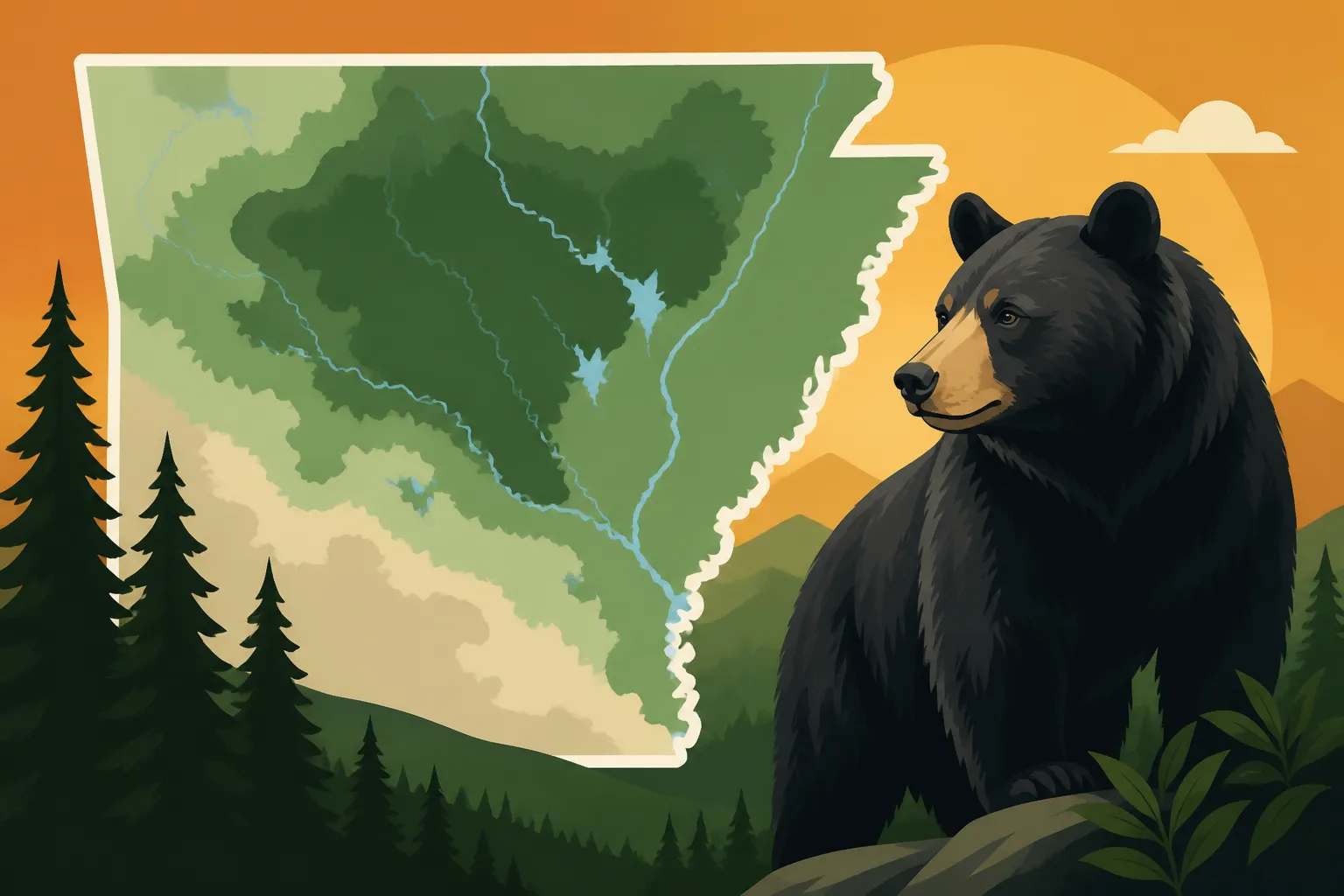
When you talk about black bears in Arkansas, two major mountain ranges immediately come to mind: the Ozarks and the Ouachitas. These are the historical and current strongholds where bear populations are most concentrated and sightings are most common. They offer the perfect blend of dense forests, rugged terrain, and abundant natural food sources that bears absolutely depend on.
The Ozark Mountains: A Bear Stronghold
The Ozark Mountains, covering much of northern Arkansas, are arguably the most iconic bear country in the state. Counties like Newton, Madison, Searcy, Boone, Carroll, and Van Buren consistently report high bear activity and harvest numbers during hunting season. The terrain here is characterized by steep, heavily forested hillsides, deep hollows, and extensive hardwood forests dominated by various oak species, hickories, and other mast-producing trees.
Bears in the Ozarks spend their days foraging for acorns in the fall, which are a critical energy source for fattening up before denning. In spring and summer, they shift to berries, roots, insects, and other plant matter. The dense forest canopy provides excellent cover for sows with cubs and secluded areas for denning. If you're spending time in the Ozark National Forest, especially in the more remote wilderness areas, you're squarely in prime bear habitat. Hunters keen on Black Bear Hunting in Arkansas often focus their efforts in these rugged northern zones.
The Ouachita Mountains: Resurgent Bear Country
South of the Arkansas River lies the Ouachita Mountain range, another significant habitat for black bears. While perhaps not as densely populated with bears as some parts of the Ozarks, the Ouachitas have seen a remarkable resurgence in their bear population since the reintroduction efforts. Counties such as Polk, Montgomery, Yell, Garland, and Hot Spring are now home to healthy and growing bear populations.
The Ouachitas offer a different, yet equally suitable, landscape for bears. Here, pine forests are more prevalent, interspersed with hardwoods, creating a mosaic of cover and food sources. The terrain can be just as rugged, with long, east-to-west running ridges and deep valleys. Bears adapt to these environments, utilizing both pine and hardwood areas for foraging and denning. You'll find them actively searching for acorns in the hardwoods and occasionally rooting around in pine stands for grubs and other edibles. Managing bear populations in this region is crucial, and understanding Arkansas Bear Seasons and Zone Quotas is key for hunters.
River Bottomlands and Delta Fringe Areas
While the mountains are the core, a fascinating aspect of Arkansas bear distribution is their expansion into what are often called "fringe" habitats. Bears are incredibly adaptable, and as their populations have grown in the mountains, younger bears, especially males, are driven to seek out new territories. This natural dispersal has led to an increasing number of sightings and establishing populations in the rich river bottomlands and even the agricultural fringes of the Arkansas Delta.
Areas along the White River, Arkansas River, and even further south into the Felsenthal National Wildlife Refuge, are seeing more consistent bear activity. These bottomland habitats, characterized by seasonally flooded timber, cypress swamps, and dense cane thickets, offer different but abundant food sources like soft mast (persimmons, wild grapes), various plant material, and even carrion. While not as densely populated as the mountains, these areas represent an important expansion of the bear's range, pushing further east and south. This means that folks in counties like Arkansas, Desha, and Drew, traditionally not considered "bear country," are reporting more frequent encounters.
| Primary Bear Range | Key Counties (Examples) | Dominant Habitat Types | General Bear Density |
|---|---|---|---|
| Ozark Mountains | Newton, Madison, Searcy, Boone, Carroll | Dense Hardwood Forests, Rugged Terrain, Deep Hollows | High |
| Ouachita Mountains | Polk, Montgomery, Yell, Garland, Hot Spring | Pine & Hardwood Mix, East-West Ridges, River Drainages | Medium-High |
| River Bottomlands | Arkansas, Desha, Drew, Grant, Lincoln | Flooded Timber, Cypress Swamps, Agricultural Fringe | Medium-Low (Expanding) |
| Peripheral/Transient | Cleburne, Independence, Saline, Jefferson | Mixed Forests, Near Urban/Suburban Areas, Farm Fields | Low (Seasonal/Transient) |
Bear Distribution Beyond the Core Ranges
It's one thing to know that bears live in the Ozarks and Ouachitas, but what truly captures people's attention (and sometimes their surprise!) is seeing a black bear outside of these traditional strongholds. This expansion beyond the core range is a natural consequence of a healthy, growing population and highlights the adaptability of these animals.
Transient Bears and Expanding Sightings
The bears we see venturing into new territories are often young males. Just like young men leaving home, these subadult bears are driven by instinct to find their own space, food sources, and mates, often traveling significant distances. They're trying to establish their own turf, which can be tough in areas already saturated with dominant bears. This dispersal leads them down river corridors, through agricultural fields, and sometimes, surprisingly close to human development.
These transient movements explain why you might hear reports of bears showing up in places like Cleburne County or even near cities like Little Rock. It doesn't necessarily mean a permanent population has established itself there, but rather that a curious or dispersing bear is exploring. Over time, if these areas prove to have sufficient food and cover and minimal human conflict, these transient visits can eventually lead to more permanent residency. This is a dynamic process, and understanding it helps us appreciate the fluidity of wildlife distribution across the state.
Encountering Bears in Unexpected Places
For most Arkansans, seeing a bear is a rare and exciting event. But for some, particularly those living on the fringes of expanding bear habitat, it can be a bit startling. Bears have been sighted in suburban backyards, rummaging through trash cans, or even wandering through town squares. These encounters are typically driven by opportunity – a bear smelling an easy meal from an unsecured garbage can, pet food left outside, or bird feeders.
While these sightings can be alarming, it's important to remember that bears are usually trying to avoid humans. These "nuisance" behaviors are often learned responses to readily available human food sources. Education on how to "bear-proof" your property – like securing trash, cleaning grills, and bringing in pet food – is crucial in minimizing these conflicts. The AGFC actively provides guidance on how to coexist with these expanding populations and what to do if you encounter one. It really makes you rethink how you store your trash, doesn't it?
Factors Influencing Bear Movements
Bear movements aren't random; they are heavily influenced by a combination of natural factors. One of the biggest drivers is food availability. If a particular area has a poor acorn crop in the fall, bears might travel further and wider in search of alternative food sources. This can lead them into areas they wouldn't normally frequent, including agricultural fields where they might feast on corn or soybeans. Drought conditions can also impact berry and other soft mast production, forcing bears to expand their search.
Another factor is population density. As bear numbers increase in core habitats, competition for resources can push younger or less dominant bears into less ideal, but available, territories. Hunting pressure can also temporarily displace bears, causing them to move into adjacent areas. Using tools like GoHunt, you can often analyze historical harvest data and public land features to better understand typical bear movements and potential pressure points, which is invaluable for those looking to understand or even hunt them.
Key Counties for Bear Activity and Hunting
Knowing the broader mountain ranges is one thing, but pinpointing specific counties where bear activity is consistently high gives a much clearer picture for both wildlife enthusiasts and hunters. The Arkansas Game and Fish Commission meticulously tracks harvest data and sightings, which helps us identify these hotspots.
Top Bear Counties in the Ozarks
In the rugged Ozark Mountains, several counties stand out as prime bear country, consistently yielding high numbers of sightings and successful hunts. Newton County, for instance, is practically synonymous with black bears in Arkansas. Its vast stretches of national forest, deep gorges, and abundant mast crops make it an ideal habitat. Madison, Searcy, and Boone counties also boast significant bear populations, particularly in their more forested western and southern portions. Carroll County, especially around Eureka Springs and the Buffalo National River area, sees regular bear activity. Van Buren County, while perhaps less rugged than Newton, still offers plenty of dense forest cover that bears love.
These counties are popular destinations for those seeking to observe bears or engage in Black Bear Hunting in Arkansas. The sheer amount of undeveloped land and diverse forest ecosystems within these areas provides bears with everything they need, from denning sites to a varied diet. If you're planning a trip to the Ozarks and hoping to catch a glimpse of a bear, these are the counties where your chances are highest.
Top Bear Counties in the Ouachitas
Down in the Ouachita Mountains, the story is similar, with several counties emerging as critical bear habitats. Polk County, bordering Oklahoma, is a significant bear producer, with extensive national forest lands providing excellent cover and forage. Montgomery County and Yell County (especially its southern Ouachita portion) are also top-tier bear counties, benefiting from a mix of pine and hardwood forests.
Garland County, despite having the urban center of Hot Springs, still maintains healthy bear populations in its more remote areas, particularly toward the Ouachita National Forest. Hot Spring County, southwest of Garland, also shows consistent bear activity. The Ouachitas often present a slightly different hunting challenge than the Ozarks due to the mix of timber types, but the bears are just as robust. For those interested in Hunting Arkansas Bear Over Natural Food, understanding the specific mast cycles in these Ouachita counties is critical.
Delta Fringe and Peripheral Zone Counties
The expansion of bear range beyond the traditional mountain habitats has led to increased bear activity in counties not historically considered bear country. These are often referred to as "delta fringe" or "peripheral zone" counties, where bottomland hardwoods and proximity to agriculture offer new opportunities for dispersing bears. For example, counties like Arkansas, Desha, Drew, Grant, and Lincoln in the southeastern part of the state are reporting more frequent bear sightings and occasional harvests.
While the densities might not compare to the Ozarks or Ouachitas, the presence of bears in these areas signals a healthy and expanding population. These bears often utilize dense river bottomland forests, like those found along the Saline River or in areas near the Felsenthal National Wildlife Refuge, as travel corridors and for food. Their proximity to agricultural fields means they might occasionally browse on crops, making it important for landowners and residents in these areas to be aware of bear activity and how to minimize potential conflicts. Knowing where these less common sightings occur can be particularly helpful for understanding the full scope of Arkansas Bear Harvest by Zone.
How Hunters Can Identify Bear Hotspots
For hunters and wildlife enthusiasts, simply knowing where bears generally live isn't enough. The real challenge, and the real fun, is figuring out specific hotspots within those ranges. Bears are creatures of habit, driven by food, water, and security. Learning to read the land and utilize modern tools can significantly increase your chances of locating them.
Interpreting Sign: Scats, Tracks, and Rubs
The most fundamental way to identify a bear hotspot is by learning to read the "sign" they leave behind. This involves getting out into the woods and actively looking for evidence of their presence.
- Scats (Droppings): Bear scat is highly variable, depending on their diet. In the fall, it's often full of acorn hulls or berry seeds. In the spring and summer, it might contain insect parts or remnants of other vegetation. Look for large, rope-like droppings, often deposited in visible locations. Fresh scat indicates recent activity.
- Tracks: Black bear tracks are distinctive. Their front paw print often looks like a human hand, with five toes and a prominent heel pad. The hind foot is longer and flatter, resembling a smaller human footprint. Look for tracks in soft mud, along creek banks, or on dusty logging roads. Pay attention to the direction of travel and if multiple tracks suggest a sow and cubs.
- Rubs and Scratches: Bears love to rub their backs against trees, especially pines, often leaving hair behind. Look for bark rubbed smooth or scratched high up on the trunk. They also mark territory by biting and clawing trees. These "bear trees" are usually well-used, indicating a travel corridor or a general area of frequent activity.
- Turned Over Rocks/Logs: Bears are constantly foraging. They'll flip over rocks and logs looking for insects, grubs, and other edibles. If you see numerous overturned rocks or ripped-apart logs, you know bears have been active in that area.
Learning to differentiate these signs from other wildlife is key. If you're serious about finding bears, you need to be constantly on the lookout for fresh sign.
Utilizing Mapping Tools and AGFC Resources
In today's age, technology is an invaluable asset for identifying bear hotspots. Digital mapping applications, like GoHunt or onX Hunt, allow you to overlay property lines, public land boundaries (like the Ozark and Ouachita National Forests), and even detailed topographical maps right on your phone or computer. You can use these tools to identify remote areas with dense cover, potential food sources like oak ridges, or water sources that bears might frequent.
The AGFC also offers fantastic resources, including interactive mapping tools and detailed annual harvest reports. These reports often break down bear harvest numbers by county and zone, giving you a statistical insight into where bears are most consistently taken. By cross-referencing this data with aerial imagery on your mapping app, you can start to pinpoint specific drainages, ridges, or sections of public land that consistently hold bears. For example, knowing How Many Black Bears Arkansas Has statewide can give you context, but drilling down to county-level data is far more practical for scouting specific areas.
Seasonal Food Sources and Their Impact
Understanding what bears eat and when they eat it is perhaps the most critical piece of the puzzle for locating them. Bears are largely opportunistic omnivores, and their movements are heavily dictated by the availability of food.
- Spring/Early Summer: After emerging from dens, bears seek out fresh greens, roots, and especially carrion from winter kills. They'll also actively hunt fawns if given the opportunity. Berries like blackberries and blueberries become important as the season progresses.
- Late Summer/Early Fall: This is when soft mast comes into play. Think wild grapes, persimmons, and pawpaws. Bears will concentrate in areas where these are abundant.
- Fall (Pre-Denning): Acorns are king! White oak acorns, which are less bitter, are usually consumed first, followed by red oak acorns. Bears will gorge themselves on acorns to build up fat reserves for winter denning. Identifying productive oak flats on a map, especially those away from heavy human pressure, can be a huge clue. This is why tactics like Hunting Arkansas Bear Over Natural Food are so effective.
By understanding these seasonal shifts in food availability, you can predict where bears will be concentrating their efforts throughout the year. If you know there's a good white oak crop on a particular ridge in September, that's where you should start your scouting. A little homework combined with some boots-on-the-ground recon can make all the difference in finding these amazing animals.
Disclaimer
Please remember that hunting regulations and wildlife distributions can change. Always consult the latest Arkansas Game and Fish Commission (AGFC) regulations for current seasons, zones, bag limits, and specific rules regarding bear hunting or interactions before heading afield. Safety should always be your top priority.