The Arkansas Feral Hog Problem
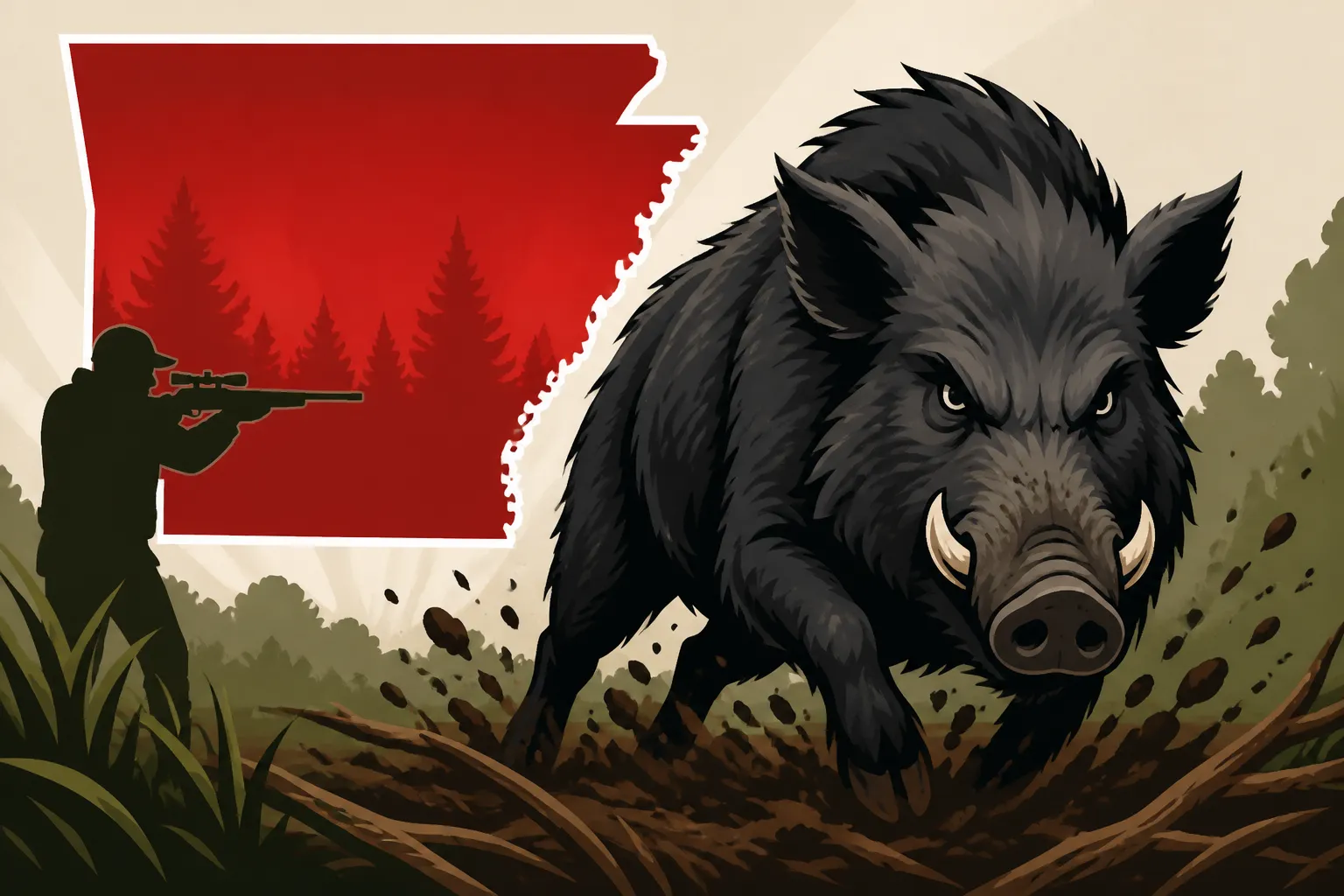
If you're a landowner, farmer, or even just an outdoor enthusiast in Arkansas, you've likely witnessed the destructive force of feral hogs. These invasive animals aren't just a nuisance; they're a full-blown ecological and agricultural crisis, tearing up fields, polluting waterways, and competing with native wildlife. This guide delves deep into the heart of Arkansas's feral hog problem, exploring their impact, management efforts, and what hunters and landowners can do to combat them.
Understanding the Scope of Arkansas's Feral Hog Problem
The phrase "hog wild" takes on a whole new meaning when you consider the sheer numbers and rapid spread of feral hogs across our beautiful state. These aren't your typical farm animals; they are resilient, intelligent, and incredibly destructive creatures that have found a perfect home in Arkansas's diverse landscapes. For those of us who cherish our wild spaces and rely on our fertile farmlands, understanding the magnitude of this challenge is the first step toward effective management.
A Prolific and Persistent Invasive Species
Feral hogs, often a mix of domestic swine gone wild and European wild boar, are truly a biological success story in all the worst ways. They're built for survival, with tough hides, sharp tusks, and an uncanny ability to adapt to almost any environment. What really sets them apart, though, is their reproductive rate. A sow can become sexually mature as early as six months old and can have two litters a year, each averaging four to eight piglets. Do the math, and you can quickly see how a small group can explode into an uncontrollable population in just a few years. It's a biological phenomenon that makes eradication feel like an uphill battle, especially when you factor in their intelligence and wariness. They learn quickly, becoming nocturnal and avoiding human contact once pressured, making traditional hunting methods less effective on their own.
Where Feral Hogs Thrive in Arkansas
While you can find feral hogs in almost every county across Arkansas, they particularly thrive in areas rich in food and cover. This includes the dense bottomland hardwoods of the Delta, where acorns and soft mast are abundant, and the thickets provide perfect daytime bedding. You'll also find them in agricultural regions, especially near fields of corn, rice, and soybeans, which are essentially an all-you-can-eat buffet. The forested areas of the Ozarks and Ouachitas aren't immune either, with hogs often found rooting along creek bottoms and in areas with mature oak stands. Their adaptability means they can exploit small woodlots, suburban fringes, and even river islands, making them a truly pervasive threat. The availability of water, whether it's a slough, a creek, or a farm pond, is also a huge draw, as hogs love to wallow to cool off and rid themselves of parasites.
Why Eradication is So Challenging
The idea of completely eradicating feral hogs in Arkansas, or anywhere they've established a foothold, is a monumental task, bordering on impossible with current methods. There are several factors contributing to this persistent problem. First, their incredible reproductive capacity means that even if you remove a large number of hogs, the remaining population can quickly rebound. It's like trying to empty a bathtub with the faucet still running. Second, their intelligence and elusive nature make them incredibly difficult to catch or kill. After a few negative encounters, they become extremely wary, often switching to nocturnal feeding patterns or retreating into impenetrable cover. Third, the sheer acreage of land in Arkansas, both public and private, means that a truly comprehensive, coordinated effort across all land types is difficult to achieve consistently. Lastly, the unfortunate reality of illegal translocation – people moving hogs from one area to another for hunting purposes – has historically exacerbated the problem, introducing them to new areas where they then establish new breeding populations. This human element makes effective control even more complicated.
The Devastating Impact of Feral Hogs on Arkansas
It’s easy to dismiss feral hogs as just another wild animal, but their presence in Arkansas carries a heavy, destructive cost that impacts everything from farmers' livelihoods to the health of our natural ecosystems. Their behavior is inherently disruptive, and when you multiply that by their staggering numbers, the damage becomes truly catastrophic. Anyone who has walked through a freshly rooted field or seen the destruction in a pristine hardwood bottom knows this firsthand.
Agricultural Catastrophe and Economic Loss
For Arkansas farmers, feral hogs are an absolute nightmare. These animals can decimate entire fields of crops overnight, whether it's rooting up newly planted rice, trampling corn, or feasting on soybeans and peanuts. Imagine spending months cultivating a field, pouring in resources and labor, only to wake up and find it's been plundered by a sounder of pigs. The economic losses are staggering, affecting not just large-scale operations but also small family farms struggling to make ends meet. Beyond direct crop damage, hogs also destroy fences, irrigation systems, and agricultural infrastructure, leading to costly repairs and further delays. Their presence can also stress livestock, disrupt grazing patterns, and contaminate feed and water sources. This isn't just a nuisance; it's a direct hit to the agricultural backbone of our state, causing millions of dollars in losses annually and creating immense frustration for those who work the land.
Environmental Destruction and Wildlife Disturbance
The damage doesn't stop at farmlands; our precious natural environments suffer immensely too. Feral hogs are ecological bulldozers, rooting up vast tracts of land in search of food. This rooting behavior destroys native vegetation, damages tree roots, and can lead to severe soil erosion, especially along streambanks and in wetland areas. This erosion then pollutes waterways, affecting water quality and aquatic life. They're omnivores with voracious appetites, consuming acorns, roots, tubers, insects, and even small mammals and reptiles. This puts them in direct competition with native wildlife for food resources, particularly white-tailed deer and black bears.
Even worse, they are notorious predators of ground-nesting birds, like wild turkeys and quail, devouring eggs and young chicks. Imagine a turkey hen's nest, carefully camouflaged, being rooted out and destroyed by a passing sounder. This impact on populations, particularly our already struggling Arkansas Turkey Population Trends and quail numbers, is a serious conservation concern. They also disturb vital wetland habitats, which are crucial for migratory birds, including the numerous ducks that flock to Arkansas during the winter. This broad environmental degradation can alter ecosystems, reduce biodiversity, and make it harder for native species to thrive.
Disease Vectors and Public Health Concerns
The threat from feral hogs isn't just limited to property and wildlife; they are also significant carriers and transmitters of diseases, posing risks to livestock, pets, and even humans. Hogs can carry a host of diseases, including pseudorabies, brucellosis, leptospirosis, tuberculosis, and E. coli. While many of these primarily affect other animals, some, like brucellosis, can be transmitted to humans, causing flu-like symptoms that can become chronic and debilitating.
Imagine a group of hogs congregating at a water source, contaminating it with their waste, then that water being consumed by cattle or even passing into a public water supply. The potential for disease spread to domestic livestock is a major concern for cattle ranchers and hog farmers, leading to economic losses from illness and quarantine measures. Even hunters who handle feral hog carcasses must take precautions, using gloves and proper sanitation to minimize exposure. The presence of these disease reservoirs running rampant across the landscape adds another layer of complexity and concern to the already daunting task of managing their populations.
Arkansas's Approach to Feral Hog Management and Control
Given the widespread destruction and ecological threat posed by feral hogs, the Arkansas Game and Fish Commission (AGFC) and other state agencies have developed specific strategies and regulations to combat this invasive species. It's a multi-faceted approach, acknowledging that there's no single silver bullet, and it often involves collaboration between state efforts and individual landowner actions.
The AGFC's Stance and Regulations
The Arkansas Game and Fish Commission views feral hogs primarily as an invasive species rather than game animals. This distinction is crucial, as it shapes the regulations around hunting and trapping. Essentially, the AGFC wants hunters to remove as many hogs as possible, year-round, without restriction on bag limits. In most of Arkansas, feral hogs can be hunted day or night, with no closed season and no bag limit on private land. This contrasts sharply with regulated game species like deer and turkey. However, there are some nuances. For example, baiting for deer is often restricted, but for hogs, it's generally encouraged to draw them in for removal, though specific rules apply in Baiting Rules in Arkansas CWD Zones.
On public lands managed by the AGFC, like Wildlife Management Areas (WMAs), the rules can be more restrictive. Often, hog hunting on WMAs is only permitted during open deer or bear seasons, and sometimes specific methods, such as night hunting or the use of certain firearms, might be prohibited. It's critical for hunters to check the specific regulations for each WMA before heading out. The AGFC's overall goal is to facilitate continuous removal, recognizing that consistent pressure is key to preventing population booms.
State-Level Coordination and Assistance
Beyond individual hunting, the state of Arkansas also engages in more organized, coordinated efforts to control feral hog populations. The AGFC works with other agencies, like the USDA Wildlife Services, to implement large-scale trapping and aerial removal programs, particularly in areas with high agricultural damage or sensitive ecological habitats. These programs often utilize advanced trapping systems, such as large corral traps, which can capture an entire sounder at once, or thermal imaging from helicopters for efficient removal in open areas.
There are also various programs designed to provide resources and support to private landowners. These might include cost-share programs for fencing, expert advice on trapping strategies, or even loaner traps. The goal is to empower landowners, who collectively manage a vast amount of Arkansas's land, to effectively deal with hog problems on their property. This collaborative approach recognizes that controlling feral hogs requires a concerted effort beyond what any single hunter or agency can achieve alone.
Landowner Responsibilities and Opportunities
For private landowners, dealing with feral hogs is often a persistent battle. However, they also have the most flexibility and opportunity to make a significant impact. On private land, the regulations are generally liberal, allowing for year-round hunting, trapping, and various control methods. Landowners can hunt hogs without a license on their own property, but visitors generally need an Arkansas Hunting Licenses and What They Cost.
Many landowners find success by combining various methods. This might involve strategically placing corral traps in travel corridors or feeding areas, actively hunting during peak activity times, or using thermal optics for night hunting. Often, the most effective strategy involves constant vigilance and immediate action when hog sign is detected. For those looking to coordinate their efforts, tools like GoHunt's mapping features can be invaluable for identifying hog hotspots, tracking their movements, and planning trap locations on their property. Building a strong relationship with neighboring landowners to create a larger, coordinated control zone can amplify success, as hogs don't respect property lines. Learning about Getting Private Land Permission in Arkansas from adjacent landowners can open up opportunities for broader control efforts.
Hunting Feral Hogs in Arkansas: Methods and Regulations
Hunting feral hogs in Arkansas is a unique experience compared to pursuing regulated game species. Because they're an invasive pest, the rules are generally designed to encourage removal, rather than manage for sustainable harvest. This means more freedom for hunters, but also the responsibility to understand what's effective and ethical. It's not always about a trophy; it's about reducing their numbers.
Legalities of Hunting Feral Hogs in Arkansas
As mentioned, the AGFC classifies feral hogs as an invasive species, not game. This means that on private land, you can generally hunt them year-round, day or night, with no bag limit. You can use a variety of weapons, including rifles, shotguns, archery equipment, and even handguns. Many hunters even use night vision or thermal optics for after-dark eradication, which is often the most effective time to catch these wary creatures unawares. There's no requirement for tagging or checking a harvested hog, which further streamlines the removal process.
However, it's absolutely crucial to remember that these liberal rules apply primarily to private land. When hunting on public lands, such as Arkansas Wildlife Management Areas or National Forests, the rules can be very different and much more restrictive. For example, on many WMAs, hog hunting is only allowed during specific open seasons for deer or other game, and night hunting might be prohibited. Always, and I mean always, check the specific WMA or public land regulations before you go. Ignorance of the law is no excuse, and violating public land rules can lead to citations and loss of hunting privileges.
Effective Hunting Tactics for Wild Pigs
Feral hogs are smart, and they learn quickly. What works once might not work again, especially if they associate human presence with danger. Therefore, a multi-faceted approach is often the most successful.
One common tactic is still-hunting or stalking, particularly in thick cover or along creek bottoms where hogs often travel or bed. This requires stealth and a keen eye for rooting, tracks, and droppings. Another popular method involves hunting over bait, using corn or other attractants to draw hogs into a specific area. This can be effective, especially for night hunting with thermal optics, but remember to be aware of any Baiting Rules in Arkansas CWD Zones that might impact your setup, even if specifically targeting hogs.
For those with access to dogs, running hog dogs can be incredibly effective, especially in dense swamps or cutovers where traditional still-hunting is difficult. These dogs track, bay, and sometimes catch hogs, allowing the hunter to move in for a clean kill. This method is often part of Deer Hunting With Dogs in Arkansas traditions, but adapted for hogs. Additionally, some hunters utilize elevated stands or ground blinds overlooking known travel routes or feeding areas, much like deer hunting, but with the flexibility to hunt hogs throughout the day or night if private land regulations allow. Scouting is paramount for all these tactics; using tools like the AGFC Map Tool or GoHunt can help you identify areas of recent hog activity, feeding patterns, and potential travel corridors.
Public Versus Private Land Considerations
The distinction between public and private land for hog hunting in Arkansas is significant and cannot be overstated.
Private Land: On private land, you typically have the most flexibility. If you own the land or have explicit permission from the landowner, you can implement a wide range of control methods year-round. This includes extensive trapping, night hunting with thermal equipment, and continuous hunting pressure. The goal here is often localized eradication or severe population reduction to protect crops or specific ecological features. Building a good relationship with landowners, especially farmers, can be a great way to gain access and help them manage their hog problem.
Public Land: Hunting hogs on public land, such as National Forests or state WMAs, requires adherence to specific regulations that are often tied to regular game seasons. This means your opportunities might be limited to archery, modern gun, or alternative firearms seasons for deer. Night hunting is rarely allowed, and methods like baiting are often prohibited. While you can still harvest hogs during these open seasons, the episodic nature of public land hunting makes comprehensive eradication extremely difficult. Hunters on public land contribute to overall population reduction but usually cannot achieve the sustained pressure needed for localized control that's possible on private property. Therefore, it's vital to research the specific rules for any public land you plan to hunt.
Beyond the Hunt: Comprehensive Hog Control Strategies
While hunting certainly plays a role in managing feral hog populations, it's rarely enough on its own to truly control or reduce their numbers significantly, especially given their prolific breeding. Effective feral hog management requires a multi-pronged, continuous approach that often integrates trapping, exclusion, and coordinated efforts. Think of it as a sustained campaign rather than a single battle.
Advanced Trapping Techniques
Trapping is widely considered one of the most effective methods for removing large numbers of feral hogs, especially when targeting entire sounders (groups of hogs). Modern trapping has moved beyond simple box traps. Today, land managers and experienced hog controllers often utilize large corral traps, sometimes 10-20 feet in diameter, equipped with remote trigger systems. These systems allow you to monitor the trap remotely via cellular cameras and only trigger the gate once an entire sounder has entered, maximizing your catch.
Successful trapping involves several key steps:
- Pre-baiting: For days or even weeks, scatter bait (like shelled corn) around the trap site without setting the trap. This habituates the hogs to feeding at that location and walking into the trap enclosure freely.
- Monitoring: Use trail cameras (some even have cellular capabilities) to observe hog activity, identify sounder sizes, and learn their patterns. Tools like GoHunt can help you mark these observation points and plan your strategy.
- Strategic Placement: Place traps along known travel corridors, near water sources, or at the edge of feeding areas.
- Patience and Persistence: Hogs are wary. It might take time for them to become comfortable with the trap. Consistency in baiting and monitoring is key.
- Proper Euthanasia: Once caught, hogs must be humanely dispatched. This is a critical and non-negotiable step.
Trapping, when done correctly, can remove a significant number of hogs at once, making a real dent in localized populations.
Exclusion Fencing and Habitat Modification
Sometimes, the best offense is a good defense. For specific areas that need robust protection, such as valuable crop fields, sensitive conservation areas, or even residential gardens adjacent to wild areas, exclusion fencing can be an effective, albeit expensive, solution. Fences designed to keep hogs out need to be sturdy, at least 32-36 inches high, and ideally have a tight bottom edge that's either buried or flush with the ground to prevent rooting underneath. Electric fencing, either as a standalone barrier or as an addition to a woven-wire fence, can be particularly effective, as hogs quickly learn to avoid the shock.
Habitat modification can also play a role. While it's impossible to "hog-proof" an entire landscape, managing dense thickets or controlling certain food sources in very localized, critical areas can sometimes make an area less attractive. However, given their adaptability, this is usually a secondary measure to trapping and hunting.
The Importance of Coordinated Efforts
The challenge of feral hogs is too big for any single individual or agency to tackle alone. Coordinated efforts across multiple landowners, agencies, and even counties are absolutely essential for long-term success. Hogs move freely across property lines, so if one landowner is diligently trapping and hunting, but their neighbor is doing nothing, the problem will simply migrate back.
This coordination can take many forms:
- Neighbor-to-Neighbor Collaboration: Farmers and rural landowners sharing information, coordinating trapping efforts, and allowing access to each other's property for control activities.
- Governmental Programs: State and federal agencies providing technical assistance, loaner equipment, or even conducting large-scale removal operations in high-impact areas.
- Community Task Forces: Local groups forming to educate residents, share resources, and organize collective hog eradication events.
Think of it this way: if a river is flooding, everyone along its banks needs to work together to build levees and divert water, not just one homeowner. The same principle applies to feral hogs. By acting collectively, sharing knowledge, and applying consistent pressure across broader landscapes, we stand a much better chance of mitigating The Arkansas Feral Hog Problem and protecting our state's natural beauty and agricultural heritage. Organizations involved in Predator and Furbearer Hunting in Arkansas also often contribute to hog control due to overlapping methods.
| Control Method | Pros | Cons | Best Use Case |
|---|---|---|---|
| Hunting | Affordable, accessible, provides recreation, immediate removal of individuals | Often difficult to remove entire sounders, hogs become wary/nocturnal quickly, not effective for population reduction on its own, limited on public lands. | Supplemental control, recreational hunting, quick removal of problem hogs. |
| Trapping | Highly effective for removing entire sounders, consistent results, can be done remotely. | Requires significant time commitment (pre-baiting, monitoring), initial equipment cost, hogs can become trap-shy, requires humane dispatch. | Primary control method for significant population reduction on private land. |
| Exclusion Fencing | Prevents damage in specific areas, long-term protection, low maintenance once installed. | Very high initial cost, requires regular inspection and maintenance, only protects specific areas, does not remove hogs from the landscape. | Protecting high-value crops, critical habitats, or residential areas. |
| Aerial Control | Rapid removal of large numbers of hogs over vast areas, especially effective in open terrain. | Extremely expensive, requires specialized equipment and trained personnel, often not feasible for small landowners, public perception issues. | Large-scale, coordinated efforts in remote or high-density areas. |
| Coordinated Efforts | Maximizes effectiveness across property lines, shares resources, creates broader impact. | Requires extensive communication and collaboration between multiple parties, can be difficult to organize and sustain. | Essential for regional control and long-term population management. |
Disclaimer
This article is for general informational purposes only and does not constitute professional advice. Laws, prices and regulations vary by location and change over time. Consult a qualified professional for guidance on your specific situation.