When the Arkansas Rut Peaks by Zone
It's easy to assume that deer everywhere "rut" at the same time, a magical couple of weeks when every buck in the woods loses its mind. But if you've hunted Arkansas for any length of time, you know it's just not that simple. Our diverse landscape means the whitetail rut is a dynamic, shifting event, with peak breeding activity varying significantly from one region to another. This guide is here to help you unravel the mystery, offering a clear breakdown of when and why the rut peaks in different Arkansas deer zones, so you can plan your hunts with confidence.
Understanding the Arkansas Deer Rut: More Than Just One Peak
When we talk about "the rut," most hunters immediately picture chasing bucks that are completely focused on does, throwing caution to the wind. And while that's certainly part of it, the rut is a complex biological process with distinct phases, and understanding these is key to successful hunting in Arkansas. It's not a single, statewide light switch; it's a gradual ramp-up, a peak, and a trailing off, all influenced by local factors.
What the Rut Really Means for Hunters
For us hunters, the rut represents the absolute best opportunity to encounter mature bucks that are actively moving during daylight hours, often venturing out of their typical nocturnal patterns. During the peak of the rut, bucks are driven by an instinct to breed, covering ground in search of receptive does. This intense period of activity means they're more susceptible to calls, decoys, and simply being in the right place at the right time. However, if you're not in the woods during the actual peak of this activity, you might miss the boat entirely, even if you’re out during what someone else considers "the rut" in a different part of the state. It's a frustrating dance, but one that becomes predictable once you understand the local rhythm.
Factors Influencing Rut Timing
The timing of the rut isn't random; it's primarily governed by photoperiod – the amount of daylight in a 24-hour cycle. As days shorten in the fall, it triggers hormonal changes in deer that initiate the breeding cycle. However, local factors can influence when that peak activity is most observable and intense. Things like genetics within local deer herds, population densities, and even local weather patterns can play a role. For example, a concentrated doe population might mean bucks don't have to travel as far, making the peak seem more intense in a smaller area. Conversely, a sparse population could stretch out the visible rut activity as bucks continue to search widely for does. The overall health of the herd and environmental conditions also contribute to the intensity and duration of the rut.
The Importance of Local Observation
While we can provide general timelines for Arkansas's zones, there's no substitute for your own boots-on-the-ground observation. Trail cameras are invaluable for this, helping you track buck behavior, scrape activity, and the presence of estrous does in your specific hunting area. Pay attention to fresh rubs and scrapes, increased buck sightings, and the way bucks are interacting with does. Are they just chasing, or are they paired up? These subtle cues are your real-time indicators. Apps like GoHunt, with their detailed mapping layers, can help you keep track of where you’re seeing sign and correlate it with the calendar, giving you a localized rut report specific to your hunting grounds. Regularly checking your cameras, scouting before season, and simply spending time in the woods listening and watching can tell you more about the exact peak in your spot than any general guide can.
A Deep Dive into Arkansas's Deer Zones and Their Rut Patterns
Arkansas is a big state, and its diverse topography and habitats lead to significant differences in deer behavior, including when the rut truly kicks into high gear. The Arkansas Game and Fish Commission (AGFC) divides the state into numerous deer zones, and understanding these boundaries is crucial because they often correspond to distinct ecological regions with their own rut characteristics. While there's always overlap and variability, some general patterns emerge that can help guide your hunting plans. For a complete understanding of how these zones are drawn, you might want to look into Arkansas Deer Zone Boundaries.
The Delta Zones: Early Peaks and Lingering Activity
The Delta region of eastern Arkansas, encompassing zones like 4, 4A, 5, 5A, 5B, 10, and 11, often experiences an earlier and more pronounced rut than other parts of the state. Here, the peak breeding activity typically falls between mid-November and early December. You might see some pre-rut chasing and scrape activity starting in late October, but those intense breeding days, where bucks are truly focused, often hit around Thanksgiving.
What makes the Delta unique is the combination of highly fertile soils, abundant food sources (like agricultural fields of corn and soybeans), and often vast expanses of bottomland hardwoods. These conditions can lead to healthier deer herds with consistent breeding cycles. However, hunting pressure can be intense, especially during modern gun season, which often coincides with the peak rut in these zones. Hunters often report seeing the most intense breeding activity shortly before or during the early days of modern gun season. After this initial peak, activity can slow down, but it's important to note that a secondary or lingering rut can occur, especially into late December or even Hunting the Delta Rut in January. This later activity is often attributed to does that weren't bred during the first cycle or younger does coming into estrus for the first time. For more specific information on hunting in this unique environment, check out Deer Rules in the Arkansas Delta Zones.
The Ozark and Ouachita Mountain Zones: A Classic, Defined Rut
Moving west into the rolling hills and rugged terrain of the Ozark and Ouachita National Forests, including zones like 1, 1A, 2, 3, 6, 7, 8, 9, 12, 13, and 16, the rut tends to follow a more traditional, slightly later timeline compared to the Delta. Here, the peak breeding window generally occurs from late November through mid-December. Pre-rut activity, with bucks establishing dominance and making rubs and scrapes, will often be noticeable in early November, leading up to that intense two-to-three-week period.
The terrain in these regions is vastly different, characterized by dense timber, steep ridges, and hollows. Deer densities can be lower than in the Delta, and food sources are typically more spread out, consisting primarily of acorns, forbs, and browse. This can sometimes lead to bucks covering more ground in search of does, making them highly callable during the peak. During this period, you’ll find bucks actively scent-checking trails, cruising ridge lines, and checking known doe bedding areas. The week after Thanksgiving often sees some of the most consistent rutting action in these mountain zones. If you're planning a trip here, understanding Deer Rules in the Arkansas Ozark Zones will be beneficial.
South Arkansas Zones: The Late-Season Surprise
The southern part of Arkansas, encompassing zones like 14, 15, 16A, 17, and parts of others, holds a fascinating rut pattern that often catches hunters from other regions by surprise. This area, often characterized by pine plantations, mixed timber, and some agricultural pockets, typically experiences the latest rut in the state. The peak breeding activity here can extend from mid-December well into January, with some reports of significant rut activity even through the end of the season.
This later rut timing is a well-documented phenomenon, and while the exact biological reasons are complex, it's often attributed to genetic differences within the deer populations in this geographic area. For hunters, this means the late archery and muzzleloader seasons, and even the late modern gun opportunities, can coincide directly with prime breeding activity. It's not uncommon to witness intense chasing, scraping, and fighting behavior in South Arkansas when other parts of the state have settled into a post-rut lull. This makes the late season incredibly exciting for those willing to brave the colder weather and capitalize on this unique timing. To learn more about this specific phenomenon, see Why the Rut Runs Late in South Arkansas.
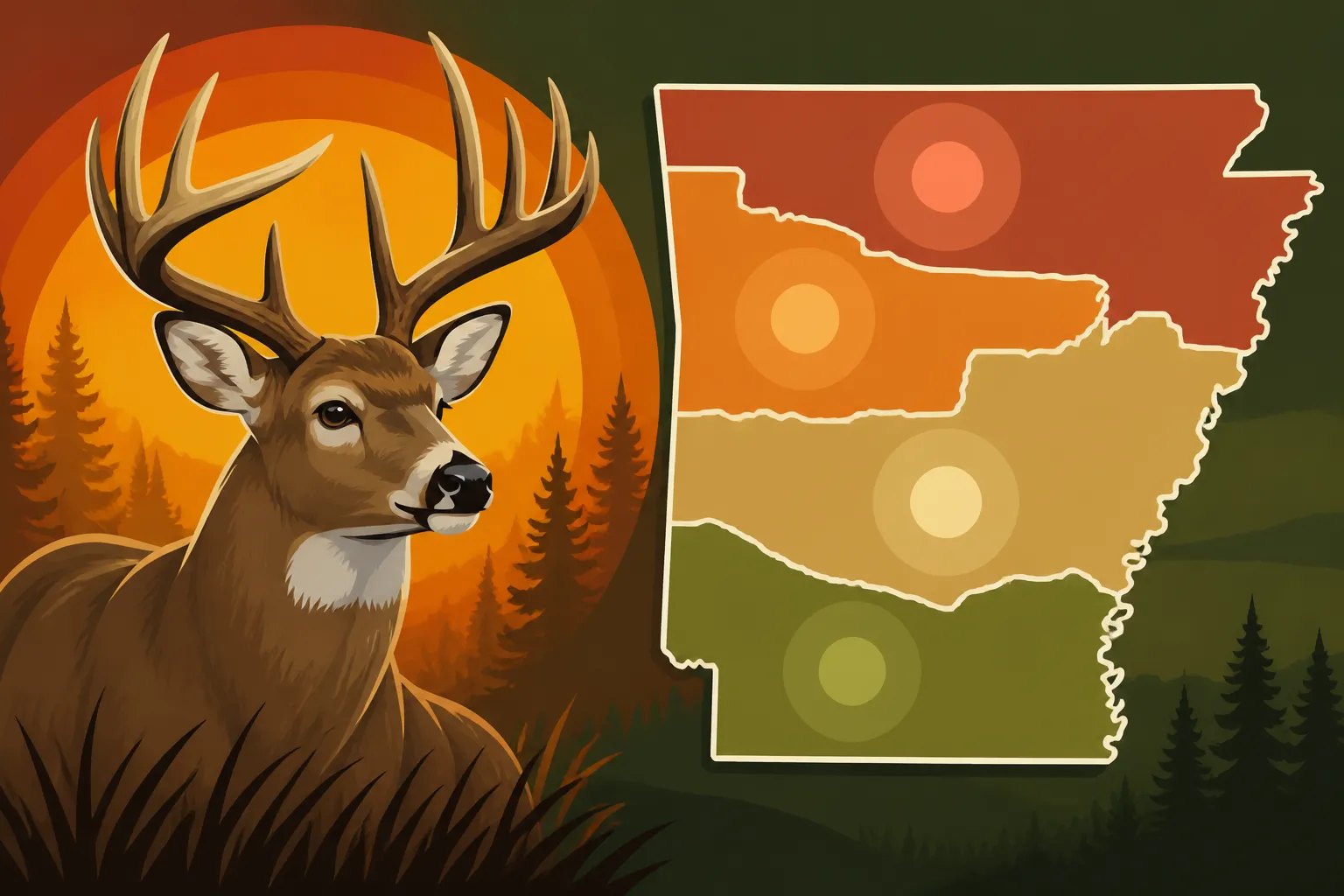
Here’s a simplified breakdown of general peak rut periods by zone type:
| Zone Type | AGFC Deer Zones Represented | General Peak Breeding Window | Key Characteristics |
|---|---|---|---|
| Delta (East) | 4, 4A, 5, 5A, 5B, 10, 11 | Mid-November to Early December | Early, intense, often coincides with Modern Gun opener. |
| Ozark/Ouachita (West) | 1, 1A, 2, 3, 6, 7, 8, 9, 12, 13, 16 | Late November to Mid-December | Classic, defined rut, good for calling and cruising. |
| South Arkansas | 14, 15, 16A, 17 | Mid-December to January | Latest rut in the state, offers late-season opportunities. |
This table provides general guidelines. Local conditions and specific deer populations can always cause variations.
Strategizing Your Hunt Around the Peak Rut
Knowing when the rut peaks is only half the battle; the other half is understanding how to adjust your hunting strategies to capitalize on each phase. The pre-rut, peak rut, and post-rut each demand different approaches, and being versatile will increase your chances of success.
Pre-Rut: Setting the Stage for Success
The pre-rut, typically starting a few weeks before the peak breeding, is often considered by many experienced hunters as one of the best times to hunt a mature buck. Bucks are starting to feel the hormonal shift, becoming more active, aggressive, and daylight-oriented. They're laying down rubs and scrapes, establishing dominance, and starting to cruise for the first does coming into estrus. They're still vulnerable to feeding patterns, but their focus is shifting.
During this phase, concentrate on areas where does frequent, such as food plots, acorn flats, and thick cover. Bucks will be scent-checking these locations regularly. Grunt calls and rattling can be incredibly effective now, as bucks are eager to assert their dominance and investigate perceived intruders. You might try Rattling and Grunting in Arkansas during this time. Focus on pinch points, funnels, and travel corridors between bedding and feeding areas. This is when patience and strategic stand placement pay off, as bucks are predictable in their movements but still slightly cautious.
The Peak Breeding Window: Go Hard or Go Home
This is the chaotic, high-stakes period everyone talks about. During the peak of the rut, does are receptive, and bucks are throwing caution to the wind. Their primary objective is to find and breed does, often leading to them covering vast distances and moving at all hours of the day. This is when you're most likely to see bucks chasing does relentlessly, running across open fields, and fighting over breeding rights. This intense activity means bucks will often let their guard down, focusing more on the chase than on surrounding dangers.
Your strategy during the peak rut should be aggressive and persistent. Hunt all day if you can, especially if you're targeting that critical Hunting the Peak Rut Week in Arkansas. Bucks might be anywhere, so consider hunting travel corridors, ridge tops, and areas with high doe density. Calling can still work, but it's more about intercepting a buck on the move rather than luring him in with a challenge. Decoys, particularly a doe decoy or a buck-and-doe setup, can be very effective in grabbing a cruising buck's attention. Keep an eye on the wind, but also be ready for unpredictable movements; a hot doe can lead a buck anywhere.
Post-Rut: Capitalizing on Worn-Out Bucks
After the intense energy expenditure of the peak rut, bucks are often exhausted, thinner, and seeking to replenish their energy reserves. While the breeding frenzy has mostly subsided, there might still be a few late-estrus does or younger does coming into cycle for the first time, which can trigger some renewed, albeit less intense, buck movement. This is where a phenomenon like Hunting the Delta Rut in January really comes into play.
In the immediate post-rut, focus shifts back to food sources. Bucks will be hitting protein-rich forage hard, trying to regain weight lost during the chase. Look for them in late-season food plots, remaining acorn crops, and browse areas. Bedding areas near these food sources become critical. While calling is less effective than during the pre-rut, a soft grunt or bleat might still pique the interest of a lone buck searching for a late doe or simply moving to feed. This phase requires patience and often involves long hours watching known food sources, as bucks become much more cautious and predictable in their movements once again.
Tools and Tactics for Timing Your Arkansas Rut Hunt
Beyond general timelines, a savvy Arkansas hunter uses every tool at their disposal to pinpoint the rut's actual arrival and duration in their specific hunting spot. Technology, combined with old-fashioned woodsmanship, is your best friend here.
Utilizing Mapping Tools for Zone Awareness
Modern mapping applications are invaluable for understanding deer zones and planning your rut hunts. Platforms like GoHunt allow you to overlay AGFC deer zone maps onto satellite imagery, giving you a crystal-clear understanding of which zone you're in and how its rut timing might differ from an adjacent zone. This is especially useful if your hunting area straddles a zone boundary.
Using these tools, you can mark specific buck sign you've found – rubs, scrapes, and tracks – and correlate them with the calendar. Over time, this creates a personalized rut "map" for your hunting spots. You can also use the topographical features to identify pinch points and funnels that bucks are likely to use during their rutting cruises. Being able to see your position relative to feeding areas, bedding cover, and potential travel corridors on a detailed map is a game-changer when bucks are on the move. Consider using these tools to identify areas where you might consider Scouting Arkansas Public Land Before Season to find early rut sign.
Reading Deer Sign to Confirm Activity
Trail cameras are your eyes in the woods, giving you real-time insight into deer activity without having to be there constantly. Deploy them along scrape lines, at mineral licks (where legal), or overlooking trails and food plots. Pay close attention to:
- Scrape Activity: Freshly pawed earth with an overhanging branch (licking branch) indicates bucks are actively scent-marking. Increased activity here signals the pre-rut and early peak.
- Rubs: Bucks rub trees to leave visual and scent markers. Heavy, fresh rubs on larger trees often indicate a mature buck in the area.
- Buck-to-Doe Ratio: Cameras can help you gauge how many bucks are present and how they're interacting with does. Are does being harassed? Are bucks pairing up with does? These are key indicators of breeding readiness.
- Daylight Movement: The ultimate sign of the rut is increased daylight movement from bucks you've previously only seen at night.
Collecting and analyzing this data, perhaps even noting it in an app like GoHunt, will help you confirm when the rut is truly peaking in your specific area, allowing you to focus your hunting efforts during the most productive windows. If you’re hunting in the Delta, using these tools to help with Reading Aerial Photos for Delta Deer can give you an edge.
Effective Calling and Decoy Strategies During the Rut
Once you've identified the phase of the rut, tailor your calling and decoy tactics accordingly.
- Pre-Rut: Bucks are establishing dominance. Aggressive rattling sequences, combined with loud grunts, can challenge a buck and draw him in. A single doe decoy can also be very effective, portraying a receptive female.
- Peak Rut: Bucks are actively searching for does or chasing them. Short, sharp tending grunts or estrous bleats can mimic a hot doe and her suitor, potentially pulling in a buck that thinks another buck is about to steal his opportunity. A buck decoy, especially when combined with a doe decoy, can trigger a territorial response from a cruising buck. Remember, when bucks are paired up, a well-timed Grunt Calls in Arkansas River Bottoms might be all it takes.
- Post-Rut: Calling becomes much less effective. Bucks are no longer as aggressive or driven by breeding. Stick to very soft, subtle doe bleats or light grunts, primarily meant to stop a buck long enough for a shot, rather than draw him in from a distance. Decoys are generally less useful, as the intensity of breeding has passed.
Remember, practice your calls, and always be aware of your surroundings when calling or using decoys, especially on public land. The goal is to maximize your chances by mimicking natural deer behavior during the specific rut phase you're hunting.
Disclaimer
This article is for general informational purposes only and does not constitute professional advice. Laws, prices and regulations vary by location and change over time. Consult a qualified professional for guidance on your specific situation.