How AGFC Counts Deer and Turkeys
Arkansas wildlife managers estimate deer and turkey populations through surveys, hunter harvest data, and biological sampling.
Know what you’re after.
Big game, small game, upland birds, and waterfowl — identification, behavior, rut and migration timing, and how each species moves through the season.
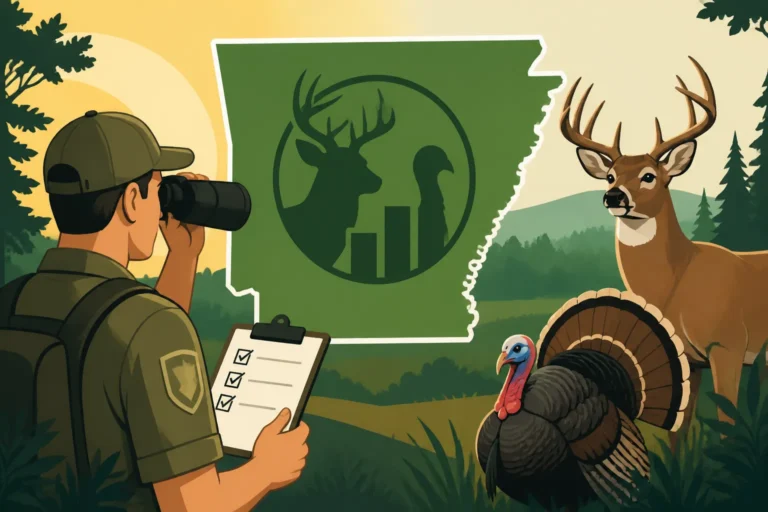
Arkansas wildlife managers estimate deer and turkey populations through surveys, hunter harvest data, and biological sampling.
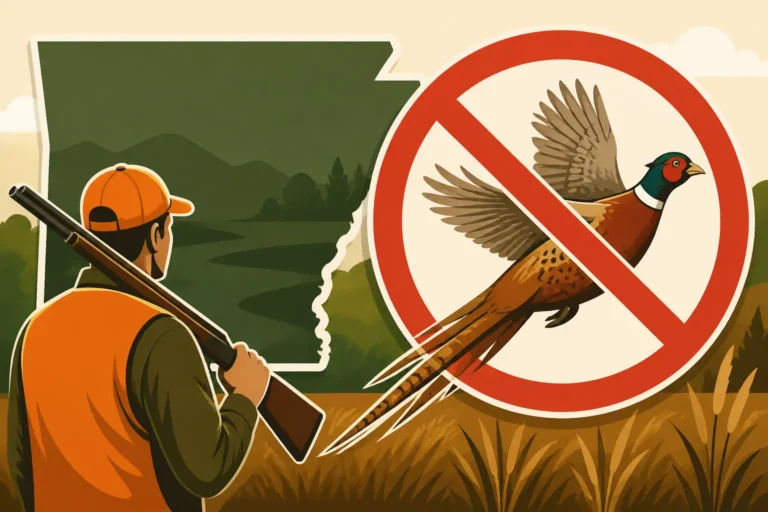
Arkansas lacks wild pheasants and a hunting season because its hot summers, intensive farming, and limited nesting cover do not suit them.
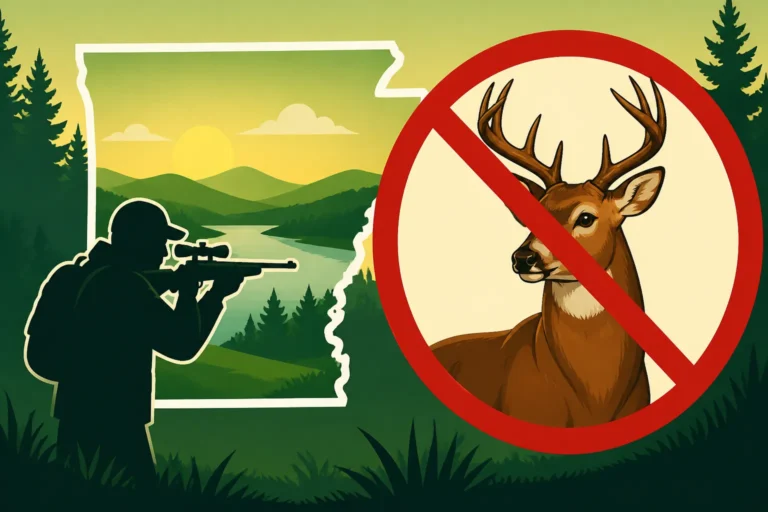
Arkansas game regulations explain protected wildlife, migratory birds, and animals that cannot be legally hunted in the state.

Arkansas protected species regulations explain how to identify birds, mammals, and reptiles to avoid illegal harvesting while hunting.
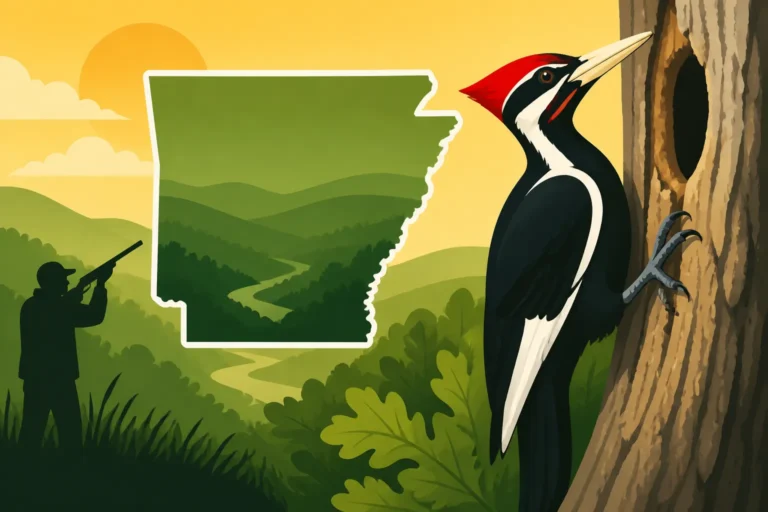
Ivory-billed woodpecker history, the 2004 Cache River sighting, and conservation impacts on Arkansas bottomland hardwood forests.

Massive Arkansas crow and blackbird roosts gather in winter for safety, offering unique hunting opportunities and agricultural pest control.

Wilson’s snipe numbers in the Arkansas Delta depend on weather, water levels, harvested rice fields, and conservation efforts.
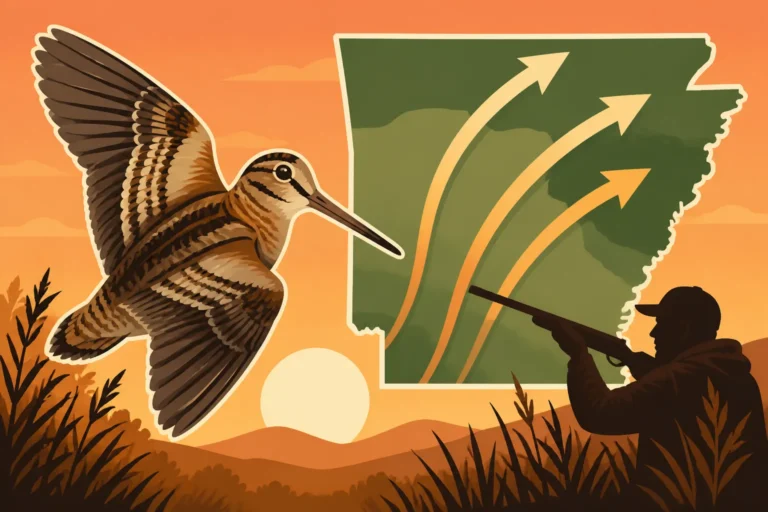
Arkansas woodcock migration timing involves early, peak, and late phases driven by northern weather and food availability.

Eurasian collared doves in Arkansas feature relaxed hunting rules, making it easy to identify and target these non-native game birds.
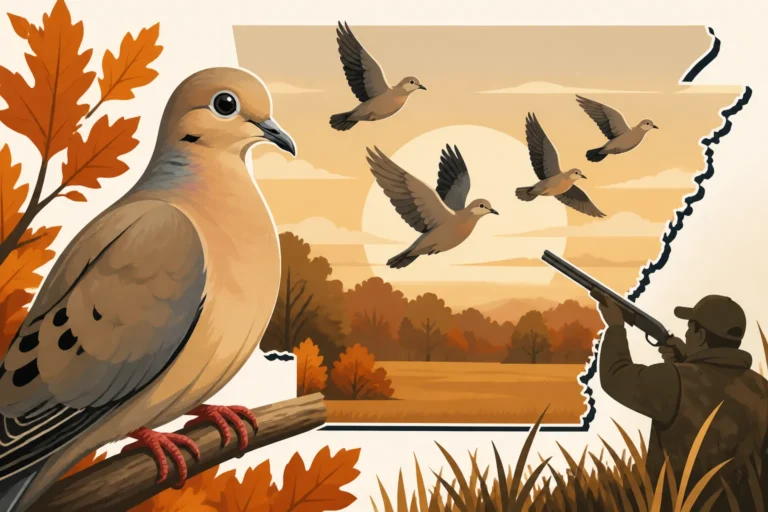
Mourning dove migration timing in Arkansas combines resident birds and northern migrants pushed south by cold fronts and changing food sources.