How Many Acres Arkansas WMAs Cover
One of the biggest hurdles many Arkansas hunters face, especially those without private land access, is simply finding somewhere to hunt. It can feel like every good spot is locked up, leased, or posted. But I’m here to tell you that Arkansas offers an incredible wealth of public hunting opportunities through its vast network of Wildlife Management Areas (WMAs). This guide will break down just how much ground these WMAs cover, giving you a clearer picture of the incredible resources available for your next hunting adventure.
The Sheer Scale of Arkansas's Wildlife Management Areas
It's easy to feel overwhelmed by the idea of public land, or to assume that any accessible spot will be overrun. But the truth is, Arkansas has invested significantly in providing a wealth of hunting opportunities through its Wildlife Management Area system. These aren't just small parcels tucked away; we're talking about an immense amount of land dedicated to conservation and public access.
Understanding the Arkansas WMA System
Think of Arkansas's WMAs as giant, living classrooms and playgrounds, all managed with wildlife and hunters in mind. The Arkansas Game and Fish Commission (AGFC) oversees these areas, and their primary goals are habitat improvement, wildlife population management, and providing recreational opportunities for folks like us. They’re not just idle land; they're actively managed, which means timber stands are thinned, food plots are planted, and water levels are controlled in certain areas—all to benefit the diverse game animals that call these places home. This commitment makes them vital for both conservation and the future of hunting in our state. For many Arkansans, and certainly for visiting hunters, WMAs are the backbone of their hunting season. They represent the best chance to get out and enjoy our hunting heritage without needing a family farm or a private lease.
The Collective Acreage: A Hunter's Paradise
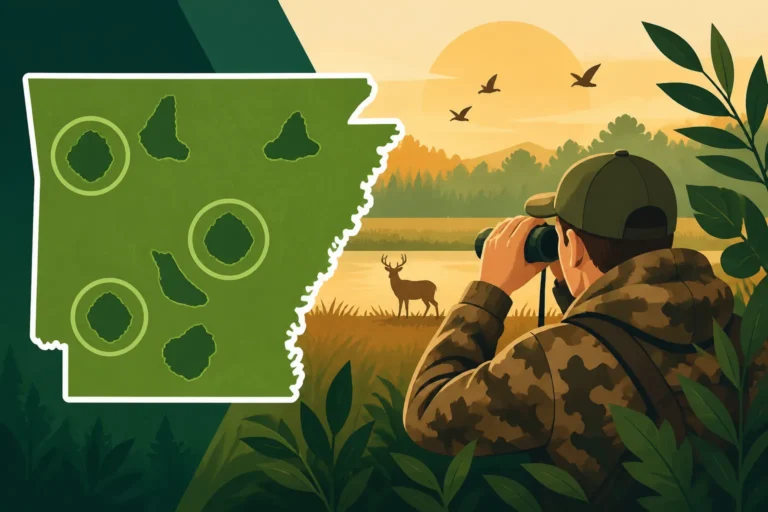
So, how much ground are we really talking about? Well, the AGFC manages a truly staggering amount of land across the state. While I won't give you an exact, ever-changing number, what I can tell you is that Arkansas's WMAs collectively encompass hundreds of thousands of acres. We're talking about a landmass that rivals some smaller states in total square mileage, all dedicated to wildlife. Imagine taking a good-sized chunk of real estate and setting it aside specifically for deer, ducks, turkeys, and all the small game you can chase. That's essentially what we have here. From the cypress breaks of the Delta to the rugged peaks of the Ozarks, these WMAs offer an incredible variety of terrain and habitat. It's a testament to our state's dedication to providing ample space for hunters to pursue their passions, and it means that with a little homework and effort, you can absolutely find vast tracts of unpressured ground. You can learn more about How Many Acres Arkansas WMAs Cover and what they offer.
Diving Deeper: Breakdown of WMA Types and Sizes
The beauty of Arkansas's WMA system isn't just in the sheer volume of land, but also in its incredible diversity. These aren't cookie-cutter tracts; they're a patchwork of habitats, each offering unique challenges and rewards for the discerning hunter.
Diverse Landscapes: From Delta Timber to Ozark Mountains
When you hear "WMA," don't just picture one type of landscape. Our state is blessed with incredible ecological variety, and the WMAs reflect that. You'll find expansive bottomland hardwood forests in the Delta, like the famous Bayou Meto WMA, where mallards swarm through flooded green timber. Then you have the rugged, rocky terrain of the Ozarks and Ouachitas, where WMAs are carved into national forests, offering steep climbs and hidden hollows for deer and turkey hunters. In between, there are pine plantations, open fields, and river bottomlands. This means that whatever kind of hunting experience you're looking for, there's likely a WMA to match. Each region presents its own set of challenges, whether it's navigating knee-deep water in the Delta or scaling a steep ridge in the mountains, but each also promises its own unique rewards. Understanding these different landscapes is key to choosing the right WMA for your target species and hunting style. Hunting the Arkansas Ozarks is a completely different ballgame than Hunting Arkansas Flooded Green Timber.
Large Tracts: The Backbone of Public Hunting
Among the many WMAs, there are some true behemoths that serve as the backbone of public hunting in Arkansas. These massive tracts, sometimes stretching into tens of thousands of acres, offer the kind of expansive wilderness where you can truly get away from it all. Think of the larger WMAs that are often part of national forest land, or those sprawling across the Delta. Their sheer size means that even during peak seasons like the modern gun deer hunt, you can often find areas where hunter density is low. This provides opportunities for still-hunting, long walks, and getting deep into areas where fewer people are willing to go. These large WMAs are critical for sustaining healthy populations of various game animals, as they provide vast, uninterrupted habitat. They often feature a mix of cover, water sources, and food, allowing animals to follow natural patterns without constant human disturbance. Successfully hunting these larger areas often requires a different mindset and more robust scouting, but the reward of harvesting an animal deep in the timber is something truly special.
Smaller, Strategic WMAs: Hidden Gems
While the big WMAs get a lot of attention, don't overlook the dozens of smaller, often more strategic WMAs scattered across the state. These might be a few hundred or a few thousand acres, but they are often incredibly valuable. They might be located closer to population centers, offering convenient day trips, or they might be specifically managed for certain species or hunting types. For example, a smaller WMA might consist primarily of managed wetlands perfect for early-season teal or wood ducks, or it could be a brushy patch providing excellent rabbit habitat near a town. What makes these smaller WMAs "hidden gems" is that they can sometimes be less pressured than their larger counterparts, or they might attract a very specific type of hunter, leaving other game relatively undisturbed. They often require a bit more detailed scouting and understanding of local patterns, but their compact size can make them easier to learn intimately. Don't be afraid to pull up the AGFC map tool and zoom in on some of these smaller green spaces near you; you might be surprised at what you find.
| WMA Type | General Location | Primary Habitat | Size Category (General) | Notes for Hunters |
|---|---|---|---|---|
| Delta WMAs | Eastern Arkansas | Flooded Timber, Rice Fields, Moist-Soil Units | Very Large to Medium | Excellent for waterfowl, often require special permits/draws. Deer hunting also strong in adjacent uplands. Can have restricted access or vehicle rules. |
| Mountain WMAs | Western/Northern Arkansas | Hardwood Forests, Pine Plantations, Steep Terrain | Large to Medium | Great for deer, turkey, bear. Focus on elevation changes, ridges, and hollows. Often part of National Forest land. |
| River Valley WMAs | Central Arkansas | River Bottoms, Mixed Forests, Agricultural Edges | Medium | Good mix of deer, turkey, small game. Often have good access along river systems. Pressure can vary. |
| Upland WMAs | Scattered | Mixed Pine/Hardwood, Regenerating Forests | Small to Medium | Diverse opportunities. Can be productive for deer, turkey, and small game. Check for recent timber work, as it creates new cover. |
| Specialty WMAs | Scattered | Specific Managed Habitats (e.g., prairies) | Small | Often managed for specific species like quail or migratory birds. Rules can be highly specific. |
Navigating the Vastness: Tools and Resources for Hunters
Knowing that hundreds of thousands of acres are out there is one thing; actually finding and effectively hunting them is another. Thankfully, modern technology and readily available resources make navigating Arkansas's WMAs more accessible than ever before.
The AGFC Map Tool: Your Digital Compass
The Arkansas Game and Fish Commission provides an invaluable online mapping tool that should be every Arkansas hunter's first stop. This interactive map allows you to zoom in on specific WMAs, view boundary lines, identify access points, and often see important features like parking areas, boat ramps, and even food plots. More crucially, it's where you'll find the specific regulations for each WMA, because as we all know, a WMA permit may be required or rules can change from one area to the next. The AGFC map tool is constantly updated, making it your most reliable source for current information. Before you ever put boots on the ground, spending time with this tool can save you hours of wasted effort and ensure you're hunting legally. It's truly an essential piece of pre-hunt planning for any public land hunter in Arkansas. You can also utilize it to learn Scouting Arkansas Public Land Before Season.
Commercial Mapping Apps: Leveling Up Your Scouting
While the AGFC map is fantastic for official boundaries and regulations, commercial mapping applications take your scouting to a whole new level. Tools like onX Hunt have become absolute game-changers for public land hunters, offering layers that show public and private land ownership, parcel boundaries, and highly detailed topographical and satellite imagery. With onX Hunt, you can pinpoint exactly where public land ends and private land begins, preventing accidental trespass – a common concern when hunting large, complex WMAs. You can also mark waypoints, track your movements, and see elevation changes that are crucial for understanding thermals in the mountains or finding subtle high ground in the Delta. Another excellent resource for data-driven hunters is GoHunt. While often associated with Western big game, GoHunt offers incredible tools for understanding habitat, access, and even hunter pressure. These apps can highlight features like logging roads, old clearcuts, water sources, and natural funnels that might be invisible on a standard map, giving you a distinct advantage. Integrating these tools into your planning lets you develop a comprehensive hunt strategy, identifying potential bedding areas, travel corridors, and feeding locations before you even step foot in the woods.
Interpreting Maps and Aerial Photos for Success
Having the best maps and apps won't do you much good if you don't know how to interpret them. When looking at a WMA on onX Hunt or through the AGFC tool, don't just see green and brown. Look for patterns. In the Delta, identify subtle changes in elevation that might create dry bedding areas during floods, or areas of dense cover where deer might feel safe. For turkey hunting, look for roosting trees along river bends or high points. In the Ozarks, learn to read contour lines to find benches—flat spots on a ridge that deer often use as travel corridors. Identify saddles in ridges where animals might cross from one drainage to another. Look for dense thickets, recent timber cuts (which will show up as lighter green on satellite images after a year or two), and areas where different habitat types converge. These "edge" areas are often wildlife magnets. By spending time analyzing these details on your map, you’ll start to see the WMA not as a flat picture, but as a three-dimensional landscape teeming with potential. This skill is vital for Reading Aerial Photos for Delta Deer or Reading an Ozark Bench for Deer.
Beyond Acreage: Understanding WMA Management and Regulations
While the sheer number of acres in Arkansas's WMAs is impressive, simply knowing the size isn't enough. To be a successful and ethical public land hunter, you need to understand how these areas are managed and, crucially, what rules govern their use.
Specialized Regulations and Permits: Not All Acres Are Equal
This is where many hunters, especially those new to public land, can get tripped up. Just because an area is a WMA doesn't mean you can hunt it with the general state regulations. Many WMAs, particularly the most popular ones or those with unique management objectives, have special regulations or require specific permits. For instance, some of the premier waterfowl WMAs in the Delta operate on a draw system, where you have to apply in advance for a chance to hunt a specific blind or area on a given day. Other WMAs might have different deer bag limits, antler point restrictions (beyond the statewide three-point rule in some zones), or specific weapon restrictions. You might also find rules about vehicle access, camping, or the use of certain types of blinds or stands. It's absolutely critical to check the current AGFC regulations for each specific WMA you plan to hunt. Don't assume. A quick check online can save you a frustrating fine or, worse, losing your hunting privileges. Always review Which Arkansas WMAs Require a Permit and Arkansas WMA Waterfowl Draw Hunts.
Habitat Management and Its Impact on Hunting
The AGFC actively manages WMA lands to enhance habitat for wildlife, and understanding these practices can give you a significant edge as a hunter. For deer, this might mean timber thinning to encourage browse growth, prescribed burns to improve forage, or planting food plots in strategic locations. For ducks, it means controlling water levels in green tree reservoirs and moist-soil units, mimicking natural flood cycles to create ideal feeding and resting areas. These management activities are designed to create healthier ecosystems, which in turn support more robust game populations. Keep an eye out for signs of recent management on your scouting trips or satellite maps – a new clearcut, a thinned timber block, or a freshly disked and planted field can be a magnet for game. Knowing that the AGFC puts a lot of effort into these lands means you're hunting in areas where wildlife health is a priority, and that can translate to better hunting opportunities for you. These efforts are what keep our White-Tailed Deer Across Arkansas and Wild Turkeys in Arkansas populations strong.
Understanding Pressure and Finding Solitude
Even with hundreds of thousands of acres, public land can feel crowded, especially on opening weekends. It’s a reality we all deal with. However, the sheer size of many WMAs means that solitude can be found, if you're willing to work for it. Most hunters won't venture far from easily accessible roads or parking areas. This creates a "donut hole" effect: high pressure near access points, but significantly less pressure just a mile or two deeper into the woods. Using your onX Hunt or AGFC map, identify areas that are farthest from roads, trails, or other obvious access points. Look for natural barriers like creeks, swamps, or steep ridges that deter casual hunters. These are the places where you're most likely to encounter undisturbed game. It might mean a longer walk, a tougher hike, or wading through some water, but the reward of finding a hidden pocket of deer or a secluded turkey roost makes the effort worthwhile. Don't be afraid to put in the mileage; your boots are your best tool for escaping the crowds on Arkansas public land. This skill is vital for Finding Ground Others Walk Past.
Maximizing Your WMA Experience: Tips for Success
Hunting Arkansas's WMAs, with their vast and varied landscapes, offers incredible opportunities. But to truly make the most of your time, it takes more than just showing up. It requires preparation, adaptability, and a deep respect for the resource.
Pre-Season Scouting: More Than Just Looking at a Map
While mapping apps like onX Hunt are powerful tools for initial planning, there's absolutely no substitute for boots-on-the-ground scouting. You need to walk the areas you intend to hunt. This means hitting the woods long before the season opens, looking for fresh sign: rubs, scrapes, tracks, droppings, and natural food sources like acorn flats or berry bushes. Walk those potential travel corridors you identified on your map, checking for game trails and pinch points. In the Delta, this might involve learning Entry Routes Through Flooded Timber or identifying high ground that bucks might use. In the Ozarks, you’ll want to walk those ridgelines and hollows to find active areas. Pay attention to bedding cover, water sources, and anything that might concentrate game. Scouting helps you understand the subtle nuances of the terrain that maps can't fully convey—the dense thicket you can barely push through, the hidden creek crossing, or the faint old logging road. The more you know about your chosen WMA before opening day, the higher your chances of success.
Adaptability and Persistence: The WMA Hunter's Creed
Hunting public land, especially WMAs, demands adaptability and a healthy dose of persistence. Conditions can change rapidly: water levels can rise or fall, affecting duck hunting; a sudden cold snap might move deer patterns; or a burst of hunting pressure could push animals into new areas. Don't get fixated on one spot if it's not producing. Be willing to move, to explore new sections of the WMA, or to try a different tactic. If your initial plan for Rattling and Grunting in Arkansas isn't working, maybe it's time to try still-hunting. Sometimes, the difference between success and failure is simply being willing to keep going when others head home. It might mean walking another mile, sitting through a tough rain shower, or waiting patiently for an opportunity to arise. The biggest advantage you have on public land is often simply outlasting other hunters and being willing to seek out the less obvious spots.
Respecting the Resource: Leave No Trace
Finally, and perhaps most importantly, we all share a responsibility to respect these incredible public hunting resources. That means practicing "Leave No Trace" principles. Pack out everything you pack in, and if you see trash left by others, consider packing it out too. Be mindful of your impact on the land—don't cut live trees for shooting lanes or blinds, and retrieve any game you harvest ethically and quickly. Adhere to all WMA rules regarding vehicle use, camping, and stand placement. Remember that these WMAs are not just for hunters; they're for hikers, birdwatchers, and other outdoor enthusiasts too. By treating the land with respect, you ensure that these vital hunting grounds remain healthy, accessible, and enjoyable for generations of Arkansans to come. We are stewards of this land, and our actions reflect on the entire hunting community.
Disclaimer
This article is for general informational purposes only and does not constitute professional advice. Laws, prices and regulations vary by location and change over time. Consult a qualified professional for guidance on your specific situation.