How Many Coyotes Arkansas Has
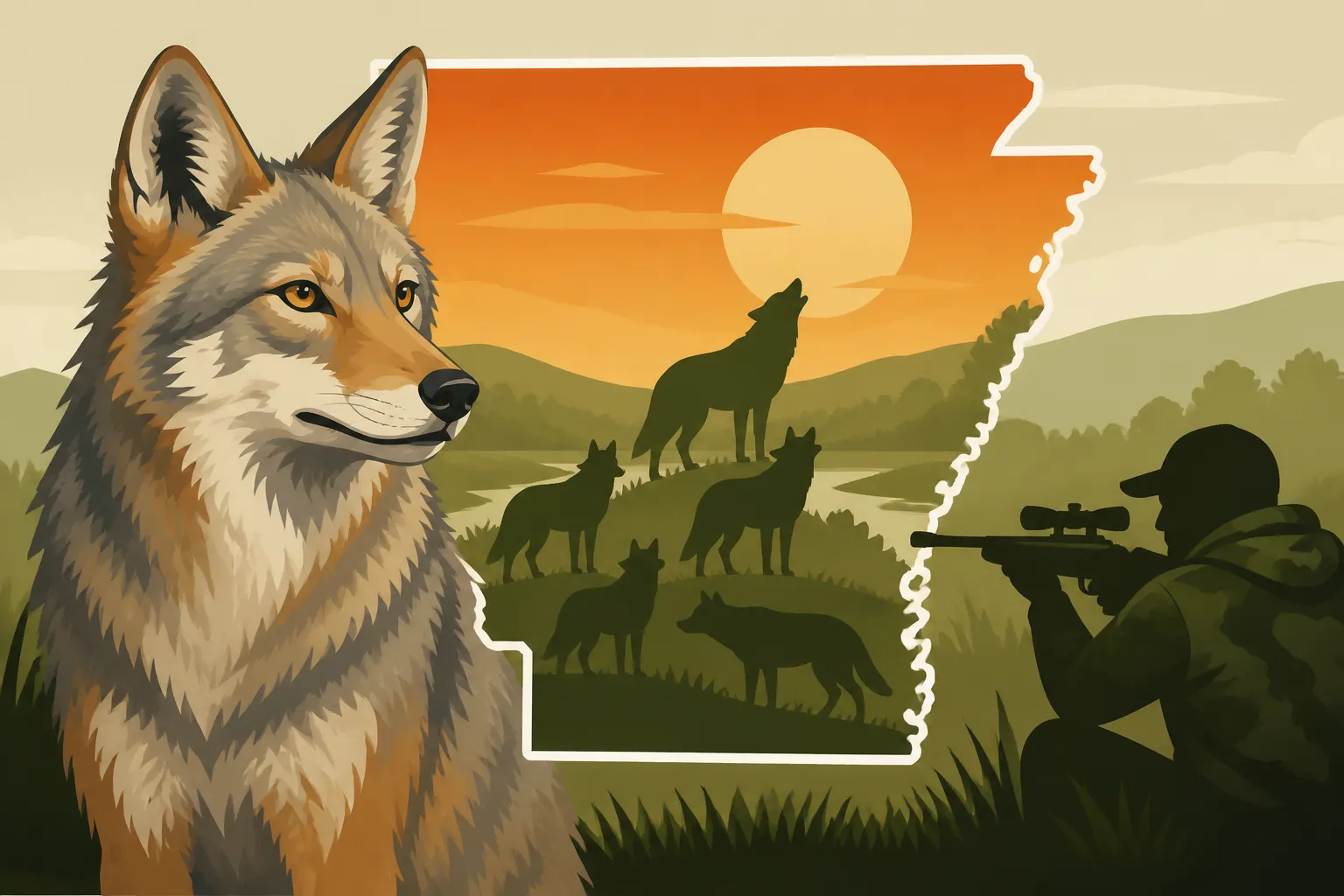
It's a question every hunter in Arkansas has probably asked themselves at some point: just how many coyotes are actually out there? You see them darting across a field, hear their yelps at dusk, and unfortunately, you often see the impact they have on our deer and turkey populations. It feels like they're absolutely everywhere, and that perception isn't far from the truth. This guide is going to dive deep into what we know about the coyote population in Arkansas, where they thrive, their impact on our cherished game animals, and what that means for hunters trying to manage them.
The Elusive Numbers: Estimating Arkansas's Coyote Population
Trying to put an exact number on the coyote population in Arkansas is a bit like trying to count raindrops in a thunderstorm – it's incredibly difficult, if not impossible. Coyotes are adaptable, intelligent, and highly mobile creatures that don't exactly line up for a head count. However, through various methods like harvest data, scent surveys, and anecdotal evidence from landowners and hunters, wildlife biologists can get a good grasp on population trends and density.
What we do know is this: coyotes are absolutely abundant across Arkansas. Their numbers have steadily increased over the decades, establishing them firmly as a top predator in virtually every corner of our state. Unlike some species with very specific habitat needs, coyotes are generalists. They thrive in agricultural areas, dense forests, mixed timber, and even push into suburban fringes. This incredible adaptability is why you'll find them almost everywhere, making their presence felt from the Delta to the Ozark mountains. They're masters of survival, quickly learning to avoid human contact and exploiting whatever food sources are available.
Why Exact Numbers Are So Hard to Pin Down
One of the biggest challenges in determining an exact coyote population figure is their elusive nature and widespread distribution. They don't have distinct migratory patterns that make them easy to track, nor do they congregate in easily countable herds like deer or elk. Instead, they operate in smaller family units or as solitary individuals, constantly moving across vast territories. Furthermore, their reproductive rates are heavily influenced by environmental factors. When food is plentiful and populations are low, they can have larger litters, quickly filling any void. Conversely, when resources are scarce or pressure is high, their litter sizes might shrink. This dynamic makes a fixed number a moving target, constantly fluctuating based on local conditions and annual cycles.
Add to this the fact that they often go unseen. They're primarily nocturnal or crepuscular, meaning they're most active at dawn and dusk. This means many of their movements and activities occur when most people aren't around to observe them. They're also incredibly stealthy, able to move through thick cover without making a sound. All these factors contribute to the feeling that they are everywhere, even if you rarely lay eyes on them. It’s a testament to their survival instincts that they can be so prevalent yet remain so shadowy.
Understanding Population Trends Over Time
While precise numbers are elusive, the trend is clear: Arkansas's coyote population has been on an upward trajectory for a long time. Coyotes are not native to Arkansas in the same way deer or bear are; they largely moved into the state as land use changed and larger predators like wolves were extirpated from the landscape. They filled an ecological niche, expanding their range eastward from the Great Plains throughout the 20th century. This expansion was fueled by a combination of factors, including the clearing of forests for agriculture, which created ideal edge habitat, and the decline of other large predators that might have competed with them.
Today, their population is considered robust and stable, if not still increasing in some localized areas. Hunting and trapping efforts, while significant, generally don't put a dent in the overall population state-wide. They reproduce efficiently, and their pups have a relatively high survival rate when conditions are favorable. This ongoing presence means coyotes are a permanent fixture in the Arkansas landscape, and understanding their dynamics is crucial for any serious hunter or outdoors enthusiast. Their presence fundamentally alters the ecosystem, and recognizing this is the first step in adapting our hunting strategies.
Where Arkansas Coyotes Roam: Habitat and Distribution
Coyotes are incredibly adaptable, which is why you can find them in virtually every habitat type across Arkansas. From the dense, rocky terrain of the Ozark and Ouachita National Forests to the expansive agricultural fields and flooded timber of the Delta, coyotes have carved out a niche. Their ability to utilize diverse food sources and cover makes them truly ubiquitous.
Ozark and Ouachita Mountains
In the rugged Ozark and Ouachita Mountains, coyotes navigate steep terrain, pine and hardwood forests, and rocky outcroppings. Here, they often utilize the thick cover of cedars and pine plantations for bedding and denning, venturing into more open hardwood ridges and creek bottoms to hunt. Their diet in these areas is incredibly varied, including deer fawns, wild turkeys, rabbits, squirrels, rodents, and even wild berries and insects. Hunters often hear their distinct howls echoing through the hollows at night, a sound that can send chills down your spine. The prevalence of small game and the cover offered by the mixed forests make these regions prime coyote territory. You can learn more about Coyote and Bobcat Calling in Arkansas to specifically target them in these areas.
Trying to pinpoint their exact locations can be tough, but by utilizing tools like GoHunt, you can analyze satellite imagery to identify prime habitat—like the edges of clearcuts, transition lines between different timber types, or the confluence of creeks—where coyotes are likely to travel or hunt. This kind of digital scouting can save you a lot of boot leather.
The Arkansas Delta
The Delta region presents a very different landscape, characterized by vast agricultural fields, bottomland hardwoods, and an intricate network of ditches and bayous. Coyotes here are equally at home. They'll often den in brushy areas along fence rows, ditch banks, or in the remaining timber blocks. Their diet in the Delta often includes a heavier reliance on rodents and rabbits that thrive in agricultural settings, but they are opportunistic predators of deer fawns and turkey poults in the scattered timbered areas. Fields of standing corn or beans provide excellent cover for them to move unseen.
The edge habitat where cultivated fields meet natural cover is particularly productive for coyotes. This offers them both hunting opportunities and escape routes. When you're Scouting Arkansas Public Land Before Season, keep an eye out for these transition zones, as coyote sign is often plentiful there. Even in areas heavily managed for ducks, like the edges of flooded rice fields or green timber, coyotes are present, preying on anything from rodents to injured waterfowl.
River Valleys and Pine Plantations
The Arkansas River Valley and the extensive pine plantations of south Arkansas also support thriving coyote populations. In river bottomlands, the dense cover along river channels and oxbow lakes provides excellent habitat. Here, they'll hunt everything from muskrats and raccoons to young deer. In the vast pine plantations, the dense undergrowth and frequent clearcuts create a mosaic of cover and open areas, perfect for coyotes to hunt and hide. They adapt to the cycle of timber harvest, often finding new opportunities in recently cut areas where small mammals thrive.
These areas, with their mix of timber stages and abundant small game, are ideal for coyote survival. The dense stands offer protection, while the openings provide hunting grounds. Hunters focused on Small Game and Squirrel Hunting in Arkansas will often encounter coyotes, or at least their tracks and scat, as they share much of the same prey base.
The Impact of Coyotes on Arkansas's Game Species
This is often the most frustrating part for hunters and wildlife enthusiasts. While coyotes are a natural part of the ecosystem, their widespread and abundant presence, especially in areas with high deer and turkey populations, can undeniably have a significant impact on other game species. It's a tough pill to swallow when you're trying to manage for healthy deer herds or boost turkey numbers, only to feel like coyotes are undoing your efforts.
Predation on Deer Fawns
One of the most well-documented impacts of coyotes in Arkansas is their predation on white-tailed deer fawns. During the fawning season, typically late spring and early summer, coyotes can be incredibly effective at finding and killing young fawns. Fawns are particularly vulnerable during their first few weeks of life, often lying still in thick cover, which unfortunately makes them easy targets for a searching coyote. Studies in various states, including those with similar landscapes to Arkansas, have shown that coyotes can be responsible for a substantial percentage of fawn mortality.
This isn't to say coyotes are the only cause of fawn mortality – disease, other predators, and environmental factors also play a role – but they are a significant one. For hunters who spend all year trying to foster a healthy deer population and improve buck age structure, the thought of countless fawns falling victim to coyotes is genuinely disheartening. It makes you feel like you're fighting an uphill battle sometimes, especially when you consider Arkansas Deer Population Estimate numbers and how many fawns are needed to maintain or grow those numbers.
Pressure on Wild Turkey Poults
Wild turkeys, especially their young poults, are another game species heavily impacted by coyote predation. Turkey poults are extremely vulnerable during their first few weeks after hatching. They are small, flightless, and dependent on the hen for protection. Coyotes, along with other predators like raccoons and opossums, are highly efficient at locating nests and ambushing young broods. This predation pressure is a significant factor in the survival rate of poults, which directly affects the overall Arkansas Turkey Population Trends and subsequent hunting seasons.
Many hunters will tell you they've seen fewer turkey broods in areas with high coyote activity. While habitat loss and other factors are also critical to turkey declines, the constant pressure from an abundant predator like the coyote doesn't help. It's a challenge for wildlife managers to balance predator control with other management strategies, but for hunters, the desire to reduce coyote numbers to benefit turkeys is strong and understandable.
Affecting Small Game and Other Species
Beyond deer and turkeys, coyotes are generalist predators, meaning they'll eat just about anything they can catch. This includes a wide array of small game species like rabbits and squirrels, as well as ground-nesting birds, rodents, and even amphibians and reptiles. While healthy populations of small game can generally withstand some predation, a high coyote density can certainly contribute to localized declines or keep populations from rebounding as quickly as hunters might hope.
For those who enjoy Rabbit Hunting With Beagles or pursuing Squirrel Hunting Arkansas Hardwoods, the presence of coyotes adds another layer of complexity. It's not uncommon to hear stories of a coyote snatching a rabbit right out from under a beagle's nose. This broad diet means their ecological footprint is vast, affecting many different levels of the food chain across Arkansas's diverse landscapes.
Managing Coyote Populations and Hunting Opportunities
Given the perceived and actual impacts coyotes have on desirable game species, many hunters are keenly interested in methods for managing their populations. While complete eradication is neither feasible nor desirable from an ecological standpoint, targeted efforts can certainly help reduce local populations and provide some relief for deer and turkey. This means embracing predator hunting as a vital part of overall wildlife management.
Year-Round Hunting and Trapping
One of the most effective tools for managing coyote numbers is consistent, year-round hunting and trapping. Unlike many game species, coyotes in Arkansas generally have no closed season or bag limits. This means hunters and trappers can pursue them throughout the year, offering continuous pressure. This accessibility is crucial because coyotes reproduce quickly, and sustained effort is needed to make a noticeable difference in local densities. Hunters often use calling techniques, such as distress calls or territorial howls, to bring coyotes into range. Others prefer to set traps or snares, especially where coyote sign is abundant and in areas critical for fawn or poult survival. The state offers considerable freedom in how you pursue them, provided you adhere to general hunting regulations.
For those interested in going after them after dark, understanding Night Hunting Rules for Arkansas Predators is essential, as these often involve specific equipment requirements, like lights, and sometimes require landowner permission for safety. It's a different kind of hunt, requiring patience and knowledge of their nocturnal habits.
Strategic Predator Control
Instead of simply "killing coyotes," many successful hunters focus on strategic predator control. This means targeting coyotes in specific areas and at critical times of the year when they are most likely to impact fawns and poults. For instance, increasing predator hunting efforts in late winter and early spring, just before fawning and nesting season, can help reduce the number of breeding coyotes and thus the number of pups entering the population. Focusing efforts around known deer bedding areas or turkey nesting grounds can also have a more direct impact on game survival.
This is where detailed scouting and local knowledge come into play. Using a powerful mapping tool like GoHunt can help you identify these crucial areas on your hunting land or public ground. You can mark observed coyote sign, potential den sites, and even areas where you've seen deer fawns or turkey broods in previous years. This allows you to prioritize your efforts and concentrate your hunting pressure where it will do the most good. Being strategic about when and where you hunt coyotes can yield far better results than just random efforts.
Collaborative Efforts and Landowner Relations
For significant impact, especially on private land, collaborative efforts between hunters, trappers, and landowners are often necessary. Landowners might grant access to experienced predator hunters, forming a partnership to reduce coyote numbers. This can be particularly effective on larger tracts of land where sustained pressure can disrupt coyote territories and breeding cycles. Open communication and trust are key in these scenarios. Many farmers and ranchers welcome responsible predator hunters, as coyotes can also impact livestock.
Education and awareness within the hunting community also play a role. Encouraging more hunters to view predator hunting not just as a separate pursuit, but as an integral part of Predator and Furbearer Hunting in Arkansas and overall deer and turkey management, can collectively contribute to healthier game populations. The more hunters that participate, the more widespread the pressure becomes, helping to keep coyote numbers in check across the broader landscape.
Coyote Population Insights Across Arkansas
To give you a clearer picture, here's a general overview of coyote presence and perceived density across different regions of Arkansas. Remember, these are general observations, and local conditions can always vary.
| Region | Coyote Presence | Perceived Density (Hunter Reports) | Primary Habitat | Key Impact on Game |
|---|---|---|---|---|
| Ozark Mountains | High | Moderate to High | Mixed Hardwood/Pine Forests, Rocky Hollows | Deer fawns, turkey poults, small game |
| Ouachita Mountains | High | Moderate to High | Pine Plantations, Mountainous Terrain | Deer fawns, turkey poults, small game |
| Arkansas Delta | High | High | Agricultural Fields, Bottomland Hardwoods | Deer fawns, turkey poults, rabbits, rodents |
| River Valley | High | Moderate | Riparian Zones, Mixed Forest Edges | Deer fawns, small game |
| South Arkansas | High | Moderate to High | Pine Plantations, Mixed Forests, Cropland Edges | Deer fawns, turkey poults, rabbits |
This table illustrates that while coyotes are prevalent everywhere, the perceived density and their impact might feel different depending on the specific terrain and habitat types found in each region. Hunters in the Delta, for example, often report a very high number of coyotes due to the mixture of dense cover and abundant food sources in agricultural areas.
Final Thoughts on Arkansas's Coyote Challenge
The bottom line for any hunter in Arkansas is that coyotes are here to stay, and they are a significant part of our state's ecosystem. While their exact numbers remain an educated estimate rather than a precise count, all indicators point to a robust, widespread, and adaptable population across all corners of Arkansas. Their impact on deer fawns, turkey poults, and other small game is a very real concern for wildlife managers and hunters alike.
Embracing predator hunting as a year-round pursuit, coupled with strategic efforts to target coyotes in vulnerable areas and during critical times, is one of the most proactive ways hunters can contribute to healthier game populations. It's a challenging endeavor, requiring patience, skill, and a deep understanding of coyote behavior. But for those dedicated to improving hunting opportunities for other species, taking on the coyote challenge is a rewarding and necessary part of being an Arkansas hunter. Tools like those on GoHunt can certainly help you Using the AGFC Map Tool to better understand the landscape and plan your hunts effectively, ensuring you're putting in the effort where it counts the most.
Disclaimer
This article is for general informational purposes only and does not constitute professional advice. Laws, prices and regulations vary by location and change over time. Consult a qualified professional for guidance on your specific situation.