Why Arkansas Restricted Feral Hog Hunting
You've probably heard the buzz, or maybe even the frustration, about hunting feral hogs in Arkansas. For years, these destructive invaders seemed like fair game, an "any time, any way" proposition. But then things changed, and suddenly, the rules around hunting these nuisance animals on public land tightened up considerably. This guide is going to walk you through exactly why the Arkansas Game and Fish Commission decided to restrict feral hog hunting, what those restrictions entail, and what it means for hunters and landowners trying to combat this widespread problem.
The Growing Menace: Why Feral Hogs Became a Problem in Arkansas
Before we dive into the "why" of the restrictions, it’s crucial to understand the sheer scale of the problem feral hogs present in the Natural State. These aren't just a minor annoyance; they are an ecological disaster on four hooves, and their presence impacts almost every aspect of Arkansas's natural resources and agricultural economy.
Feral hogs are essentially domestic pigs that have escaped captivity and established wild populations. They are incredibly adaptable, capable of thriving in diverse habitats from the Delta's rich bottomlands to the rugged terrain of the Ozarks. Their rapid reproductive rates mean a small group can quickly explode into an overwhelming population, making them one of the most destructive invasive species in North America.
Unseen Damage: Beyond the Rooted Fields
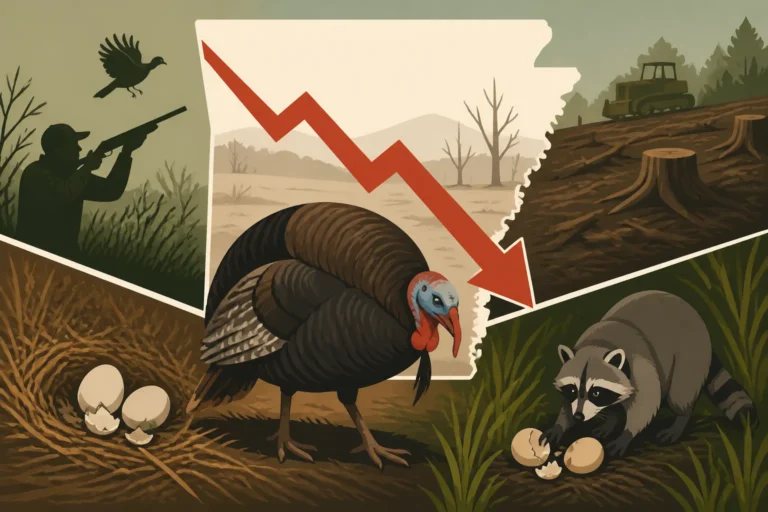
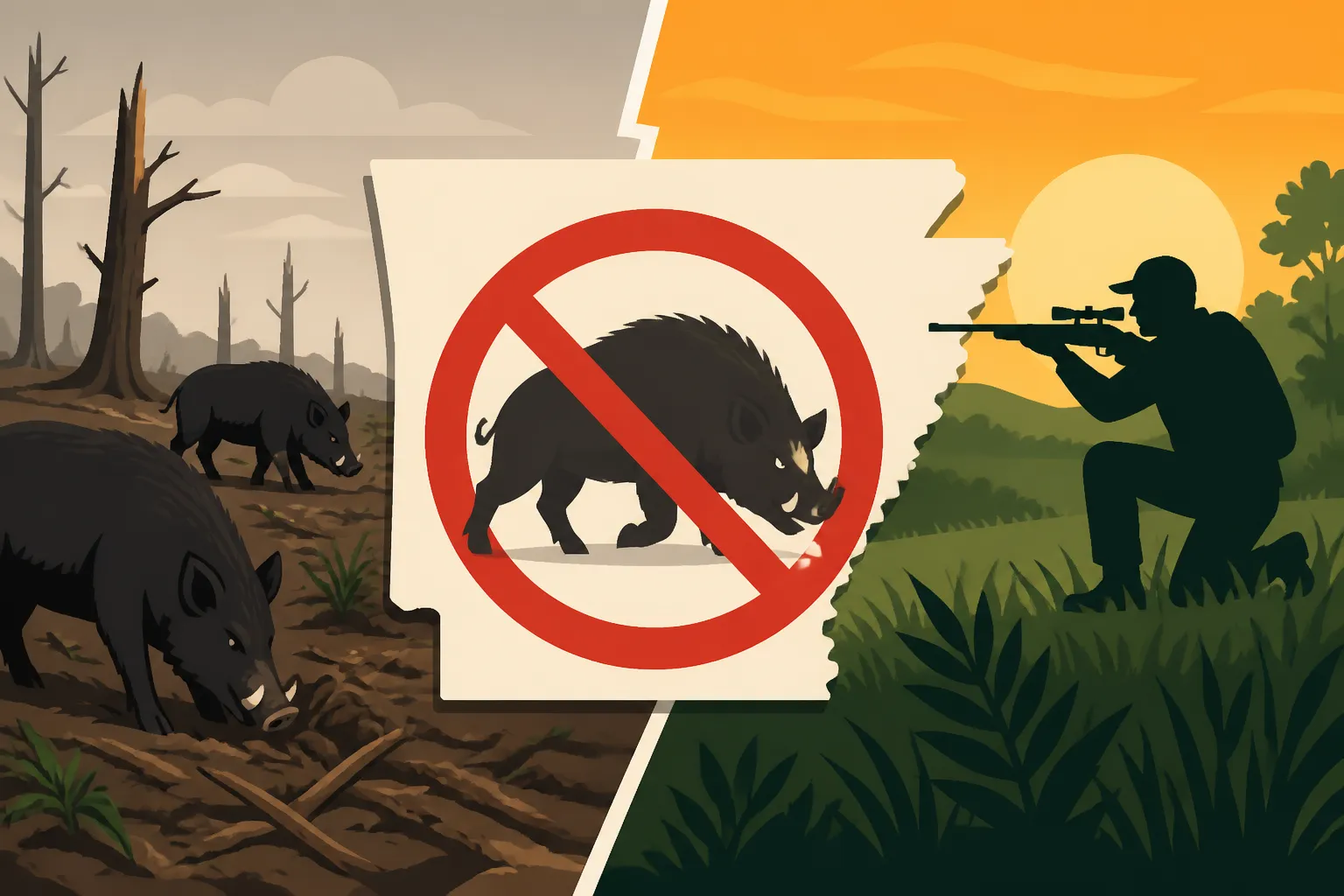
When most people think of hog damage, they picture a freshly plowed field that looks like a rototiller went rogue. And while agricultural damage is certainly a huge component of the problem, the destruction goes far deeper. Feral hogs root up delicate native plant communities, destroy critical habitat for ground-nesting birds like wild turkeys and quail, and contaminate water sources. They eat virtually anything, including the fawns of White-Tailed Deer Across Arkansas, turkey poults, and the eggs of waterfowl, directly impacting the populations of our cherished game animals. Their constant rooting also leads to soil erosion, especially along streambanks and in wetland areas, further degrading the environment. This isn't just a farmer's headache; it's a nightmare for the entire ecosystem.
Furthermore, feral hogs are notorious carriers of diseases and parasites. While we're all rightly concerned about Chronic Wasting Disease in Arkansas in our deer herd, hogs present a whole other suite of potential health risks, including pseudorabies, brucellosis, leptospirosis, and tuberculosis. These diseases can be transmitted to livestock, domestic animals, and even humans. Imagine a hog carrying brucellosis rooting around in a cattle pasture, or passing on disease to a deer that then comes into contact with other deer. The potential for widespread impact on both wildlife and agricultural animals is immense and terrifying.
An Ever-Expanding Problem: The Rapid Reproduction Cycle
One of the most frustrating aspects of feral hog management is their incredible ability to reproduce. Sows can begin breeding as early as six months of age and can have two litters a year, with each litter averaging 4 to 12 piglets. Do the math, and you quickly realize that even if you remove a significant number of hogs, the population can rebound alarmingly fast if even a few fertile sows remain. This biological reality means that traditional hunting methods, while providing some recreational opportunity, were simply not keeping pace with the exponential growth of these animals. For more detail on their population trends, you might want to read Arkansas Feral Hog Numbers.
The problem often starts innocently enough: a few hogs escape a farm, or perhaps someone illegally releases them into the wild for "sport." From there, without natural predators or effective control measures, their numbers soar. It’s a vicious cycle that has seen The Arkansas Feral Hog Problem grow exponentially across the state, pushing wildlife managers to seek more aggressive and coordinated solutions.
The Old Way Wasn't Working: Unintended Consequences of Unregulated Hunting
For a long time, the prevailing wisdom for dealing with feral hogs was to let hunters take as many as they could, any way they could. The idea was that every hog removed was a win, and the more pressure put on them, the better. This led to a very open season for hog hunting, especially on public lands and national forests in Arkansas. While this approach seemed logical on the surface, wildlife biologists and land managers began to realize that it was actually hindering, rather than helping, the overall effort to control the hog population.
Spreading the Problem: The "Trap-and-Release" Mentality
One of the most significant unintended consequences of unregulated hog hunting was the inadvertent spread of the animals. Hunters would sometimes capture hogs on public land, or even private land, and then release them elsewhere to create new hunting opportunities. This practice, often referred to as "trap-and-release" for hunting purposes, completely undermined any localized eradication efforts. It was like trying to put out a fire by spraying gasoline on new spots.
This behavior, while perhaps well-intentioned by some who just wanted more hogs to hunt, ultimately facilitated the expansion of feral hog ranges. Areas that were once hog-free suddenly had established populations, making the state-wide problem even more daunting. It became clear that if hogs could be hunted anywhere, anytime, without strict oversight, the incentive to move them around would persist, making true eradication impossible.
Educating the Hogs: Making Them Warier and Harder to Catch
Another subtle but critical issue with continuous, unregulated hunting pressure was that it made the surviving hogs incredibly wary and difficult to control. Hogs are highly intelligent animals. When constantly pursued by hunters, dogs, and vehicles, they quickly learn to become nocturnal, seek out the densest cover, and avoid human activity. This "education" made them much harder to trap effectively, which is widely considered the most efficient method for large-scale removal.
Imagine trying to trap a group of hogs that have been shot at repeatedly. They become trap-shy, avoiding new structures or bait sites. This behavioral change turned an already challenging task into an even greater one for wildlife professionals trying to implement systematic control programs. Instead of making them easier to manage, constant hunting pressure often just made the problem more elusive.
Understanding the New Approach: What the Restrictions Mean
Recognizing that the traditional "hunt them whenever and however" approach was counterproductive, the Arkansas Game and Fish Commission (AGFC) made a difficult but necessary decision: they restricted feral hog hunting, particularly on public lands. This wasn't about protecting the hogs; it was about protecting Arkansas's resources and enabling more effective, strategic control.
The Shift on Public Lands: A New Philosophy
The core of the new restrictions is a dramatic shift in how feral hogs can be pursued on public land, including state wildlife management areas (WMAs) and national forests. Essentially, recreational hunting of feral hogs is no longer permitted on most public lands in Arkansas. This is a hard pill to swallow for many hunters who enjoyed the challenge of pursuing hogs, but it's a critical component of the AGFC's new strategy.
The AGFC’s philosophy is that hogs are no longer a "game animal" to be hunted for sport on public ground, but rather a "nuisance pest" to be eradicated. This means that removal efforts are now primarily conducted by AGFC staff or their authorized agents, using targeted trapping and removal programs. The goal is to remove entire sounders (groups of hogs) at once, rather than just scattering them and making them harder to catch. For anyone looking to understand the broader rules of public land hunting, Arkansas WMA Rules and Permits is a good resource.
Here's a breakdown of the typical restrictions:
| Aspect of Hunting | Old Approach (Unregulated) | New Approach (Restricted) |
|---|---|---|
| Public Land (WMAs, NF) | Open season, often with any legal weapon. | Recreational hunting generally prohibited. Removal by AGFC/agents only. |
| Private Land | Generally unrestricted, landowner discretion. | Still largely landowner discretion, but AGFC encourages coordinated removal. |
| Trapping | Used by some, but less coordinated. | Primary removal method by AGFC/agents. Encouraged on private land. |
| Movement of Hogs | Often resulted in intentional/unintentional spread. | Strict prohibition on transporting live feral hogs. |
| Goal | Sport hunting, individual removal. | Eradication of entire sounders, population control. |
It's important to remember that these restrictions are in place to allow the AGFC and other agencies to implement systematic eradication strategies that have a chance of succeeding. Scattering hogs by recreational hunting often makes it harder to trap them and remove whole family groups, which is the most effective way to reduce their numbers.
Private Land Hunting: Where the Rules Differ
The restrictions on public land don't necessarily apply in the same way to private land. Landowners still generally have the right to remove feral hogs on their own property. In fact, the AGFC strongly encourages landowners to actively remove hogs, and they offer assistance through their private lands programs, including advice on effective trapping techniques.
If you're a landowner struggling with hogs, or you know one who is, reaching out to the AGFC for guidance on trapping can be incredibly beneficial. They can provide resources and expertise to help implement a successful eradication program on private land. Just remember that there are rules around Baiting Rules in Arkansas CWD Zones and other general hunting regulations that still apply, even when dealing with nuisance animals. Navigating private land access for any species also requires understanding Arkansas Trespass and Permission Law and often involves Asking an Arkansas Landowner for Permission. This is where tools like GoHunt can be invaluable for understanding land ownership and boundaries, helping you identify private landowners who might be struggling with hog populations and open to a conversation about removal.
If you're hunting private land for hogs, ensure you have explicit permission and are aware of any local ordinances or specific rules the landowner might have. While the AGFC's focus is on public land eradication, they still encourage private landowners to do their part, often with trapping being the most effective tool.
Looking Ahead: The Long Game of Feral Hog Management in Arkansas
The decision to restrict feral hog hunting on public lands wasn't made lightly. It was a strategic shift designed to address a critical, escalating problem with a more effective, science-based approach. But it's important to understand that eradicating feral hogs is not a quick fix; it's a long-term commitment that requires sustained effort and cooperation.
The Strategy: Trapping, Targeting, and Technology
The AGFC's current strategy focuses heavily on systematic trapping. This involves placing large, specialized traps, often equipped with remote monitoring capabilities, to capture entire sounders of hogs. When hogs are scattered by hunting pressure, it breaks up these sounders, making them harder to catch in traps designed for group capture. By removing the recreational hunting pressure, the hope is that hogs will become less wary and more susceptible to these coordinated trapping efforts.
Technology plays a vital role here. Remote cameras and smart traps allow wildlife managers to monitor activity, ensure entire sounders are present before triggering a trap, and reduce disturbance. This precision is key to achieving true eradication, rather than just temporary reduction. Tools that help you identify different land types, like the Using the AGFC Map Tool or platforms like GoHunt, can also help hunters and landowners alike understand where the AGFC's control efforts might be concentrated or where private land mitigation efforts are most critical.
The Role of Hunters and Landowners in the New Era
While recreational hunting for hogs on public land is restricted, hunters and landowners still have a crucial role to play in the fight against feral hogs. On private land, active removal is still encouraged. If you have permission to hunt on private property, taking feral hogs can make a real difference, especially if done systematically with the landowner’s cooperation. Understanding Night Hunting Rules for Arkansas Predators might also be helpful, as hogs are often most active after dark on private land.
The biggest contribution hunters and the public can make is reporting hog sightings. If you see feral hog activity on public land, don't hunt them; report it to the AGFC. This information helps their teams prioritize and deploy their trapping efforts. It's a shift from being a casual hunter of hogs to being an active partner in a statewide eradication campaign.
This collaborative approach is essential. The AGFC can't be everywhere at once, and information from the public is invaluable. By adhering to the new regulations and supporting the AGFC's strategic efforts, we can collectively work towards mitigating the devastating impact these invasive animals have on Arkansas's beautiful landscapes and diverse wildlife. It's a big challenge, but with a united front, there's hope for a healthier Arkansas.
Disclaimer
This article is for general informational purposes only and does not constitute professional advice. Laws, prices and regulations vary by location and change over time. Consult a qualified professional for guidance on your specific situation.