How Arkansas’s Long Archery Season Works
For many deer hunters in Arkansas, the thought of the season beginning feels like a distant dream, often overshadowed by the brief, intense modern gun windows. But for those of us who embrace the challenge of the bow, Arkansas offers an incredible, almost year-round opportunity, making it a truly unique hunting destination. This guide will meticulously break down the intricacies of Arkansas's extensive archery season, providing you with the insights and strategies needed to make the most of every phase, from the sweltering early days to the frosty late-season hunts.
Understanding the Scope of Arkansas's Archery Season
Arkansas’s archery deer season is an absolute gift for bowhunters, stretching across what feels like half the calendar year. Unlike some states where bow season is a short prelude to firearms, here it’s the backbone of deer hunting, offering an incredible variety of conditions and deer behaviors to explore. It’s not just a season; it’s a marathon, and understanding its unique structure is the first step to success.
The Sheer Length and What It Means for Hunters
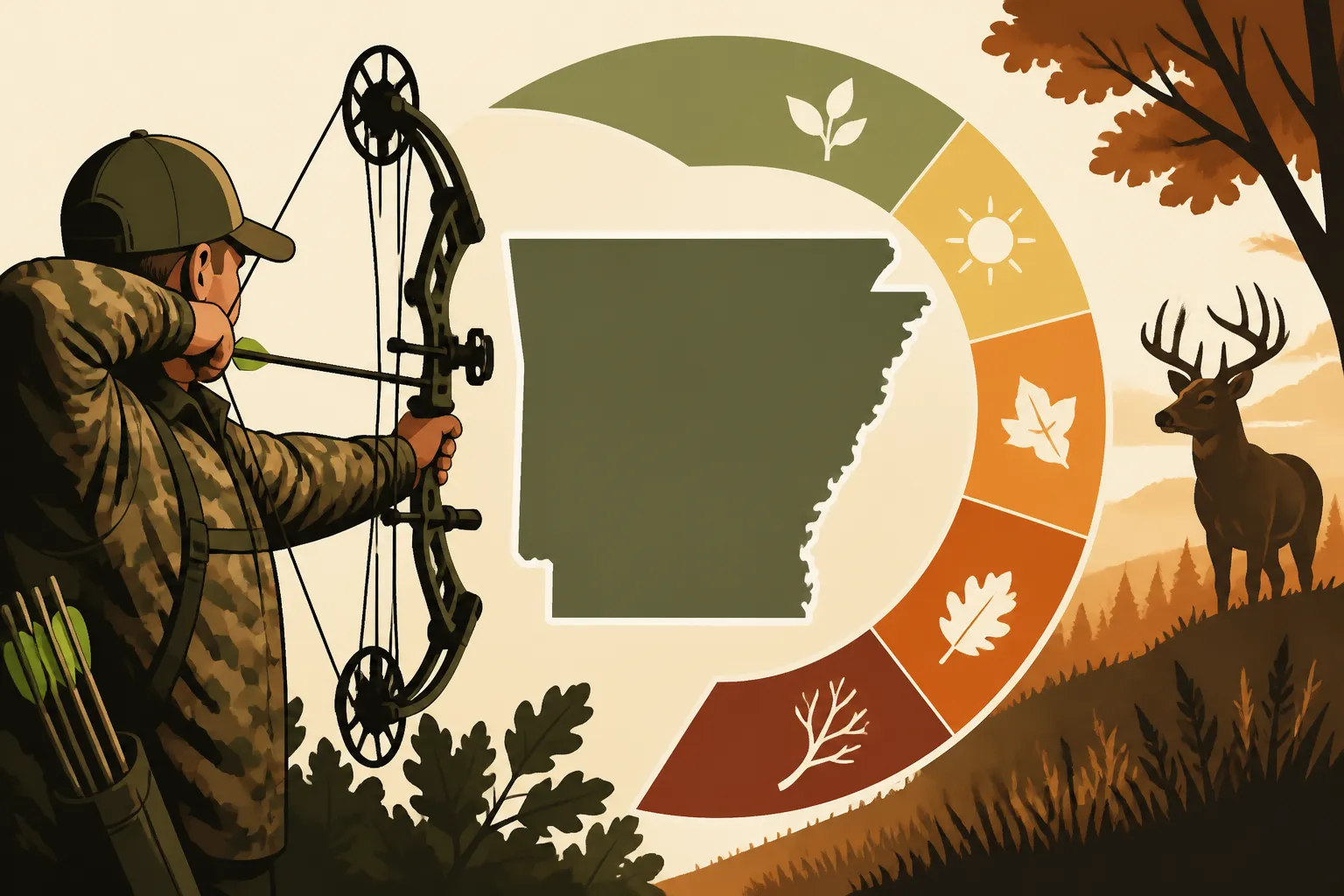
Imagine having nearly five full months to pursue whitetails with your bow. That's the reality for Arkansas archers, with the season typically kicking off in late September and running all the way through February. This incredibly long window means you don't have to cram all your hunts into a couple of weekends. You can strategize, adapt, and learn throughout the fall and winter, observing deer patterns as they shift from summer feeding behaviors to pre-rut, peak rut, and then into late-season survival modes. This extended timeframe allows for a much deeper understanding of your hunting grounds and the deer that inhabit them. It truly distinguishes Bowhunting Arkansas's Five-Month Archery Season from hunting in other regions.
The beauty of this lengthy season is its flexibility. If a certain weather pattern ruins a weekend hunt, you’re not out of luck; there are plenty more opportunities. It also means less pressure to fill a tag early, allowing you to be more selective and focus on quality encounters. This extended access can lead to incredible hunting experiences, as you witness the full cycle of the deer woods unfold. From acorns dropping in September to frozen river bottoms in January, the bowhunter sees it all.
Navigating Zone-Specific Dates and Regulations
While the overarching season is long, Arkansas's deer regulations are finely tuned to its diverse ecological zones. The state is divided into multiple deer zones, each with slightly different opening and closing dates, bag limits, and even antler restrictions. For instance, the timing of the rut can vary significantly between the Delta and the Ozark regions, and the regulations reflect these biological differences. It's not a one-size-fits-all approach, and that's critical for hunters to understand.
Before you even think about stringing your bow, you must consult the latest Arkansas Game and Fish Commission (AGFC) regulations for your specific deer zone. What's legal in Zone 1 might be different in Zone 12, especially concerning antlered deer and the antlerless quota. Some zones might have a more restrictive three-point rule, while others might be more liberal. Knowing your zone's specific Arkansas Archery Deer Season Structure is paramount to a legal and ethical hunt. This often requires a careful study of maps and the AGFC website to ensure you’re compliant, and a tool like GoHunt can be invaluable for cross-referencing zone boundaries and regulations on the fly. Don't just assume; verify every single time.
Tagging and Reporting Requirements for Archers
No matter how long the season or how many deer you encounter, proper tagging and reporting are non-negotiable. In Arkansas, once you’ve successfully harvested a deer, whether it’s a magnificent buck or a management doe, you are legally required to tag it immediately and then report it to the AGFC. This process is fairly streamlined but must be done correctly. The physical tag from your license needs to be affixed to the deer, and then the harvest must be reported through the AGFC website, their mobile app, or via a toll-free phone number.
This reporting provides critical data for wildlife managers to assess deer populations and adjust future seasons and bag limits. It helps ensure the long-term health of the herd. Make sure you have your license and tags with you every time you hunt. Also, always carry a pen or permanent marker to fill out the tag information clearly. For more specific details on what to do after a successful hunt, refer to the guidelines on Arkansas Deer Checking and Tagging. Failing to properly tag and report a deer can lead to significant penalties, so it's a step you absolutely cannot afford to skip, no matter how tired or excited you are after a successful hunt.
Leveraging Early Season Archery Opportunities
The early part of Arkansas’s archery season, typically from late September into early October, presents a unique set of challenges and rewards. It's often hot, humid, and buggy, but it’s also when deer are still largely on summer patterns, making them somewhat predictable if you know what to look for. This period also includes some strategic buck-only days that can be golden opportunities.
The Strategic Early Buck-Only Archery Days
Arkansas often kicks off its archery season with a special early buck-only period, usually a few days or a week before the full season opens for antlerless deer. This is a fantastic strategic advantage for bowhunters focused on harvesting an antlered deer. During this time, the woods are quieter, and deer haven't experienced the full brunt of hunting pressure. It’s a chance to catch mature bucks still in their relatively undisturbed summer patterns, often focused on food sources. For a deeper dive, check out Hunting the Arkansas Early Buck-Only Archery Days.
The key to success during these early days is pinpointing where bucks are consistently feeding or traveling. They might still be in bachelor groups, and their movements are often more daylight-oriented than they will be once hunting pressure ramps up. Scouting before the season is paramount, looking for well-used trails, fresh rubs, and consistent food sources. This brief, focused window can be incredibly productive for patient and prepared archers, setting the tone for the rest of the long season.
Battling September Heat and Insect Pressure
Let’s be honest, hunting in September in Arkansas can feel like a tropical adventure, and not in a good way. The heat and humidity are oppressive, and the insect population—mosquitoes, ticks, chiggers—can be relentless. This isn't just uncomfortable; it can significantly impact both deer movement and hunter endurance. Deer often become largely nocturnal in response to the heat, moving primarily at dawn and dusk, or even sticking to the cooler hours of the night. For a more detailed look into this, read about Bowhunting Arkansas in September Heat.
As a hunter, you need to be prepared for these conditions. Lightweight, breathable clothing, plenty of water, and effective insect repellent are not optional—they are essential. Setting up near water sources or shaded bedding areas can pay off, as deer will seek relief from the heat. Patience is also critical; deer might move slowly, and you might have shorter hunting windows. Don't let the weather deter you; adapt your strategy, hunt smart, and those early season bucks can still be had.
Focusing on Food and Water Sources Before the Rut
Before the frantic activity of the rut begins, deer are primarily driven by their need for food and water. In the early season, this means keying in on summer food sources that are still available and fresh. White oak acorns, if they’ve started dropping, can be deer magnets. Agricultural fields like soybeans, corn, or even hay fields can also be hot spots, especially during the cooler hours. Don’t forget natural browse, like green briar and honeysuckle, which are reliable food sources.
Water is another critical element, especially in the heat. Ponds, creeks, and even damp depressions can attract deer looking to quench their thirst. Setting up between bedding areas and these reliable food and water sources will give you the best chance for an encounter. Pay attention to transition zones—the edges where different habitats meet—as deer often use these as travel corridors. Scouting for fresh tracks, droppings, and browse lines will tell you where the deer are concentrating their efforts before the breeding season takes over their priorities.
Mid-Season Archery: The Pre-Rut and Peak Rut
As autumn truly sets in, the woods transform, and so does deer behavior. Mid-season, typically October through mid-November, is arguably the most exciting time for many bowhunters, encompassing the thrilling pre-rut and the explosive peak rut. This is when bucks become more active, more vulnerable, and more unpredictable.
Decoding the Pre-Rut Behavior in October
October in Arkansas is a transitional month, often characterized by the "pre-rut." Bucks are no longer strictly in bachelor groups; their testosterone levels are rising, and they're starting to disperse, rub, and make scrapes. While they aren't actively chasing does yet, they're definitely thinking about it. This period can be incredibly productive, as bucks are becoming more visible in daylight, checking scrapes, and laying down scent. They’re still primarily focused on food, but with an underlying restlessness.
During the pre-rut, look for fresh rubs on small trees and bushes, indicating where bucks are marking their territory. Scrapes, particularly "community scrapes" where multiple deer contribute, are also prime locations to set up. These areas are communication hubs, and bucks will regularly check them. Understanding how deer use these signposts can dramatically increase your chances. A well-placed stand overlooking a scrape line or a rub route can lead to an unforgettable encounter.
Hunting the Arkansas Rut by Zone
The peak rut is a bowhunter's dream, a period of frenzied activity where bucks throw caution to the wind in pursuit of does. However, it's crucial to remember that the rut doesn't happen uniformly across the entire state. Hunting the Arkansas Rut by Zone highlights how the timing can shift significantly, with some zones experiencing peak breeding in mid-November and others not until December or even January, particularly in the Delta regions. This means you need to adjust your strategy based on where you are hunting.
During the peak rut, focus on areas where does congregate, such as preferred food sources or bedding thickets. Bucks will be cruising these areas, checking for receptive females. Patience is key, as a hot doe can pull a buck through your stand at any moment. While scrapes and rubs are still important, the most effective strategy often shifts to covering more ground or sitting longer hours in high-traffic areas near doe groups. This is the time to be in your stand from dawn till dusk if you can manage it.
Effective Calling and Decoy Strategies for the Rut
The rut is the one time of year when deer vocalizations and visual attractants can be incredibly effective. Grunt calls, doe bleats, and rattling antlers can all be used to pique a buck's curiosity or challenge his dominance. During the pre-rut and early rut, light rattling and soft grunts can mimic sparring bucks or a buck trailing a doe, drawing in curious deer. As the rut intensifies, more aggressive rattling and snort-wheezes can challenge a dominant buck, potentially bringing him right into your lap. For more tips on this, refer to Rattling and Grunting in Arkansas.
Decoys can also be powerful tools. A single doe decoy placed within shooting range can lure in a cruising buck looking for a mate. Adding a small buck decoy can challenge a dominant buck, especially if combined with aggressive calling. Placement is critical: position your decoy so that an approaching buck presents a clear shot, often broadside, as he circles downwind to get a whiff. Always consider the wind direction when using decoys, as bucks will almost always approach from downwind to scent-check the "intruder."
Late Season Archery: Post-Rut Challenges and Rewards
After the peak of the rut, deer behavior shifts dramatically. Late season, typically from late November through February, can be tough but also incredibly rewarding for the persistent bowhunter. The focus moves from breeding to survival, as deer contend with colder temperatures, dwindling food sources, and increased hunting pressure.
Adapting to Post-Rut Buck Movement
Once the majority of does have been bred, bucks enter a recovery phase. They've lost significant body mass during the rut and are exhausted. Their primary focus becomes replenishing energy reserves, which means finding and consuming high-calorie food sources. Their movements become less random and more directed, often between secure bedding areas and reliable food plots or natural mast crops. The chasing and cruising of the rut are largely over.
During this post-rut period, understanding where deer are feeding becomes paramount. Look for areas with remaining acorns, agricultural fields (especially standing corn or beans if available), or winter food plots. Bucks will often move cautiously, conserving energy, so patient observation and long sits are often necessary. Early mornings and late afternoons, when temperatures are coldest, can be prime times for deer to move to and from feeding areas.
Dealing with Colder Weather and Increased Pressure
Late season hunting in Arkansas often brings significantly colder temperatures, sometimes even snow and ice, especially in the Ozarks. While this can make for uncomfortable hunting, it also stimulates deer to feed more actively to maintain body heat. However, it also means that deer are increasingly wary due to months of hunting pressure from both archery and modern gun seasons.
Hunters need to adjust their gear for the cold: layered clothing, insulated boots, and hand warmers are essential. Staying warm and comfortable will allow you to stay on stand longer, increasing your chances. As for pressure, deer will seek out thicker cover and more secluded areas. This means you might need to venture deeper into public lands or focus on overlooked thickets on private ground. Utilizing tools like GoHunt to identify overlooked corners or areas with limited access can provide a significant advantage. Don't be afraid to try still-hunting through dense cover or setting up on transition routes between bedding and feeding areas.
Targeting Winter Food Sources and Refuge Areas
The availability of food is the biggest driver for late-season deer. Natural food sources like acorns might be depleted, but any remaining mast will be heavily utilized. Areas with standing timber that still hold nuts, or dense thickets where deer can browse on evergreens like greenbrier, become crucial. In agricultural areas, look for leftover grain in harvested fields or any standing crops that provide both food and cover.
Deer will also seek out thermal cover to escape the cold winds and snow. Dense pine thickets, cedar bottoms, or south-facing slopes that catch more sun can become prime bedding locations. Often, these refuge areas will be adjacent to or within close proximity to remaining food sources. By identifying these critical late-season survival habitats, you can pinpoint deer movement patterns and increase your odds of a successful harvest.
Essential Gear and Ethical Considerations for Bowhunters
Successful and ethical bowhunting requires more than just a good bow; it demands appropriate gear for Arkansas’s varied terrain and conditions, coupled with a deep understanding of regulations and responsible practices.
Choosing the Right Bow and Broadheads for Arkansas
Your bow is, of course, the heart of your archery setup. Whether you prefer a compound, traditional recurve, or longbow, ensure it’s well-maintained, properly tuned, and comfortable for you to shoot accurately. Accuracy is paramount; a well-placed shot with a moderately powerful bow is infinitely better than a poorly placed shot with the latest and greatest speed demon. Practice consistently at various distances, including from elevated positions if you plan to hunt from a treestand.
Broadheads are equally critical. For deer, a sharp, reliable broadhead that creates a devastating wound channel is essential for a quick, humane kill. Both fixed-blade and mechanical broadheads can be effective, but choose one that matches your bow's setup and your personal preference. Ensure your broadheads are razor-sharp before every hunt. Test them with your setup to confirm they fly true with your field points. This attention to detail contributes to a clean, ethical harvest.
Strategic Treestand Setups in Delta Hardwoods and Ozark Ridges
Arkansas’s landscape is incredibly diverse, from the flat, flooded timber of the Delta to the steep, rocky ridges of the Ozarks. Your treestand setup needs to reflect this variety. In the Delta hardwoods, you might be hanging a stand in a giant oak overlooking a slough or a dry cypress break. Here, the challenge is often finding trees straight enough and ensuring your approach and exit routes are quiet, especially if you're dealing with water. For more on this, consider Treestand Setups in Delta Hardwoods.
In the Ozarks, the terrain is dramatically different. Here, you'll be navigating steep inclines, rock outcroppings, and hollows. Finding a subtle bench or saddle along a ridge line where deer travel can be a gold mine. Wind and thermals are critical considerations in this hilly terrain, as air currents will often rise in the morning and fall in the evening. Understanding how to read an Reading an Ozark Bench for Deer is a skill that takes time to develop but is invaluable. Always use a safety harness, no matter how quick or simple your setup seems.
CWD Rules and Carcass Transport for Archers
Chronic Wasting Disease (CWD) is a serious concern for deer populations, and Arkansas has proactive regulations in place to monitor and manage its spread. Hunters have a critical role to play in this effort. If you harvest a deer in a CWD-positive county, there will be specific rules regarding carcass transport and, in some cases, mandatory testing requirements.
Always know the current CWD status of your hunting area. If you harvest a deer in a CWD Management Zone, typically you cannot transport certain parts of the deer (like the brain, spinal cord, or lymph nodes) out of that zone, with exceptions for deboned meat, clean skull plates, and taxidermy-ready hides. It's vital to familiarize yourself with these regulations before your hunt to avoid unintentional violations. For comprehensive information, consult Arkansas CWD Rules and Carcass Transport. Being responsible about CWD helps protect Arkansas’s deer herd for future generations.
Making the Most of Public Land Archery in Arkansas
Arkansas boasts a significant amount of public hunting land, from expansive National Forests to numerous Wildlife Management Areas (WMAs). For the bowhunter willing to put in the effort, these public lands offer incredible opportunities to pursue whitetails throughout the long archery season.
Scouting Arkansas Public Land Before Season
Public land hunting often requires a different approach than hunting private land. Deer on public land are typically more pressured and therefore more wary. This makes pre-season scouting absolutely essential. Long before opening day, hit the woods to identify bedding areas, travel corridors, and consistent food sources. Look for subtle terrain features like benches, saddles, and creek crossings that funnel deer movement.
Utilize mapping tools like the AGFC map tool or GoHunt, which can show property boundaries, topography, and even historical satellite imagery that reveals changes in habitat over time. This digital scouting can save you countless hours of walking. Then, boots-on-the-ground scouting confirms what you see on the map. Pay attention to ingress and egress routes that minimize your disturbance. For more detailed advice, read about Scouting Arkansas Public Land Before Season. The more you know about your chosen area before the season, the better your chances of success.
Finding Solitude on Wildlife Management Areas
Arkansas’s WMAs are fantastic resources, but they can also see significant hunter pressure, especially on opening weekends. As an archer, you have an advantage: you can hunt areas that might be too dense or difficult for modern gun hunters to navigate. Finding solitude often means going deeper, away from easy access points, or targeting areas that others overlook.
Look for thick cover, swamps, or areas with natural barriers that deter casual hunters. These often serve as refuge areas for pressured deer. Sometimes, it's as simple as walking an extra mile or two from the road or boat launch. Tools that help you identify subtle access points or tracts of public land that might be less known can be invaluable. Even during high-pressure times, there's always an opportunity to Finding Ground Others Walk Past if you're willing to work for it. The long archery season gives you ample time to explore and discover these hidden gems.
Respecting Hunter Orange Rules Even During Archery
While hunter orange is typically associated with modern gun seasons, it's critical for archers to understand when it's required and, perhaps more importantly, when it's simply a good idea for safety. During the concurrent modern gun season, even if you are bowhunting, you are usually required to wear hunter orange. This is a non-negotiable safety rule designed to make you visible to other hunters and prevent accidents.
Even outside of mandatory hunter orange periods, many archers choose to wear a hunter orange vest or hat while walking to and from their stand, especially on public land. This is a voluntary safety measure that can significantly reduce your risk, particularly during periods when other hunting activities (like small game or duck hunting) might be occurring in the same general area. Always be visible and aware of your surroundings, and for complete regulations, consult Arkansas Hunter Orange Rules. Safety should always be your top priority.
Arkansas Archery Season Overview
This table provides a generalized overview of how Arkansas's long archery season typically breaks down. Always consult the current AGFC regulations for precise dates, zone-specific rules, and bag limits, as these can change annually.
| Season Phase | Typical Dates (Approx.) | Key Deer Behavior | Primary Hunter Strategy | Gear/Considerations |
|---|---|---|---|---|
| Early Season | Late Sept. – Mid-Oct. | Summer patterns, bachelor groups, food-focused, nocturnal due to heat. | Focus on primary food/water sources, travel routes from bedding, hunt early/late. | Bug spray, hydration, lightweight clothing, pre-season scouting. |
| Pre-Rut | Mid-Oct. – Early Nov. | Bucks disperse, rub/scrape activity, increased daylight movement. | Hunt rubs/scrapes, transition zones, use calling (grunts, light rattling). | Calls, binoculars, observation stands. |
| Peak Rut | Mid-Nov. – Mid-Dec. (varies by zone) | Bucks actively chasing does, less focused on food, vulnerable. | Hunt doe bedding/feeding areas, all-day sits, aggressive calling, decoys. | Decoys, aggressive calls, warm clothing (weather dependent). |
| Post-Rut | Mid-Dec. – Early Jan. | Bucks recovering, food-focused again, wary, seeking thermal cover. | Target high-calorie food sources, thick cover, deep woods, patient sits. | Warm layers, insulated boots, focus on nutrition. |
| Late Season | Mid-Jan. – Feb. | Survival mode, very wary, heavy focus on remaining food and cover. | Focus on untouched food plots, thickets, sanctuary areas, long walks. | Extreme cold weather gear, strategic access, minimal disturbance. |
Disclaimer
Hunting involves inherent risks, including injury and death. Always prioritize safety, follow all local, state, and federal regulations, and obtain proper landowner permission. The information provided in this guide is for informational purposes only and should not be considered legal advice. Consult the official Arkansas Game and Fish Commission regulations for the most accurate and up-to-date rules.