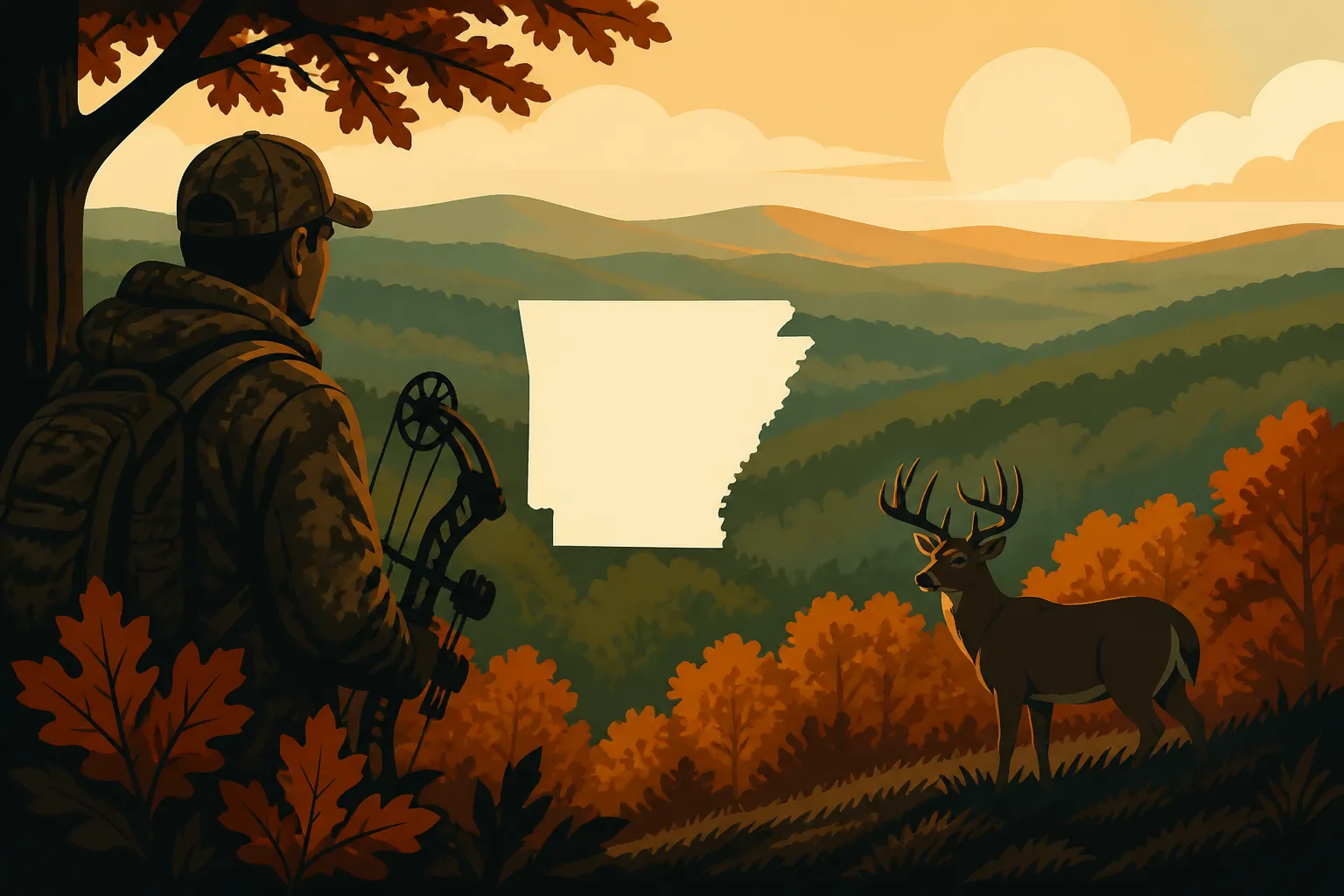
Hunting Ozark Ridges and Hollows for Deer
The Arkansas Ozarks are absolutely breathtaking, a rugged expanse of hills and hollers that can make a deer hunter feel both invigorated and utterly defeated. The sheer scale of the terrain, combined with thick timber and sometimes elusive deer sign, often leaves folks wondering where to even begin. It's a far cry from the flat, predictable farmlands of the Delta, and trying to apply lowland tactics here can quickly lead to frustration and worn-out boots. This guide is all about demystifying those challenging ridges and hollows, breaking down how deer move through this complex landscape, and equipping you with the strategies to hunt these beautiful mountains successfully.
Decoding the Ozark Landscape and Deer Behavior
Hunting the Ozarks isn't just about finding deer; it's about understanding the land itself and how deer utilize its unique features. These aren't your typical agricultural deer that move between bedding and feeding in open fields. Ozark deer are creatures of contour, masters of using elevation changes, drainages, and dense cover to their advantage. To consistently find success, you’ve got to learn to read the mountain like a book.
Reading Topographic Maps and Aerial Imagery
Before you even step foot in the woods, your best friend in the Ozarks is a detailed topographic map or, even better, a mapping application like GoHunt on your phone or tablet. These tools allow you to visualize the terrain in a way that ground-level scouting simply can't. Look for features like steep bluffs, gradual benches, saddles between ridges, and the convergence of multiple drainages, often called "hollows" or "draws." These aren't just random lines and colors; they tell a story about how water flows, where cover is thickest, and most importantly, where deer are likely to travel. A bench, for instance, is a relatively flat spot on the side of a steep hill, acting like a natural deer highway where they can travel horizontally with less effort, offering both movement and vantage points. Similarly, saddles, which are dips between two high points on a ridge, serve as natural crossings for deer moving from one side of a mountain to another.
Aerial imagery complements topo maps beautifully. While the topo map shows you how the land lays, the aerial view shows you what is actually on it. You can identify different timber types – thick pine regeneration often indicates bedding areas, while mature hardwoods might point to food sources like acorns. Look for subtle changes in canopy cover that could indicate old logging roads, creek beds, or even secluded clearings where deer might browse. Overlaying these two types of maps, you start to see patterns: a bench running through a mixed hardwood and pine stand, or a saddle connecting two ridges with a thick clearcut nearby. This initial digital reconnaissance is crucial for Scouting Arkansas Public Land Before Season and saving you countless miles of aimless walking.
Deer Movement Along Benches and Draws
Once you’ve identified these key terrain features, you can start to predict how deer will move. Benches are absolutely critical. Deer, just like us, prefer the path of least resistance. Instead of constantly climbing and descending, they'll often travel along these horizontal shelves, especially if they're hidden by good cover. Think of them as contour lines brought to life – highways that deer use to navigate steep slopes. These benches often hold rubs and scrapes, particularly during the rut, as bucks travel them looking for does without expending unnecessary energy.
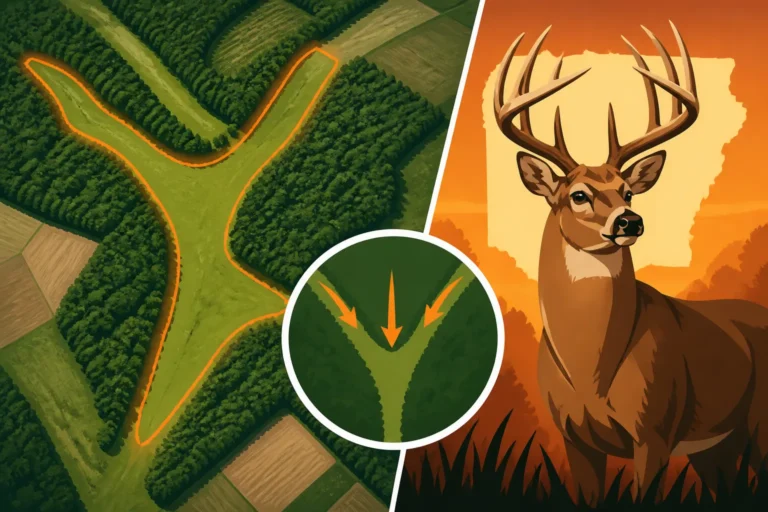
Hollows and draws, on the other hand, serve as natural funnels, especially if they contain a reliable water source or dense thermal cover. Deer will use the bottoms of these draws for travel, particularly if the wind is swirling or they want to avoid detection by staying low. The edges of these draws, where the steep terrain transitions into a more gradual slope, can also be productive. Deer might skirt these edges, using the elevation for a quick escape or to scent-check the area below. Pay close attention to where multiple draws converge, as these junctions often create natural pinch points that concentrate deer movement. Understanding Wind and Thermals in Ouachita Hollows becomes vital here, as the air currents can be unpredictable.
Food Sources and Water in the Mountains
Unlike the agricultural lands that dominate parts of Arkansas, food sources in the Ozarks are primarily natural and scattered. Hard mast, especially acorns from various oak species (red, white, black, pin), is king. Identifying productive oak ridges or specific groves that are dropping acorns is paramount. This can change year to year, so pre-season scouting for mast crops is a must. Deer will often congregate in areas with abundant acorns until the supply is exhausted. Other food sources include various forbs, browse from woody plants, and occasionally persimmons or wild grapes.
Water is another significant factor, particularly during dry spells or in areas where consistent creeks are scarce. Deer need to drink, and identifying springheads, seepages, or isolated pools in stream beds can reveal critical ambush points. Even in periods of ample rainfall, deer will gravitate towards drainages and hollows with reliable water sources. These water sources not only attract deer for drinking but also often provide lush vegetation and cooler temperatures, especially in early archery season. Learning to read the subtle signs of these water sources and how deer approach them can be a game-changer for your success, making these overlooked areas prime for a stand setup.
Strategic Scouting for Ozark Deer
Scouting in the Ozarks is a workout, but it’s absolutely essential. You can't just drive around and expect to find deer. It requires miles on your boots, a keen eye, and a strategic approach to cover ground effectively and identify high-percentage areas.
Pre-Season Reconnaissance
Your pre-season scouting isn't just a casual walk in the woods; it's an investigative mission. Start by using your digital tools to mark potential areas: those benches, saddles, intersecting draws, and areas of diverse timber. Then, hit the woods with a purpose. Focus on finding actual deer sign: tracks, droppings, rubs, and scrapes. Tracks in soft dirt along benches or creek beds are a good indicator of travel corridors. Droppings can give you a clue about what deer are eating and how recently they've been in the area. Fresh rubs on saplings, especially larger ones, indicate an active buck. Look for scrape lines, particularly around the edges of thick cover or along travel routes.
During this time, also evaluate bedding areas. These are typically thick, nasty places – dense cedar thickets, brushy clearcuts, or steep, south-facing slopes that catch the morning sun. Deer often bed just below the crest of a ridge, allowing them to watch their backtrail and smell anything approaching from below. Finding the connection points between these bedding areas and potential food sources or water is the holy grail of Ozark scouting. This deep dive into the deer's daily patterns is foundational for Bowhunting Arkansas's Five-Month Archery Season.
Finding Key Funnels and Pinch Points
The Ozarks are vast, and deer can feel like needles in a haystack. Your job as a hunter is to shrink that haystack by identifying natural funnels and pinch points that concentrate deer movement. These are spots where the terrain naturally forces deer into a narrower corridor. A saddle between two ridges is a classic funnel. A bluff line that forces deer to walk a specific narrow bench is another. The junction of two or three hollows is often a hot spot, as deer from various directions will converge there.
Look for areas where different habitat types meet – say, a mature hardwood ridge transitioning into a thick pine plantation or a recently logged clearcut. The edge where these two environments meet is often heavily traveled, providing both food and cover. Sometimes, human elements can create funnels too: an old logging road that provides easier travel, or even the edge of a property line where habitat changes abruptly. Identifying these "bottlenecks" on a map and then confirming them with ground scouting is how you turn a huge, intimidating landscape into manageable, huntable sections.
Using Technology for Scouting
Modern technology has revolutionized how we scout and hunt, especially in challenging terrain like the Ozarks. Mapping apps like GoHunt are indispensable. They provide high-resolution satellite imagery, detailed topographic maps, public/private land boundaries (crucial for Arkansas Public Hunting Land access), and the ability to drop pins, draw lines, and measure distances. You can literally sit at home, pore over maps, and mark potential stand locations, bedding areas, and travel corridors, saving immense amounts of time and energy in the woods.
Beyond just maps, don't overlook weather apps that can give you real-time wind direction and speed, which is critical for planning your approach and stand setup. GPS devices, even built into your phone, are lifesavers for navigating dense timber and finding your way back to your vehicle after a long day in unfamiliar country. While it's always wise to carry a physical map and compass as a backup, these digital tools, when used effectively, can give you a profound advantage in breaking down the complex Ozark landscape into understandable, huntable pieces.
Effective Hunting Methods in Challenging Topography
Once you've done your scouting homework, it's time to put those insights into action. Hunting the Ozarks often demands a blend of patience, stealth, and adaptability. You can't just plop down a stand anywhere; your approach needs to be as nuanced as the terrain itself.
Still-Hunting the Timber
Still-hunting is perhaps the most effective tactic in the vast, timbered expanse of the Ozarks. This isn't about sitting in a stand all day, though that has its place. Still-hunting involves moving slowly, deliberately, and quietly through the woods, pausing frequently to observe, listen, and scan for deer. Think of it as stalking, but with a broader search pattern. The key is to take a few steps, then stop and stand absolutely still for several minutes, using your binoculars to pick apart every shadow, every cluster of brush. Deer rely heavily on their eyesight, especially for movement, and by being still, you become part of the forest.
Focus your still-hunting efforts along those benches, the edges of thickets, and through hollows where you've found fresh sign. Pay particular attention to your wind direction, making sure it's in your favor or quartering across to prevent deer from scenting you. The steep terrain often creates swirling thermals, especially in the mornings as the sun rises and in the evenings as it sets. Understanding these thermal currents is crucial for a successful still-hunt. Moving uphill in the morning or downhill in the evening can help keep your scent below or above the deer. This method takes patience and sharp observation skills but can be incredibly rewarding, putting you directly into the deer's world. This is a core part of Still-Hunting Arkansas Pine Country, which shares many similarities with the Ozark timber.
Setting Up Ambush Points
While still-hunting is active, setting up strategic ambush points is about patience and precision. This involves finding those identified funnels, pinch points, or prime feeding/bedding transitions and placing a treestand or ground blind. For treestands, prioritize areas with good cover for your ascent and descent, and ensure you have clear shooting lanes in the directions deer are most likely to approach. A common strategy is to hang stands overlooking benches, saddles, or the intersections of major draws where deer movement is concentrated. Remember the "Reading an Ozark Bench for Deer" article on our site, as that offers more specific insights.
Ground blinds can be very effective in the Ozarks, especially in areas with thick undergrowth or around large blowdowns that offer natural concealment. They can also be a good option for hunters who prefer not to use a treestand or when the terrain makes stand placement difficult. The key to both stand and blind placement is minimizing your impact. Clear shooting lanes before the season, and try to access your spot quietly, ideally under the cover of darkness, to avoid disturbing deer. Your ambush should be an integrated part of the landscape, not an obvious intrusion.
Utilizing Natural Blinds and Cover
In the Ozarks, Mother Nature often provides the best concealment. Instead of hauling in heavy pop-up blinds, learn to utilize the natural contours and vegetation around you. Large oak trees with spreading canopies, thick cedar stands, rock outcrops, or fallen timber can all provide excellent natural blinds. The goal is to break up your silhouette and blend into your surroundings. When still-hunting, use these features to your advantage, moving from one piece of cover to the next, always with an escape route or further concealment in mind.
Even when sitting in a treestand, you want to be silhouetted against a busy background, like a dense tree line or a thick cluster of limbs, rather than a clear sky. Using natural branches or even small camo netting can enhance your concealment. Remember, deer are constantly looking for anomalies in their environment. The more you can disappear into the natural flow of the Ozark woods, the better your chances of seeing deer without being detected. This natural approach ties into the spirit of Hunting Ozark Ridges and Hollows for Deer – becoming one with the environment.
Gear Considerations for Rugged Ozark Hunts
Hunting the Ozarks will test your gear. This isn't flat ground, and a day in these mountains can feel like a marathon. Having the right equipment isn't just about comfort; it's about safety and effectiveness.
Footwear and Layering for Steep Climbs
Your feet are your foundation in the Ozarks. Investing in high-quality, comfortable, and supportive boots is non-negotiable. Look for boots with excellent ankle support, a stiff sole for navigating rocky terrain, and good traction for steep, often leaf-covered slopes. Waterproofing is a huge plus, as you’ll inevitably encounter wet creek beds or damp morning dew. Break your boots in well before the season to avoid blisters that can quickly ruin a hunt.
Layering your clothing is equally important. The Ozarks can experience significant temperature swings, from chilly mornings in the hollows to warm afternoons on sunny ridge tops. Start with a moisture-wicking base layer to manage sweat, add an insulating mid-layer for warmth, and top it with a windproof and water-resistant outer shell. As you climb, you'll heat up quickly, so being able to shed layers easily is crucial to avoid overheating and sweating, which can lead to a chill later in the day. A good pair of gaiters can also keep leaves, twigs, and moisture out of your boots, keeping your feet drier and more comfortable.
Navigation Tools and Communication
Even with a detailed map, getting turned around in the vast, undulating terrain of the Ozarks is easier than you think. A reliable GPS device or a robust mapping app like GoHunt on a fully charged phone (with a backup power bank!) is a must. Download your maps offline before you go, as cell service is often spotty or non-existent in many remote areas. Mark your vehicle, your stand locations, and any significant deer sign you find.
Beyond navigation, consider communication. A fully charged phone is great, but a satellite communicator (like a Garmin InReach or Spot device) can be a literal lifesaver if you venture deep into areas without cell service. These devices allow you to send SOS messages, check in with family, and even exchange texts with other hunters in your party, providing peace of mind and an essential safety net, especially when hunting alone. Always let someone know your hunting plan, including your intended route and estimated return time, even if you’re carrying a satellite device.
Packing Essentials for a Day Hunt
A well-packed day pack can make all the difference. Beyond your weapon, ammo, and optics, here’s a checklist of essentials for an Ozark deer hunt:
| Item | Purpose | Notes |
|---|---|---|
| Water | Hydration for strenuous activity | At least 2-3 liters; more in warm weather |
| Snacks | Sustained energy for long days | High-protein bars, nuts, dried fruit |
| First-Aid Kit | Treating minor injuries or emergencies | Blister treatment, pain relievers, bandages, antiseptic |
| Headlamp/Flashlight | Navigation in low light, blood trailing | With extra batteries |
| Knife | Field dressing, general utility | Sharp and easily accessible |
| Game Bags/Gloves | Protecting meat, hygiene during field dressing | Essential for quick cooling |
| Cordage/Rope | Dragging deer, hanging gear, emergency uses | 50 ft of strong cordage |
| Fire Starter | Emergency signaling, warmth | Waterproof matches, lighter, fire steel |
| Whistle | Signaling for help | Louder and less fatiguing than yelling |
| Rain Gear | Unexpected showers, staying dry and warm | Lightweight, packable jacket and pants |
| Toilet Paper | Personal hygiene, emergency fire starter | Small, compressed roll |
| Compass & Paper Map | Backup navigation | Know how to use them! |
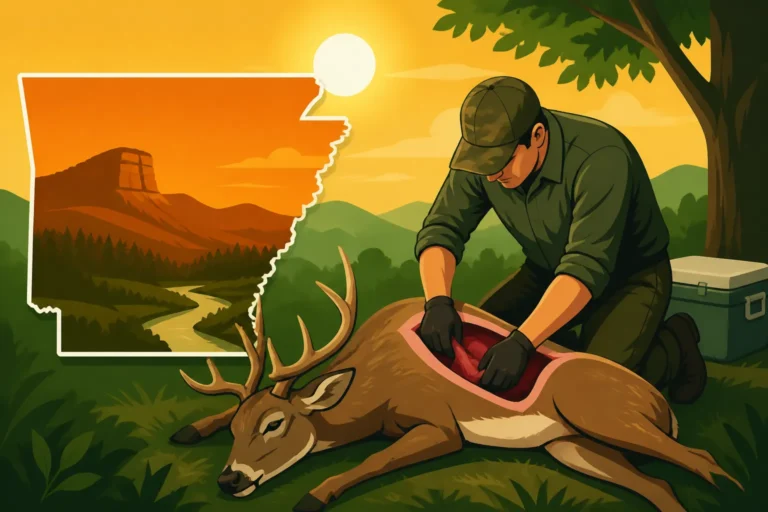
This list ensures you're prepared for most eventualities you might encounter while Field Dressing in Arkansas Heat or trying to get a deer out of a deep hollow.
Adapting to Weather and Seasonal Changes
The Ozarks are beautiful, but they can be unpredictable. Weather patterns, especially, can shift quickly, and deer behavior changes significantly as the seasons progress. Being able to adapt is key to consistent success.
Wind and Thermals in Mountainous Areas
Understanding wind and thermals is paramount when hunting ridges and hollows. Unlike flat terrain where wind direction is relatively consistent, mountains create complex air currents. As the sun rises, the air in the hollows warms and begins to rise, creating an uphill thermal current. Conversely, as the sun sets, the air cools and descends into the hollows, creating a downhill thermal. This means your scent will generally travel uphill in the morning and downhill in the evening.
However, prevailing winds can override or combine with these thermals, creating swirling, unpredictable currents. Always pay attention to how your scent is behaving – a milkweed pod, a puff bottle, or a small piece of string tied to your bow string can give you real-time feedback. Your best bet is often to hunt the side of a ridge that allows the wind and thermal to carry your scent away from where you expect deer to approach. This constant vigilance with scent management is vital for close encounters. We touched on this in Wind and Thermals in Ouachita Hollows, and the principles apply directly here.
Hunting After Rain or Snow
A good rain or a fresh snow can completely change the hunting dynamics in the Ozarks, often for the better. Rain quiets the woods, making it easier to move silently through crunchy leaves and over noisy branches. It also washes away human scent, giving you a cleaner slate. Deer often become more active during and immediately after a rain shower, moving to feed or simply stretching their legs. This is an excellent time for still-hunting, as your footsteps will be muffled.
Snow is a game-changer. Fresh snow acts like a giant white canvas, revealing every deer track and movement. It also pushes deer to seek out food sources more actively and find thermal cover. Following fresh tracks in the snow can lead you directly to deer. Look for rubs and scrapes that suddenly pop against the white backdrop, indicating recent activity. A heavy snow can also make deer concentrate in specific areas, such as south-facing slopes that warm up faster or dense cedar thickets that offer protection from the elements. Don't let a little inclement weather deter you; it often provides some of the best hunting opportunities.
Late Season Tactics and Pressured Deer
As the season progresses into late fall and early winter, deer behavior in the Ozarks shifts dramatically, especially after the peak of the rut and with increased hunting pressure. Deer become more nocturnal and often move into thicker, harder-to-reach cover. They've been pushed and prodded, and they learn quickly. Your tactics must adapt to this. Focus on primary food sources that are still available, like late-dropping acorns, persimmons, or winter browse. Deer will often concentrate in areas with remaining food.
Target secluded, out-of-the-way hollows and thickets that most hunters overlook. These "sanctuaries" are where pressured deer will retreat. Long, patient watches over these areas, especially during midday when other hunters have left the woods, can pay off. Consider employing Two-Person Drives on Small Tracts if you have hunting partners, pushing deer towards strategically placed standers in dense cover. The late season in the Ozarks requires grit, patience, and a willingness to explore the nastiest, steepest parts of the mountain where older, wiser deer often seek refuge.
Disclaimer
Please remember that hunting regulations and conditions can change. Always consult the latest Arkansas Game and Fish Commission (AGFC) regulations before heading into the field. Safety should always be your top priority.