Turkey Tactics in Arkansas Pine Plantations
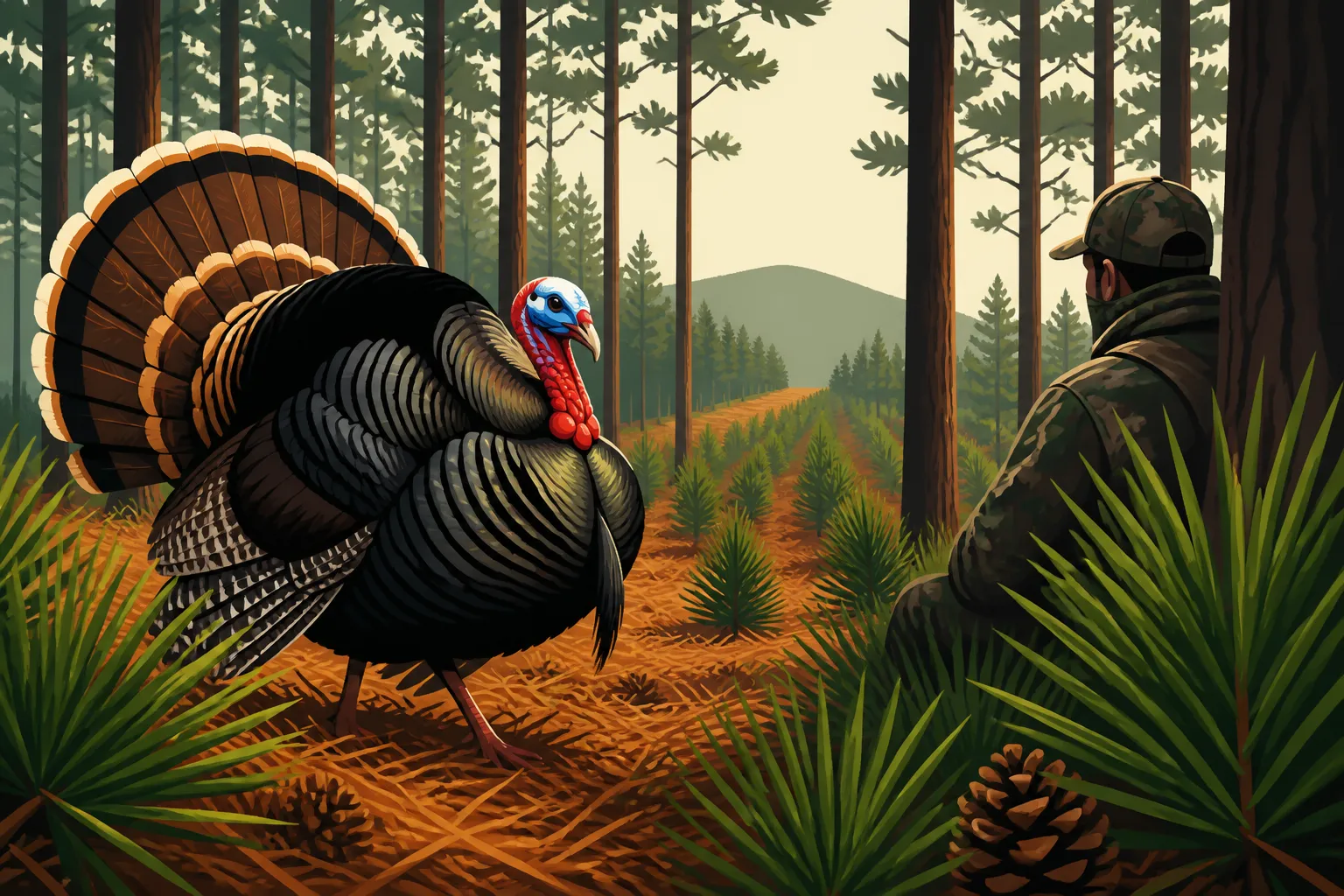
Hunting turkeys in Arkansas pine plantations presents a unique set of challenges that can leave even seasoned hunters scratching their heads. The dense, regimented rows of trees, coupled with often-thick undergrowth, make visibility a constant struggle and can play havoc with sound, making it tough to pinpoint a gobbler. This comprehensive guide will walk you through the specific tactics and considerations for successfully pursuing wild turkeys within these often-overlooked and sometimes frustrating landscapes across Arkansas.
Understanding the Pine Plantation Environment
Pine plantations, common across much of Arkansas, especially in the southern and western parts of the state, are distinct from the mature hardwoods many turkey hunters prefer. These managed timber tracts, often owned by large timber companies or private landowners, are characterized by their uniform tree growth and specific management cycles. Understanding these environments is the first step toward deciphering how turkeys use them and, ultimately, how you can hunt them effectively.
Structure and Cover Density
Unlike the open understories of mature hardwood forests where a turkey's gobble can carry for miles and you might spot a bird strutting from a distance, pine plantations are often like a labyrinth. Young plantations, especially those 5-15 years old, can be incredibly thick, forming an impenetrable wall of tightly packed pines and dense underbrush. This provides excellent security cover for turkeys, allowing them to move undetected, but it severely limits a hunter's line of sight and shooting lanes. As pines mature, thinning operations might open up the canopy and allow more light to the forest floor, creating a more diverse understory, but the rows themselves often remain a challenge. Birds might roost in the taller pines, but they’ll often drop into thicker sections for loafing during the day or to escape pressure.
The challenge here is two-fold: turkeys can hear you coming long before you see them, and you might not have a clear shot even if they respond to your call. It's a game of inches, where finding that subtle opening, that slight break in the vegetation, becomes paramount. You're not looking for wide-open spaces, but rather corridors and small clearings that offer fleeting opportunities.
Food Sources and Water Access
While pine plantations aren't typically known for the abundant hard mast (acorns, hickory nuts) that draws turkeys to mature hardwoods, they do offer alternative food sources. Turkeys in pine country will forage for insects, spiders, and other invertebrates in the duff layer beneath the pines, especially after recent rains or prescribed burns. They also key in on soft mast like berries (blackberries, huckleberries) and the tender green shoots of various plants that thrive in the sunlight gaps. Look for areas where natural clearings or logging roads allow sunlight to penetrate, as these spots often host a richer diversity of turkey foods.
Water access is another critical factor. Turkeys need water daily, and while they can get some moisture from dew and food, they'll seek out creeks, small ponds, or even puddles in low-lying areas. Identifying these water sources on a map is crucial, as they can serve as natural congregation points or travel corridors for birds moving through the drier pine uplands. These areas can also hold more diverse vegetation, creating a natural break from the monotony of the pines and offering better ambush opportunities.
Scouting Strategies for Pine Plantations
Scouting is paramount in any turkey hunting scenario, but it becomes an absolute non-negotiable when dealing with the complexities of pine plantations. The limited visibility means you can't rely on spotting birds from a distance, so understanding their movements and preferred areas before the hunt is critical. This involves a blend of technological aids and old-fashioned boot-leather scouting.
Pre-Season Aerial Map Analysis
Before you ever set foot in the woods, spend significant time poring over aerial maps. Tools like those found on GoHunt are invaluable for dissecting pine plantations. Look for variations in timber stand age, which often appear as different shades of green or texture. Younger, thicker stands might hold loafing or roosting birds, while slightly older, thinned sections might offer better travel and feeding opportunities. Pay close attention to the edges where pine plantations meet hardwoods, agricultural fields, or creek bottoms—these transition zones are often hotspots. Identify existing logging roads, fire lanes, and ATV trails; these are vital arteries for turkey movement and your own access. Mark potential roosting areas (tallest trees near water), dusting bowls, and natural clearings or small openings that could serve as setup locations. Use your mapping tool to identify subtle topographical changes, like small ridges or draws, as these can also funnel turkey movement. Don't just look at the pines; look at what's around the pines.
Analyzing these maps allows you to develop a strategic plan, identifying several potential starting points and backup locations based on wind, access, and suspected turkey activity. It helps you visualize potential travel routes for birds and escape routes for yourself, giving you a distinct advantage in these dense environments. When considering public land, this kind of detailed analysis can help you find areas that other hunters might overlook.
On-the-Ground Sign Reading
Once you have a solid understanding from your maps, it's time to hit the ground. During the pre-season or on off-days, walk the logging roads, fire lanes, and any accessible trails through the pine plantations. Look for fresh turkey sign: tracks in soft dirt, droppings (larger and often J-shaped for gobblers), scattered feathers, and dusting bowls. Dusting bowls are particularly good indicators of active areas, as turkeys frequently use them to rid themselves of parasites. Pay attention to strut marks on sandy roads or in open clearings, which indicate a gobbler has been displaying there.
Listen for gobbling at dawn, even if you’re not hunting, to pinpoint roosting locations. Don't be afraid to walk into the thicker sections, identifying natural openings, subtle ridges, or small draws that might be hidden from aerial view but offer excellent setup potential. Look for areas where sunlight penetrates the canopy, as these can create small clearings that turkeys might utilize. Pay attention to how sound travels in different parts of the plantation – a gobble might sound closer than it is due to the acoustics of the pines. This hands-on scouting complements your map study and is essential for confirming turkey activity and finding those crucial ambush points. When you're scouting, you're not just looking for turkeys; you're looking for the best way to hunt them given the challenging terrain, much like hunters scout for optimal spots for Hunting Arkansas Cutovers and Clearcuts.
Calling Tactics for Pine Plantation Turkeys
Calling turkeys in pine plantations is a different beast compared to calling in open hardwoods or fields. The dense cover changes how sound travels and how birds respond. You need to be adaptable, patient, and sometimes, a little aggressive.
Volume and Call Type Selection
The acoustics of a pine plantation can be tricky. A gobble might sound like it's right on top of you, only for the bird to be 200 yards away, or vice versa. When a turkey gobbles, try to get a clear triangulation if possible, but err on the side of caution. Start with softer calls, like subtle clucks and purrs, especially if you suspect a bird is close. If you don't get a response, slowly increase your volume with yelps or cutts. Locator calls, like crow or owl calls, are invaluable here. They often elicit a shock gobble from a tom that isn't willing to sound off at turkey calls, allowing you to pinpoint his general location without giving away your exact position with turkey vocalizations. Don't be afraid to try several different types of locator calls, as one might trigger a response where another fails.
When you do get a response to a turkey call, be mindful of over-calling. The goal is to pique his interest enough to make him come looking for you, not to scare him away by sounding too aggressive or moving too quickly through the dense cover. Sometimes, less is more. Try a series of soft yelps, then go quiet for an extended period, listening intently for his approach. This can make him anxious and compel him to close the distance.
Decoy Use in Open Timber
Decoys can be highly effective in pine plantations, but their placement is critical due to limited visibility. Since long-range visibility is rare, set your decoys closer than you might in an open field, typically within 20-30 yards of your position. The key is to place them in any natural opening, logging road, or fire lane where they can be seen by an approaching gobbler and where you have a clear shot. A single hen decoy or a jake/hen combination often works best. The jake decoy can be particularly effective at drawing in dominant gobblers looking for a fight. Ensure your decoys are visible from multiple angles, if possible, but don't overdo it. You want to create a realistic scenario, not a crowded party.
One of the biggest advantages of using decoys in these dense environments is that they give the gobbler a visual target to focus on once he gets close. This can distract him from your exact position, allowing you to make small movements or adjust for a better shot. It’s a bit different than the wide-open spaces often discussed in guides like Decoy Placement for Pressured Birds, but the principle of giving the bird a visual to commit to remains the same. Always consider your backdrop when setting decoys; make sure you're well-camouflaged and have a solid tree or natural blind behind you.
Setup and Ambush Techniques
Setting up correctly in a pine plantation is arguably the most critical component of a successful hunt. The dense cover, while offering concealment, also severely limits your visibility and shooting lanes. You need to be methodical and strategic in choosing your spot.
Picking the Right Tree or Blind
When a gobbler sounds off, your immediate goal is to quickly and quietly move to a position that offers both concealment and a clear shooting lane. Look for the thickest tree or clump of saplings you can find to break up your outline, ensuring you have a solid backdrop to prevent silhouetting. However, don't just hide; you need to see. Identify a shooting lane—a narrow opening between trees, a small clearcut, or a fire lane—where you anticipate the turkey will appear. This might mean sitting with your back to a dense pine and facing a slightly more open area. The challenge is often finding a lane that gives you more than a few feet of visibility. Sometimes, you'll need to use pruning shears to subtly clear a few branches (check WMA rules first!).
If you're hunting on private land or a WMA where pop-up blinds are allowed, a ground blind can be an absolute game-changer in pine plantations. It offers maximum concealment, allows for more movement, and provides a clear shooting window. Set it up well in advance of the hunt if possible, or at least before dawn, along a known travel route or near a preferred strutting zone. This kind of thoughtful setup is crucial when dealing with wary birds, similar to the precision needed for successful Hunting Turkeys in Ouachita Pine.
Navigating Thick Undergrowth for Setup
Moving through pine plantations to get into position can be loud and frustrating. The dry pine needles and fallen branches can crunch underfoot, and dense briars or brush can snag your clothes. The key is to move slowly, deliberately, and with extreme stealth. If a bird is gobbling, move only when he gobbles, using the sound to mask your footsteps. This "gobble-and-move" tactic is essential. Prioritize quiet movement over speed. It’s better to take a few extra minutes to get into a good, quiet position than to rush in and spook the bird.
Sometimes, you might need to crawl or belly-crawl through thick spots to avoid detection. Before you move, mentally map out your route to the chosen setup spot, trying to stick to slightly less dense areas or even animal trails if you can find them. Once you’re in position, make sure you can see your designated shooting lane without having to make any significant adjustments when the turkey approaches. Remember, the turkey has superior eyesight and hearing, so every rustle and every visible movement counts against you.
Overcoming Common Pine Plantation Challenges
Hunting turkeys in pine plantations isn't always glamorous, and you'll inevitably run into some unique obstacles. Learning to anticipate and overcome these challenges is key to consistent success.
Dealing with Limited Visibility
The biggest headache in a pine plantation is undoubtedly the limited visibility. A gobbler might be strutting his heart out just 50 yards away, but you can't see him through the thick rows of trees. This leads to a lot of "cat-and-mouse" games where you might hear a bird but struggle to get a visual. To counter this, constantly scan for openings, even small ones. Use your binoculars to pick apart the shadows and look for tell-tale signs like a flash of red head, a black fan, or even just the movement of vegetation. Often, a turkey will appear in the most unexpected gap.
Patience is your best friend here. Instead of trying to force a shot through heavy cover, try to draw the bird into a slightly more open area you've identified, even if it's just a narrow lane. If you get a gobbler hung up, meaning he won't come closer but continues to gobble, consider a subtle repositioning. Sometimes, simply moving 20-30 yards to a different tree that offers a better angle or a clearer view can make all the difference. This takes time, stealth, and careful planning to avoid bumping the bird, much like the careful decision-making for When Arkansas Gobblers Go Quiet.
Managing Hunter Pressure
Pine plantations, especially on public land or smaller private tracts, can sometimes see significant hunter pressure. Other hunters might be moving through, calling, or simply spooking birds. This pressure can make turkeys wary and less likely to respond aggressively to calls or to move predictably. To mitigate this, consider hunting during weekdays or later in the season when pressure typically tapers off. Also, look for less obvious access points that might lead you to areas other hunters overlook. GoHunt mapping is excellent for finding these obscure entrances and identifying pockets of pines that are harder to reach.
If you suspect you're in an area with high pressure, adapt your tactics. Use softer, more subtle calls. Instead of aggressively trying to pull a bird to you, try to intercept him as he moves between roosting, feeding, and loafing areas. This might mean setting up silently on a known travel corridor or a fire lane and waiting. Sometimes, doing the opposite of what everyone else is doing can pay off. Remember, turkeys learn quickly, so a bird that has been called at extensively will be much tougher to fool.
Seasonal Considerations and Adaptations
Turkey hunting in Arkansas spans several weeks, and the behavior of gobblers in pine plantations can shift dramatically with the progression of the season and changes in weather. Being able to adapt your tactics is crucial.
Early Season Aggression vs. Late Season Wary Birds
At the beginning of the Arkansas spring turkey season, gobblers are typically more aggressive and less wary. They are fresh off winter, eager to find hens, and haven't yet been exposed to significant hunter pressure. In pine plantations, this means they might be more responsive to locator calls and more willing to charge into a setup, especially if they hear a lone hen. During this period, more aggressive calling, including loud yelps and cutts, can be effective to draw them in. Early season also often sees birds roosting on the highest pines and gobbling furiously at dawn. Setting up early and waiting for them to pitch down into a travel lane or clearing can be a potent tactic. This is also when you might encounter more than one gobbler, and competition can make them less cautious.
As the season progresses, especially into late April and May, gobblers become much more cautious. They've heard countless calls, encountered other hunters, and many hens are already bred and nesting. Birds in pine plantations will often become "henned up," meaning they're with real hens and difficult to pull away. When this happens, a "run-and-gun" approach, as detailed in Run-and-Gun on Arkansas Public Land, becomes less effective. You'll need to be more patient, relying on softer calls, longer waits, and trying to intercept birds as they move through their daily routines. Sometimes, the best bet is to set up quietly near a known strutting zone or food source and simply wait for a lone gobbler to show up, rather than trying to call him in from a distance.
Weather's Impact on Pine Plantation Turkeys
Weather plays a significant role in turkey behavior, and pine plantations are no exception. On clear, calm mornings, turkeys will often gobble more on the roost and be more active on the ground. These are ideal days for aggressive calling and trying to locate birds. However, if it's windy, turkeys will often become quieter. The wind can carry away sound, making it harder for them to hear your calls and for you to hear them gobble. On windy days, focus on protected areas like creek bottoms, lee sides of ridges, or dense thickets where the wind's impact is lessened. These areas also offer better sound projection.
Rainy weather also changes tactics. Turkeys will often gobble less in heavy rain and might seek shelter under dense canopies. However, light rain or drizzly conditions can sometimes make birds more active, especially after the rain stops, as insects become more available. After a heavy rain, logging roads and fire lanes will be soft, making it easier to spot fresh tracks and travel routes. Always consider the immediate and upcoming weather forecast, as it can dictate where turkeys might be found and how they might respond.
Here's a quick comparison of calling strategies for different pine plantation scenarios:
| Scenario | Recommended Call Type | Volume | Decoy Strategy | Movement/Setup Advice |
|---|---|---|---|---|
| Thick, Young Pines | Soft Clucks, Purrs, Kee-Kees | Low to Medium | Single Hen (close, visible in small opening) | Stealthy, slow approach; focus on small clearings |
| Older, Thinned Pines | Yelp Series, Cuts, Excited Calls | Medium to High | Jake/Hen Combo (in wider lanes/openings) | Can be more aggressive; look for natural funnels |
| Gobbler Hung Up (Close) | Soft Tree Yelps, Purrs, Fly-Down Cackles | Very Low | No Decoy (or pre-set hen very close) | Stay put, be patient; slight reposition if no progress |
| Locating Distant Bird | Crow Call, Owl Hoot, Pileated Woodpecker | High | No Decoy (until bird located and committed) | Move quietly after each call to avoid giving up position |
| Heavily Pressured Area | Very Soft Clucks & Purrs, Silence | Very Low | Single Hen (subtle, avoid aggressive jake) | Minimal movement; intercept birds on travel routes |
| Windy Conditions | Louder Yelps/Cuts (to cut wind) | High | Jake/Hen Combo (more aggressive visual) | Seek protected areas; focus on known corridors |
Navigating Legalities and Public Land Access
Hunting in Arkansas, especially on Wildlife Management Areas (WMAs) which often contain significant pine plantation acreage, comes with specific rules and considerations. It’s crucial to understand these before you head into the woods.
WMA Specific Rules and Permits
Many of Arkansas's prime turkey hunting grounds, especially those with large pine plantations, are located within WMAs managed by the Arkansas Game and Fish Commission (AGFC). Each WMA might have specific regulations that differ from statewide rules, and some may require a WMA permit in addition to your general hunting license and turkey tags. For example, some WMAs might have restricted hunting days, specific check-in/check-out procedures, or limitations on vehicle access. It's not uncommon to find areas with a three-point rule for deer, but turkey rules generally remain consistent. Always check the current AGFC regulations for the specific WMA you plan to hunt. You can find detailed information on Arkansas WMA Permits and Draw Hunts directly from the AGFC website or their official app.
Be aware of any specific rules regarding decoys, ATVs, or ground blinds. Some WMAs may not allow the use of motorized vehicles off designated roads, which means more walking to get into those prime, harder-to-reach pine blocks. Knowing these rules beforehand ensures a legal and safe hunt, and it can also inform your scouting strategy – areas with limited vehicle access often see less pressure.
Identifying Private Land Boundaries
Timber company lands, which often consist of vast pine plantations, are frequently leased to hunting clubs or private individuals. Misidentifying private land can quickly turn a great hunt into a trespassing violation. Always use a reliable mapping application, such as GoHunt, with property boundary overlays to clearly identify land ownership. These apps are invaluable for ensuring you stay on public ground or on private land where you have explicit permission. Before heading out, download offline maps if you'll be in areas with poor cell service, which is common in many remote pine tracts.
It's not enough to just glance at a map; zoom in, understand the boundary lines, and be aware of any recent changes in land ownership or lease agreements. While some timber companies might allow public access for hunting on unleased tracts, always verify this directly with the landowner or company. When Getting Private Land Permission in Arkansas is an option, it opens up a lot of opportunities, but understanding those boundaries is paramount to maintaining a good relationship with landowners and avoiding legal issues.
Disclaimer
Always consult the current Arkansas Game and Fish Commission regulations before participating in any hunting activities. Seasons, limits, and specific WMA rules can change annually. This guide is for informational purposes only and does not supersede official regulations.