Whether Your Dog Can Hunt the Blind
It's a common dilemma for hunters who consider their canine companions part of the family: you've put in countless hours training your dog, honing their skills, and they're an invaluable partner in the field. But when it comes to a guided hunt or joining others in a blind, the question often arises, "Can my dog actually hunt with me in the blind?" This guide is here to help you navigate those waters, covering everything from outfitter expectations to practical tips for a successful hunt with your four-legged friend in Arkansas.
Understanding the "Can My Dog Hunt the Blind?" Question
The simple answer is: it depends. It depends on the outfitter, the type of hunt, the location, and, perhaps most importantly, your dog's training and temperament. Many hunters assume their well-behaved dog will be welcome everywhere, only to face disappointment or awkward situations when they realize policies vary wildly.
The Core Concern: Guide Preferences and Lodge Rules
When you're booking a guided hunt, especially for waterfowl in the Arkansas Delta, the outfitter's stance on personal dogs is paramount. These guides are running a business, and their primary goal is to ensure a successful hunt for all paying clients, along with the safety and well-being of their own dogs, which are often highly trained professionals themselves.
Imagine arriving at a reputable duck lodge near Stuttgart, brimming with excitement for your Booking an Arkansas Duck Hunt adventure. You've paid good money, and you're ready to see some greenheads. But if you haven't explicitly cleared bringing your dog, you might find yourself in a bind. Many lodges have strict "no guest dogs in the blind" policies. Why? Because an unknown dog, no matter how well-meaning, can disrupt the flow of the hunt. They might break too early, whine, bump into other hunters, or even get into a scuffle with the guide's dog. This isn't just an inconvenience; it can ruin the hunt for everyone, impact the guide's reputation, and even create safety hazards. Some guides might make exceptions for private, one-on-one hunts, but group hunts are often a firm no-go. You need to ask these questions upfront when you're exploring options, whether you're looking at various lodges or browsing available hunts on platforms like BookYourHunt.
Public Land Considerations vs. Private Leases
The rules of engagement shift considerably when you move from a guided, private land scenario to public hunting grounds like Arkansas Wildlife Management Areas (WMAs) or federal refuges. On public land, generally, you have more freedom with your own dog, as long as you adhere to all WMA specific rules and regulations. Arkansas WMA Rules and Permits are crucial here. These usually dictate things like vehicle access, blind construction, and sometimes even dog training restrictions, but rarely forbid a well-behaved hunting dog from being in your personal blind setup.
However, "allowed" doesn't always mean "welcomed" by your fellow hunters, especially if you're sharing a public timber hole or a field edge that's seeing a lot of pressure. If you're setting up a portable blind or just using natural cover in a popular spot, understand that common courtesy and etiquette still apply. If another hunting party is nearby, their experience shouldn't be negatively impacted by your dog's presence, particularly if it's being vocal or running loose. This is where personal responsibility and having a perfectly behaved dog truly shine. Likewise, if you're hunting private land that you've secured permission for, or a hunting club lease, the rules are typically set by the landowner or the club itself. Always confirm these rules before bringing your dog, even if you think it's your own private slice of heaven.
Factors Influencing a Dog's Presence in the Blind
Beyond the official rules, several practical factors will dictate whether bringing your dog into the blind is a good idea for you, your dog, and your hunting partners. It's about setting everyone up for success.
Dog Training, Temperament, and Blind Manners
This is perhaps the most critical factor. A well-trained retrieving dog is a joy to hunt with. A poorly trained one is a liability. Your dog needs to be rock-solid on its "sit," "stay," and "heel" commands, with impeccable manners, especially around other people and dogs.
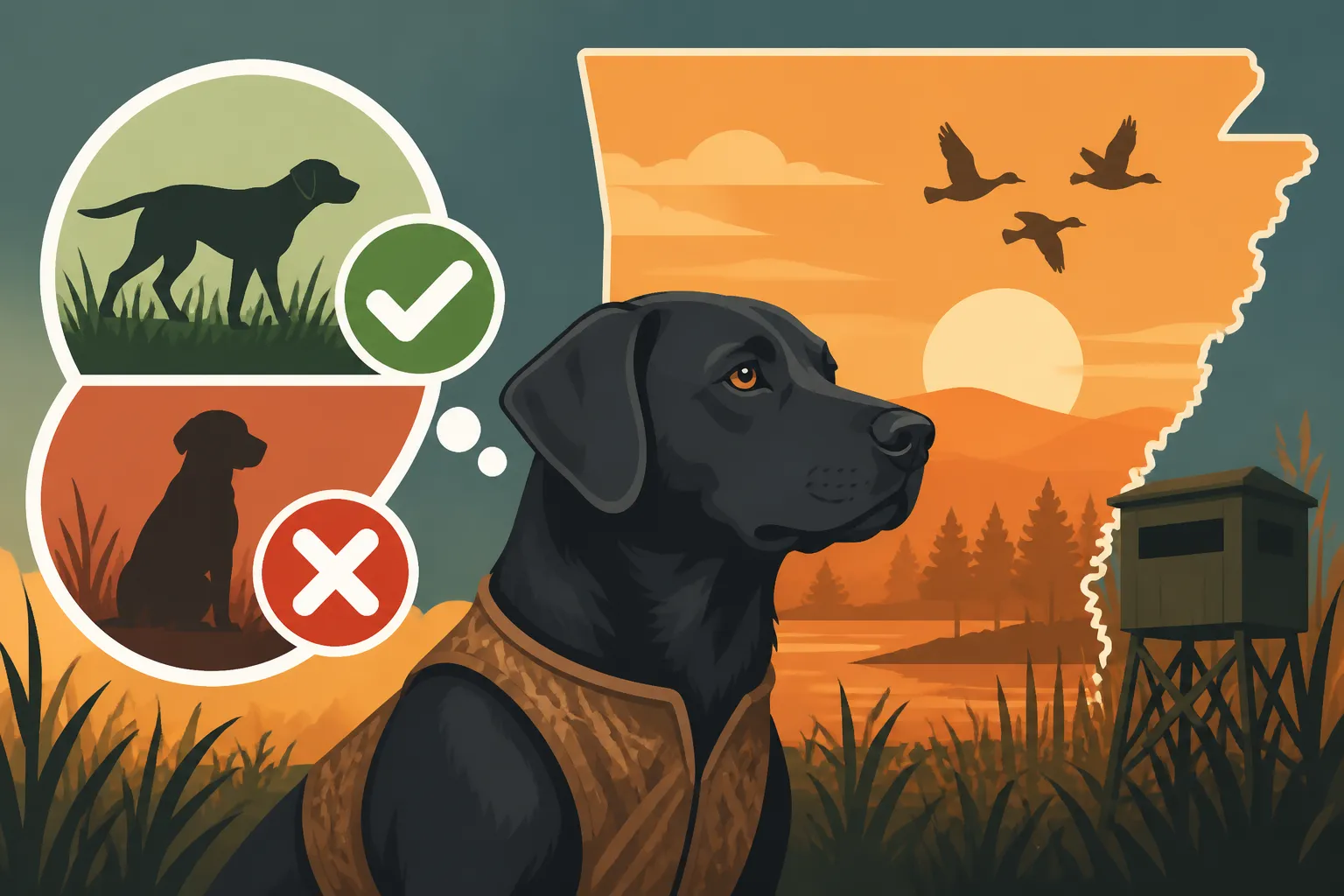
- Steadiness: Can your dog remain absolutely still and quiet in the blind, even when birds are working overhead, shots are being fired, and other dogs are reacting? Breaking early is a cardinal sin in duck hunting, ruining the shot opportunity and potentially endangering your dog.
- Quietness: Whining, barking, or whimpering will flare birds every time. Your dog needs to be silent in the blind, understanding that their job starts after the shot.
- Socialization: If there are other hunters (or even other dogs) in the blind, your dog needs to be comfortable and non-aggressive. A guide's dog is an integral part of their operation, and a fight between dogs can be disastrous.
- Obedience under pressure: Hunting conditions are often loud, chaotic, and exciting. Your dog's training needs to hold up under this stress. Have you practiced these scenarios in training? Simulating gunshots, multiple people, and decoy spreads can make a huge difference.
If your dog struggles with any of these, even a little, it's probably best to leave them at home or consider Kennel Facilities at Arkansas Lodges if available. It's better to miss a hunt with your dog than to have a bad experience that stresses everyone out and damages your dog's confidence.
The Type of Hunt: Timber vs. Fields
The physical environment of the hunt can also influence whether your dog can comfortably and effectively hunt in the blind with you.
- Green Timber Hunts: Hunting in flooded timber, a hallmark of Arkansas duck hunting, often involves wading, potentially deep water, and smaller, more confined "holes" or temporary blinds. Space is at a premium. If you're Hunting Arkansas Flooded Green Timber, your dog might be asked to sit on a bucket, a small platform, or even in the water for extended periods. This requires incredible steadiness and patience. A large, fidgety dog might struggle to stay hidden and out of the way, especially in a popular spot that might have a few more hunters than usual due to high duck numbers. In these scenarios, the Guide-to-Hunter Ratios in a Blind also play a role, as more people mean less space for a dog.
- Field Hunts: If you're Hunting Rice Fields and Levees for ducks, geese, or even early season doves, the setup is often different. Layout blinds in a harvested field or pit blinds along a levee might offer more room, or at least a different kind of concealment. However, field hunting often involves longer distances for retrieves, and the dog needs to be able to navigate mud, standing crop stubble, and potentially longer waits between flights. While layout blinds are typically more dog-friendly in terms of concealment, the dog still needs to remain still and not jump up when birds are working. The elements, like cold wind or direct sun, can also be harsher in open fields compared to the relative shelter of timber, requiring extra consideration for your dog's comfort and safety. Green Timber Versus Rice Field Guides often cater to different preferences, and their dog policies might reflect the unique challenges of each environment.
Communicating with Outfitters and Fellow Hunters
Proactive communication is your best friend when it comes to hunting with your dog, especially when involving others. Don't assume anything.
Essential Questions to Ask Before Booking
If you're considering a guided hunt and absolutely want to bring your dog, your first call should be to the outfitter. This isn't a conversation to have lightly; it needs to happen before you send any deposits or finalize plans. Here's a table of questions to get you started:
| Question Category | Specific Questions to Ask |
|---|---|
| General Policy | Do you allow guest dogs in the blind? If not, are there kennel facilities or other arrangements for my dog? |
| Specific Hunt Type | Does your policy change for different types of hunts (e.g., timber vs. field)? What about for different species (e.g., ducks vs. geese)? |
| Guide's Preference | Will my dog be hunting with your guide's dog? How do you manage potential interactions? |
| Dog Requirements | Are there any specific training or temperament requirements for guest dogs (e.g., absolute steadiness, no whining)? |
| Blind Conditions | What are the typical blind conditions like? (e.g., size, cover, wading depth if applicable, Asking About Physical Demands). Will there be enough space for my dog to be comfortable and hidden? |
| Retrieval Policy | Will my dog be retrieving, or will the guide's dog be making all retrieves? Can they retrieve together? |
| Additional Fees | Are there any extra fees for bringing a dog? |
| Liability | What is the policy regarding liability if my dog causes damage or injury, or is injured itself? |
Be honest about your dog's capabilities. It’s better to be upfront and find out it’s not a good fit than to jeopardize a hunt or put your dog in a bad situation. Many reputable operations will be clear about their stance. If you're having trouble finding an outfitter that matches your needs, sometimes checking resources like GoHunt or other online hunting communities can help you find recommendations for dog-friendly operations. Remember, a good outfitter will appreciate your transparency. They want everyone, including your dog, to have a safe and enjoyable experience. You might also want to ask about Bringing Your Own Dog to an Arkansas Lodge and their specific rules there, as sometimes the lodge itself has different rules than the blind.
Preparing Your Dog for the Blind Environment
Even if the outfitter says "yes" to your dog, the responsibility for your dog's performance rests squarely on your shoulders. Preparation is key.
- Proofing Steadiness: Practice calling in birds, shooting over your dog, and having them remain absolutely still until released. Do this in various environments, with distractions, and with other people around.
- Blind Familiarization: If possible, set up your actual blind (or a similar structure) at home and spend time with your dog in it. Have them sit, stay, and get used to the confined space. Make it a positive experience with treats and praise.
- Noise Desensitization: Accustom your dog to the sounds of gunshots, duck calls, and general commotion. Start with low volumes and gradually increase them.
- Water Exposure: Ensure your dog is comfortable in the water they'll be retrieving in. If it’s cold, practice in cold water. If it’s muddy, make sure they’re not hesitant about mud.
- Physical Conditioning: Hunting, especially retrieving multiple birds, can be demanding. Make sure your dog is in good physical condition for the hunt.
- Basic Obedience Refresher: A few weeks before the hunt, run through all basic obedience commands to reinforce good habits. This is especially important for Rattling Volume in Thick Cover type situations or any time there might be sudden noise or movement.
By taking these steps, you not only increase the chances of a successful hunt but also ensure your dog is comfortable and confident in the blind, making it a truly rewarding experience for both of you.
Practical Tips for a Successful Hunt with Your Canine Partner
Even the most well-trained dog needs a few considerations to ensure their comfort and effectiveness in the blind. Thinking ahead can prevent minor inconveniences from becoming major headaches.
Gear and Comfort for Your Dog in the Blind
Just like you pack layers and snacks for yourself, your dog needs its own dedicated gear for a successful hunt.
- Dog Stand or Platform: In flooded timber or muddy fields, a portable dog stand or platform can keep your dog out of the coldest water and mud, making them much more comfortable and steady. This is especially important if you're Hunting Timber on a Bluebird Day when the air might be cold, even if the sun is out. These platforms elevate the dog, offering a better vantage point for retrieves and keeping them dry.
- Insulated Vest or Coat: For cold weather hunting, particularly for waterfowl, an insulated dog vest can be a game-changer. It helps maintain their core body temperature between retrieves, preventing hypothermia. Even in Arkansas, late-season hunts can be brutally cold.
- Food and Water: Pack plenty of fresh water and a portable bowl. Hunting is hard work, and your dog will get thirsty. High-energy dog food or treats can also be useful for motivation and sustaining energy throughout a long day.
- Leash and Whistle: Always have a leash handy for control when moving to and from the blind or if your dog needs a potty break. A whistle is an indispensable communication tool, especially in thick cover or when retrieving long distances.
- First-Aid Kit: A small first-aid kit specifically for dogs, containing items like wound disinfectant, paw balm, bandages, and tweezers (for thorns or splinters), is a must-have. Accidents happen, and being prepared can make all the difference.
- Towels: Wet dogs in a blind mean everything else gets wet. Bring several towels to dry your dog off after retrieves, especially if it's cold. This is particularly crucial after Recovering a Deer From a Delta Slough or a duck from a frigid slough.
Handling Unexpected Situations
Hunting is unpredictable, and things rarely go exactly as planned. How you handle these moments can define the experience for everyone.
- Dog Gets Cold or Injured: If your dog starts shivering uncontrollably or shows signs of injury, their well-being takes precedence over the hunt. Don't push them. Get them warm, treat any minor injuries, or consider ending the hunt early if it's serious. This is where your dog's vest and a first-aid kit become invaluable.
- Dog Disrupts the Hunt: Despite your best training, a dog can have an off day. If your dog starts whining, breaking, or otherwise disrupting the hunt, it's your responsibility to remove them from the blind or take steps to manage the behavior immediately. This might mean leashing them, putting them in a dog kennel (if one is available nearby and appropriate), or even taking them back to the truck. It’s tough, but respecting the hunt and other hunters is paramount. This can be especially important in high-pressure public areas where Hunting Pressure on Arkansas WMAs means birds are wary of any extra noise or movement.
- Other Dogs in the Blind: If you're on a guided hunt and the guide's dog is present, ensure your dog knows to respect its space and the guide's commands. A guide's dog is an extension of their expertise, and interference can be detrimental. Conversely, if you're hunting with friends, make sure all dogs involved are compatible and well-managed.
- Retrieval Challenges: Sometimes a bird falls in tough cover, or a retrieve is longer than expected. Trust your dog's instincts, but be ready to assist if needed. Don't let your dog wear themselves out on an impossible retrieve. Use your whistle to call them back if necessary and go for the bird yourself.
Ultimately, bringing your dog into the blind on an Arkansas hunt can be one of the most rewarding experiences imaginable, truly sharing the passion with your best friend. But it requires diligent preparation, clear communication, and a deep understanding of your dog's capabilities and the specific hunting environment.
Disclaimer
This article is for general informational purposes only and does not constitute professional advice. Laws, prices and regulations vary by location and change over time. Consult a qualified professional for guidance on your specific situation.