Bowhunting Arkansas in September Heat
September in Arkansas can be a truly brutal time to be in the deer woods, no matter how much you love bowhunting. The oppressive heat, relentless humidity, and swarms of mosquitoes can make even the most dedicated archer question their sanity, not to mention how it shifts deer behavior. But don't despair! This guide is all about equipping you with the knowledge and tactics to navigate these challenging conditions, understand what the deer are doing, and ultimately increase your chances of success during the early archery season.
Decoding Early Season Deer Behavior in Arkansas's September Heat
When those early September archery dates roll around in Arkansas, many hunters hit the woods with visions of crisp fall mornings. The reality, however, is often a sweltering reminder that autumn is still a distant promise. This intense heat doesn't just make us uncomfortable; it profoundly impacts deer behavior, dictating their movement patterns, preferred bedding areas, and feeding schedules. To consistently find success, you’ve got to understand how these factors play out on your hunting grounds.
The Impact of Temperature on Deer Movement and Feeding
Imagine trying to go for a jog in 90-degree heat and 80% humidity. You'd probably choose dawn or dusk, right? Deer operate on a similar principle. During the peak heat of the day, from late morning until late afternoon, deer activity typically grinds to a halt. They're not going to be out browsing in open fields or walking along exposed ridge lines. Their primary goal is thermoregulation – staying cool.
This means that deer in September are overwhelmingly nocturnal or crepuscular. Most of their significant movement, feeding, and social interaction will occur under the cover of darkness or during those precious, fleeting windows of twilight. You'll likely see a flurry of camera activity an hour before dark and an hour after daylight, with a long gap in between. During the day, they're seeking out the coolest, shadiest, and most secluded bedding areas they can find. These might be dense thickets, north-facing slopes, or deep creek bottoms where a slight breeze can penetrate the canopy. For us bowhunters, this means adjusting our expectations and our hunt timing dramatically. You might get a picture of a giant buck at 2 AM, but that doesn't mean he'll be out at 2 PM. Knowing what the general patterns are for How Arkansas's Long Archery Season Works can provide a good baseline, but September demands extra scrutiny of daily conditions.
Food Sources and Water Dependency
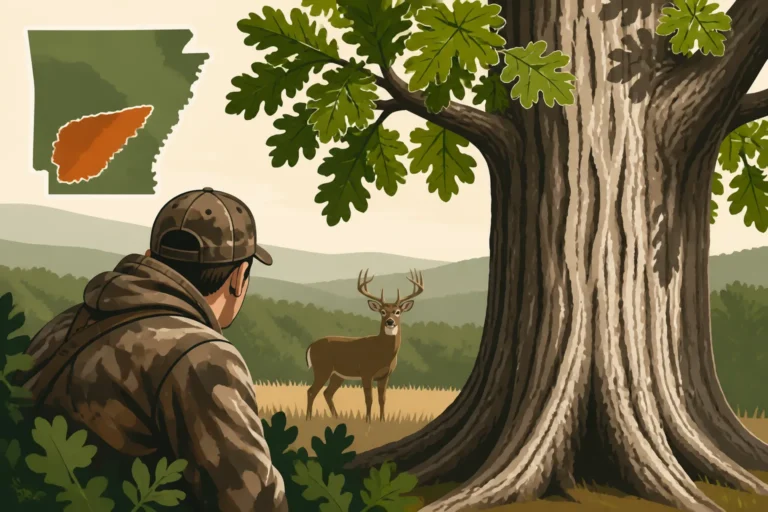
Early season food sources are a critical puzzle piece, but their appeal is heavily influenced by the heat. While deer in Arkansas will still hit whatever acorns are dropping, particularly early white oak varieties, the timing of their visits will be different. Instead of meandering through a sun-drenched oak flat at midday, they'll likely slip in and out of these areas under low light conditions. If white oaks are dropping, these spots can be golden, as they often draw deer like magnets before the red oaks really get going. You might want to consider some of the insights shared in Reading Red Oak Acorn Drops to get a sense of how acorn cycles work, even though we're talking about white oaks specifically here.
Beyond acorns, don't forget about browse and agricultural crops. In the Delta regions, deer might be hitting soybean or cornfields, but again, primarily at night or in the very early morning and late evening. The edges of these fields, especially where they meet thick cover, can be prime ambush points. However, the absolute game-changer in September heat is water. Water sources become literal magnets for deer, not just for drinking, but also as a way to cool down. Small seepages, stagnant ponds, creek bends, or even low-lying areas that hold dew can be hubs of activity. A buck might not move far from his bedding area, but he will absolutely seek out water multiple times a day. If you're using a mapping tool like GoHunt, pay close attention to topographical maps to identify potential water sources and thick cover near them.
Strategic Stand Placement and Hunt Timing for Hot Weather
Hunting in Arkansas's September heat isn't just about enduring the discomfort; it's about outsmarting the conditions and the deer that are reacting to them. This demands a highly strategic approach to where you set up and when you decide to be in the woods. Generic stand locations won't cut it when the mercury is soaring. You need to think like a deer trying to beat the heat.
Targeting Thermal Cover and Water Sources
When you're scouting, especially using tools like GoHunt that allow you to analyze topography and habitat remotely, prioritize areas that offer significant thermal relief. This means looking for north-facing slopes, which receive less direct sunlight throughout the day, remaining cooler and shadier. Think about those deep, dark creek bottoms or dense draws where the air just feels a few degrees cooler. Areas with thick, mature canopy that blocks out the sun's rays are also excellent candidates for daytime bedding and travel routes. A mature pine plantation with a dense understory can offer a surprising amount of shade and concealment. The same principles apply whether you're learning how to hunt Reading an Ozark Bench for Deer or trying to figure out Where Delta Bucks Bed in Standing Water; it’s all about finding that cool, safe sanctuary.
Deer will use these cooler pockets not just for bedding, but also as travel corridors between bedding and feeding areas. If you can find a subtle trail leading from a dense thicket on a north slope towards an early acorn drop or a reliable water source, you've found a high-percentage spot. Remember, deer will often move along the path of least resistance that also offers the most cover and shade. This often means hugging creek banks, field edges with heavy timber, or the transition lines between different types of habitat. Keep an eye out for fresh tracks in soft ground near these features.
Optimizing Hunt Times and Entry/Exit Routes
Given that deer activity is heavily skewed towards low light in September, your hunt times need to be precise. The first hour of daylight and the last hour before dark are your absolute prime windows. Don't feel pressured to sit all day; in most September scenarios, the middle of the day is a waste of your time and risks overheating yourself and spooking deer. Focus your efforts on these short, high-impact periods.
Crucially, your entry and exit routes must be as stealthy as possible to avoid alerting deer. This is especially true when it's hot, as a deer's senses might be slightly dulled, but they're still hyper-vigilant. Plan your approach to use prevailing winds that carry your scent away from potential deer activity. In the Ozarks, this might mean paying extra attention to Wind and Thermals in Ouachita Hollows, which can be unpredictable. Avoid walking through bedding areas or known feeding spots. Consider taking longer, more circuitous routes if they keep you out of sight and scent of deer. In the Delta, where cover can be sparse, this might mean utilizing ditches, levee breaks, or even taking a boat through an oxbow lake if water access allows. The goal is to slip in, sit for a short, effective window, and then slip out without ever alerting a deer to your presence. Remember, spooking a deer on a hot day can mean they lie low for an even longer period, pushing them even further into their nocturnal habits.
| Hunt Time | Pros in September Heat | Cons in September Heat | Strategy |
|---|---|---|---|
| Morning | Coolest temperatures of the day | Deer already heading to beds, less feeding activity | Focus on trails leading from feed to bedding; arrive early to beat deer movement. |
| Midday | Almost no deer movement, few hunters | Extreme heat, high risk of spooking deer, low success rate | Best for scouting from a distance, or checking trail cameras. Not ideal for hunting. |
| Evening | Deer moving from beds to feed/water | Temperatures still high, scent management critical | Focus on trails leading from bedding to feed/water; stay until dark. |
| Late Night | Deer are most active | Not legal to hunt in Arkansas after dark | Utilize trail cameras to understand nocturnal patterns for better next-day strategy. |
Essential Gear and Personal Preparation for Bowhunting in the Heat
Hunting in September heat isn't just a mental game; it's a physical one. Your gear and how you prepare yourself can make or break a hunt, affecting everything from your comfort to your scent control and even your ability to track a deer successfully. Skimping on preparation for these conditions is a recipe for misery and potential failure.
Lightweight Clothing, Hydration, and Insect Protection
First and foremost, your clothing needs to be designed for hot, humid conditions. Forget heavy cotton. Opt for lightweight, moisture-wicking fabrics that breathe and dry quickly. Synthetics like polyester or merino wool blends are your best friends. Light-colored camo patterns can also help reflect some of the sun's heat. You might still sweat through it, but at least it won't feel like a sauna suit. A good wide-brimmed hat will also help keep the sun off your face and neck, and lightweight gloves can offer some sun and insect protection.
Hydration is absolutely non-negotiable. You need to carry significantly more water than you think you will. A hydration pack like a CamelBak is ideal, allowing you to sip continuously without making noise or fumbling with bottles. Consider adding electrolyte tablets or mixes to your water to replenish what you're sweating out. It's not just about staying comfortable; dehydration can impair your focus and judgment, which are crucial for bowhunting. And then there are the insects – ticks, chiggers, and especially mosquitoes. A Thermacell is a lifesaver in the stand, creating a scent-free zone of protection. For your clothing, treat it with permethrin a few days before your hunt. It's odorless once dry and incredibly effective at repelling and killing ticks and mosquitoes that land on your clothes. This preparation is vital, because you don't want to be swarmed by biting insects while trying to make a silent shot.
Scent Control and Food Preservation
Scent control is always important in bowhunting, but in September heat, it becomes paramount. Your body is going to sweat, and that sweat carries a lot of human odor. A meticulous scent-control regimen is crucial. This starts before you even leave the house: shower with scent-free soap, use scent-free deodorant, and wash your hunting clothes in scent-free detergent. Store your hunting clothes in airtight bags or containers until you're ready to put them on at your hunting location. Rubber boots are also a must to keep ground scent to a minimum. Remember, deer will naturally be more wary when it's hot, and any foreign scent will put them on high alert.
The heat also brings a significant challenge for food preservation once you've harvested an animal. In September, meat can spoil incredibly fast. You need to have a plan in place. This includes having a large cooler with plenty of ice ready to go before you even hit the woods. As soon as you recover your deer, the clock starts ticking. You might only have a few hours before meat quality begins to degrade significantly. This makes the job of Field Dressing a Deer in Warm Weather incredibly important. Think through how you'll get the deer out of the woods and to a processor or your cooler as quickly as possible. Don't delay the field dressing; it's the first and most critical step in cooling the carcass.
Ethical Considerations and Post-Shot Strategy
Successfully arrowing a deer in September heat is a triumph, but the hunt isn't truly over until that animal is recovered and the meat is safely cared for. The warm temperatures introduce unique challenges and ethical considerations that demand a well-thought-out post-shot plan. Rushing or delaying recovery can have significant consequences for both the animal and the quality of your harvest.
Tracking and Recovery in Warm Conditions
When you make a shot in September, your instinct might be to wait the usual 30 minutes to an hour, or even longer for a marginal hit. However, the heat complicates this standard advice. While you still need to give the deer time to expire and bed down, waiting too long can be detrimental to the meat. On a cool November day, a deer might be fine for several hours, but in 80-degree plus weather, spoilage sets in rapidly. This means precise shot placement is even more critical. Aim for the heart and lungs to ensure a quick, ethical kill and a short recovery distance.
If you suspect anything other than a perfect shot, you're faced with a tough decision. You want to give the deer enough time, but you also need to recover it before the meat is ruined. A marginal hit means you should still back out, but consider returning sooner than you would in cold weather, especially if the blood trail suggests a gut shot. Night tracking can be your best friend here. If you can't find the deer before full darkness, regroup and come back first thing in the morning when temperatures are lowest. Remember, Blood Trailing After Dark in Arkansas requires good lighting, patience, and often a few hunting partners to help meticulously follow the trail. If possible, mark the last blood and return with a fresh mind and perhaps more resources. Don't be afraid to utilize a tracking dog if legal and available; their noses are invaluable in warm conditions when blood trails can dry or be washed away quickly.
Game Care in the Field and Transportation
The moment you recover your deer, you need to be efficient and swift with game care. Field dressing should happen immediately. Remove the entrails to allow the body cavity to cool down from the inside out. If you're deep in the woods and have a long drag ahead, bringing a few small bags of ice to pack into the body cavity can make a huge difference. Seal them inside game bags to keep the meat clean.
Once field-dressed, get that deer out of the woods and into a cooler or to a processor as quickly as humanly possible. Protect the meat from direct sunlight during transport. If you're driving a long distance, wrap the deer in a tarp or place it on ice in a large cooler. Don't just toss it in the back of your truck for hours. If you're processing it yourself, skin it quickly and quarter it, getting the meat submerged in ice water in clean coolers. This rapid cooling is paramount to preserving the quality and safety of the venison. The effort you put into Cooling Meat in an Arkansas November or rather, September, will directly correlate to the deliciousness of your harvest later. It might seem like a lot of extra work, but it’s an ethical responsibility to ensure the meat doesn’t go to waste, especially after the hard work of bowhunting in the Arkansas heat.
Disclaimer
Please remember that hunting regulations and conditions can change. Always consult the latest Arkansas Game and Fish Commission (AGFC) regulations before heading into the field. This guide provides general advice and should not replace official rules and guidelines. Stay safe, hunt ethically, and enjoy your time in the Arkansas outdoors.