Hunting a Cutover Two Years After Logging
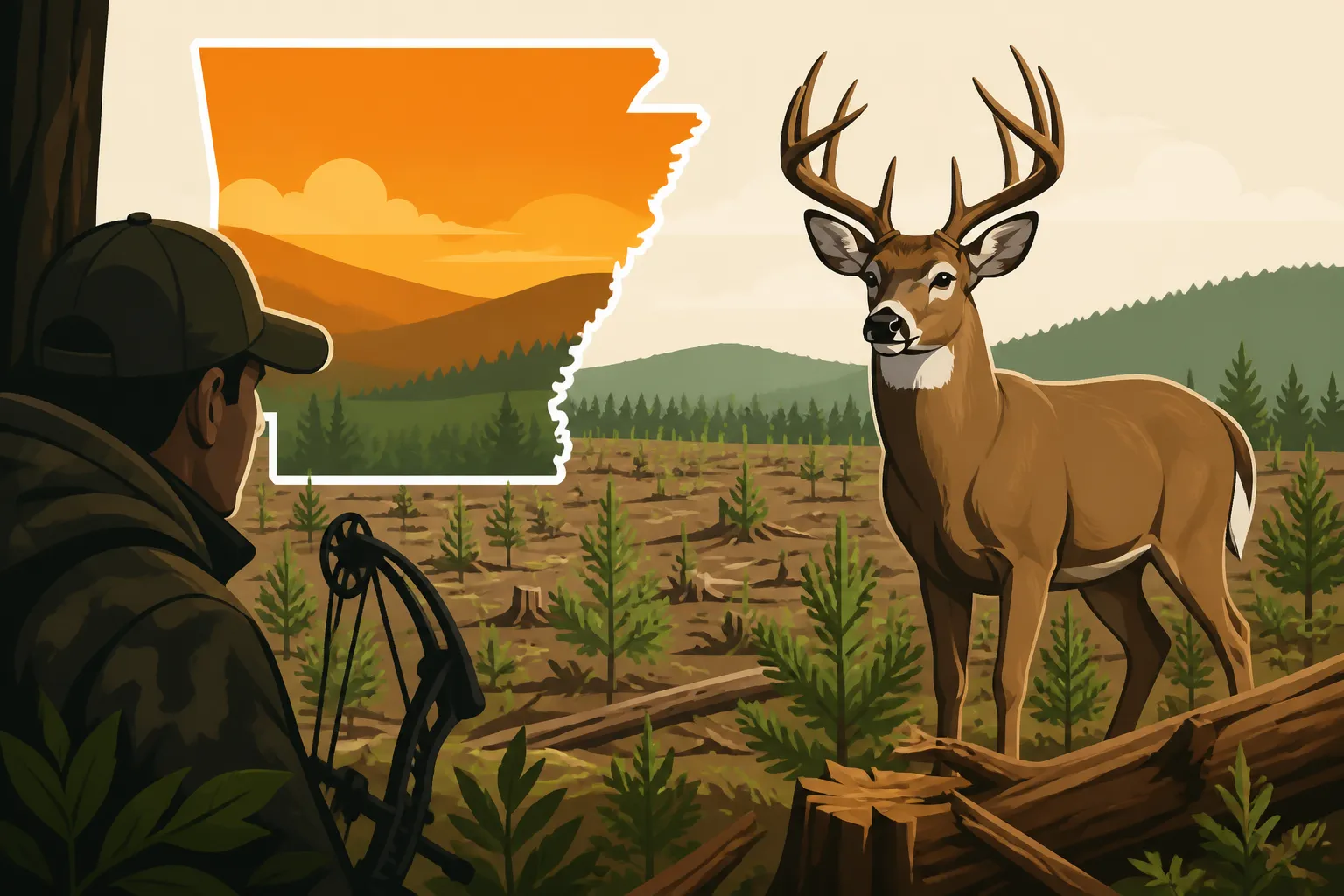
Hunting cutovers can feel like you’re trying to navigate a briar patch maze, and when you add the element of time, specifically two years post-logging, it really complicates things. That initial year after a timber harvest, the clearcut is an absolute mess of stumps and downed trees, but by year two, something truly magical (and challenging) begins to happen for deer hunters. This guide is all about diving deep into what makes a two-year-old cutover such a unique and often overlooked deer magnet in Arkansas, and how you can successfully hunt these incredibly thick, productive spots.
Understanding the Two-Year Mark in Cutovers
When a tract of timber gets logged, it goes through a fascinating ecological transformation. The first year is often pure chaos – a tangled mess that's difficult to even walk through. But by the second year, Mother Nature really starts flexing her muscles, and what was once a relatively open forest floor is now bursting with new life. This isn't just "some brush"; it's a dense, almost impenetrable jungle of saplings, briars, weeds, and various regenerating plant species. This explosion of growth provides an entirely different kind of cover and food source for deer, making it prime habitat, even if it’s a pain for us hunters to navigate.
Why Deer Are Drawn to Two-Year Growth
Deer, especially those mature bucks looking for sanctuary, are absolute masters at finding the path of least resistance for them and maximum resistance for us. A two-year-old cutover is a perfect example. All that new growth means a buffet of browse right at deer level. Think about all the young shoots, tender leaves, and succulent forbs that suddenly have access to sunlight. Deer will gorge themselves on these offerings. But beyond the food, it's the security that truly makes these areas shine. The thick, thorny tangles provide incredible bedding cover that predators (including human ones) struggle to penetrate. A big buck can bed down in one of these spots, and unless you practically step on him, you'll never know he's there. They feel safe, hidden, and have food and water often close by, making them ideal hideouts, especially during hunting pressure.
Identifying Productive Cutovers on Your Hunting Map
Not all cutovers are created equal, and knowing how to spot the ones that are two years post-logging is key. You'll often see these areas marked on satellite imagery as lighter green patches, sometimes with visible logging roads or landings that are starting to grow in. These aren't the bright green of a fresh clearcut, nor are they the darker, established green of older timber. They're in that sweet spot where regeneration is rampant but hasn't yet reached a pole-timber stage. This is where tools like Scouting Arkansas Public Land Before Season can really come in handy, allowing you to zoom in and differentiate stages of growth. Look for the edges where the cutover meets standing timber or a water source; these are natural travel corridors. Pay close attention to the contours of the land—a cutover on a south-facing slope might get more sunlight and therefore thicker growth, while one in a low-lying area might have more succulent browse. GoHunt mapping software, for example, often updates satellite imagery regularly, which can be invaluable for identifying these transitional stages of logging regeneration.
Reading the Landscape: What Changes After Two Years?
The transformation from a raw clearcut to a two-year-old deer haven is dramatic, and understanding these changes is fundamental to successful hunting. You're no longer looking at just open ground; you're dealing with specific types of vegetation and how they influence deer movement and behavior.
Vegetation Density and Deer Movement Patterns
By the second year, the ground is absolutely choked with saplings, briars (hello, greenbrier and blackberry!), small hardwoods, and a variety of weeds. It's often head-high or taller in places, making human travel incredibly difficult. For deer, however, this dense growth is a labyrinth of security. They create their own intricate network of trails through it, often called "deer tunnels." These aren't always obvious to the casual observer; you have to look for worn paths, sometimes just barely visible, where deer have pushed through repeatedly. These tunnels often connect bedding areas within the cutover to food sources (either within the cutover itself or in adjacent timber/fields) and water. Learning to identify these trails is paramount. They'll typically follow the easiest path, avoiding the densest tangles when possible, but still prioritizing cover. You might even find where they've rubbed against saplings, leaving scent marks. This is where a deer's smaller body profile becomes an advantage, allowing them to slip through cover that would stop a human in their tracks.
New Food Sources and Bedding Areas
The two-year mark is when the browse production truly explodes. Young oak sprouts, maple saplings, honeysuckle, greenbrier, and a host of other plants are now within reach and highly palatable for deer. This means the cutover itself becomes a primary food source, not just a travel corridor to a food plot or ag field. This can change deer patterns significantly, as they don't have to venture far from their secure bedding areas to eat.
For bedding, the sheer density offers unparalleled security. Deer will bed down in the thickest clumps, often on small rises or benches within the cutover itself, giving them a slight advantage for scenting or hearing approaching danger. You might find beds tucked into a patch of particularly thorny briars or within a dense stand of young pines. Identifying these specific bedding spots can be tough, but if you find a cluster of well-used trails leading into a dense section, it's a good bet deer are bedding there. Pay attention to how Wind and Thermals in Ouachita Hollows can influence where deer bed for maximum scenting advantage, even in the rolling hills surrounding a flat cutover. A big buck might use a slight thermal current to detect an intruder from downhill while staying hidden in the dense canopy above.
Edges, Funnels, and Micro-Topography
The edges of a two-year-old cutover are critical. Where it meets older timber, a field, or a creek bottom, you'll find primary travel routes. These transition zones act as natural funnels. Deer often prefer to hug these edges, enjoying the cover of the cutover while having easy access to other habitat types. Inside the cutover, look for subtle changes in topography. A small drainage, a rock pile, or even a lone standing mature tree can create a micro-funnel that concentrates deer movement. Understanding how to use these natural features is key to setting up successfully. For instance, a small finger of standing timber extending into the cutover can create a perfect ambush point, especially if deer are using it to travel from a bedding area deeper in the cutover to a food source. Mapping tools, like those provided by GoHunt, can help you pick out these subtle changes in elevation and vegetation type before you even step foot in the woods, allowing you to identify potential travel corridors and bedding areas from the comfort of your home.
Tactical Approaches for Hunting Two-Year Cutovers
Hunting these dense, regenerating areas requires a completely different mindset and set of tactics than hunting open timber or fields. It's about patience, stealth, and sometimes, a little bit of controlled chaos.
Still-Hunting and Sneaking the Edges
One of the most effective ways to hunt a two-year cutover is by still-hunting its edges. This isn't your grandfather's leisurely stroll through the woods; this is slow, deliberate movement, often taking a minute or two to take a single step. Focus on observing every detail, listening for the slightest rustle, and smelling for deer. The idea is to slowly pick your way along the transition zones, looking for deer that are either moving into or out of the cutover, or even bedded just inside its cover. You'll want to be ready to shoot quickly, as encounters in these thick spots are often close-range and fleeting. This tactic is also fantastic for finding those hidden deer tunnels and understanding how deer are using the area. As detailed in Still-Hunting Arkansas Pine Country, the principles of slow movement, utilizing cover, and patience are paramount here. You're trying to integrate yourself into the environment, not just walk through it.
Ground Blinds and Ambush Points
Given the density of a two-year cutover, a ground blind can be an absolute game-changer. It allows you to set up in a strategic location – perhaps overlooking a known deer trail or a pinch point – and remain completely hidden. Think about placing a blind where multiple deer tunnels converge or along a key travel corridor. Because visibility is often limited to short distances (sometimes as little as 10-20 yards), the blind helps you get away with more movement and draw your bow or shoulder your gun without being detected. Brushing in your blind to blend with the natural surroundings is critical. This is a tactic often employed when Using a Ground Blind on an Arkansas WMA where natural cover is important.
Elevated stands can also work, but require careful placement. You need a mature tree on the edge of the cutover or one that survived the logging operation inside it, giving you a vantage point over the thick growth. The challenge is often finding a shooting lane. Sometimes, a well-placed ladder stand on the edge of the cutover, overlooking a main trail, is all you need. Always trim minimal shooting lanes to maintain cover and avoid alerting deer to your presence.
Small Drives and Push-Throughs
For larger cutovers, especially when hunting with a group, small, controlled drives can be highly effective. This involves one or two hunters (the drivers) slowly pushing through the thickest parts of the cutover, while other hunters (the standers) are positioned on the downwind side, covering escape routes. The key is to keep the drive slow and quiet, making just enough noise to encourage deer to get up and move, but not run. Deer in these thick areas often try to slip out the back or around the sides, rather than busting out full speed. The standers need to be ready for close-range shots. Before attempting any drive, thoroughly scout the area, identify all potential escape routes, and communicate clearly with your hunting partners. Safety is paramount, especially when moving through dense cover with limited visibility. This method is a more focused version of Deer Drives in Arkansas Bottomland, adapted for the extreme thickness of a two-year cutover.
Scent Control and Stealthy Entry
Entering and exiting a two-year cutover without alerting deer is incredibly difficult due to the noise of pushing through brush and the close quarters. Scent control becomes even more critical than usual. Use scent-eliminating sprays, wash your clothes in scent-free detergent, and store them in airtight containers. Consider using an ozone generator for your gear.
For entry and exit, plan your routes meticulously. If possible, use old logging roads or creek beds that offer easier passage. If you must push through, do it slowly and quietly, taking advantage of any natural sounds (like wind or distant traffic) to mask your movement. Avoid creating new, obvious trails that deer will learn to associate with human presence. The less impact you leave, the better. Consider utilizing mapping tools like GoHunt to identify potential less-dense entry points or natural funnels that can be accessed quietly.
Gear and Considerations for Navigating Dense Growth
Hunting two-year-old cutovers is physically demanding and hard on your gear. Being prepared with the right equipment and mental fortitude can make all the difference between a miserable day and a successful hunt.
Durable Clothing and Protective Gear
Forget your quiet, lightweight hiking pants; you need tough, thorn-resistant clothing. Briars are relentless, and they will tear through anything less than rugged canvas, Cordura, or dedicated brush pants. Look for Briarproof Chaps or pants made by brands like Dan's Hunting Gear or Filson. A durable hunting jacket is also a must. You'll also want good gloves to protect your hands when pushing through thorny thickets or handling downed timber. Eye protection, such as safety glasses, is highly recommended to prevent branches from scratching or poking your eyes. Remember, you're essentially bushwhacking, so prepare accordingly. The more comfortable and protected you are, the longer you can stay out and the more effectively you can hunt.
Navigational Tools and Communication
Once you dive into a dense two-year cutover, it's incredibly easy to get disoriented. The horizon is often obscured, and familiar landmarks disappear. A reliable GPS unit or a smartphone with a robust hunting app (like GoHunt) is non-negotiable. Mark your entry point, your stand locations, and any significant deer sign you find. This is crucial not only for finding your way back but also for understanding deer movement patterns over time. Carry a portable charger for your phone, as GPS usage drains batteries quickly. If hunting with a partner, two-way radios can be invaluable for communication, especially during drives or when trying to coordinate movements in areas where cell service is spotty. Make sure to download offline maps if your chosen hunting spot has unreliable signal, as many remote areas in Arkansas do.
Weapon Choice and Shot Preparation
Given the close-range encounters and limited visibility in two-year cutovers, your weapon choice and readiness are paramount. Shotguns with slugs or buckshot are highly effective for deer in these environments, offering plenty of knock-down power at short ranges. For archery hunters, a compound bow with fixed-blade broadheads is a solid choice, as shots will likely be within 30 yards, and you need maximum penetration through potential small branches. Traditional bows or crossbows are also excellent for this scenario.
Regardless of your weapon, practice shooting quickly and accurately at close distances. You won't have time for long draws or precise measurements. Focus on target acquisition and hitting vitals with speed. When you hear or see something, freeze, assess, and be ready to make a quick, ethical shot. Remember, in this kind of cover, every shot counts, and you may only get one opportunity.
Considerations for Safety and Ethical Hunting
Hunting a two-year-old cutover is inherently more challenging and potentially more dangerous than hunting open woods. Always prioritize safety and ethical practices.
Staying Safe in Dense Cover
Visibility is extremely limited in these areas, making hunter orange crucial, especially during modern gun seasons. Ensure you and your hunting partners are wearing plenty of it. Always identify your target clearly and be absolutely certain of what's beyond it before taking a shot. This is not the place for hurried, speculative shots. If hunting with a group, establish clear communication protocols and stick to them. Let everyone know where they are positioned and where they intend to move. Carry a first-aid kit, as cuts and scrapes from briars and fallen branches are common. A sharp knife, a small saw, and even some flagging tape (used responsibly for marking routes, not littering) can be useful. Be aware of your surroundings, including venomous snakes that might be seeking cover in the brush.
Respecting the Habitat and Game Recovery
While cutovers are productive, they are also sensitive. Minimize your impact by sticking to existing trails when possible. If you make a shot, immediately begin your recovery efforts. Tracking a deer in dense, thorny growth is incredibly difficult, and blood trails can be sparse. Take your time, mark the last known blood, and work slowly. Having a reliable tracking dog (where legal) can be a massive asset. Knowing how to perform Blood Trailing After Dark in Arkansas can also be a vital skill, as deer often travel deep into these thickets before expiring. Ethical hunting means doing everything in your power to recover any animal you shoot, and in a two-year cutover, that often requires extra effort and patience.
The Value of Patience and Persistence
Hunting a two-year cutover is not for the faint of heart or the impatient. It demands persistence, a willingness to get uncomfortable, and an understanding that success may not come easily. You might spend hours slowly still-hunting, only to jump a deer you never saw or hear one crashing away through the brush. Don't get discouraged. The more time you spend in these areas, the more you'll learn about how deer use them. Every trip is a learning experience. You'll start to recognize subtle signs, find those hidden trails, and eventually, you'll be rewarded with a successful harvest from one of Arkansas's toughest, yet most productive, deer habitats.
| Cutover Stage | Key Characteristics | Deer Behavior | Hunting Tactics |
|---|---|---|---|
| Year 1 | Stumps, downed logs, minimal new growth, open sightlines. | Limited cover, deer typically avoid or cross quickly. | Scouting, minimal hunting. |
| Year 2 | Dense saplings, briars, weeds (head-high+), abundant browse. | Primary bedding & feeding; intricate tunnel systems. | Still-hunting edges, ground blinds, small drives. |
| Years 3-5 | Thicker saplings, less browse at ground level, harder to move. | Excellent bedding, less feeding, harder to penetrate. | Stands on edges, longer drives, heavier gear. |
| Years 5-10 | Pole timber, canopy closes, ground cover thins. | Travel corridors, some bedding, less primary food. | Ambush points, travel corridors. |
Disclaimer
Hunting is an inherently dangerous activity. Always prioritize safety, understand and follow all Arkansas Game and Fish Commission regulations, and obtain proper licenses and permits. The information provided here is for educational purposes and should not replace professional guidance or personal experience.