Two-Person Drives on Small Tracts
It's a common frustration for hunters in Arkansas: you've got a passion for the chase, but maybe your hunting crew is small, or the tracts of land you have access to aren't sprawling acres of public ground. You want to execute an effective deer drive, but the idea of coordinating a dozen people across a massive timber block feels completely out of reach. Don't throw in the towel just yet! This guide is here to show you how a well-planned, two-person deer drive can be incredibly effective on smaller pieces of land, turning perceived limitations into real opportunities.
The Power of Intimacy: Why Two-Person Drives Work
Many hunters mistakenly believe that a deer drive requires a small army. They envision a loud, chaotic push with numerous drivers and standers, which might work on vast public tracts like the Ouachita National Forest, but it's simply not practical or safe for smaller parcels. On the contrary, a two-person drive capitalizes on precision, stealth, and a deep understanding of deer behavior within a confined space. It's less about brute force and more about strategic finesse. When you're working with just one other person, communication becomes streamlined, and each individual's role is magnified, demanding careful planning and execution. This method is perfect for those smaller private leases, family plots, or even overlooked corners of larger public areas that don't see massive hunting pressure.
Strategic Planning: Blueprinting Your Two-Person Deer Drive
Before you even step foot in the woods with your rifle or bow, the success of a two-person drive hinges almost entirely on meticulous planning. This isn't a "wing it" operation; it's a chess match with the local deer population.
Understanding Your Small Tract's Topography and Cover
Every acre of land, no matter how small, has unique features that dictate how deer move through it. Your first step is to become intimately familiar with these nuances. Are there thick pine plantations with dense undergrowth that deer love to bed in, or more open hardwoods with scattered cover? Perhaps a small creek bottom winds its way through your property, creating natural travel corridors. Look for subtle elevation changes, even a slight rise can offer a strategic advantage or a hidden escape route for deer. Consider man-made features too, like old logging roads, fence lines, or property boundaries. These often act as invisible walls or funnels for deer movement.
Using mapping tools like GoHunt can be incredibly helpful here. You can mark bedding areas, identified escape routes, and potential stander locations right from your couch. This visual planning helps both you and your partner get on the same page. Spend time studying aerial photos and topographic maps. Identify bottlenecks—places where deer are forced into a narrow path—and areas of dense thermal cover where they're likely to bed during the day. This deep dive into the landscape is the foundation of a successful drive, especially if you're hunting an area like a Hunting a Cutover Two Years After Logging or navigating dense river bottoms.
Pinpointing Deer Movement and Bedding Areas
Deer aren't just randomly wandering. They have routines, especially on smaller, more pressured tracts. Before a drive, you need to scout thoroughly to understand these patterns. Look for fresh tracks, rub lines, and scrape lines. Where are the deer entering and exiting the property? Where are they feeding? Most importantly, where are they bedding during daylight hours? On a small tract, these areas might be much closer than you think, often in the thickest, nastiest cover that hunters tend to avoid.
A two-person drive is most effective when you know where the deer are starting and where you want to push them. This means the driver needs to start close to a known bedding area and push towards a pre-determined escape route or funnel where the stander is waiting. If deer are using a particular creek crossing or a saddle on an Ozark ridge to move between properties, those are prime spots for your stander to intercept them. Remember, deer will always try to use the path of least resistance or the most familiar escape route when pressured.
The Indispensable Role of Wind and Thermals
In Arkansas, especially in the varied terrain, wind and thermals are not suggestions; they are ironclad rules. Ignoring them is a surefire way to educate deer and ruin your hunt. For a two-person drive, understanding the wind direction is paramount for both the driver and the stander. The driver should ideally have the wind in their face or slightly quartering as they move into the bedding area, preventing their scent from blowing ahead and prematurely alerting deer.
The stander's position is even more critical. They must be set up so that the prevailing wind carries their scent away from the anticipated escape route of the deer. Deer will almost always circle downwind to get a whiff of whatever is pressuring them. If your stander's scent is blowing directly into the deer's path, those animals will often smell them long before they come into sight and either hold up or slip out another way. In areas with significant elevation changes, like the Ouachita Mountains, thermals also play a huge role. Early morning thermals typically rise, while evening thermals fall. Factor this into your approach and stander placement, especially when considering Wind and Thermals in Ouachita Hollows. Always double-check the wind right before the drive starts; it can change quickly.
Executing the Drive: Precision and Patience
Once the planning is done and you know your roles, it's time to put the plan into action. This is where the discipline and coordination of a two-person team truly shine.
The Driver's Methodical Approach
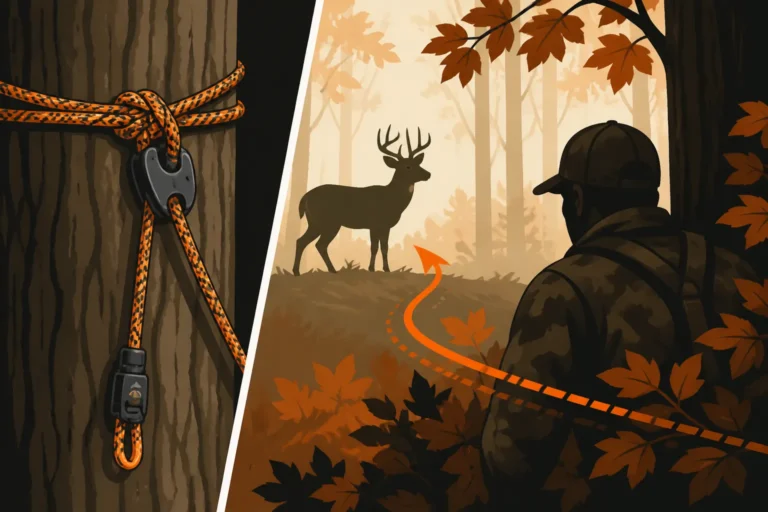
The driver's job is not to run through the woods like a freight train, crashing through every bush. That might work for large, chaotic drives designed to simply bump deer, but for a two-person drive, it's about a slow, deliberate, and subtle push. Think more like a still-hunter moving through cover. The goal is to make just enough noise to encourage the deer to move, but not so much that they panic and bust out in an unpredictable direction. A slow, steady walk, occasionally breaking a stick or shuffling your feet, is often enough. The idea is to nudge them, not terrify them.
As the driver, you need to be constantly aware of your surroundings, looking for deer that might be trying to slip past you. Move through the densest cover, where deer are most likely bedded. Pay attention to how the deer react. If they bust out silently behind you, you might be moving too fast or making too much noise. If they start moving ahead of you but aren't crashing through the woods, you're doing it right. It takes a delicate touch. This approach is similar to Still-Hunting Arkansas Pine Country, where slow, observant movement is key.
The Stander's Strategic Patience
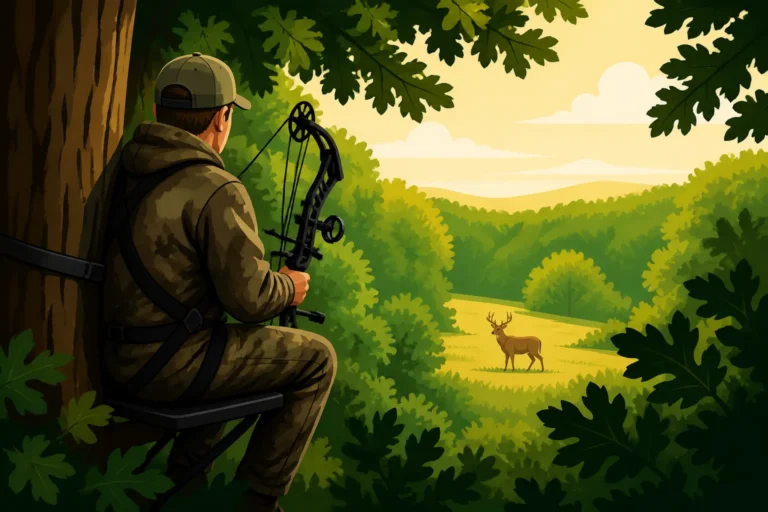
The stander's role requires extreme patience and vigilance. Your job is to be absolutely still, quiet, and camouflaged at your pre-determined position. This position should offer good visibility into the expected travel corridors or escape routes, with clear shooting lanes. Remember, deer will be on high alert when they're being pushed, so they'll be looking for any movement or unnatural shapes. Concealment is paramount. Using a natural blind or even a ground blind can be incredibly effective, especially if you're on a public WMA where you might want to consider Using a Ground Blind on an Arkansas WMA.
The stander needs to be ready for a shot at any moment. Deer might appear suddenly, often slipping through cover rather than charging. They might pause, looking back at the driver, giving you a brief window of opportunity. Keep your firearm or bow ready, but ensure it's in a safe position. Identify multiple shooting lanes before the drive starts, knowing exactly where you can take a safe and ethical shot if a deer presents itself. Don't fidget, check your phone, or make unnecessary movements. Your primary focus is on the deer path, anticipating their arrival.
The Imperative of Pre-Planned Communication
With only two people, clear and concise communication is absolutely vital. Before the drive begins, you must have a detailed plan. Discuss starting points, routes, desired deer movement, and stander locations. Agree on a specific timeframe or a signal for when the drive should conclude. Handheld radios can be incredibly useful, allowing the driver and stander to provide updates on their progress or observed deer movement. However, if radios aren't an option, clear hand signals or even pre-arranged whistle codes can work, provided they are practiced and understood by both parties.
For example, the driver might signal "deer seen moving left" or "approaching your position." The stander might signal "clear" or "heard movement." The key is to keep it simple and pre-arranged to avoid confusion. Discuss potential deer escape routes and how each person will react if deer try to break out prematurely. This level of communication turns two individuals into a cohesive, effective hunting unit.
Overcoming Obstacles and Maximizing Opportunities
Even the best-laid plans can encounter unexpected challenges. A two-person drive requires adaptability and a focus on safety.
Anticipating and Countering Slipping Deer
Deer are masters of evasion. On small tracts, especially those with good cover, they'll often try to slip out the sides of the drive, circle back behind the driver, or simply lie tight and let the driver walk past them. This is where detailed scouting and understanding deer behavior truly pay off. If you know a deer's likely escape routes, the stander can position themselves to intercept these attempts. Sometimes, a subtle approach by the driver can prevent a full-blown panic.
If deer do try to circle, the driver can sometimes adjust their path slightly to push them back towards the stander, or the stander might need to quickly adjust their ready position. This is why vigilance is crucial for both hunters. Post-rut deer can be particularly wary. Often, the bigger, more experienced bucks will be the ones trying to sneak out the back or slide along the edge of the property, which is where your mapping tools like GoHunt become invaluable for identifying overlooked corridors. For specific insights into deer behavior during different times, consider reading about Hunting the Arkansas Rut by Zone.
Paramount Importance of Safety
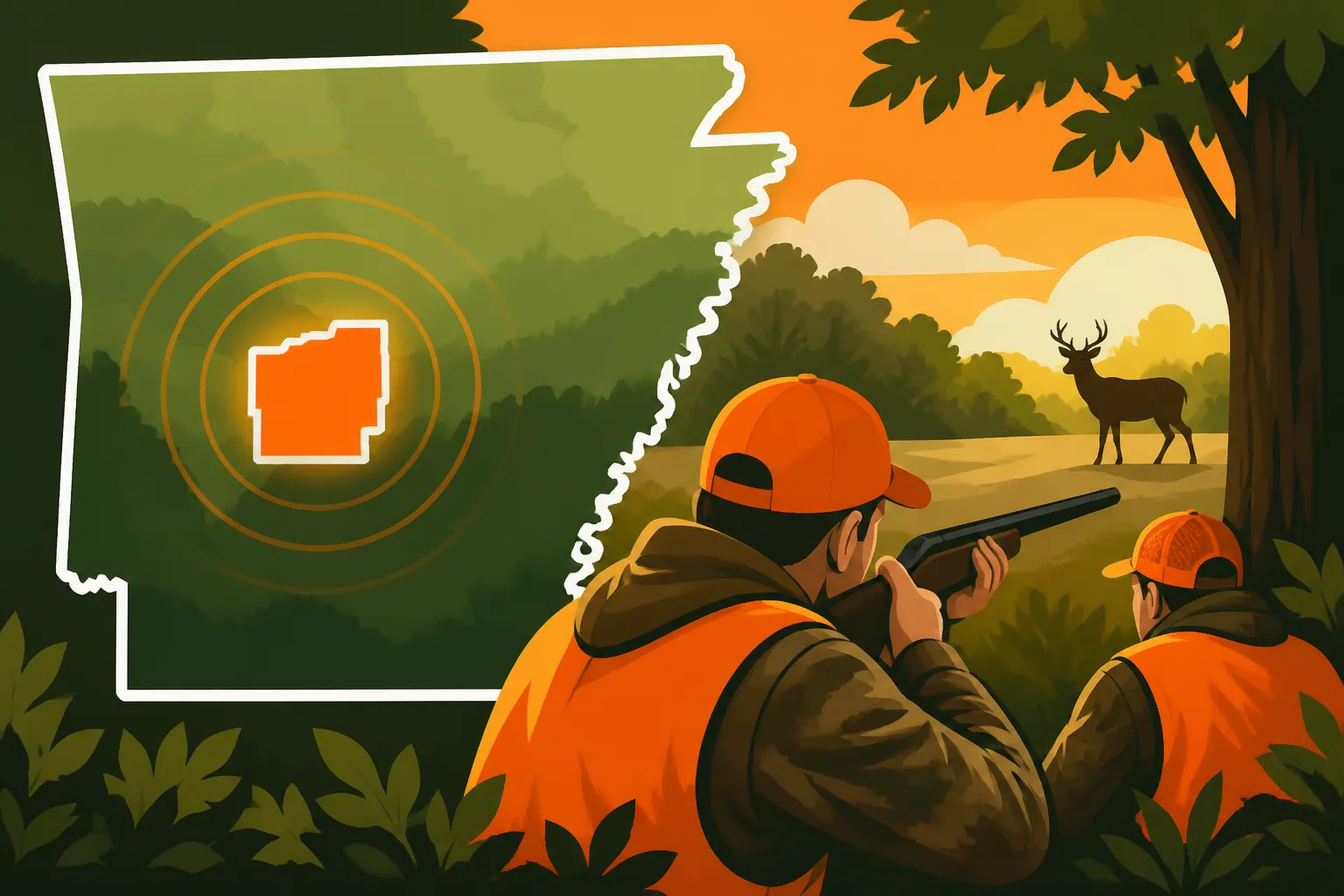
Hunting safety is non-negotiable. With only two people, it's even more critical to communicate and know each other's positions at all times. Both hunters should wear plenty of hunter orange, especially if you're hunting during modern gun season. Always have a clear understanding of your shooting lanes and the zone of fire for both the driver and the stander. Never shoot in the direction of your hunting partner.
Before the drive, confirm boundaries and no-shoot zones. Discuss what to do if a deer doubles back or if an unexpected animal appears. Keep your firearm pointed in a safe direction and on "safe" until you are ready to shoot. This mutual understanding and commitment to safety ensure that everyone goes home safely at the end of the day, regardless of the harvest.
Adapting to Arkansas's Diverse Terrain and Cover
Arkansas offers a huge variety of hunting environments, from the steep, rocky Ozark ridges to the flat, flooded timber of the Delta. Your two-person drive strategy will need to adapt accordingly.
- Ozark Ridges and Hollows: In the mountains, deer often travel along benches or saddles. The driver might push along a ridge, knowing deer will often try to drop into a hollow or cross over to the next ridge. The stander would be positioned at a pinch point where these movements converge. Terrain here can be tough, so choose routes carefully. See Hunting Ozark Ridges and Hollows for Deer for more specific tactics.
- Delta Bottomlands: In thick bottomland hardwoods or areas with dense brush, deer might be harder to move. The driver needs to move very slowly and methodically through the thickest cover, focusing on pushing deer out of specific islands of cover. Stander positions should be along known travel routes between cover blocks or near property lines.
- Pine Plantations and Cutovers: These areas offer dense bedding and escape cover. The driver can often push through rows of pines or the edges of clearcuts, while the stander covers the downwind side or known crossing points. Always be mindful of visibility in these thick areas, and again, GoHunt can help identify internal travel lanes that deer will use to navigate the dense growth.
Post-Drive Protocol and Continuous Improvement
The hunt isn't over when the shot is fired, or even when the deer has run off. There are critical steps to take afterward that contribute to success and learning.
Diligent Tracking and Recovery
If a deer is hit, the work truly begins. Patience is your best friend here. Even if you saw the deer fall, give it some time, especially if the shot wasn't immediately fatal. For a two-person team, one person can start marking the last known location and initial blood trail while the other prepares. Take your time following the blood trail, marking each spot with flagging tape or toilet paper. Don't rush, as pushing a wounded deer can make recovery much harder. If the trail gets difficult, back out and give the deer more time, then return with fresh eyes.
If daylight fades, recovering a deer can become even more challenging, but it's crucial to exhaust all options. Sometimes, you might need to return the next morning. Knowing how to manage a track job, especially when facing obstacles, is key. Check out Blood Trailing After Dark in Arkansas for more detailed advice on recovery.
Analyzing the Hunt: Learning for Next Time
Every hunt is a learning experience, and a two-person drive is no exception. Once the hunt is concluded, whether successful or not, take the time to debrief with your partner. Discuss what went well and what could be improved.
- Did the deer move as expected? If not, why? Was the wind wrong? Did they slip out a route you didn't anticipate?
- Was the driver's pace effective? Too fast, too slow, too noisy?
- Was the stander in the best position? Did they have good visibility? Were they too exposed?
- Was communication clear?
Take notes, even marking observations directly onto your GoHunt maps. Document where deer were seen, their direction of travel, and any unexpected behaviors. This continuous analysis will refine your strategy, making your next two-person drive even more effective. Over time, you'll develop a deeper understanding of your specific hunting ground and how to consistently push deer within its unique confines. Even on small tracts, there's always something new to learn about Finding Ground Others Walk Past or how deer react to pressure.
Two-Person Drive Checklist
To help you get organized for your next small-tract drive, here’s a quick checklist to run through with your hunting partner:
| Item | Driver Responsibilities | Stander Responsibilities | Shared Responsibilities |
|---|---|---|---|
| Pre-Hunt Planning | Scout bedding areas, primary push route, escape routes | Scout stander position, shooting lanes, wind direction | Define target area, confirm wind/thermals, agree on roles |
| Gear Check | Hunter orange, comms (radio/whistle), weapon, first-aid kit | Hunter orange, comms, weapon, rangefinder, first-aid kit | Confirm licenses/tags, map/GPS (GoHunt!), water, snacks |
| Communication Plan | Understand start signal, progression updates, deer movement | Understand end signal, deer sighted signals, safety checks | Agreed-upon signals/codes, check radio batteries |
| Safety Briefing | Know partner's location, no-shoot zones, safe walking route | Know partner's location, identify clear shooting lanes | Discuss emergency procedures, confirmed shot locations |
| During Drive | Slow, steady pace; make subtle noise; watch for slipping deer | Stay still, silent, concealed; constant vigilance on lanes | Maintain communication (if applicable), observe deer behavior |
| Post-Drive | Assist with tracking, mark last seen, initial blood | Mark shot location, assist with tracking, recovery help | Track and recover deer, debrief, clean up, review map |
Disclaimer
Hunting carries inherent risks, including but not limited to injury or death. Always prioritize safety, adhere to all local, state, and federal hunting regulations, and ensure you have the appropriate licenses and permits. This guide is for informational purposes only and does not substitute for proper hunter education or professional guidance. Always respect wildlife and the land you hunt.