The Three-Point Rule and What It Changes
A buck steps into your shooting lane at forty yards, the light is fading, and you can see antlers but you cannot quite count them. Is that two points on the left side or three? In much of Arkansas, the answer decides whether you are about to fill a tag or write a ticket. This guide explains what the three-point rule requires, how to count points in the field and how it changes the way you hunt.
What the Three-Point Rule Actually Says
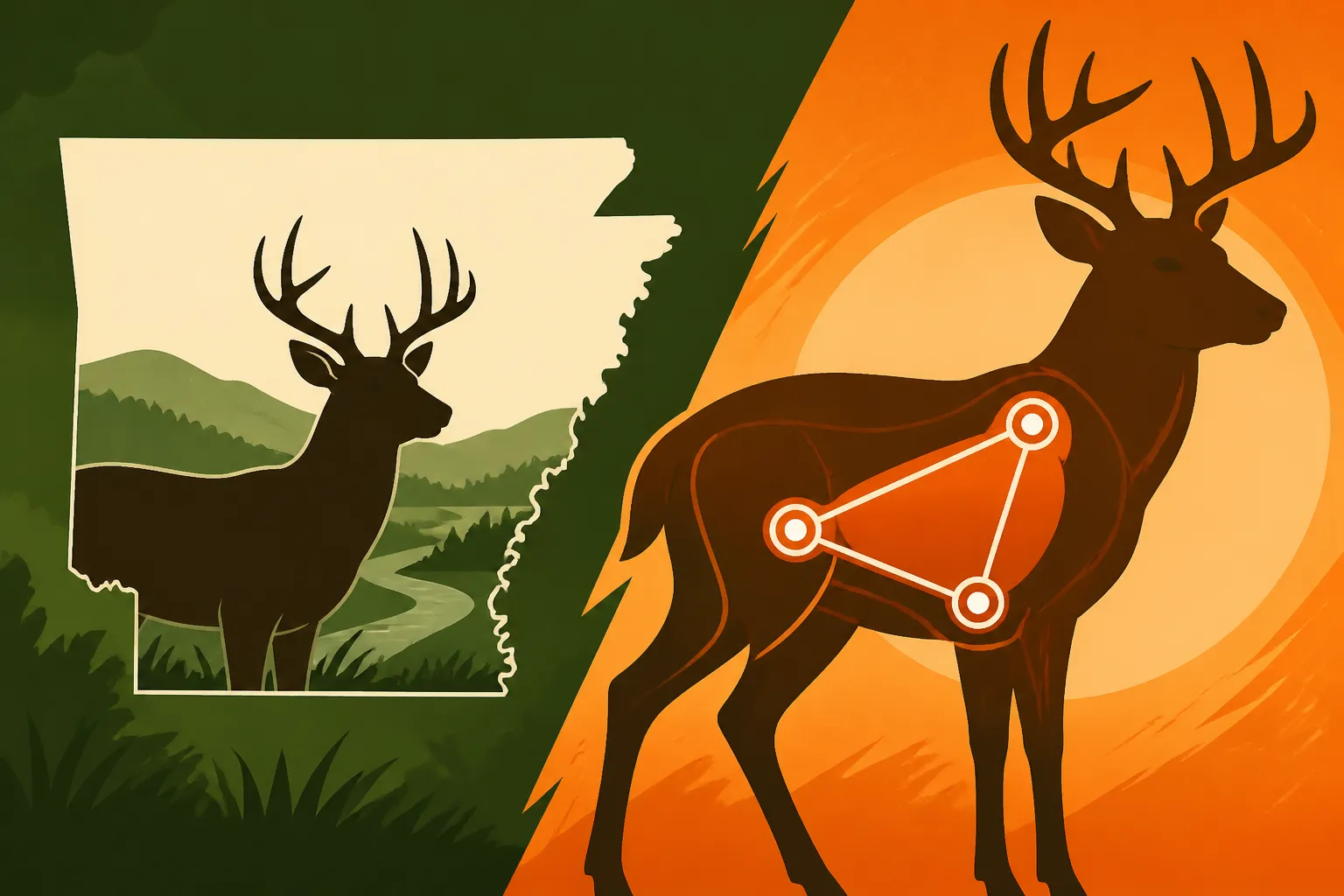
Arkansas has used an antler restriction for most of its deer hunting since the late 1990s. In the zones where the rule applies, a legal antlered buck must have at least three points on one side of its rack. It does not matter how many points the other side has, how wide the rack is or how heavy the deer looks. One side with three qualifying points makes the buck legal. For the regulation itself, start with The Arkansas Three-Point Rule, and check Deer Zones With a Three-Point Rule to confirm whether it applies where you hunt.
What Counts as a Point
The definition of a point is where most confusion starts. In Arkansas regulations, a point generally has to be at least one inch long, and the tip of the main beam counts as a point. That means a typical young buck with a main beam and two tines on one side has three points on that side and is legal, while a buck with a main beam and one tine on each side is not.
Small bumps, burrs near the base and stickers under an inch do not count. Brow tines count if they reach the one-inch threshold. What Counts as a Legal Arkansas Buck goes into the details, including how to handle broken tines and unusual racks.
How to Measure a Point
The usual approach is to measure from the tip of the point down to the nearest edge of the main beam or the tine it grows from. If a point is close to an inch, the safe answer in the woods is to treat it as not counting. Once the deer is down, a small tape measure in your pack settles any argument.
Who the Rule Does Not Apply To
Youth hunters are the main exception. Hunters under a certain age can take a buck without meeting the three-point requirement, which gives kids a better chance at their first deer. The details, including age limits and which seasons the exemption covers, are in Youth Deer Hunt Dates and Rules. Some areas also have different or stricter antler rules, such as certain wildlife management areas and special hunts, so always read the rules for the specific zone or property.
Quick Reference
| Rack Description | Points on Best Side | Legal Under the Rule |
|---|---|---|
| Spike on both sides | 1 | No |
| Forked horn, two points per side | 2 | No |
| Main beam plus two tines on one side | 3 | Yes |
| Three on one side, two on the other | 3 | Yes |
| Wide rack with two points per side | 2 | No |
| Broken beam with three points left on the other side | 3 | Yes |
Counting Points in the Field
Knowing the rule is easy. Applying it to a moving deer in fading light is the hard part. These steps help.
A Step-by-Step Counting Method
- Pick one side of the rack and ignore the other until you finish counting.
- Find the main beam and follow it from the base out to the tip, counting the tip as one point.
- Count each tine rising off the beam, including the brow tine if it is long enough.
- If you count three on that side, the buck is legal. If not, repeat on the other side.
- If the deer turns before you finish, start over rather than guessing.
- If you cannot be sure, do not shoot.
That last step is the one that keeps hunters out of trouble. A legal buck that walks away today might come back tomorrow. An illegal buck on the ground cannot be undone.
Angles That Fool You
A buck facing you straight on hides tines behind the main beam. A buck quartering away can make two points look like three. Side views are usually best, because you see the tines silhouetted against the sky or a background. Watch for the deer to raise its head, turn to look behind it or lower its head to feed, since each movement shows the rack from a new angle. Judging Points on a Standing Buck has more on angles and lighting.
Optics Matter
A good binocular is the most useful tool for this rule. A riflescope is not a substitute, because you should never point a firearm at a deer just to look at it. Bowhunters often rely on binoculars hung on a harness so they can glass without moving much. Low light makes counting much harder, so the last fifteen minutes of shooting light are when many hunters pass on bucks they cannot confirm.
Using Trail Cameras and Maps
Trail cameras help you learn which bucks on your property are legal before the season opens. If you have photos of a buck with a clear three-point side, you will recognize him faster in the stand. Many hunters log camera locations, stand sites and buck sightings in a mapping app, and GoHunt is one option some hunters use for marking waypoints and tracking where certain bucks show up over a season. Seeing those pins together helps you decide which stand to hunt when a known legal buck is moving.
How the Rule Changes Arkansas Deer Hunting
The three-point rule was not adopted just to make hunting harder. It changed the age structure of the herd, and that changes how deer behave and how you should hunt them.
More Bucks Survive Their First Year
Before the rule, many yearling bucks were taken as spikes and forkhorns. Under the rule, most of those young bucks are protected for at least a season. That pushes more bucks into older age classes, which means more bucks with larger racks and bodies and a stronger rut. For a closer look at the biology, see Buck Age Structure Under the Three-Point Rule and What the Three-Point Rule Did to Arkansas Bucks.
The Tradeoff Some Hunters Notice
The rule does not protect every young buck. A yearling buck with good genetics and nutrition can grow a rack with three points on a side and become legal in his first fall. Some biologists and hunters argue this can shift harvest pressure toward the faster-growing young bucks while slower-growing ones survive. Others point out that the overall effect has been more older bucks in the herd. Either way, hunters who want to protect promising young deer can set their own stricter standards on the land they hunt.
Rut Activity and Hunting Strategy
With more mature bucks in the herd, rut activity tends to be more intense, with more scraping, rubbing and chasing. That rewards hunters who time their sits around the rut and who set up on travel routes between bedding areas and doe groups. Hunting the Arkansas Rut by Zone explains how timing varies across the state.
Mature bucks are also more cautious, which means wind, access and stand placement matter more than they did when most of the harvest was yearlings. The rule raises the bar for every hunter, not just those chasing big racks.
What It Means for Meat Hunters
Plenty of Arkansas hunters care more about filling the freezer than about antlers. For them, the rule mostly shifts attention toward does. Antlerless harvest is often the better choice for meat anyway, and in many zones it helps keep the herd in balance with its habitat. A hunter who passes on a young two-point buck in the morning and takes a mature doe in the evening has done exactly what the rule was designed to encourage.
Choosing Which Legal Buck to Take
Just because a buck is legal does not mean he is the one you want. A young buck with three short points on one side is legal, but letting him walk might give you a much bigger deer in two years. Many hunters set a personal standard, such as waiting for a buck that looks at least three and a half years old, judged by body shape rather than rack. Signs of an older buck include a deep chest, a thick neck in the rut, a sagging belly and legs that look short for the body. Those clues are easier to read than points at long range and help you decide before you even start counting.
Bag Limits and Checking
The three-point rule works alongside the statewide limit on antlered bucks. Each legal buck counts toward that limit, and every deer must be checked according to state rules. Arkansas Antlered Buck Limit explains the bag limit, and Arkansas Deer Checking and Tagging covers the process. Checking is also how wildlife managers track how the rule is working across the state.
Practical Scenarios and Common Mistakes
Scenario One: The Wide Eight-Pointer That Is Not
A bowhunter in the Ozarks sees a wide buck and counts the left side first: main beam tip, a brow tine and one long tine. That is three on the left side, so he is legal. Now picture the same width with only a main beam and one tine per side. That is two points per side and not legal, even though the rack is wider than many legal bucks. Width does not count, only points.
Scenario Two: The Broken Tine
A buck walks out with a broken main beam on one side, leaving two points. The other side has the main beam tip, a brow tine and a G2. That is three on the good side, so he is legal. The rule only needs one side to qualify.
Scenario Three: The Youth Hunter
A fourteen-year-old on a youth hunt sees a forkhorn. Under the youth exemption, that buck may be legal for the young hunter even though an adult could not shoot it. Before the season, confirm exactly what the youth rules allow for that zone and season, and make sure the adult mentor understands them too.
Scenario Four: The Last Minutes of Light
A rifle hunter in the Delta sees a buck at the far end of a bean field at dusk. He can see a rack, but not well enough to count. He waits. The buck feeds out of sight. It feels like a lost chance, but the hunter is back the next morning with better light, and he learns the buck is a two-pointer per side. Waiting saved him from a violation.
Common Mistakes Hunters Make
| Mistake | Why It Happens | How to Avoid It |
|---|---|---|
| Counting both sides together | Habit from other states | Count only one side at a time |
| Counting short bumps as points | Rushing the count | Treat anything under an inch as not counting |
| Shooting in poor light | Pressure to fill a tag | Pass if you cannot confirm |
| Forgetting zone exceptions | Assuming one rule statewide | Check the rule for your zone |
| Misreading youth rules | Mentor and youth not on the same page | Review youth rules together |
A Pre-Season Checklist
- Read the antler rule for every zone and property you plan to hunt, and see Which Arkansas Zone You Are Hunting if you are unsure.
- Practice counting points on trail camera photos with friends or family.
- Keep a small tape measure in your pack.
- Carry binoculars and use them before raising a firearm or bow.
- Mark legal and non-legal bucks on a map or in an app such as GoHunt so you recognize them later.
- Agree with hunting partners on any stricter standards for the land you share.
Many hunting clubs and lease groups go beyond the state minimum, such as requiring a certain spread or age before a buck can be taken. If your group keeps records, a shared map in GoHunt or a similar app helps everyone see which bucks are off-limits and where they have been seen.
The three-point rule asks a little more from every hunter: patience, good optics and a careful count. In return, it has helped build a herd with more mature bucks than Arkansas had a generation ago. Learn the definition, practice counting and pass on any deer you cannot confirm.
Disclaimer
This article is for general informational purposes only and does not constitute professional advice. Laws, prices and regulations vary by location and change over time. Consult a qualified professional for guidance on your specific situation.