Why Mallards Use Flooded Timber
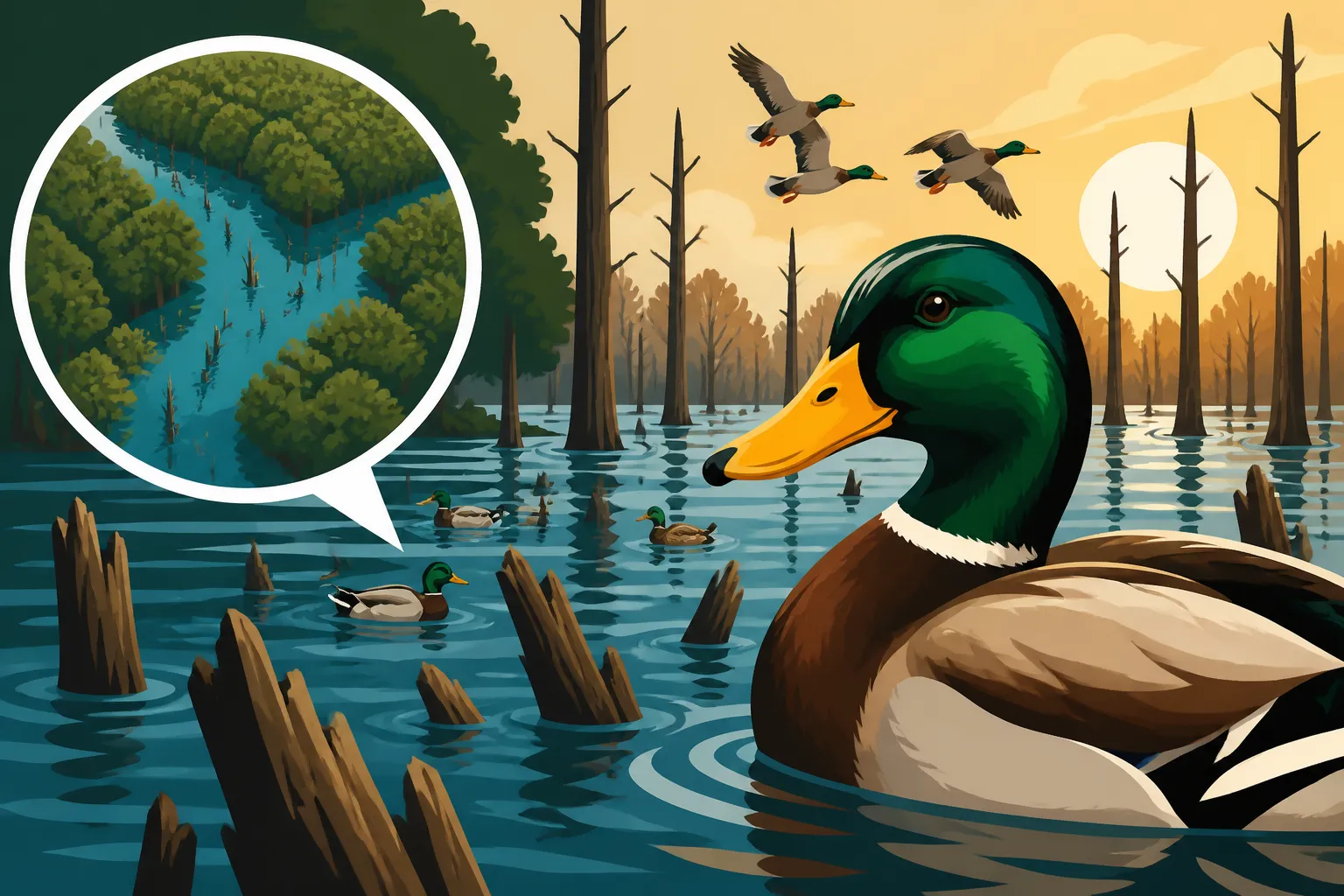
If you've ever stood chest-deep in frigid water, surrounded by ancient oaks, listening to the symphony of mallard wings tearing through the crisp Arkansas air, you understand the magic of flooded timber. But often, we as hunters find ourselves wondering, why here? Why do these incredibly intelligent birds, capable of navigating vast migratory routes, consistently choose these specific pockets of waterlogged forest year after year? It's more than just a place to land; it’s a complex, living ecosystem that provides everything a mallard needs to survive the challenging winter months. This guide will peel back the layers of that mystery, helping you understand the undeniable pull of Arkansas's famed flooded timber for greenheads and providing insights into how you can better anticipate their movements.
The Irresistible Allure of Flooded Timber for Mallards
For a mallard, flooded timber isn't just a picturesque hunting backdrop; it's a meticulously chosen survival zone, a place that offers a crucial trifecta of necessities: abundant food, vital shelter, and unparalleled safety. These aren't just preferences; they are biological imperatives that dictate where these birds will spend their winter. When the cold north wind blows down the Mississippi Flyway, a mallard's internal compass is set for the rich, water-filled bottomlands of places like the Arkansas Delta, specifically those areas with standing timber.
A Natural Buffet: The Abundance of Food Sources
Imagine a grocery store specifically designed for a duck, brimming with all its favorite delicacies. That's essentially what flooded timber represents to a mallard. The vast majority of a mallard's diet in these wintering grounds consists of acorns, seeds from various plants, and a healthy dose of invertebrates. When the water rises in these hardwood bottoms, it inundates the forest floor, making these high-energy food sources suddenly accessible.
Unlike open fields where food might be quickly depleted or exposed to the elements, flooded timber acts as a natural storage facility. Water not only preserves acorns and seeds but also makes them buoyant or semi-buoyant, allowing dabbling ducks to easily tip up and grab them from the softened mud. Oak trees, particularly red oaks, drop vast quantities of acorns, which are a critical energy source due to their high fat content. When you consider the sheer volume of acorns that can fall from mature hardwoods in a good mast year, it’s clear why ducks flock to these areas. A single large oak can produce thousands of acorns, and when these fall into shallow, flooded waters, they become an all-you-can-eat buffet that fuels the ducks through the cold nights and gives them the energy needed for daily survival.
Sanctuary from the Storm: Shelter and Thermal Regulation
Winter in Arkansas, especially in the Delta, can be unpredictable. Freezing rain, biting winds, and sudden temperature drops are common. Flooded timber provides an unmatched level of shelter from these harsh conditions. The dense canopy of trees breaks the wind, creating calmer pockets of water and air underneath. This reduction in wind chill is paramount for mallards, as it helps them conserve precious body heat.
Think about it from a duck's perspective: an open field or a large, exposed lake offers little to no protection from a gale-force wind. In contrast, the intricate network of tree trunks and branches in a flooded forest acts like a natural windbreak. This isn't just about comfort; it's about survival. Ducks expend a lot of energy staying warm, and anything that reduces that energy expenditure is a huge advantage. Furthermore, the water itself can be a thermal buffer, often being slightly warmer than the air during extreme cold snaps, offering a subtle but important benefit for their legs and feet. The thick cover also provides respite from the constant glare of the sun on open water, allowing ducks to rest more effectively during the day without being overly exposed.
A Safe Haven: Protection from Predators
Perhaps one of the most underrated reasons mallards gravitate towards flooded timber is the inherent security it offers. Predation is a constant threat for waterfowl, whether from aerial predators like eagles and hawks or ground-based threats such as coyotes, raccoons, and bobcats. Flooded timber provides a natural fortress against many of these dangers.
For starters, the dense tree canopy makes it incredibly difficult for raptors to effectively hunt. Their diving attacks are hindered by the branches, giving ducks a crucial advantage in detecting and evading them. On the ground, the standing water acts as a formidable barrier. Most terrestrial predators are less inclined or even unable to navigate through several feet of water and dense undergrowth, especially for extended periods. This creates a buffer zone where ducks can rest and feed with a significantly reduced risk of being ambushed. The complex, three-dimensional environment of a flooded forest also offers numerous hiding spots, allowing birds to quickly disappear from sight if a threat is perceived. This sense of security allows them to conserve energy by not constantly being on high alert, contributing significantly to their overall well-being during the winter.
Understanding the Preferred Timber Ecosystem
Not all flooded timber is created equal in the eyes of a mallard. Just like humans prefer certain types of neighborhoods, ducks have specific preferences when it comes to the composition, water levels, and structure of their forested wetlands. Understanding these nuances can be the difference between a successful hunt and a quiet morning, offering critical insights when you're trying to figure out Where Delta Bucks Bed in Standing Water or scouting for ducks.
Key Tree Species and Their Role
When we talk about flooded timber, we're really talking about bottomland hardwood forests, and within these, specific tree species play a starring role. The most celebrated, of course, are the various species of oaks, particularly the red oak group. Water oaks, pin oaks, willow oaks, and Nuttall oaks are legendary among Arkansas duck hunters, and for good reason. Their acorns are a primary food source, packed with the fat and carbohydrates mallards need to survive the winter. A good crop of these acorns is like ringing the dinner bell for migrating ducks.
Beyond oaks, other tree species contribute to the overall ecosystem that mallards utilize. Cypress and tupelo trees are iconic in many of Arkansas's deeper sloughs and permanent water bodies, providing excellent roosting cover and a slightly different microhabitat. While their fruit isn't as sought after as acorns, their towering presence and knobby knees create important structure. Hickory, sweetgum, and maple trees also dot these landscapes, dropping seeds that ducks may consume. The variety ensures a more resilient food base, even if one species has a poor mast year. Understanding which trees are producing mast in a given season is vital for predicting where the ducks will concentrate.
The Importance of Water Depth and Flow
Water depth is perhaps the single most critical factor in determining how mallards use flooded timber. Mallards are dabbling ducks, meaning they feed by tipping up, rather than diving completely underwater like a diver duck. This behavior limits their effective feeding depth. Generally, mallards prefer water that is between a few inches and about 18-24 inches deep for optimal feeding. Any deeper, and the acorns and seeds on the bottom become inaccessible.
However, water that's too shallow can also be problematic, especially if it freezes solid. The ideal scenario is a dynamic water level: enough to cover the forest floor, making food available, but not so deep that it prohibits feeding. Flow is also a factor, particularly in river bottomlands. Ducks often prefer areas with minimal current for resting and feeding, as strong currents require more energy to maintain position. Stable water levels, or at least predictable rising and falling patterns, are often more attractive. For example, understanding how a river's stage impacts a nearby WMA's flooded timber can provide critical clues. You can often see real-time water levels on various river systems, which is something a modern hunter using tools like GoHunt would regularly monitor.
Microhabitats Within the Timber
Even within a single stand of flooded timber, mallards will seek out specific microhabitats. These subtle differences can be the key to finding concentrations of birds. Canopy openings, for instance, are highly favored. These are areas where one or more large trees have fallen or where the canopy is naturally sparser, allowing more light to penetrate and creating more open water below. These openings offer easier landing and take-off zones for ducks, as well as providing more visibility. This is why when you're learning about Setting Decoys in Timber Holes, the advice often focuses on these open pockets.
Beyond openings, ducks also utilize dense stands of trees for loafing and roosting, especially if those areas provide thicker cover. Submerged logs and fallen trees create underwater structure that can harbor invertebrates, adding another food source. Edges where the flooded timber meets an open field or a slough can also be productive transition zones. Ducks might feed in the timber, then move to a more open, yet protected, slough to loaf during the middle of the day. The interplay of these smaller, distinct areas within the larger timber landscape creates a varied and attractive environment for mallards.
How Mallards Utilize These Unique Wetlands
The way mallards interact with their flooded timber environment is a masterclass in efficiency and adaptation. From their specific feeding techniques to their communal roosting behaviors, every aspect of their timber residency is finely tuned for survival. Understanding these behaviors not only helps us appreciate these incredible birds but also informs our hunting strategies, especially when trying to decipher how to hunt effectively in these unique conditions, as outlined in guides like Hunting Arkansas Flooded Green Timber.
Feeding Strategies: Dabbling and Foraging
Mallards are classic dabblers, and this feeding style is perfectly suited to the shallow, food-rich waters of flooded timber. They don't dive; instead, they "tip up," submerging their heads and necks while their tails remain comically pointed skyward. This allows them to sift through the soft mud and leaf litter on the forest floor, searching for acorns, seeds, and invertebrates. Their specialized lamellae (small, comb-like structures on their bills) help them filter edible items from the water and mud.
The act of feeding in flooded timber is often a social affair. Flocks will work through an area, stirring up the bottom and making food more accessible for others. They are incredibly efficient, capable of rapidly consuming large quantities of high-energy foods, especially acorns. During periods of heavy feeding, their presence can be quite noisy, with constant chattering and splashes as they tip and right themselves. This is a critical daily activity, typically occurring during dawn and dusk, though they might feed throughout the day in areas with minimal disturbance or during periods of intense cold when more calories are needed.
Roosting and Resting Behaviors
Just like any animal, mallards need periods of rest and safety. Flooded timber provides ideal conditions for both. During the middle of the day, after a morning feeding frenzy, mallards will often congregate in thicker, more secluded parts of the timber to loaf. Here, they'll preen their feathers, digest their food, and simply conserve energy. These loafing areas are chosen for their cover and minimal disturbance.
Nighttime roosting is another crucial behavior where flooded timber excels. Ducks will seek out specific, often deeper, flooded timber pockets or sloughs that offer maximum security for the night. The dense canopy, combined with the standing water, makes these areas virtually impenetrable to most nocturnal predators. They'll often raft together in large numbers, providing collective security. They prefer quiet, undisturbed roosts, and if these are disrupted too often, the ducks will often abandon them for safer ground. This is why knowing when the ducks are simply resting versus actively feeding is key; you might see birds in a particular area, but they might not be there to eat, but rather to sleep. Many hunters have learned this lesson the hard way, thinking a quiet timber hole meant no birds, when in fact, it was their peaceful bedroom.
Navigating the Canopy and Understory
Flying through dense flooded timber is not for the faint of heart, but mallards are remarkably adept at it. Their strong wings and agile flight allow them to weave through the intricate maze of branches with astonishing speed and precision. When approaching a timber hole, they’ll often circle several times, adjusting their altitude and speed, before committing to a final descent. This circling also serves a purpose, allowing them to survey the area for potential threats or other ducks.
Once on the water, they expertly maneuver through the submerged trees and brush, finding patches of open water for feeding or resting. They are incredibly observant, learning the layout of their chosen timber holes and remembering where the best food sources are, or which routes offer the safest access. Their keen eyesight and hearing are constantly at play, detecting changes in their environment. This inherent ability to navigate and thrive in such a complex environment is a testament to their evolutionary success and a core reason why they prefer the challenges and rewards of flooded timber over more open, exposed habitats.
External Factors Influencing Mallard Presence
While flooded timber offers inherent advantages, its attractiveness to mallards isn't static. A host of external factors, from human activity to the whims of Mother Nature, can significantly influence whether a particular patch of timber is buzzing with greenheads or standing eerily silent. A savvy hunter, often relying on tools like GoHunt for up-to-date data, understands that these variables play a massive role in shaping duck movements.
The Impact of Hunting Pressure
Let's be brutally honest: hunting pressure is one of the biggest deterrents for mallards. These birds are not dumb. They quickly learn where they are safe and where they are not. An area of flooded timber that receives constant, intense hunting pressure will often be abandoned in favor of quieter, less disturbed refuges, even if the food source isn't as abundant. This is why ducks often become "educated" throughout the season, especially after the opening weekend.
Early in the season, ducks might be more tolerant of pressure, but as weeks turn into months, they become incredibly wary. They'll learn to differentiate between different types of calls, recognize the silhouette of a hunter, and pinpoint the exact location of danger. This leads to birds "trading" back and forth between heavily hunted public land and unpressured private sanctuaries, or even flying extremely high, out of range, over popular hunting spots. To mitigate this, many successful hunters focus on Finding Ground Others Walk Past or hunting less accessible areas, where the birds feel safer. Managing pressure, even on private land, is critical to holding ducks. This might mean only hunting a specific hole once or twice a week, or staggering hunting days across different timber stands to give birds a break.
Weather Patterns and Migration Dynamics
Weather is the ultimate orchestrator of duck migration and movement within Arkansas. Cold fronts, particularly those that bring sustained freezing temperatures to points north of Arkansas, are the primary drivers of fresh duck arrivals. When the northern states freeze up, pushing ducks further south, Arkansas's flooded timber becomes a critical stopover and wintering ground. The timing and severity of these cold fronts directly correlate with the influx of new birds. This is part of the phenomenon behind Duck Migration Timing Into Arkansas.
Once ducks are in Arkansas, local weather patterns continue to dictate their daily behavior. Bluebird skies and calm winds might lead to ducks loafing more during the day, making them harder to decoy. Overcast days with a slight chop on the water can often lead to more active feeding. Extreme cold, especially if it causes widespread freezing of shallow waters, will force ducks to find open water, often deep sloughs or larger rivers that resist freezing. Conversely, heavy rains can raise water levels, opening up new timbered areas for feeding. Snow and ice can also have a profound impact, often driving birds to feed more aggressively as they need extra calories to stay warm. Hunters constantly monitor weather forecasts, both local and regional, to anticipate these shifts.
Management Practices and Conservation Efforts
The presence of mallards in Arkansas's flooded timber isn't accidental; it's often the result of dedicated management and conservation efforts by state agencies, private landowners, and organizations. The Arkansas Game and Fish Commission (AGFC) manages vast tracts of flooded timber on public lands, using water control structures to strategically flood and drain areas to optimize conditions for ducks. This includes maintaining optimal water depths and encouraging the growth of desirable food-producing plants.
One significant management practice is the strategic flooding of green timber reservoirs (GTRs). These areas are designed to mimic natural flooding cycles, providing crucial wintering habitat. However, these systems also face challenges, such as the health of the timber itself, which can be negatively impacted by prolonged flooding, as discussed in Why Some Arkansas Green Timber Is Dying. Organizations like Ducks Unlimited and numerous private landowners also invest heavily in habitat management, creating impoundments and managing timber to attract and hold ducks. These efforts include planting specific food crops, maintaining healthy timber stands, and establishing rest areas. Without these ongoing commitments to conservation and thoughtful habitat management, the abundance of mallards in Arkansas's famed flooded timber would be a far less common sight.
| Factor | Impact on Mallards in Flooded Timber | Hunting Implications |
|---|---|---|
| Acorn Production | High mast years draw more birds and hold them longer; low mast years force birds to seek alternative food sources. | Scout early to locate areas with good acorn crops. Focus on these zones. |
| Water Depth | Ideal for dabbling (6-24 inches); too deep makes food inaccessible, too shallow may freeze. | Monitor water levels. Target timber holes with optimal depths for feeding. |
| Hunting Pressure | Heavy pressure makes birds wary, leads to abandonment of spots, or causes them to become nocturnal. | Hunt smart: use rest days, hunt less accessible areas, avoid over-calling, consider using a good map like GoHunt to find low-pressure spots. |
| Cold Fronts (North) | Drives new birds south, replenishing local populations and increasing overall numbers. | Plan hunts around major cold fronts. Be ready for fresh birds. |
| Local Freezing | Freezes shallow timber, forcing birds to open, deeper water or areas with aeration. | Adapt quickly. If timber freezes, look for rivers, large sloughs, or managed open water areas. |
| Timber Health/Type | Healthy, diverse stands with key oak species are preferred. Dying timber may offer less food/cover. | Prioritize areas with mature, mast-producing oaks. Understand the impact of Green Tree Reservoir Management in Arkansas. |
| Conservation Efforts | Strategic flooding, rest areas, and habitat improvements enhance attractiveness and capacity to hold birds. | Utilize publicly managed areas when conditions are optimized. Respect designated refuges and rest areas. |
Disclaimer
Please remember that hunting regulations and conditions in Arkansas can change. Always consult the latest Arkansas Game and Fish Commission (AGFC) regulations before planning any hunt. This guide is for informational purposes only and does not replace official wildlife guidance.