When Arkansas Allows Crow Hunting
When you think about hunting in Arkansas, your mind probably jumps straight to those monster Delta bucks or the incredible green timber duck hunting that draws folks from all over the world. But for a lot of us, there’s a quieter, often overlooked pursuit that offers plenty of challenge and action: crow hunting. It’s a fantastic way to sharpen your skills, get outdoors, and honestly, help out some of our other game species. However, figuring out the exact when of Arkansas crow hunting can sometimes feel like trying to hit a fast-flying bird with a slingshot – a little tricky to nail down. This guide is here to untangle those dates and rules, giving you a clear shot at understanding when and how you can legally pursue crows in the Natural State.
Understanding Arkansas Crow Hunting Seasons
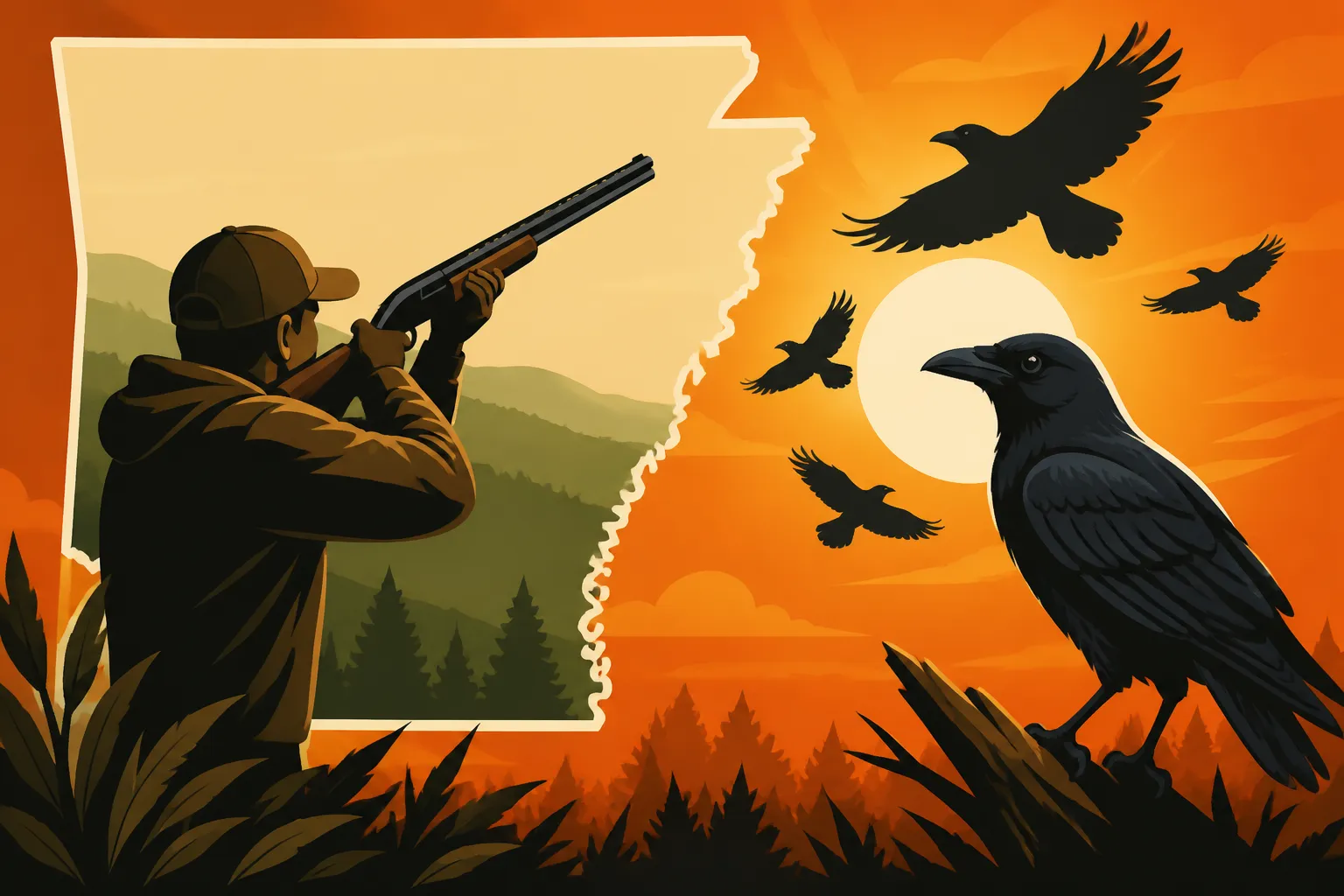
Crow hunting in Arkansas isn't like deer or turkey season, with super precise opening and closing days that vary wildly by zone or even change every other year. Crows are unique; they’re classified as migratory game birds, but they're often treated more like a nuisance species in terms of hunting regulations, leading to a much more liberal season structure. This can be a blessing and a curse – great for getting out, but sometimes confusing because it doesn’t fit the typical mold.
The Open-Ended Nature of Crow Seasons
Unlike white-tailed deer or wild turkeys, which have strict season lengths and bag limits designed to manage populations for sustainable harvest, crows are often managed with a much broader stroke. This is largely because crows can, and do, impact other wildlife populations through predation on nests and young, and they can also cause agricultural damage. Because of these factors, the Arkansas Game and Fish Commission (AGFC) allows for a lengthy season, recognizing the benefits of managing their numbers while providing ample opportunity for hunters. You won't find specific daily or seasonal bag limits for crows, which really sets them apart from virtually every other game animal in the state. This "open-ended" approach means you don't have to stress about hitting a quota; it's more about opportunity and enjoying the hunt.
Specific Dates and Legal Hunting Periods
For the most recent hunting season, Arkansas generally provides two distinct periods for crow hunting, giving hunters ample opportunity across much of the year. The primary season runs for a significant chunk of the fall and winter, allowing you to get out when other seasons might be closed or when you’re taking a break from big game pursuits. This typically starts around September 1st and continues through late February. Then, there's often a shorter, earlier summer season, usually encompassing the month of June.
For example, looking at current AGFC regulations, the crow season generally runs from September 1 through February 20, and then again from June 1 through June 30. This means you have a solid fall/winter period and then another crack at them in early summer. It's really important to remember that while these dates are usually pretty consistent, regulations can and do change. Always, always double-check the current Arkansas Game and Fish Commission regulations guide before heading afield, even if you think you know the dates by heart. A quick visit to their website or picking up a physical copy of the regulations is a non-negotiable step for any responsible hunter.
Why Crows are Classified Differently
Crows are federally recognized as migratory game birds under the Migratory Bird Treaty Act. This is why the U.S. Fish and Wildlife Service, working with state agencies like the AGFC, sets frameworks for their hunting. However, because crows are so widespread, adaptable, and can often be a nuisance, individual states are given a lot of latitude in how they manage their populations. This is why you don't see the same rigorous federal migratory bird stamp requirements or strict, short seasons that you might for ducks or doves. The long seasons and lack of bag limits reflect a management strategy that acknowledges their ecological role and potential for overpopulation in certain areas, particularly when nesting opportunities for other species are abundant or agricultural resources are exposed. It’s a different kind of conservation, focused on balance rather than strict harvest quotas.
Regulations Beyond Just Dates
Knowing when you can hunt crows is a great start, but the rules don't stop there. Just like any other hunting pursuit in Arkansas, there are specific regulations governing everything from the license you need to the methods you can employ. Ignoring these details can quickly turn a fun day in the field into a frustrating encounter with a game warden.
Licensing Requirements for Crow Hunters
To hunt crows in Arkansas, you'll need a valid hunting license. For Arkansas residents, this typically means your standard Resident Sportsman's License or an annual hunting license. If you're a nonresident looking to experience the unique challenge of crow hunting in the Natural State, you'll need to secure an appropriate nonresident hunting license. There are various options, from annual passes to shorter-term permits like the Arkansas Nonresident Five-Day License Cost or a specific Arkansas Nonresident Three-Day Deer License (though a general hunting license would be more appropriate if only hunting crows). It's always a good idea to check out the full range of Arkansas Resident License Options or Arkansas Nonresident License Options to find the one that best fits your needs. Remember, purchasing your license online through the AGFC portal is convenient and ensures you're legal before you even step foot outside.
Beyond the basic license, crow hunting in Arkansas generally doesn't require any additional stamps or permits, unlike migratory waterfowl which demands state and federal duck stamps. This simplicity is another aspect that makes crow hunting accessible and appealing to many hunters.
Legal Hunting Hours and Permitted Methods
Arkansas has clear rules about when you can hunt crows, much like other species. Generally, crow hunting is allowed from one-half hour before sunrise until sunset. This means no night hunting for crows, which is an important distinction to remember, especially if you're also involved in Raccoon Hunting at Night in Arkansas or other nocturnal predator pursuits. Sticking to daylight hours ensures safety and aligns with most hunting ethics.
When it comes to methods, crow hunting offers a fair amount of flexibility. Electronic calls are perfectly legal and are, in fact, one of the most effective tools in a crow hunter's arsenal. These calls can mimic distressed crows, hawk attacks, or feeding frenzies, drawing curious or aggressive birds right into your setup. Decoys, often simple silhouettes or full-bodied crow decoys placed in a realistic spread, also work wonders. You can use shotguns, typically 12 or 20 gauge, with smaller shot sizes like 7.5 or 8. Rifles are also permitted, but caution must be exercised to ensure safe backstops, especially in populated areas.
However, certain restrictions apply depending on where you're hunting. For instance, on some Wildlife Management Areas (WMAs), there might be specific regulations regarding vehicle use, access, or even the type of firearms allowed. Always consult the specific WMA regulations, which you can often find Using the AGFC Map Tool or by reviewing the overall Arkansas WMA Rules and Permits documentation. It's your responsibility to know the rules of the particular area you choose to hunt.
Bag and Possession Limits
Here's another way crow hunting stands apart: in Arkansas, there are no daily bag limits or possession limits for crows. That’s right, you can harvest as many crows as you can reasonably and ethically take during the open season. This liberal approach reflects the management strategy mentioned earlier, where controlling crow populations can benefit other ground-nesting birds and agricultural interests.
However, just because there's no limit doesn't mean you should simply go out and shoot indiscriminately. Ethical hunting practices still apply. Only shoot what you intend to pick up, and always be mindful of your surroundings. While crows aren't typically harvested for their meat, many hunters do collect feathers, or simply enjoy the challenge and practice that high-volume shooting provides. The absence of limits really highlights that crow hunting is more about population management and hunter opportunity than it is about a finite game resource.
Practical Tips for Arkansas Crow Hunting
So, you’ve got the dates and the general rules down. Now, let’s talk about putting boots on the ground and actually connecting with some crows. Crow hunting might seem simple, but like any successful hunt, it benefits greatly from good scouting, the right gear, and an understanding of the birds' behavior.
Scouting and Locating Crow Roosts
Finding crows isn't usually the biggest challenge in Arkansas; they're quite common. The real trick is finding where they concentrate. Crows often gather in large numbers at communal roosts, especially outside of nesting season. These roosts can hold hundreds, sometimes thousands, of birds. Scouting for these roosts, typically in dense timber, pine plantations, or thick river bottoms, is your first step. Drive around at dusk, and you'll often see streams of crows flying towards these areas.
Beyond roosts, look for feeding areas. Crows are omnivores and will flock to agricultural fields after harvest, particularly corn or soybean fields, to pick up spilled grain. They'll also patrol pastures and clearcuts for insects and small carrion. Scouting Arkansas Public Land Before Season isn't just for deer and turkeys; it can reveal prime crow habitat as well. Pay attention to power lines or dead trees at the edges of fields – these are often perching points before they descend to feed. You can also use mapping tools like those offered by GoHunt to identify large timber blocks or agricultural areas where crows might congregate. Looking for these patterns will give you a significant advantage.
Essential Gear and Effective Tactics
Crow hunting doesn't require a mountain of specialized gear, which is part of its appeal. Here's a quick rundown:
- Shotgun: A 12-gauge or 20-gauge shotgun is perfect. Crows are tough, but not heavily armored. Load up with 7.5 or 8 shot in standard field loads. A modified or improved cylinder choke is usually ideal for the ranges you'll be shooting.
- Ammunition: As mentioned, 7.5 or 8 shot is standard. You don't need heavy loads, as crows aren't incredibly large or resilient.
- Calls: This is where the magic happens. An electronic call is often king for crow hunting. Models like the Foxpro or Primos Alpha Dogg are popular and effective, offering a wide array of crow distress, fighting, and gathering sounds, along with predator calls that can provoke an aggressive response. Mouth calls can also work, especially for finishing birds or when you need more subtle sounds.
- Decoys: Simple, inexpensive crow decoys make a huge difference. Place them in open areas, often in trees or on fence posts, to simulate a gathering of crows or crows reacting to a predator. Some hunters even add an owl or hawk decoy to infuriate the crows and bring them in closer for defensive maneuvers.
- Camouflage: Crows have excellent eyesight. Full camouflage, including face mask and gloves, is crucial. Break up your outline against a tree or in a blind.
- Blind: A simple pop-up ground blind or even just hiding in thick brush can be very effective. The key is concealment.
Once you have your location and gear, the tactics involve setting up downwind (crows often approach upwind), placing your decoys, and then deploying your calls. Start with a series of aggressive calls to get their attention, then switch to distress or fighting calls to draw them in. Be patient, and be ready, because when they commit, they come in fast and hard! This aggressive calling technique can be quite different from the subtle calls used for Calling Arkansas Gobblers in the Ozarks, so practice is key.
Safety and Ethical Considerations
While crow hunting is a blast, safety always comes first. Always be aware of your surroundings, especially if you're hunting near agricultural operations or private property. Ensure you have a safe backdrop for every shot. You might be shooting at moving birds, so confirming no homes, livestock, or people are beyond your target is paramount. While hunter orange isn't usually required specifically for crow hunting during their dedicated seasons, if you're hunting during an overlap with, say, a modern gun deer season, you will need to comply with hunter orange rules. Always check the current regulations for Arkansas Hunter Orange Rules to be absolutely sure.
Also, be respectful of private land. Always obtain explicit permission before hunting on private property. A simple knock on the door, showing respect, can often get you access. This is a critical aspect of Getting Private Land Permission in Arkansas that every hunter should practice. Remember, you're an ambassador for all hunters.
The Role of Crow Hunting in Wildlife Management
It might not be as glamorous as chasing trophy deer, but crow hunting plays a quiet, yet important, role in the broader ecosystem and even in sharpening your own skills as a hunter. It’s more than just busting birds; it’s about understanding ecological balance and staying connected to the field.
Crow Impact on Other Wildlife Populations
Crows are intelligent and opportunistic predators. While they primarily eat insects, seeds, and carrion, they are also notorious nest predators. They will raid the nests of turkeys, quail, ducks, and various songbirds, eating eggs and even young poults or chicks. In areas where crow populations are high, this predation can significantly impact the reproductive success of these other species.
By participating in crow hunting, you're actually contributing to a form of wildlife management that can benefit other game birds. Reducing crow numbers, especially in localized areas, can potentially lead to higher survival rates for young turkeys, bobwhite quail, and ducks. This is particularly relevant when we consider the challenges faced by populations like Arkansas Turkey Population Trends and the ongoing efforts for Arkansas Bobwhite Quail Decline. It's a subtle but meaningful way to help maintain the balance in our natural environment.
Skill Development and Off-Season Practice
Let's be honest, we all love deer and duck season, but there are significant stretches of the year when those opportunities are closed. Crow hunting fills a vital gap. It’s an incredible way to keep your shooting skills sharp, practice your calling techniques, and stay attuned to the rhythms of the outdoors.
Imagine refining your shotgun swing on fast-moving targets, improving your ability to read bird behavior, or perfecting your camouflage and concealment tactics. These are all skills that translate directly to success in other pursuits, whether you're taking advantage of Arkansas Modern Gun Deer Hunting, trying your hand at Field and Flooded Rice Duck Hunting in the Delta, or getting ready for Spring Turkey Hunting in the Arkansas Ozarks. The repetitive action and dynamic nature of crow hunting make it an excellent training ground, helping you stay proficient and confident with your firearms. It also provides fantastic practice in working with electronic calls and decoys, refining your setup and understanding how animals react to different stimuli.
Enjoying the Outdoors and the Challenge
Beyond the practical aspects, crow hunting is just plain fun. It's a challenging, fast-paced hunt that tests your wits against a very smart bird. There’s something incredibly satisfying about calling in a flock of crows, watching them commit to your setup, and then trying to pick them out of the sky. It's an active, engaging pursuit that gets you out into the fresh air, away from the daily grind.
For many hunters, it's also about appreciating a species that often gets a bad rap. Crows are highly intelligent, social animals, and observing their complex behaviors in the field is fascinating. It’s an opportunity to learn more about the ecosystem and enjoy the natural beauty of Arkansas, even when the "main" seasons are closed. It's an accessible hunting experience that doesn't demand expensive leases or elaborate setups, making it a perfect way to simply get out and enjoy what Arkansas hunting has to offer.
| Hunting Aspect | General Crow Hunting Rules in Arkansas |
|---|---|
| Season Dates | Primarily Sep 1 – Feb 20, and Jun 1 – Jun 30 (Always check current AGFC regulations) |
| Daily Hours | One-half hour before sunrise to sunset |
| Bag/Possession | No daily bag or possession limits |
| License | Valid Arkansas hunting license (resident or nonresident) |
| Methods | Shotguns (12/20 gauge common), rifles, electronic calls, mouth calls, decoys |
| Concealment | Full camouflage recommended (including face/hands) due to excellent crow eyesight |
| Safety | Always ensure a safe backdrop; be aware of private property boundaries and obtain permission if needed |
| Benefits | Population control, skill practice, extended hunting opportunity |
Disclaimer
Please note that hunting regulations, season dates, and license requirements can change. Always consult the most current Arkansas Game and Fish Commission (AGFC) hunting regulations guide before participating in any hunting activity. This content is for informational purposes only and should not be considered legal advice or a substitute for official regulations.