How to Tell Timber From Field Hunting
One of the biggest head-scratchers for hunters planning a trip to Arkansas, especially if you're coming from out of state or new to a particular species, is understanding the lingo. You hear folks talking about "timber hunting" versus "field hunting," and while it might sound straightforward, the reality on the ground—or in the water—can be vastly different. This guide is here to untangle those distinctions, helping you understand what each type of hunt entails so you can pick the adventure that's right for you.
Understanding Green Timber Hunting
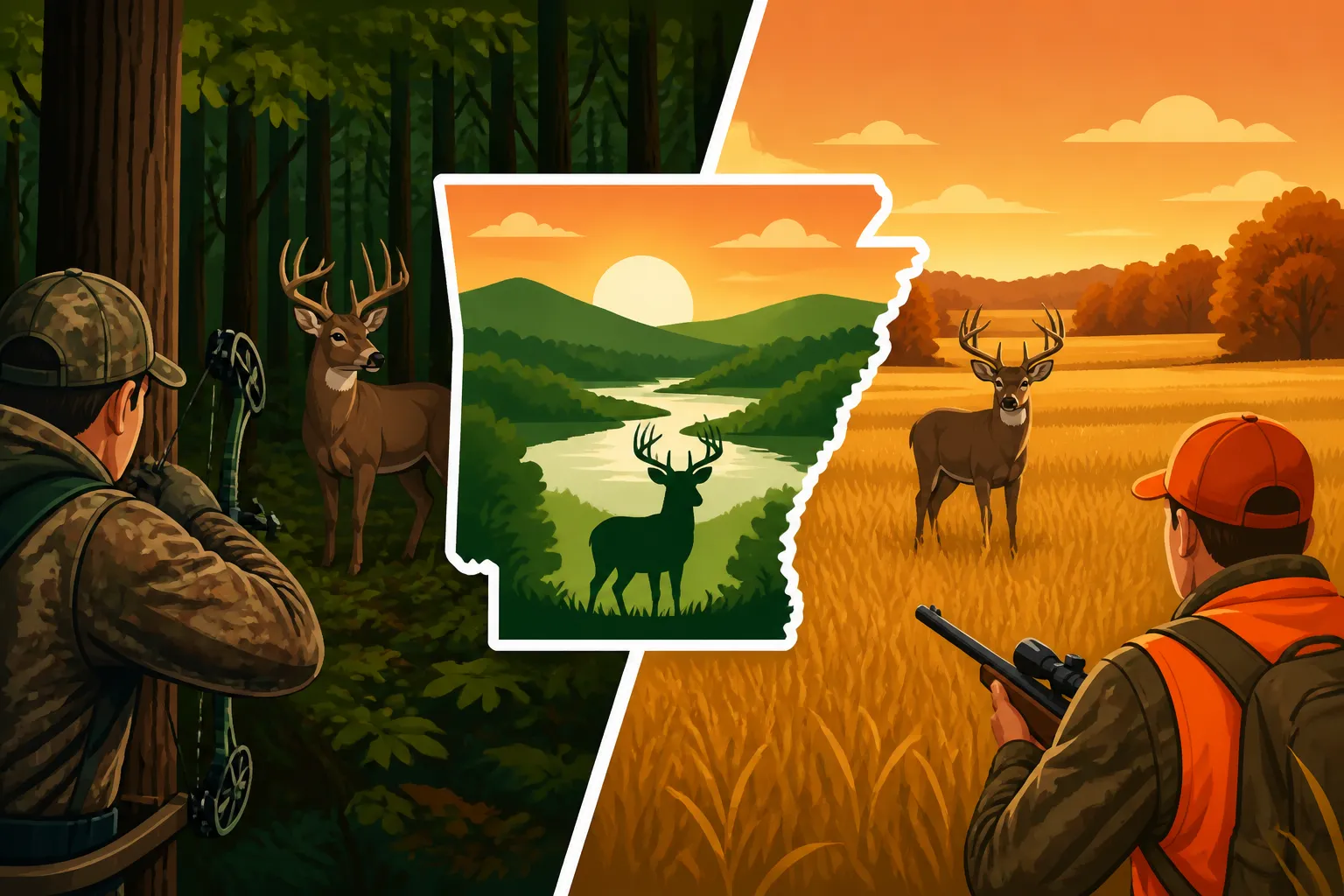
When Arkansans talk about "timber hunting," they're usually referring to a classic, almost mythical experience, particularly for waterfowl, but it also applies to deer in certain flooded bottomland areas. It's a world apart from open-field endeavors, offering a unique blend of challenge, beauty, and intimate encounters with nature.
The Ecosystem of Flooded Timber
Imagine ancient stands of oak, cypress, and other hardwoods, not just alongside a river, but actually in the water. This is the heart of flooded timber. These forests thrive in the Delta's low-lying areas, where winter rains and controlled flooding transform the woods into a temporary wetland. For ducks, especially mallards, these areas are an absolute magnet, providing crucial food in the form of acorns and aquatic invertebrates, as well as shelter from the wind and predators. The water levels can vary dramatically, from ankle-deep to waist-deep or more, creating a dynamic environment that changes with every rainfall. For deer, while they're not wading chest-deep, these bottomland hardwoods, particularly those bordering unflooded timber, offer vital cover, food sources like acorns, and often act as natural travel corridors when adjacent sloughs or streams fill up.
Navigating these submerged forests requires a specific skill set and local knowledge. You're not just walking; you're often wading, sometimes pushing a small boat or kayak through a maze of trees. The sounds of the forest take on a new dimension, amplified by the water, and the quiet can be profound, broken only by the splashes of feeding ducks or the rustle of a deer moving through the undergrowth. This environment is complex and beautiful, but it's also demanding, which is part of its allure for many dedicated hunters. Hunting Arkansas Flooded Green Timber dives deeper into the specifics of this unique landscape for waterfowl hunters.
Key Characteristics of a Timber Hunt
A timber hunt is, at its core, an immersive experience. For duck hunting, you're usually tucked into the woods, often standing in waist-deep water, leaning against a tree, or in a natural blind built into the canopy. Decoys are often set relatively close, sometimes just a dozen or two, mimicking ducks feeding among the trees. Calling is crucial and often more nuanced than in open fields; the timber absorbs sound differently, and ducks approaching through the canopy require careful attention to decoying and calling. Shots are generally closer, and quick reflexes are paramount as ducks dart through openings in the timber.
For deer, timber hunting often means setting up a Treestand Setups in Delta Hardwoods or a ground blind strategically along a pinch point, a natural funnel created by water, or near a prominent acorn crop. You're relying on the deer's natural movement through dense cover. The hunting is intimate, often requiring stealth and patience. You're more likely to see deer slipping through the shadows than sprinting across an open expanse. The dense foliage provides excellent cover for both hunter and hunted, making encounters intense and often at close range.
Species Found in Arkansas Timber
While the iconic image of Arkansas timber hunting often conjures up mallards raining down through the trees, many other species utilize these habitats. For waterfowl, you'll encounter a variety of dabbling ducks like wood ducks, gadwall, and sometimes pintails or wigeon, in addition to mallards. These diverse species add to the excitement and challenge of deciphering their calls and flight patterns. Why Mallards Use Flooded Timber provides insight into the primary target species.
For deer hunters, the bottomland hardwoods and timbered tracts adjacent to agricultural fields are prime real estate for white-tailed deer. These areas provide excellent cover, year-round browse, and security, especially when pressured from surrounding open land. The big-bodied, heavy-antlered bucks Arkansas is known for often call these timbered havens home. You might also encounter squirrels, raccoons, and even black bears in the more remote timbered regions of the state.
Delving into Field Hunting
In stark contrast to the shadowy, water-filled woods, field hunting in Arkansas offers a completely different set of challenges and rewards. This type of hunting often takes place in vast, open spaces, primarily targeting ducks and geese that feed on waste grain, or deer that frequent field edges and standing crops.
The Open Expanses of Agricultural Fields
Arkansas's Delta region is a patchwork of agricultural fields—rice, corn, soybeans, and wheat—stretching for miles. After harvest, these fields become incredibly attractive to migratory birds and local game. Ducks and geese descend upon these fields to gorge on waste grain, replenishing their energy reserves for migration. These fields might be dry, muddy, or even intentionally flooded, depending on the farming practices and rainfall. This creates expansive landscapes that are entirely different from the tight quarters of green timber. For deer, these fields provide crucial food sources, drawing them out of dense cover, especially during the colder months when natural forage is scarcer.
The sheer scale of field hunting means you're often dealing with wide-open spaces, big skies, and long sightlines. Wind becomes a huge factor, dictating decoy spreads and hunter placement. The sounds are different too; the wind whistles across the open ground, and the honking of geese or distant duck calls can carry for miles. While less intimate than timber, field hunting provides its own spectacle, with massive flocks of birds swirling overhead or deer cautiously emerging from the woods at dusk. Hunting Rice Fields and Levees covers one of the most prominent forms of field hunting in the state.
Key Characteristics of a Field Hunt
Field hunting for waterfowl typically involves large decoy spreads, sometimes hundreds of decoys, to attract distant birds. Hunters are usually hidden in permanent pit blinds, movable layout blinds, or brushed-in makeshift blinds along field edges or levees. Calling is often loud and aggressive, designed to grab the attention of high-flying flocks. Shots can be longer than in timber, requiring proficiency with larger shot sizes and tighter chokes. The retrieve often involves dogs ranging over considerable distances, sometimes through muddy, uneven terrain. The waiting game can be long, but when a large flock commits, the action can be furious.
For deer, field hunting often means hunting the edges of these agricultural fields from a tower stand, a ground blind, or a treestand overlooking a food plot or crop. The strategy revolves around catching deer as they transition from bedding areas in nearby woods to feed in the fields, typically at dawn or dusk. Long shots are more common, so ethical shot placement and understanding your rifle's capabilities are paramount. Hunting Standing Corn and Beans in the Delta outlines some specific tactics for deer in these environments. Patience, a good spotting scope, and understanding deer movement patterns across open ground are critical components of a successful field deer hunt.
Species Targeted in Arkansas Fields
The primary draw for waterfowl hunters in Arkansas's fields is the sheer abundance of geese and ducks. Specklebelly geese (greater white-fronted geese) are a highly prized species, known for their distinctive calls and delicious meat. Snow geese and Ross's geese are also present in massive numbers, particularly during the Spring Conservation Order. Mallards and other dabbling ducks are also frequently hunted in flooded rice fields, which essentially mimic a shallow, open-timber environment. Specklebelly Hunting in Arkansas Fields offers more details on these popular goose hunts.
For deer hunters, the rich agricultural lands of the Delta and other farming regions attract a strong population of white-tailed deer. These deer often grow large due to abundant food sources. Coyotes and bobcats are also frequently found hunting in and around these fields, preying on rodents and rabbits, and can offer exciting opportunities for predator callers, particularly at night.
Practical Differences for the Hunter
Understanding the ecological differences between timber and field hunting is one thing, but translating that into practical decisions for your hunt requires thinking about gear, tactics, and how external factors play into your success.
Gear and Preparation Disparities
The gear you pack for a timber hunt versus a field hunt can be starkly different. For timber duck hunting, waterproof waders are non-negotiable – chest waders are often a must, sometimes even insulated ones if you're hunting late season. A sturdy, waterproof backpack for calls, shells, and snacks is crucial. Your shotgun might need a sling for hands-free wading. A headlamp is indispensable for navigating in the dark. You might also consider a compact boat or sled for hauling gear and birds. The clothing needs to be quiet and blend with the dense, dark timber surroundings.
For field duck or goose hunting, especially from a layout blind, you might need lighter, more mobile outerwear. Camouflage patterns often need to match stubble fields or darker soil. Large decoy bags, specialized layout blinds, and potentially a four-wheeler or UTV for transport are common. Footwear can range from rubber boots for muddy conditions to comfortable, sturdy hiking boots for dry fields. Rifle hunters targeting deer in fields will focus on long-range optics, binoculars, and perhaps a shooting rest or bipod. Consider what you’d need for Hunting the Delta Rut in January versus Bowhunting Arkansas in September Heat – the attire and gear will vary drastically.
Strategic and Tactical Considerations
The strategic approach to each type of hunt diverges significantly. In the timber, it’s often about stealth, precision calling, and understanding how ducks navigate a dense canopy. Setting up against a large tree, ensuring your silhouette is broken up, and positioning decoys in natural landing holes are key. For deer, it's about identifying natural funnels, pinch points, and bedding areas within the timber, and setting up for close-range opportunities. You're trying to intercept movement rather than draw them in from a great distance.
Field hunting, conversely, often relies on volume and visibility. For waterfowl, it's about creating a large, appealing spread that can be seen from afar, and using aggressive calling to convince birds to commit. Wind direction is critical for setting up your spread and ensuring birds finish into the wind over your decoys. For deer, the strategy usually involves patience, observation, and anticipating movement along field edges, often at dawn or dusk. It's less about subtle timber calls and more about glassing large areas and making calculated movements. Understanding how to use Rattling Volume in Thick Cover in timber is vastly different from attracting distant geese in an open field.
Here's a quick comparison of some key distinctions:
| Feature | Green Timber Hunting | Field Hunting |
|---|---|---|
| Primary Terrain | Flooded hardwood forests, dense canopy | Open agricultural fields (rice, corn, beans), levees |
| Water Depth | Varies from ankle-deep to waist-deep (or more) | Dry, muddy, or shallow-flooded |
| Visibility | Limited, short sight lines, broken by trees | Expansive, long sight lines, open sky |
| Decoy Spreads | Smaller, more natural sets (dozen or two) | Larger, often hundreds, visible from a distance |
| Calling Style | Nuanced, softer, focused on finishing | Louder, aggressive, designed for long distances |
| Shots | Typically closer, quick reflexes needed | Can be longer, requiring precise judgment |
| Hunter Concealment | Leaning against trees, natural vegetation, blinds | Layout blinds, pit blinds, brushed-in blinds |
| Physical Demands | Wading, pushing boats, navigating dense cover | Walking long distances, setting large spreads |
| Primary Species | Mallards, Wood Ducks, Gadwall; Delta Whitetails | Specks, Snow Geese, Mallards; Field-edge Whitetails |
Weather and Water Impact
Weather plays a role in any hunting endeavor, but its impact is felt differently in these two environments. In flooded timber, cold temperatures can turn wading into a painful experience, and freezing conditions can lock up the water, making access and hunting impossible. Heavy rains can raise water levels, sometimes too high for ideal hunting, or change access routes. The constant presence of water means understanding Reading Water Levels on the White River and other major systems is vital.
For field hunting, severe wind can make decoy spreads ineffective and scatter birds. Freezing rain can coat fields, making footing treacherous and food inaccessible. Conversely, specific weather patterns, like a sharp cold front, can push new birds into the region, making certain days incredibly productive. Drought conditions can also impact field hunting, as dry fields may hold fewer birds or deer seeking water elsewhere. Always check Arkansas Waterfowl Seasons and Zones for specific regulations that might be affected by weather.
Choosing Your Arkansas Hunting Adventure
Deciding between timber and field hunting, or even a combination of both, boils down to personal preference, physical capabilities, and what kind of experience you're truly seeking.
Factors to Consider Before Booking
Before you commit to a particular type of hunt, especially if you're booking with an outfitter, ask yourself a few questions. Are you comfortable wading through potentially deep, cold water in the dark? Do you prefer the challenge of intimate, close-quarters shooting, or the spectacle of large flocks working a wide-open spread? What's your physical condition? Timber hunting can be surprisingly strenuous.
Consider the species you're most interested in. While mallards are present in both, green timber is often considered the quintessential mallard experience, while fields dominate for specklebellies and snow geese. For deer, are you looking for the thrill of a close-range encounter in thick cover, or are you more comfortable with longer shots from a stationary blind overlooking a food source? Don't be afraid to reach out to outfitters and ask pointed questions about what their hunts specifically entail. Many hunters use platforms like BookYourHunt to find and compare different types of guided hunts, allowing them to filter by terrain and target species.
Resources for Researching Hunt Types
The beauty of living in this digital age is the wealth of information at our fingertips. Beyond guides like this, spend time watching videos of different hunts in Arkansas. See hunters wading through timber, setting out monster field spreads, or sitting in blinds overlooking vast open spaces. This visual context can be incredibly helpful in understanding the reality of each experience. Read forums and testimonials. If you're looking at outfitters, don't just look at their highlight reels; try to find candid reviews that talk about the day-to-day grind and the specific challenges of their hunting grounds.
Online mapping tools and hunting apps, such as GoHunt, can also give you a bird's-eye view of potential hunting areas, allowing you to identify timbered tracts versus open fields. This can help you understand the landscape even before you arrive. Don't be shy about asking questions when you're making arrangements, whether it's for a guided trip or a self-guided adventure. Understanding Booking an Arkansas Duck Hunt can give you an idea of what to expect when communicating with guides and making arrangements. The more informed you are, the better prepared you'll be to make the most of your Arkansas hunting trip, no matter if you're deep in the timber or out in the open fields.
Disclaimer
This article is for general informational purposes only and does not constitute professional advice. Laws, prices and regulations vary by location and change over time. Consult a qualified professional for guidance on your specific situation.