Weather in the Weeks After the Hatch
There's nothing quite as frustrating as hearing the first spring gobblers hammering in the woods, full of hope for a strong turkey season, only to find the population numbers aren't quite what you expected later on. Many hunters assume a good hatch year means more turkeys, but the reality is far more complex. The weather in the weeks immediately following a turkey hatch plays an incredibly critical role in poult survival, often dictating the success of an entire generation, and understanding this can really change how you assess future hunting prospects and even inform your scouting efforts.
Why Post-Hatch Weather is So Critical for Poults
You might think that once a hen successfully hatches a clutch of eggs, the hard part is over. But for wild turkeys, especially in a state like Arkansas with its diverse and sometimes unpredictable weather patterns, that couldn't be further from the truth. The first few weeks of a poult's life are incredibly perilous, and adverse weather conditions during this vulnerable period can decimate an entire brood, leading to noticeable dips in the turkey population years down the road. These tiny birds, often no bigger than a golf ball when they first emerge, are highly susceptible to environmental stressors.
Their survival hinges on a delicate balance of warmth, dryness, and access to protein-rich insects. A hen does her best, brooding them constantly, but she can only do so much against the forces of nature. Hunters often look at factors like Arkansas Turkey Brood Surveys as a gauge, but those early counts can be misleading if significant weather events follow soon after. It’s a dynamic situation that unfolds after those little birds break free from their shells.
Vulnerability of Young Poults to Cold and Wet Conditions
Imagine being a tiny, downy bird with undeveloped thermoregulation, trying to stay warm and dry in the face of a sudden cold snap or torrential rain. That's precisely the challenge poults face. Unlike adult turkeys, poults can't regulate their body temperature effectively for the first few weeks of their lives. They rely entirely on their mother's warmth, tucking under her wings to avoid hypothermia.
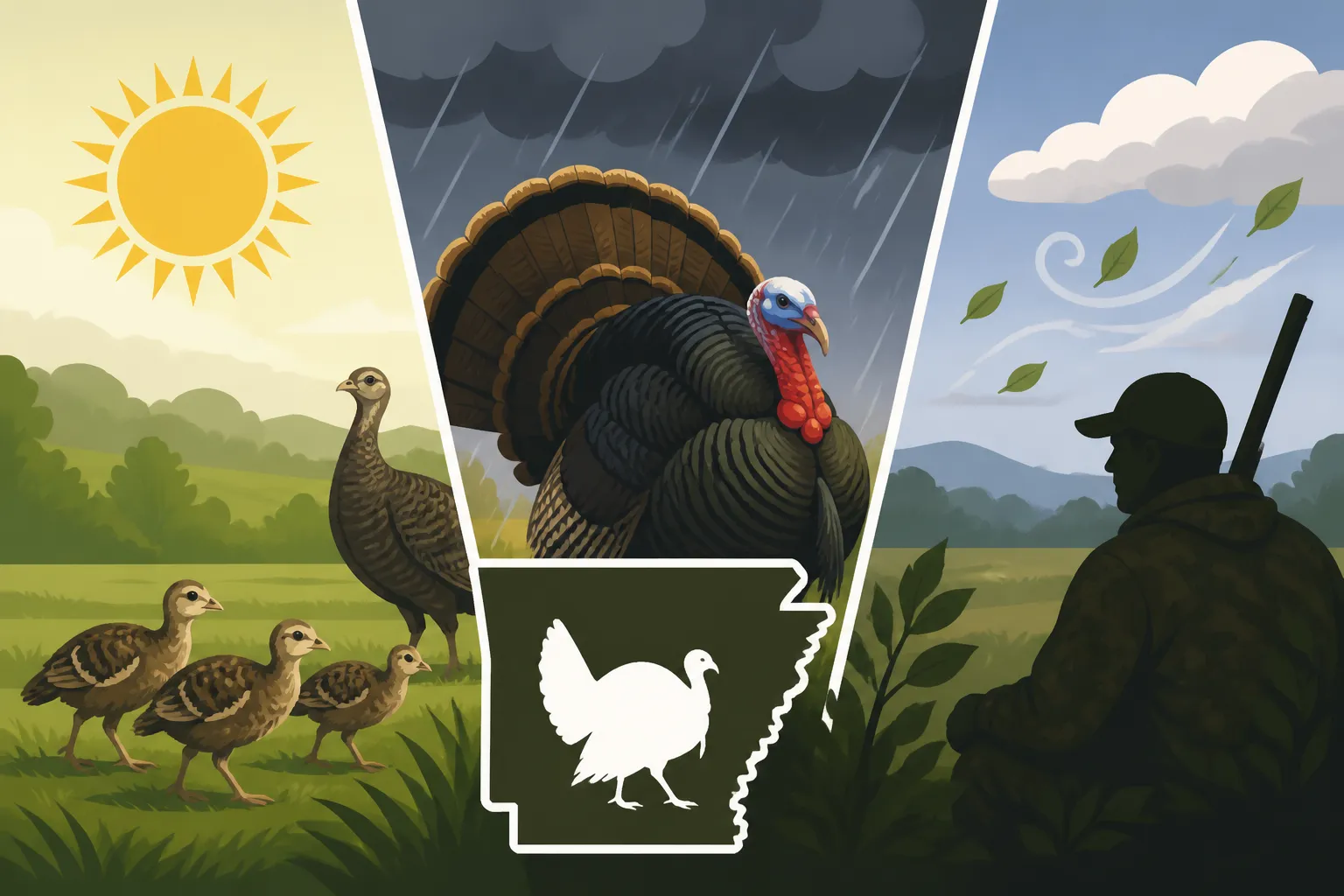
Heavy, prolonged rainfall is particularly devastating. When poults get thoroughly soaked, their downy feathers lose their insulating properties. Coupled with cooler temperatures, this rapidly leads to hypothermia. A hen might be able to keep a few poults warm, but a large brood could overwhelm her ability to shelter them all, especially if they’re forced to move or feed in the wet. We've all seen those sudden summer downpours that turn creek bottoms into raging torrents; for a fledgling poult, even a puddle can become a death trap. This is a major factor in What Drove the Arkansas Turkey Decline in certain periods.
Impact on Food Source Availability
Beyond the direct threat of exposure, adverse weather also impacts a poult's primary food source: insects. Young poults are insectivores, meaning they need a constant supply of protein-rich bugs like grasshoppers, crickets, spiders, and caterpillars to grow rapidly. These insects thrive in warm, relatively dry conditions.
However, prolonged periods of heavy rain can wash insects from vegetation, drown them, or drive them deep into cover, making them inaccessible to small poults. Conversely, severe drought can also reduce insect populations, making foraging difficult. A poult needs to eat almost constantly to fuel its rapid growth, and if the buffet table is suddenly empty because of the weather, they simply won't survive. A successful hatch means little if the larder is bare.
Common Weather Challenges and Their Effects
Arkansas weather is, shall we say, a vibrant tapestry of conditions, especially during the late spring and early summer when most turkey hatches occur. From sudden storms to extended dry spells, each type of weather presents unique challenges to our wild turkey populations. Understanding these patterns can give you a better grasp of the health of the local turkey numbers, beyond just looking at the Arkansas Turkey Population Trends over time.
Heavy and Prolonged Rainfall
This is perhaps the biggest culprit for poult mortality. I've seen springs in Arkansas where it felt like it rained every other day for a month. While the forests thrive and the creeks run full, it can be a death knell for young turkeys. A single, intense thunderstorm might not be too bad if it's followed by warm, sunny weather, allowing the poults to dry out and warm up. However, when the rain lingers for days, or when multiple storms roll through back-to-back, the situation becomes critical.
Wet feathers, coupled with the inability to thermoregulate, quickly lead to chilling and death. Even if they survive the cold and wet, the reduced insect availability during these periods can weaken them significantly, making them more susceptible to disease or predation. Think about how difficult it is to get around in soaked clothes; now imagine being a tiny bird trying to navigate thick, dripping underbrush while shivering. It's a tough existence.
Cold Snaps and Temperature Fluctuations
Arkansas spring weather can be notoriously fickle. One day it's seventy degrees and sunny, the next a cold front sweeps through, dropping temperatures into the low forties or even thirties at night. While adult turkeys are well-equipped to handle these fluctuations, young poults are not. Even if it's not raining, a sudden drop in temperature can cause hypothermia.
These cold snaps are especially dangerous when they occur shortly after a major rain event. The combination of wetness and cold is almost always lethal for poults. Hens will try to brood their young constantly, but even her body heat can only do so much against persistent cold. Such conditions can set the stage for low Poult-to-Hen Ratios and What They Mean in subsequent surveys, signaling trouble for future breeding seasons.
Drought Conditions and Extreme Heat
While less immediately devastating than cold and wet, extended drought and extreme heat can also take a toll on poult survival. Drought conditions reduce the lush, green undergrowth that provides both cover and food for insects. As habitats dry out, insect populations can decline, making it harder for poults to find the protein they need. Water sources, vital for all wildlife, can also diminish, although turkeys are generally quite adaptable in finding water.
Extreme heat, especially if combined with drought, can also stress poults. While they are more tolerant of heat than cold, prolonged exposure can lead to dehydration and heatstroke, particularly in areas with limited shade or dense cover. A hen will lead her brood to shaded areas and dust baths, but the overall decline in habitat quality due to drought can still make life much harder for them. Using tools like GoHunt can help you scout historical weather patterns and observe how specific areas are impacted by prolonged dry spells, informing your expectations for game populations.
Long-Term Implications for Turkey Populations
The weather immediately following the hatch isn't just about whether a handful of poults survive this year; it has ripple effects that can be felt for several hunting seasons. A consistently poor hatch due to unfavorable weather can create significant gaps in the age structure of a turkey population, leading to fewer gobblers for hunters and fewer hens to lay eggs in the future.
Recruitment into the Breeding Population
The ultimate goal of a successful hatch, from a population management standpoint, is recruitment – those poults surviving to become adults and entering the breeding population. When post-hatch weather is poor, fewer poults survive to maturity. This means fewer jakes the following spring, fewer two-year-old gobblers the year after, and ultimately, a reduced pool of breeding hens.
It's a compounding effect. A few bad years in a row, and suddenly, those once-vibrant turkey woods can seem eerily quiet. This is why conservation efforts often focus on improving nesting and brooding habitat, trying to give hens and poults every possible advantage against the whims of weather and Nest Predation and Turkey Hatches. A well-managed area can sometimes mitigate some of the weather's negative impacts by providing better cover and more resilient insect populations.
Hunter Expectations and Harvest Trends
For us hunters, this translates directly into what we see and hear in the woods. After a season with poor post-hatch weather, you can expect fewer birds on the landscape a year or two later. This often means harder hunting, fewer gobblers answering calls, and potentially lower Arkansas Spring Turkey Harvest Numbers. It can be disheartening, but it’s a direct consequence of nature's cycle.
Conversely, a few years of favorable post-hatch weather, with mild temperatures and appropriate rainfall, can lead to a surge in turkey numbers. These are the years when hunters enjoy abundant gobbling, higher success rates, and a strong sense of a thriving population. You might find that even specific areas like those described in Turkey Tactics in Arkansas Pine Plantations or Calling Arkansas Gobblers in the Ozarks are noticeably quieter or more active depending on these past weather events. It's not just about that year's spring weather, but the two or three springs before.
Regional Differences in Arkansas
Arkansas is a big state, and its weather can vary dramatically from one region to another. A heavy rain event in the Delta might not affect the Ozarks, and vice-versa. This means that poult survival can also vary regionally. You might have a fantastic hatch in one part of the state and a dismal one in another, all in the same year.
For instance, the bottomland hardwood regions are often prone to flooding, which can be devastating for poults. In contrast, the dryer, rockier Ozark highlands might face more challenges from drought. Keep these regional differences in mind when you're looking at broader turkey population reports. What happened in southwest Arkansas might not reflect the conditions in the northeast. Using scouting apps with weather overlays, or even historical data features that some, including GoHunt, offer, can help you look back at specific regional weather during key hatch periods to predict success.
What Hunters Can Do and How to Stay Informed
While we can't control the weather (wouldn't that be nice!), understanding its impact allows us to adjust our expectations, refine our scouting methods, and contribute to conservation efforts. Being an informed hunter is part of being a responsible steward of the wildlife we cherish.
Monitoring Weather Patterns and Reports
Before and during turkey season, it pays to keep a close eye on long-range forecasts, not just for the immediate hunting conditions but for the spring weather of the previous one to three years. Look back at the late spring and early summer periods for the areas you plan to hunt. Were those months characterized by excessive rainfall, severe cold snaps, or prolonged drought?
This historical perspective, even if anecdotal, can offer clues about the age structure and density of the birds you're likely to encounter. While general weather apps are useful, some specialized outdoor apps or detailed meteorological archives can give you deeper insights into past conditions. GoHunt, for instance, might have features that allow you to track and store observations against past weather data, helping you build a personal knowledge base for your hunting grounds.
Habitat Management and Conservation Efforts
Since we can't change the weather, focusing on habitat is our next best bet. Healthy, diverse habitats can help turkeys weather the storm, quite literally. Good brooding habitat, with a mix of open areas for insect foraging and dense cover for protection from predators and elements, can improve poult survival rates even during challenging weather.
If you're a landowner or part of a hunting club, consider implementing habitat improvements. These can include prescribed burns to stimulate new growth and insect production, planting native grasses and forbs, and maintaining diverse forest stands. Even on public land, supporting organizations that advocate for and implement habitat management is crucial. Understanding the importance of healthy brood cover is also key to knowing Where Arkansas Gobblers Roost and how successful their hens might be.
Adjusting Hunting Strategies
Knowing that a poor hatch occurred a couple of years prior might mean adjusting your hunting strategy. Instead of focusing solely on aggressive calling to bring in two-year-old gobblers (which might be scarce), you might shift to more subtle tactics or spend more time scouting for older, more seasoned birds. If you notice fewer birds responsive to aggressive Rattling Volume in Thick Cover or Grunt Calls in Arkansas River Bottoms, it might not be your calling, but simply fewer birds of that age class on the landscape.
You might also focus your efforts on areas known for more resilient turkey populations or those with optimal brooding habitat that might have mitigated the weather's impact. Being patient, flexible, and observant becomes even more critical in years following unfavorable post-hatch weather. Sometimes it means knowing When Arkansas Gobblers Go Quiet is a sign of pressure, but other times it's a reflection of fewer birds being there to begin with.
Table: Impact of Post-Hatch Weather on Turkey Poults
| Weather Condition | Immediate Impact on Poults | Short-Term Impact (1-4 weeks) | Long-Term Population Impact |
|---|---|---|---|
| Heavy Rainfall | Hypothermia, drowning risk, reduced insect access | Weakness, increased predation, slower growth | Reduced recruitment, fewer mature birds, lower harvest |
| Cold Snap | Hypothermia, direct mortality, stress | Slower development, increased energy expenditure | Lower breeding success in future, smaller age classes |
| Drought/Extreme Heat | Dehydration, heatstroke, reduced insect biomass | Malnutrition, poor condition, reduced cover | Slower population growth, decreased hen productivity |
| Mild & Sunny | Optimal foraging, rapid growth, warmth | Strong development, robust health, higher survival | Strong recruitment, healthy population, better hunting |
Conclusion: A Deeper Understanding of Turkey Dynamics
Ultimately, the weather in those few crucial weeks after a turkey hatch is a silent, powerful force shaping the future of our turkey woods. It's a reminder that wildlife management is a complex dance with nature, and successful hunting involves more than just knowing seasons and limits. By understanding these environmental pressures, we gain a deeper appreciation for the resilience of wild turkeys and become better informed, more patient, and more effective stewards of this incredible game species.
Disclaimer
This article is for general informational purposes only and does not constitute professional advice. Laws, prices and regulations vary by location and change over time. Consult a qualified professional for guidance on your specific situation.