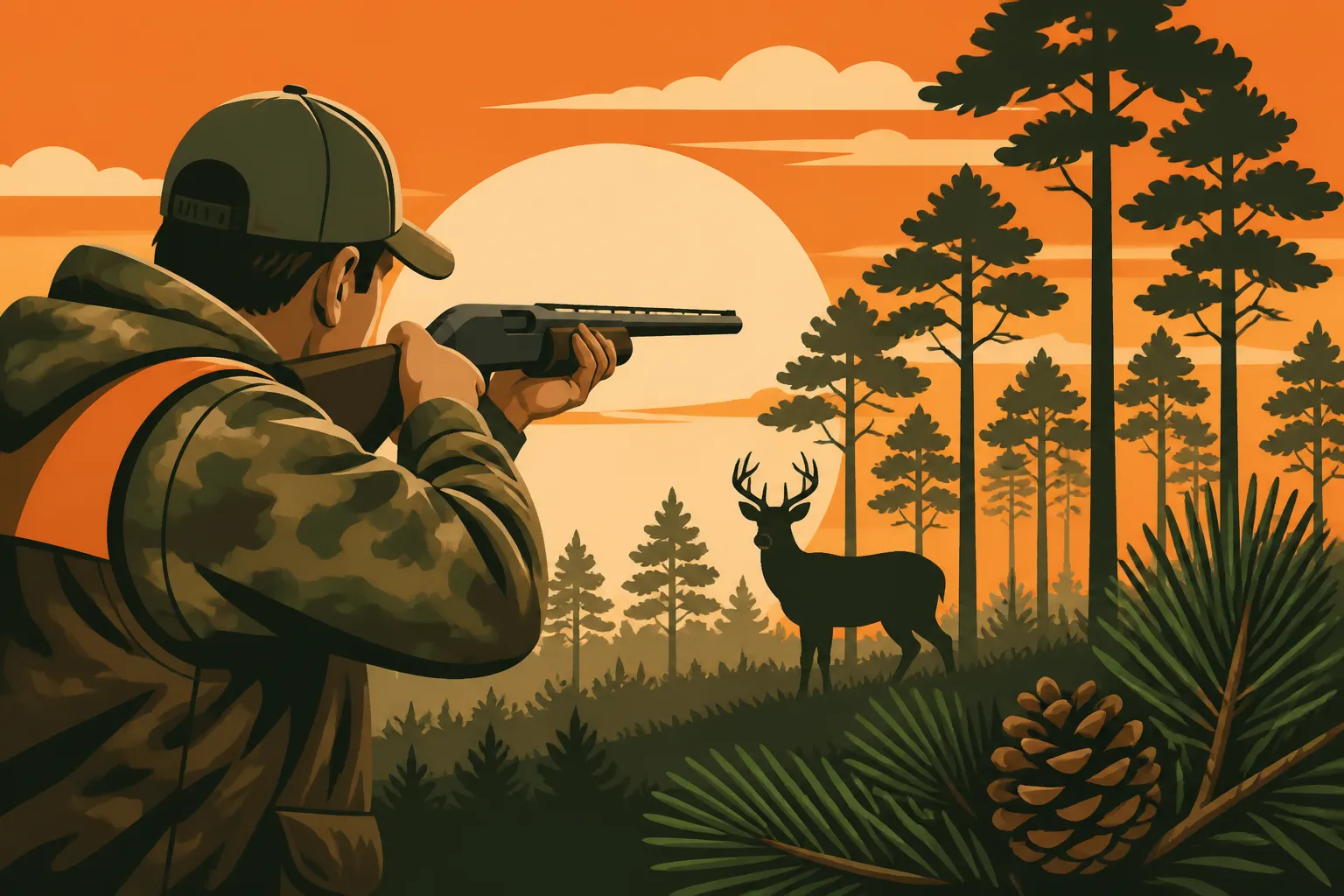
Hunting South Arkansas Pine Country
Hunting the vast pine country of South Arkansas can feel like stepping into a different world compared to the Delta hardwoods or the rugged Ozark mountains. It's a landscape of dense, often monotonous, timber stands that can quickly disorient you, yet it holds incredible opportunities for deer, turkey, and small game. This guide is here to walk you through the unique challenges and rewards of navigating and hunting these extensive pine forests, from understanding the habitat to mastering specific tactics.
Understanding the Landscape and Habitat of South Arkansas Pines
When folks talk about "South Arkansas pine country," they're often referring to the massive working forests of loblolly and shortleaf pine that dominate the southern half of the state, particularly across the Ouachita Mountains foothills and the West Gulf Coastal Plain. These aren't your grandfather's untouched woods; they're actively managed timberlands, which means a mosaic of clearcuts, young sapling stands, thinned mature pines, and everything in between. This industrial forestry creates a dynamic environment that, while sometimes uniform, can be incredibly productive for wildlife if you know what to look for.
The Dynamics of Pine Plantations
Unlike the natural, diverse hardwood forests found in other parts of Arkansas, pine plantations are typically planted in rows and managed for timber production. This means you'll encounter areas ranging from freshly clearcut blocks—which might look barren but become incredible forage producers in a few years—to dense "dog hair" thickets of young pines that are almost impenetrable, all the way up to mature, thinned stands that resemble park-like settings. Each stage of growth offers different challenges and opportunities for hunters. For instance, those young, thick stands provide fantastic bedding cover, while thinned, mature pines often allow for better visibility and easier movement, though they might lack the diverse forage of a hardwood bottom.
The key here is understanding the timber cycle. A recent clearcut will grow back in briars, young hardwoods, and various succulent plants, attracting deer and rabbits for browsing and cover. As the pines grow taller and shade out the understory, these areas become less appealing for deer browse but offer dense security cover. Then, when they're thinned, sunlight hits the forest floor again, stimulating new growth and creating food sources once more. This constant change means that a spot that was hot last year might be quiet this year, or vice-versa. It really keeps you on your toes and requires regular scouting and adaptability.
Water Sources and Bottomland Edges
Even in predominantly pine country, water is king, and finding those transition zones between pine uplands and hardwood bottoms or creek drainages is critical. These areas offer a break in the monoculture, providing a more diverse food source of acorns, persimmons, and other mast crops that pine trees simply don't produce. Deer and turkey will often travel through the pine stands to access these richer food sources and reliable water. Creeks and sloughs also serve as natural travel corridors, funnels, and escape routes.
Identifying these bottomland edges on your Scouting Arkansas Public Land Before Season maps, even before you set foot in the woods, can save you a lot of fruitless walking through monotonous pine rows. Look for contours indicating drainages, small streams, or even just subtle changes in elevation that might hold a bit more moisture and support different vegetation. During dry spells, these water sources become even more magnetic for all wildlife. These spots are often overlooked by hunters who stick to the easily accessible pine roads, making them prime targets for those willing to venture a little deeper.
Key Game Species and Their Habits in Pine Country
South Arkansas pine country might not be as famous for its trophy bucks as the Delta, or its roaring gobblers as the Ozarks, but it holds a robust population of several popular game species. Understanding how these animals adapt to and utilize the pine forest environment is fundamental to successful hunting.
White-Tailed Deer: Adapting to Timber Management
White-tailed deer thrive in a mosaic habitat, and the constantly changing landscape of timber plantations provides just that. They love the dense cover of young pine thickets for bedding and security, especially when those trees are 5-15 feet tall and almost impenetrable to humans. These areas also offer abundant browse from young hardwood sprouts and briars that flourish in the sunlight following logging operations. Mature, thinned pine stands, while offering less forage, can be excellent travel corridors, especially if they connect bedding areas to food sources like nearby agricultural fields or hardwood bottoms.
When hunting deer in these areas, focus on the edges and transitions. Look for the lines where clearcuts meet older timber, where pine stands meet hardwood drains, or where dense bedding cover transitions into more open feeding areas. Deer will often skirt these edges. Identifying major travel routes, especially during the rut, can be productive. While the "big woods" feel can make deer patterns seem random, they often use subtle topographical features, old logging roads, or drainage lines as consistent pathways. Don't forget that Arkansas Deer Seasons and Zone Limits vary, so always check the specific regulations for the zone you're hunting in South Arkansas.
Wild Turkeys: Roaming the Pine Forests
Turkeys are also abundant in South Arkansas pine country, though they often present a different challenge than their Ozark cousins. They'll use the pine stands for roosting, especially tall, mature pines that offer good visibility and safety from predators. They also forage extensively in thinned pine stands where sunlight allows for the growth of insects, grasses, and forbs, as well as along the edges of agricultural fields that often border timber company lands. When those pine plantations hit the right age for thinning, the increased undergrowth and insect activity can make them turkey magnets.
Finding turkeys in these large expanses often means covering a lot of ground. Listening for gobblers on the roost at dawn is crucial, but don't be afraid to use locator calls like crow or owl hoots throughout the morning to try and strike a shock gobble. Once on the ground, turkeys will often travel long distances along logging roads, power lines, or through open pine stands. They'll be looking for insects, seeds, and any available mast in nearby hardwood inclusions. Setting up on a Turkey Tactics in Arkansas Pine Plantations is often about patience and being ready to move if the birds are on the other side of a block.
Small Game: Squirrels, Rabbits, and Quail
Don't overlook the incredible opportunities for small game in South Arkansas pine forests. Squirrels, particularly fox squirrels, are very common. While gray squirrels prefer mast-producing hardwoods, fox squirrels are quite at home in pine forests, often feeding on pine cones, fungi, and insects, as well as venturing into nearby hardwood stringers for acorns. Look for them around mature pine trees, especially those with some age on them, or where pines mix with oaks or hickories in transition zones.
Rabbits absolutely thrive in the brushy cover of young clearcuts and regenerating pine stands. Those dense tangles of briars, young saplings, and weeds that grow up after logging offer perfect habitat. If you enjoy hunting with beagles, these areas can provide endless action. Finally, while their numbers have seen a decline, pockets of bobwhite quail can still be found, particularly in areas with a good mix of open pine savannahs, managed clearcuts, and native grasses. Habitat management aimed at increasing light penetration and promoting native groundcover can bring them back, and some timber companies are starting to adopt these practices. Small Game and Squirrel Hunting in Arkansas can be a fantastic way to enjoy the woods when deer and turkey seasons are closed or to extend your day afield.
Public Hunting Opportunities in South Arkansas Pine Country
One of the great advantages of hunting in South Arkansas pine country is the sheer amount of accessible public land, primarily through national forests and Wildlife Management Areas (WMAs) managed by the Arkansas Game and Fish Commission (AGFC). These areas, often composed largely of timber company land under cooperative agreement, offer vast opportunities for hunters willing to put in the effort.
Ouachita National Forest and Associated WMAs
While the core of the Ouachita National Forest is often associated with the more mountainous regions, its eastern and southern fringes extend into what many consider prime South Arkansas pine country. This sprawling national forest offers millions of acres of public hunting land, with much of it being commercial pine timber interspersed with hardwoods in the drainages. These lands are generally open to hunting with a valid state hunting license, and specific WMA permits might be required for designated areas within or adjacent to the National Forest boundaries.
Hunting the Ouachita National Forest means dealing with varying terrain, from gently rolling hills to steeper slopes, all covered in timber. Access is often good via an extensive network of forest service roads, though some areas require significant hiking to get away from road hunters. It's crucial to consult maps, like those available through onX Hunt or the AGFC's own map tool, to identify property boundaries, road access, and specific WMA regulations. Pay attention to areas where the forest transitions from national forest land to private timber company tracts, as rules can change subtly. Look for less-traveled roads or walk-in-only sections for a quieter hunting experience.
Felsenthal and Other South Arkansas National Wildlife Refuges
In the southeastern part of the state, you'll find gems like the Felsenthal National Wildlife Refuge, which, while known for its flooded timber and incredible duck hunting, also offers significant deer and other big game opportunities within its diverse habitat. These refuges often have stricter regulations regarding hunting methods, specific dates, and sometimes require special permits or draw applications, so always check the specific refuge's rules before planning a trip. However, they can hold some truly outstanding game due to limited pressure and quality habitat.
Beyond Felsenthal, other smaller refuges or WMA segments exist throughout South Arkansas, often encompassing bottomland hardwoods along major rivers but frequently bordering or being surrounded by private pine timberland. These refuge lands are managed primarily for wildlife conservation, meaning they can be havens for game. While the rules can be a bit more complex than general national forest land, the reward can be well worth the extra effort in research and application. Always check the AGFC regulations digest and the specific refuge's website for the latest information on seasons, bag limits, and access requirements.
Using Technology for Public Land Navigation
Navigating these extensive public lands, especially the often-monotonous pine blocks, can be challenging. This is where modern mapping applications become indispensable. Tools like onX Hunt allow you to see property boundaries, identify public versus private land, view satellite imagery that reveals timber stand ages, and mark waypoints for stands, game sign, or access points. These apps can even track your movement offline, which is critical in areas with spotty cell service.
Before you ever leave home, use these tools to scout potential areas, identify pinch points, funnels, and transition zones between different habitat types. Pay close attention to recent logging activity visible on satellite imagery, as these cutovers are often magnets for deer and rabbits. When you're in the field, being able to confirm you're on public land and precisely locate your position saves time, prevents trespass, and allows you to focus on hunting. Similarly, for those serious about scouting, GoHunt can offer valuable insights into public land management practices and game populations in specific areas.
Private Land Access: Leases and Permissions
While public land offers vast opportunities, a significant portion of South Arkansas's pine country is privately owned, primarily by timber companies and large private landowners. Gaining access to these lands can unlock some incredible hunting, often with less pressure than public areas.
Timber Company Leases and Hunting Clubs
Large timber companies, such as Weyerhaeuser or CatchMark Timber Trust, own massive tracts of land across South Arkansas. Many of these companies lease out hunting rights to individuals or, more commonly, to hunting clubs. These leases can range from relatively small tracts to thousands of acres, often encompassing a diverse mix of pine plantations, natural pine stands, and hardwood drains. Joining a hunting club that holds one of these leases is a popular way to gain consistent access to quality hunting ground.
The cost and availability of these leases can vary widely depending on location, acreage, and perceived game quality. Clubs often have strict rules regarding guest policies, stand placement, and game harvest to ensure the sustainability of the hunting resource and minimize conflicts. If you're considering joining a club, inquire about their management practices, club rules, and the number of members per acre to get a sense of the hunting pressure. These leases provide consistent access, often allowing for year-round scouting and management, which can be invaluable for consistent success. You can explore more about Arkansas Timber Company Leases and how they operate.
Asking for Permission from Private Landowners
Even outside of formal timber leases, there are opportunities to hunt private land by simply asking for permission. Many smaller landowners, especially those with properties bordering larger timber tracts, might be open to allowing hunting, particularly if you approach them respectfully and offer to help with things like gate maintenance or feral hog control. Farmers with fields adjacent to pine timber often welcome hunters to help with deer damage to crops.
The key to gaining permission is a polite, face-to-face approach. Dress neatly, be prepared to introduce yourself, and clearly state your intentions. Offer references if you have them, and always emphasize respect for their property. Never assume permission is granted indefinitely; always reconfirm each season. Offering a share of the harvest, helping with chores, or giving a small gift at the end of the season can go a long way in building goodwill and securing future access. Remember that Do You Need Written Permission in Arkansas? on private land, and it's always a good idea to have it to avoid any misunderstandings.
Navigating Lease Agreements and Expectations
When dealing with formal hunting leases, whether with a timber company directly or through a hunting club, it's absolutely critical to understand the terms of the agreement. What are the boundaries? Are there any specific access restrictions? Are you allowed to plant food plots or conduct timber stand improvements? What are the rules regarding guests, ATVs, or camping? These details can make or break your hunting experience and can prevent disputes.
It's also important to manage your expectations. A leased tract might look perfect on a map, but conditions can change with logging, severe weather, or neighboring hunting pressure. A good hunting club will have a detailed lease agreement that outlines all these particulars. Take the time to read it thoroughly, ask questions, and ensure you're comfortable with all the terms before committing. A clear understanding from the outset will lead to a more enjoyable and successful season.
Hunting Tactics for South Arkansas Pine Plantations
Hunting pine country requires a slightly different approach than the hardwood bottoms of the Delta or the rugged mountains of the Ozarks. The dense, uniform nature of many pine stands can make traditional tactics feel less effective, but with a few adjustments, you can consistently find success.
Still-Hunting and Tracking in Pine Thickets
Still-hunting is a highly effective tactic in the quiet, often soft-needled floor of pine forests. It involves moving slowly, taking a few steps, then stopping to scan and listen intently for long periods. The key is to blend with the environment, moving at a snail's pace, often taking an hour to cover only a few hundred yards. This allows you to spot game before they spot you, especially in those dense young pine plantations where visibility is limited. Focus on areas where pines transition to hardwoods, or along subtle ridges and drainage lines that act as travel corridors.
Tracking, while challenging, can also be productive in pine country. The soft pine needles often hold tracks well, and a fresh set of deer tracks, especially those of a mature buck, can lead you directly to their bedding area or feeding zone. Learn to differentiate fresh tracks from older ones, and be prepared for a slow, methodical stalk. The benefit of pine forests is often the quiet footing, allowing for stealthy movement. For more on this, check out Still-Hunting Arkansas Pine Country.
Setting Up on Pine Plantation Edges and Funnels
Deer and turkeys often use the edges of different timber stand types, as well as natural funnels created by topography or changes in vegetation. A prime location might be where a dense, young pine thicket (excellent bedding cover) meets a recently thinned stand (more open, potentially more browse), or where a pine ridge drops off into a hardwood bottomland. These transition lines are natural travel routes.
Look for places where the woods constrict, forcing animal movement into a narrower path. This could be a small hardwood stringer between two large pine blocks, a narrow strip of timber connecting two larger areas, or a saddle over a ridge. Using a tree stand or ground blind on these edges or within these funnels can intercept animals as they move between bedding and feeding areas. Understanding how to use Setting Up on a Pine Plantation Edge is crucial for effective ambush hunting in this environment.
Using Calls and Decoys in Pine Forests
While less common than in hardwoods, calls and decoys can still be effective in pine country, particularly for turkeys and, to a lesser extent, deer. For turkeys, locator calls like owl hoots or crow calls are excellent for pinpointing gobblers on the roost or striking a shock gobble during the day. Once you've located a bird, soft hen yelps and clucks can draw him in. Setting up a single hen decoy, or a hen and jake combo, in a relatively open pine stand can often be enough to pull in a wary tom who wants to investigate.
For deer, rattling and grunting can work, especially during the rut, but the sound doesn't carry as far in dense pine as it might in more open hardwoods. Keep your calling sequences realistic and consider how much ground the sound will cover. Sometimes subtle grunts are more effective in thick cover than aggressive rattling. Always position yourself carefully, perhaps with a clear shooting lane downwind, as incoming deer might approach cautiously. Learning the nuances of Rattling Volume in Thick Cover is important for success in these areas.
Navigating Regulations and Safety in Pine Country
Hunting in South Arkansas, like anywhere else, requires a solid understanding of the rules and a commitment to safety. The unique environment of managed timberlands can present specific challenges that hunters need to be aware of.
Understanding License Requirements and Local Rules
Before you even step foot in the woods, ensure you have all the necessary Arkansas Hunting Licenses and What They Cost, including any required stamps or permits. This usually includes a resident or non-resident hunting license, and potentially a WMA permit if you're hunting on specific Wildlife Management Areas. Always double-check the current year's regulations digest for season dates, bag limits, and specific rules for the county or WMA you plan to hunt. Some areas might have antler restrictions, special harvest reporting requirements, or restrictions on baiting or ATV use.
Specific rules can apply to public lands in pine country. For example, some WMAs might have restrictions on stand types (e.g., no screw-in steps on trees), or rules about removing stands at the end of the season. National Forests generally have their own set of rules regarding camping, vehicle access, and timber management activities. It's your responsibility to know and abide by all regulations, as ignorance is rarely an acceptable excuse if you run afoul of the law.
Hunter Orange and Visibility Considerations
Safety is paramount, especially when hunting during modern gun seasons. Arkansas has specific Arkansas Hunter Orange Requirements for deer and bear modern gun seasons, and it's always a good idea to wear it during any season when other hunters might be in the woods. The dense nature of pine plantations, with their limited visibility, makes wearing hunter orange even more critical. It's not just about what you see, but about being seen by others.
When choosing your hunting spot, think about visibility. Can you clearly identify your target and what's beyond it? Are there any houses, roads, or trails in your line of fire? In thick pine, a deer can appear and disappear quickly, making clear target identification essential. Consider bright orange vests or hats, and ensure your hunting partners also adhere to safety protocols. A safe hunt is a successful hunt.
Respecting Private Property and Timber Operations
As much of South Arkansas pine country is actively managed timberland, you will frequently encounter signs of logging operations: freshly cut stumps, skid trails, logging roads, and heavy equipment. It's crucial to respect these operations. Never interfere with active logging, and be aware that heavy machinery can be operating even on weekends. Road closures for logging can also impact your access.
If hunting on leased timber company land or private land with permission, be hyper-vigilant about property lines. The uniform nature of pine trees can make it easy to inadvertently cross onto neighboring private property without permission. Use mapping tools like onX Hunt to constantly verify your location. Avoid damaging timber, fences, or gates. Leave no trash behind. Being a good steward of the land, whether public or private, ensures continued access for all hunters.
Seasonal Considerations for Success in Pine Country
The changing seasons bring different challenges and opportunities for hunters in South Arkansas pine country. Understanding these seasonal shifts and how they impact game behavior is vital for planning your hunts.
Early Archery Season in the September Heat
September in South Arkansas can still feel like deep summer, with high temperatures and humidity. Bowhunting Arkansas in September Heat means focusing your efforts around reliable water sources and shaded bedding areas. Deer movement will be largely nocturnal or crepuscular, with peak activity right at dawn and dusk. Targeting small, secluded food plots, natural browse areas along shaded creek bottoms, or well-used trails leading to water can be productive.
During these hot early weeks, deer are very patternable around water. Consider setting up near a pond, stream, or seep where deer come to drink. Hunting over bait, where legal, can also be effective to draw deer into range. Pay close attention to wind direction, as the swirling thermals in the morning and evening can be tricky in the rolling pine hills. It's also critical to have a plan for quick game recovery and cooling your harvested deer to prevent spoilage in the heat.
Hunting the Peak Rut in the Pines
The rut in South Arkansas typically peaks in November, but can vary by zone. During this period, buck movement increases dramatically as they search for does. While bucks might still favor thick cover for bedding, they will be much more visible as they cruise logging roads, field edges, and natural funnels. This is a prime time for aggressive calling, rattling, and even still-hunting through less dense pine stands.
Focus your efforts on areas where does congregate, such as food sources (acorns, food plots, agricultural fields) or secure bedding areas. Bucks will be scent-checking these locations constantly. Rutting bucks can travel long distances, so being patient and sitting for longer durations can pay off. Don't be afraid to move if you're not seeing activity, as a cruising buck could be anywhere. Understanding Hunting the Arkansas Rut by Zone can give you a more precise timeframe for peak activity in your specific hunting area.
Late Season Challenges and Opportunities
As the season progresses into late December and January, food sources become scarcer, and deer shift their patterns to focus heavily on remaining forage. In pine country, this often means concentrated feeding around persistent mast crops in hardwood drains, food plots, or agricultural fields (like cut corn or beans) that border timberlands. Deer will also seek out thermal cover in the densest pine thickets during cold snaps.
Late season can also be an excellent time for small game, particularly rabbits in those clearcuts that have grown up in thick briars and brush. With leaves off the hardwoods, visibility improves, making it easier to spot squirrels in mast trees or to spot deer moving through more open timber. Snowfall, while rare, can create fantastic tracking conditions and make deer stand out against a white backdrop, though it also limits movement.
Gear and Preparation for South Arkansas Pine Hunting
Having the right gear and being well-prepared can significantly enhance your hunting experience and success in South Arkansas's challenging pine country.
Essential Gear for Pine Country
The varied terrain and dense vegetation of South Arkansas pine country demand specific gear choices. A reliable GPS unit or a smartphone with a mapping app like onX Hunt is absolutely non-negotiable for navigation and ensuring you stay on public land or within your leased boundaries. Good quality boots, waterproof and comfortable, are essential for covering ground and wading through potential wet areas in drainages. Durable hunting clothing that can withstand briars and thorns is also a must, as you'll often be pushing through thick undergrowth.
Beyond navigation and clothing, consider investing in sturdy tree stands or ground blinds that are easy to deploy and conceal. A good pair of binoculars will help you pick apart dense cover and identify game at a distance. Don't forget a quality knife, game bags, and a drag rope for game recovery, especially if you're hunting alone. Finally, a portable saw or pruning shears can be invaluable for clearing shooting lanes or paths in thick areas.
| Gear Category | Essential Items | Why It's Crucial in Pine Country |
|---|---|---|
| Navigation | GPS Unit / Smartphone with Mapping App (e.g., onX Hunt) | Prevents getting lost in monotonous timber; identifies property lines; marks waypoints. |
| Footwear | Waterproof, Comfortable, Durable Boots | Protects feet from moisture, thorns, and covers rough ground; essential for extensive walking. |
| Clothing | Thorn-Resistant Outerwear (pants, jacket); Layers | Protects against briars and dense brush; allows adaptation to temperature swings. |
| Optics | Binoculars (8x-10x) | Locates game in dense cover; identifies distant features or sign. |
| Recovery | Sharp Knife, Game Bags, Drag Rope | Essential for field dressing, protecting meat, and moving harvested animals through thickets. |
| Stand/Blind | Lightweight, Portable Tree Stand or Ground Blind | Allows ambush hunting in key travel corridors and edges; easy to move as conditions change. |
| Safety | Hunter Orange, First-Aid Kit, Whistle, Headlamp | Crucial for visibility, emergencies, and navigating in low light or unexpected darkness. |
| Tools | Small Pruning Shears/Saw, Rangefinder | Clears shooting lanes; measures shot distance accurately in varied terrain. |
Physical Fitness and Endurance
Hunting South Arkansas pine country, especially on public land, often involves covering significant distances on foot. You might be still-hunting for miles, dragging a deer out of a dense clearcut, or climbing in and out of creek bottoms. The terrain, while not as steep as the Ozarks, can be surprisingly undulating, and the dense undergrowth can make walking feel like a constant uphill battle.
Being in good physical condition will not only make your hunt more enjoyable but also safer. It helps you endure longer hours in the field, handle the physical demands of game recovery, and react more effectively when an opportunity presents itself. Start a walking regimen well before the season, carry a loaded pack to simulate gear weight, and practice moving quietly through different types of terrain. Your legs and lungs will thank you when you're deep in a pine block and a big buck steps out.
Being Prepared for Weather Changes
Arkansas weather can be notoriously unpredictable, especially during the fall and winter hunting seasons. A warm, sunny morning can quickly turn into a cold, rainy afternoon. Flash floods can occur in creek bottoms after heavy rains, making access difficult or dangerous. Always check the forecast before heading out, but be prepared for unexpected changes.
Dress in layers so you can adjust to fluctuating temperatures. Carry rain gear, even if the forecast looks clear. Ensure your backpack has waterproof covers or dry bags for sensitive electronics. Have an emergency kit with extra food, water, and a way to start a fire. Knowing how to Blood Trailing After Dark in Arkansas can also be crucial if you have to track a wounded animal in fading light or unexpected weather. A little extra preparation can prevent a minor inconvenience from becoming a major problem.
Disclaimer
This article is for general informational purposes only and does not constitute professional advice. Laws, prices and regulations vary by location and change over time. Consult a qualified professional for guidance on your specific situation.