Judging Points on a Standing Buck
Few things get an Arkansas deer hunter’s heart pounding like spotting a mature buck through the timber or across a field. But in that moment of adrenaline, judging his rack accurately can feel like trying to solve a puzzle in a hurricane. Whether you’re trying to determine if he’s a legal buck under the Arkansas Game and Fish Commission (AGFC) regulations or simply trying to decide if he’s the "shooter" you’ve been dreaming of, miscounting points or misjudging size is a common frustration. This guide is here to walk you through the essential techniques and considerations for confidently judging points on a standing buck, helping you make those split-second decisions with more certainty and less regret.
Understanding Antler Anatomy and Point Counting Basics
Before you can even begin to confidently field judge a buck, it’s absolutely essential to understand the basic anatomy of a deer antler and, more importantly, how the Arkansas Game and Fish Commission defines a legal "point." This isn't just about scoring a trophy; it's about staying within the legal framework of the hunt.
The Definition of a "Point" in Arkansas
In Arkansas, a "point" is generally defined as any projection off the main beam that is at least one inch long. This might sound straightforward, but in practice, it can get tricky. Those small bumps, nubs, or calluses that aren't at least an inch long are typically not counted as legal points. Imagine a buck with a gnarly base – sometimes you see little bumps that might look like points but don't quite make the inch mark. These are non-starters for the official count.
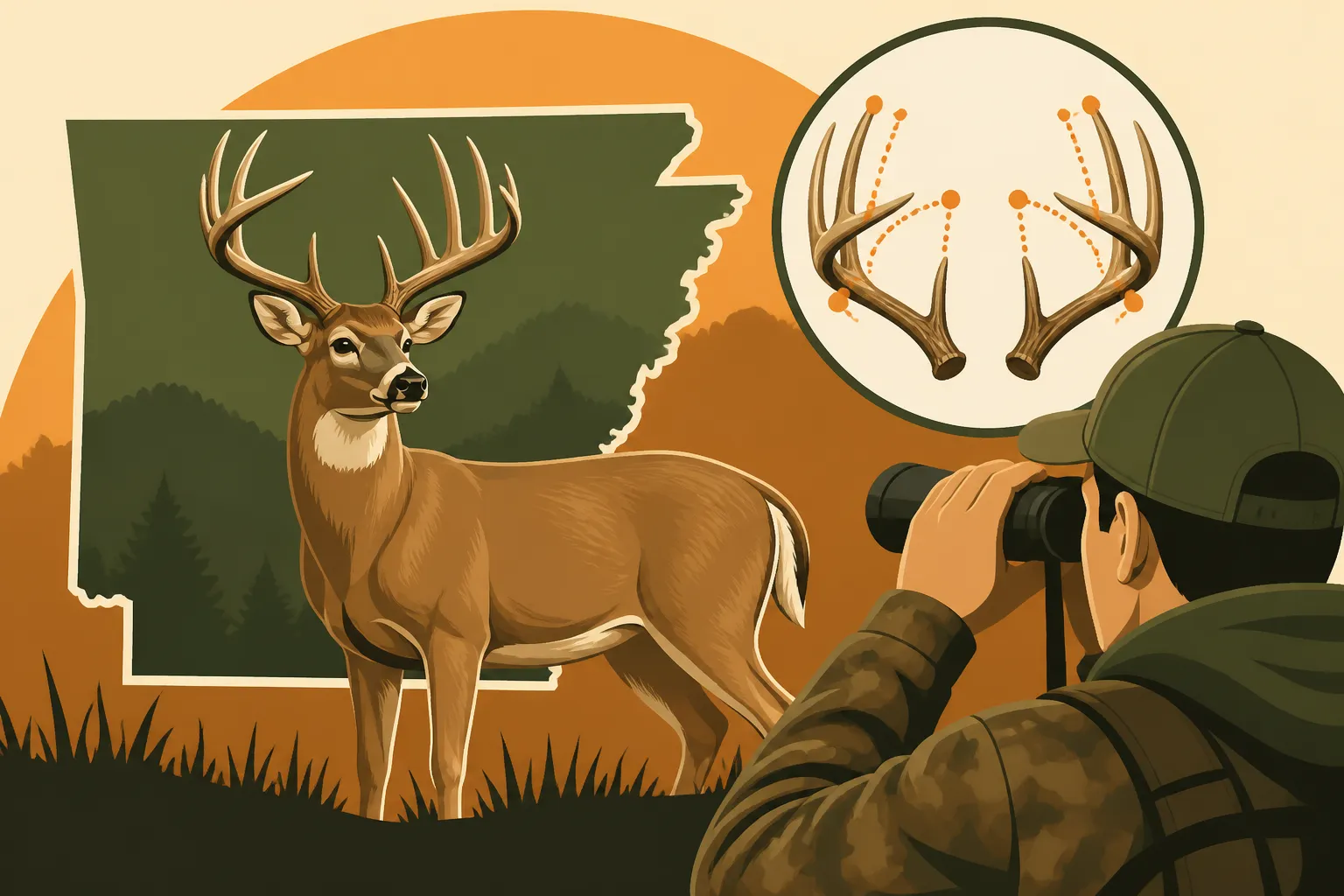
When you're looking at a buck, the easiest way to count points is to follow the main beam from the base up, identifying each individual projection. A buck might have a simple spike, a forked antler, or multiple tines branching off the main beam. Each distinct projection that meets that one-inch minimum is a point. For instance, a common "eight-point" buck (or 4×4) would have four points on each side: a brow tine (G1), a second point (G2), a third point (G3), and the tip of the main beam. Understanding this foundational rule is your first step to becoming a more accurate field judge.
Main Beam, Tines, and Abnormalities
Beyond simply counting projections, knowing the specific parts of an antler helps in a more precise assessment. The main beam is the central, curved portion of the antler from which all other points (or tines) typically grow. The length and sweep of the main beam are key indicators of a buck’s age and overall antler size. Often, the end of the main beam itself is considered a point if it's over an inch long.
The tines are the individual points that extend from the main beam. These are usually referred to as G1 (the brow tine, closest to the head), G2, G3, G4, and so on, moving up the beam. The spacing, length, and mass of these tines contribute significantly to the aesthetic and score of a buck. When you're trying to figure out if a buck meets certain criteria, like the three-point rule, you'll be focusing heavily on these tines.
Then there are abnormalities. These can include kickers, stickers, drop tines, or other non-typical projections that don't follow the symmetrical pattern of the main beam and its tines. For official scoring systems like Boone and Crockett or Pope and Young, abnormal points are measured separately and can impact a buck's "typical" or "non-typical" score. However, for regulatory purposes in Arkansas, as long as they meet the one-inch length requirement, they simply count as a point for whatever side they’re on. This distinction is vital when considering the regulations for a legal buck in Arkansas.
The Challenges of Field Judging a Live Buck
Let's be honest, seeing a buck in the wild isn't like looking at a picture in a magazine. It's often a chaotic, adrenaline-fueled moment where the deer might be moving, the light might be bad, and your heart is pounding out of your chest. These real-world factors make accurate field judging a significant challenge for even seasoned hunters.
Distance, Light, and Quick Encounters
The first and most obvious hurdle is distance. A buck at 200 yards looks completely different than one at 50 yards. Antler size, mass, and even the number of points can be distorted, making a small rack look bigger or obscuring details. What might seem like a solid G3 at a distance could resolve into a little nub when he gets closer. Similarly, light conditions play a huge role. Early morning or late evening hunts, while often productive, also present the worst light for judging. Shadows can hide points, make tines look shorter, or even create phantom points. A buck standing in dense cover or behind a brush pile offers only fleeting glimpses, and trying to count points on a moving target is nearly impossible.
Then there’s the quick encounter. Sometimes, you only get a few seconds to assess a buck before he bolts or dips into thick cover. In these high-pressure moments, "buck fever" is a very real phenomenon. Your hands might shake, your breathing becomes shallow, and your mind races. It’s incredibly frustrating to know you had a chance, but couldn't make a confident decision because you couldn't get a good read on his rack. This is where pre-hunt preparation and practiced judgment can really make a difference, allowing you to react instinctively and correctly.
The Impact of the Three-Point Rule in Arkansas
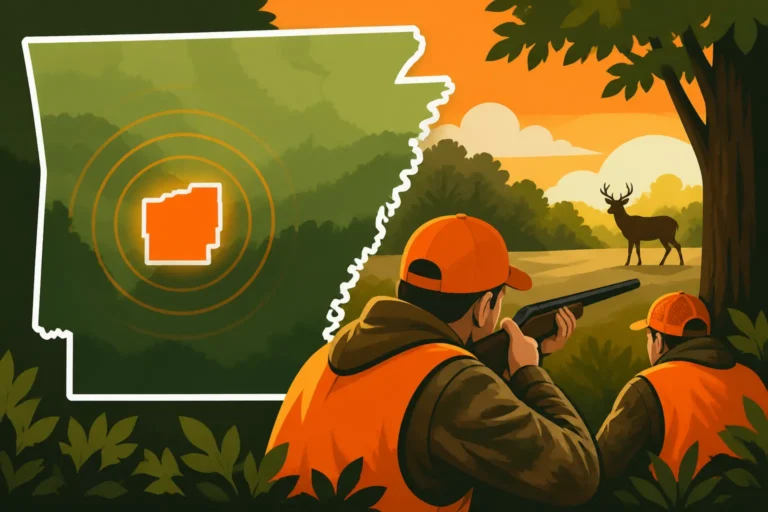
Arkansas has specific regulations that can add another layer of complexity to field judging, particularly in certain zones. The AGFC's "three-point rule" is a prime example. In zones where it applies, a legal buck must have at least one antler with three points, 1 inch or longer, or have a main beam measuring at least 15 inches in length. This means you're not just looking for "any legal buck"; you're looking for a buck that specifically meets one of these two criteria. This is different from some other states where brow tines might be excluded from point counts for regulations. In Arkansas, a brow tine (G1) that's an inch or longer counts towards that three-point minimum.
This rule shifts your focus. Instead of a general point count, you're scrutinizing one side specifically, or trying to eyeball a 15-inch main beam. Judging main beam length accurately in the field is incredibly difficult. You’re trying to visualize a straight line along a curve, often with no clear reference. This can lead to a lot of second-guessing. Knowing Which Arkansas Zone You Are Hunting is crucial, as these rules don't apply statewide. This added layer of regulation makes field judging in Arkansas a more demanding skill, requiring a keen eye and a clear understanding of the rules for your specific hunting zone. You might even use a tool like GoHunt to check specific WMA regulations or mapping overlays to confirm zone boundaries on the fly.
Practical Strategies for Accurate Field Judging
Overcoming the challenges of field judging requires more than just luck; it demands a systematic approach and a lot of practice. While you can't control every variable, you can control how you prepare and how you approach each sighting.
Systematic Point Counting Techniques
When you spot a buck, don't just stare aimlessly at the antlers hoping the points will magically appear. Develop a mental checklist and a systematic approach. Start with one side, usually the left side from your perspective. Begin at the base and methodically count each point along the main beam, ensuring it meets the one-inch minimum. Once you’ve counted the main beam tip, move to the other side and repeat. This structured approach helps ensure you don’t miss any points and minimizes double-counting.
It's crucial to look for the base of each point, not just the tip. Sometimes, a point might be broken or worn down, but if the base is clearly defined and extends at least an inch from the main beam, it still counts. Take your time, if the situation allows. Use your binoculars or a spotting scope to get a clearer view, even if it means sacrificing a few seconds. Rushing is the quickest way to make a mistake. Remember that Judging Points on a Standing Buck is a skill that improves with conscious effort.
| Antler Feature | AGFC Point Counting Rule (for "3 points on one side") | General Field Judging (overall score) |
|---|---|---|
| Main Beam Tip | Counts if 1 inch or longer. | Counts as a point. |
| Brow Tine (G1) | Counts if 1 inch or longer. | Counts as a typical point. |
| Normal Tines (G2, G3, G4) | Count if 1 inch or longer. | Count as typical points. |
| Abnormal Points (Kickera, Stickers, Drops) | Count if 1 inch or longer. | Count as non-typical points. |
| Bumps/Nubs | Do NOT count unless 1 inch or longer. | Do NOT count unless 1 inch or longer. |
Note: For the Arkansas "three points on one side" rule, any point (including brow tines and abnormal points) that is 1 inch or longer counts towards the three. The alternative is a 15-inch main beam.
Using Body Cues and Relative Comparisons
Beyond simply counting, seasoned hunters often use various body cues to help judge antler size, mass, and overall age. While not direct point counting, these cues can give you confidence in your assessment. A buck’s ear width is a common reference point. Most whitetail deer ears, from tip to tip, measure around 15-18 inches wide. If a buck's main beams extend significantly outside his ears, he likely has a good spread. This can be particularly helpful if you're trying to eyeball that 15-inch main beam rule or just assess overall antler width.
The mass of the antlers and the thickness of the buck's neck can indicate age. A young buck will have thin antlers and a slender neck, while a mature buck will often have thick, gnarly bases and a heavily muscled neck that blends seamlessly into his shoulders, especially during the rut. If you're on a public land hunt like in the Ouachita National Forest Hunting or scouting for Arkansas Deer Seasons and Zone Limits, understanding these subtle cues can help you quickly sort through younger bucks to identify truly mature animals. Also, compare the antler length to the buck's head. Does a G2 look longer than his ear? Does the main beam extend past his nose? These relative comparisons, while not perfect, offer valuable context.
Leverage Technology and Scouting for Confidence
Modern hunting offers incredible tools that can boost your field judging confidence long before you ever pull the trigger. Trail cameras are indispensable for pre-season scouting. By setting up cameras on food plots, pinch points, or known travel corridors, you can gather intelligence on specific bucks in your area. This allows you to study their unique antler characteristics, count points, and even get an idea of their typical movements, reducing the pressure during a live encounter. Imagine having countless photos of "that 8-point" from October, so when you see him in person, you're not guessing.
Mapping applications like GoHunt are another game-changer. These tools provide detailed topographical maps, satellite imagery, and often property boundary overlays. While they don't count points for you, they help you scout potential bedding areas, travel routes, and food sources where you're likely to encounter deer. Knowing the terrain inside out can help you anticipate where a buck might emerge, giving you precious extra seconds to observe him before he disappears. This preparation is key to Scouting Arkansas Public Land Before Season and gives you a much better chance at a confident shot when it counts. Familiarizing yourself with the deer in your hunting area through scouting and technology makes judging points in the moment much less daunting.
Ethical Considerations and Making the Shot
Ultimately, field judging a buck is not just about numbers; it's about making a responsible, ethical decision in the heat of the moment. The goal isn't just to harvest any deer, but to make a clean, legal kill that respects the animal and the regulations.
When in Doubt, Let Him Grow
This is perhaps the most important rule in ethical hunting. If you have any doubt about whether a buck meets the legal requirements for your zone or if you simply can't get a clear read on his antlers, let him walk. The consequences of an illegal harvest in Arkansas can be severe, ranging from hefty fines to loss of hunting privileges. More importantly, it's an ethical failing. No trophy or freezer full of meat is worth compromising your integrity as a hunter.
Promoting conservation means making responsible choices. Passing on a younger buck allows him to mature, potentially growing into an even larger trophy in future seasons. There will always be another deer, another opportunity. Many hunters have stories of passing on a buck, only to see him a year or two later with an even more impressive rack. Trust your gut, and if the picture isn't clear, wait for the next one. This mindset is crucial, especially when hunting during specific periods like The Three-Day Early Buck-Only Archery Hunt or late season hunts where legal antlerless deer might also be an option.
Practicing Your Eye for Antlers
Field judging isn't an innate talent; it's a learned skill that improves with practice and experience. The more time you spend observing deer, both in the wild and through various media, the better you'll become at quickly assessing their antlers. Start by watching any deer you see, even does or young bucks, and try to apply the point-counting techniques mentally. Look at hunting magazines, online forums, or even videos and try to count points and estimate size before reading the captions. You might even pick up some shed antlers to familiarize yourself with the feel and look of different point lengths.
Consider reviewing your trail camera photos and videos, practicing your judgment on known bucks. Even on non-hunting trips, if you see deer, take a moment to "score" them with your eye. This consistent effort will build your confidence and refine your judgment skills, making those critical in-the-moment decisions much easier. Whether you're hunting in the wide-open Delta or the thick Arkansas Pine Plantations, a well-practiced eye is your best tool. Remember, becoming a skilled hunter means being proficient in all aspects, and ethical, accurate field judging is definitely one of them.
Disclaimer
Always consult the latest Arkansas Game and Fish Commission regulations before heading into the field. Hunting laws and zone boundaries can change, and it is every hunter's responsibility to know and abide by current rules. This guide is for informational purposes only and should not replace official regulations.