Alligators and Other Arkansas Oddities
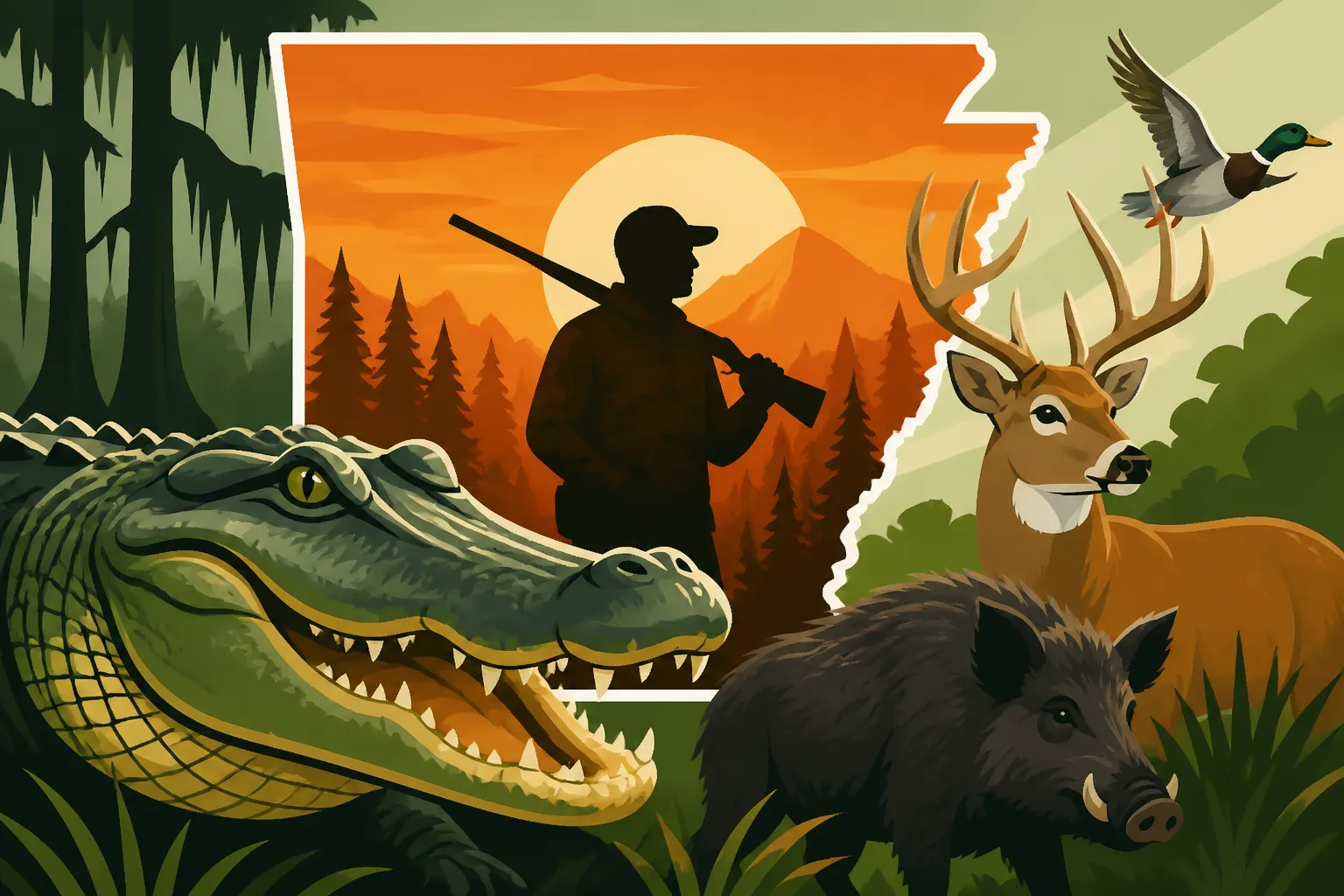
You know, living in Arkansas, most folks immediately think of whitetails, mallards, and turkeys when "hunting" comes up. And for good reason – our state offers some truly world-class opportunities for those iconic species. But if you’ve spent any real time wandering our wild places, especially in the deeper swamps or the remote corners of the Ozarks, you’ve probably stumbled upon something a little… unexpected. This guide is all about those captivating, sometimes startling, "oddities" of Arkansas's game species, offering a deep dive into the creatures that make our state truly unique, from ancient reptiles to elusive predators and persistent invasives.
The Resurgence of the Arkansas Alligator
It might surprise some, but yes, we have alligators in Arkansas! And not just a few. These prehistoric creatures are a testament to incredible conservation efforts and now offer one of the most unique hunting experiences you can imagine. It’s a far cry from stalking deer or calling ducks, let me tell you.
A History of Comeback: From Near Extinction to Regulated Harvest
Imagine a time when the "Arkansas Alligator" was almost a ghost story. Back in the early to mid-20th century, uncontrolled hunting and habitat destruction pushed American alligators across the entire Southeast, including Arkansas, to the brink of extinction. Their hides were prized, and their presence was often seen as a nuisance, leading to relentless persecution. Thankfully, a massive shift in conservation philosophy in the 1960s and 70s brought about federal and state protections. The Arkansas Game and Fish Commission (AGFC) played a crucial role, implementing strict protections and working to restore their habitats. It was a long, slow climb, but these incredible reptiles showed remarkable resilience.
Fast forward to today, and the alligator population in Arkansas has recovered so successfully that the AGFC has implemented a highly regulated, limited permit hunting season. This isn't just about sport; it's a carefully managed harvest designed to keep populations healthy and balanced while providing a thrilling opportunity for a select few hunters. It’s a remarkable turnaround, demonstrating what dedicated conservation efforts can achieve.
Where Alligators Roam: Habitat and Distribution in Arkansas
So, where exactly do you find these scaly giants in the Natural State? While you won't spot them in every creek or pond, alligators are primarily concentrated in the southern and eastern parts of Arkansas, especially in the Delta region. They thrive in slow-moving, warm waters rich with prey. Think cypress-lined swamps, oxbow lakes, bayous, and the backwaters of larger rivers like the Arkansas and Mississippi.
Places like the Felsenthal National Wildlife Refuge in south Arkansas are renowned alligator hotspots, as are many of the deeper sloughs and oxbows throughout Desha, Chicot, and Ashley counties. You might even find them further north in the Arkansas River Valley in some of the larger, more stagnant water bodies. They prefer areas with dense vegetation for cover and plenty of basking spots. If you're out fishing or exploring in these regions, keep a keen eye on the water's edge – you might just catch a glimpse of a pair of eyes breaking the surface.
Alligator Season: A Unique Hunting Opportunity
Hunting alligators in Arkansas is certainly not your typical affair. It's an experience that requires specialized permits, gear, and an entirely different set of skills. The season is short, typically in September, and permits are highly coveted, issued through a rigorous draw system. Only a limited number of tags are available each year, making it a true once-in-a-lifetime hunt for many.
The primary method for alligator hunting is spotlighting at night, using harpoons or snares to secure the animal before dispatching it with a firearm or bangstick. It’s a physical, intense experience, often conducted from a small boat in shallow, murky waters. Imagine the thrill of slowly navigating a dark swamp, your spotlight cutting through the blackness, searching for those telltale red eyes reflecting back at you. Once an alligator is located and brought to hand, the challenge then becomes safely and ethically dispatching it. It’s a hunt steeped in tradition and adrenaline, a true test of nerve and skill. For those interested in this unique pursuit, understanding the Arkansas Alligator Permit Draw process is the first critical step.
The Elusive and Often Misunderstood Mountain Lion
Ah, the mountain lion. Just the mention of it in Arkansas can spark a lively debate, often fueled by blurry trail camera photos, fleeting glimpses, and generations of local folklore. Are they here? Have they always been here? It’s a topic that fascinates and frustrates in equal measure.
Deciphering the Sightings: Fact Versus Fiction
For decades, reports of mountain lions, also known as cougars or pumas, have cropped up all over Arkansas, particularly in the rugged Ozark and Ouachita mountains. Local legends abound, with many folks swearing they’ve seen one cross a logging road or stalk deer on their property. The Arkansas Game and Fish Commission, however, has maintained for a long time that while transient mountain lions do occasionally pass through the state, there is no evidence of a breeding population. Most confirmed sightings by AGFC biologists involve either transient males, typically young animals dispersing from established populations in states like Oklahoma or Texas, or, more commonly, misidentifications of other animals.
It's easy to mistake a large bobcat, a coyote, or even a domestic dog for a mountain lion, especially in low light or at a distance. People often report seeing "black panthers" as well, a color phase that simply doesn't exist for mountain lions in North America, though it does for jaguars and leopards in other parts of the world. This persistent mystery is what makes discussing Mountain Lion Reports in Arkansas so captivating. The AGFC actively investigates credible reports, relying on solid evidence like tracks, scat, verified photos, or DNA samples. The fact remains that solid, undeniable proof of a resident, breeding population continues to be elusive.
Potential Transient Animals: Where Do They Come From?
So, if we don't have a resident population, how do these confirmed individual mountain lions end up in Arkansas? The most widely accepted theory is that they are young male cougars dispersing from established populations to our west, primarily Oklahoma and Texas. Mountain lions, especially males, have enormous home ranges and can travel hundreds, if not thousands, of miles in search of new territory, mates, or prey. It’s a natural part of their life cycle.
Imagine a young male cougar, pushed out of his birth territory by older, dominant males, embarking on an incredible journey across vast landscapes. Rivers, highways, and even developed areas are often no match for their determined wanderlust. These transient individuals might spend some time in Arkansas, preying on deer and other available game, before moving on, or sadly, succumbing to a vehicle collision or other misfortune. Their presence is a testament to the wildness that still exists in our state and the incredible resilience of these apex predators.
What to Do If You Encounter One
While the chances of encountering a mountain lion in Arkansas are exceedingly low, it's always wise to be prepared, especially if you spend a lot of time in the backcountry of the Ozarks or Ouachitas. Most wild animals, including mountain lions, want nothing to do with humans and will avoid you long before you ever know they were there.
If, by some extremely rare chance, you do find yourself face-to-face with what you believe is a mountain lion, the advice is similar to encountering a black bear or other large predator:
- Do not run. Running can trigger a chase response.
- Make yourself look as large as possible. Raise your arms, open your jacket, and stand tall.
- Make noise. Yell, clap your hands, or bang sticks together.
- Back away slowly. Maintain eye contact and give the animal an escape route.
- Protect small children and pets. Pick up small children immediately. Keep dogs on a leash and close to you.
- Fight back if attacked. Use any available means to defend yourself aggressively.
Most importantly, report any credible sightings to the AGFC immediately. Provide as much detail as possible, including date, time, location, and any physical evidence like tracks or photos. This information helps biologists track the movements of these fascinating, albeit rare, visitors to our state.
The Growing Challenge of Feral Hogs
If there’s one "oddity" that unites hunters, landowners, and conservationists in a collective groan, it’s the feral hog. These intelligent, prolific, and destructive animals have become a genuine plague across much of Arkansas, particularly in the southern and eastern agricultural and bottomland regions.
An Invasive Problem: Impact on Habitat and Wildlife
Feral hogs are not native to North America. They are descendants of domestic pigs brought over by European explorers centuries ago, mixed with wild Eurasian boars that have escaped and bred. In Arkansas, their populations have exploded, and their impact is devastating. They are ecological bulldozers, rooting up vast tracts of land in search of food. This rooting behavior destroys sensitive habitats, including wetlands, agricultural fields, and forest floors, leading to erosion and making it harder for native plants to grow. They compete directly with native wildlife like deer, turkeys, and bears for crucial food sources such as acorns.
Beyond habitat destruction, feral hogs are vectors for numerous diseases, including pseudorabies, brucellosis, and even E. coli, which can be transmitted to livestock, wildlife, and even humans. Their presence in CWD management zones is also a concern, as they can potentially spread the prion through soil disturbance. Farmers face significant crop damage, and property owners deal with torn-up yards and pastures. It's a relentless, costly battle that shows no signs of slowing down without aggressive intervention.
Shifting Management Strategies: From Hunting to Eradication
For many years, the primary approach to managing feral hogs was to encourage hunters to kill as many as possible. It was often seen as a fun, year-round hunting opportunity with no limits. However, wildlife biologists have realized that recreational hunting alone, while it can reduce local populations temporarily, often isn't effective for true population control or eradication. In fact, it can sometimes even spread hogs further as hunters chase them across property lines.
The AGFC, along with federal agencies like the USDA Wildlife Services, has shifted its focus to systematic eradication efforts, especially on public lands and in critical wildlife habitats. This often involves large-scale trapping operations where entire sounders (groups of hogs) are captured at once, as well as aerial gunning from helicopters. While hunters can still pursue feral hogs on private land with landowner permission, public land regulations have become much stricter regarding hog hunting to support these targeted eradication programs. Understanding Why Arkansas Restricted Feral Hog Hunting on many WMAs is key to recognizing the severity of the problem and the need for a more strategic approach. The goal now is not just to "hunt" them, but to eliminate them from as much of the landscape as possible.
The Role of Technology and Cooperation
Combating the feral hog problem requires a multi-pronged approach, heavily relying on advanced techniques and strong cooperation among landowners, state agencies, and federal partners. Trapping has become incredibly sophisticated, utilizing large, remotely triggered corral traps equipped with cellular cameras. These systems allow managers to monitor hog activity, wait for an entire sounder to enter the trap, and then trigger the gate from a smartphone. This method is far more effective than individual hunting for removing significant numbers of hogs.
Aerial gunning, typically conducted from helicopters, is another powerful tool for covering large, inaccessible areas quickly and efficiently. This method is often employed after crops have been harvested or in areas where trapping is difficult. Education and outreach are also crucial, informing landowners about best practices for hog control and encouraging them to report sightings and collaborate on eradication efforts. Resources like GoHunt can provide useful mapping and landowner contact information, helping coordinate these efforts effectively. The fight against feral hogs is an ongoing war, but with these combined strategies, Arkansas hopes to gain the upper hand.
Beyond the Big Game: Other Intriguing Species
Arkansas is a treasure trove of biodiversity, and while deer, ducks, and turkeys command much of the hunting spotlight, there's a whole cast of supporting characters that add to the state's wild allure. Some are native, some are introduced, but all contribute to the rich tapestry of Arkansas's ecosystems.
The Unmistakable Armadillo: An Introduced Species
If you’ve driven any of the country roads in Arkansas, you've almost certainly seen the distinctive, armored body of a nine-banded armadillo. These unique mammals, originally native to South America, have steadily expanded their range northward over the last century, thriving in the warm, humid climate of the southern United States. They're often seen rooting around in lawns and fields, digging for insects, grubs, and worms with their long snouts and powerful claws.
Armadillos are truly oddities; they are the only surviving armored mammals and have a peculiar reproductive habit of always giving birth to genetically identical quadruplets. While generally harmless, they can be a nuisance for homeowners due to their digging, and they are one of the few wild animals that can naturally carry the bacteria that causes leprosy, although transmission to humans is rare. They are not typically hunted for sport or meat in Arkansas, but their pervasive presence makes them a quintessential part of our state's "other" wildlife.
Nutria: The Marsh Destroyers of the Delta
Deep in the wetlands and bayous of the Arkansas Delta, another introduced species poses a significant threat: the nutria. These large, semi-aquatic rodents, resembling enormous rats with orange incisors and round tails, were originally brought to the U.S. for their fur. Like many such introductions, they escaped captivity and quickly established thriving wild populations. Nutria are voracious vegetarians, capable of consuming vast amounts of wetland vegetation.
Their insatiable appetite for the roots and stems of marsh plants can lead to severe "eat-outs," where entire acres of marshland are denuded. This destroys critical habitat for native waterfowl, fish, and other wetland species, accelerating erosion and turning vibrant marshes into open water. Controlling Armadillo and Nutria Spread in the Delta is an ongoing challenge for wildlife managers, as their populations are difficult to suppress, and they reproduce rapidly. While not a game species in the traditional sense, understanding their impact is crucial for anyone with an interest in the health of our state's precious wetland ecosystems.
Eurasian Collared Doves: A Newcomer on the Landscape
The sound of a cooing dove is familiar to any Arkansan, but increasingly, that coo might be coming from a Eurasian collared dove rather than our native mourning dove. These non-native doves, identifiable by their slightly larger size, lighter coloration, and a distinctive black half-collar on the nape of their neck, have rapidly spread across North America since their introduction in Florida in the 1980s.
They are incredibly adaptable and can be found almost anywhere, from urban backyards to agricultural fields. While there's ongoing debate about their precise impact, they often compete with mourning doves for food and nesting sites. However, unlike mourning doves, which have strict season and bag limits, Eurasian collared doves are not protected in Arkansas and can be harvested year-round with no daily or possession limit. This provides a unique and often unexpected hunting opportunity for those looking to hone their wing-shooting skills outside of traditional dove season. Their rapid expansion is a fascinating ecological phenomenon, and they've certainly become a permanent fixture on the Arkansas landscape, adding another layer to the story of Eurasian Collared Doves in Arkansas.
The Ghost of the Ivory-Bill: Myth, Hope, and Reality
No discussion of Arkansas's wildlife oddities would be complete without acknowledging the most famous (or infamous) feathered phantom of all: the Ivory-billed Woodpecker. The "Lord God Bird," as it's sometimes called, holds a mythical status, representing both the tragic loss of a magnificent species and the enduring hope of its survival.
The Elusive Search: A Century of Sightings and Debates
For decades, the Ivory-billed Woodpecker has been officially considered extinct or critically endangered, with the last universally accepted sighting in Louisiana in the 1940s. Yet, its legend persists, fueled by tantalizing, unconfirmed sightings and faint whispers from the deepest, most remote bottomland hardwood swamps of Arkansas and elsewhere in the Southeast. The Cache River National Wildlife Refuge in Eastern Arkansas became the epicenter of a renewed search in the early 2000s after a credible, albeit controversial, sighting was reported. This sparked a massive, multi-agency effort, deploying cutting-edge technology and legions of dedicated birders and scientists into the dense, mosquito-ridden swamps.
The debates have been passionate, sometimes even fierce, between those who believe the bird still exists, citing grainy photos, distinctive calls, and brief glimpses, and those who argue that the evidence falls short of scientific certainty. Regardless of where you stand, the story of the Ivory-Billed Woodpecker Reports in Arkansas is a powerful one, highlighting the beauty and mystery of our wilderness and the human desire to rediscover what we fear is lost forever. It's a tale woven into the fabric of Arkansas's natural history, a testament to the wild heart of our delta.
What If It Exists? Implications for Conservation
Imagine the earth-shattering news: conclusive, undeniable proof that the Ivory-billed Woodpecker still lives in the wild swamps of Arkansas. The implications for conservation would be monumental, unlike anything seen in decades. Such a rediscovery would immediately thrust the remaining habitat of the bird into the global spotlight, leading to unprecedented protection measures. Vast tracts of bottomland hardwoods, already vital for migratory waterfowl and other wildlife, would likely receive enhanced conservation status, potentially impacting everything from logging practices to water management in the Delta.
It would reinvigorate public interest in conservation, demonstrating that even species thought lost can be brought back from the brink, given enough time and untouched wilderness. However, it would also present immense challenges. Managing such an incredibly rare and sensitive species would be a delicate balancing act, requiring careful control of access, minimal disturbance, and potentially vast new funding for habitat acquisition and restoration. The hope for the ivory-bill’s survival serves as a powerful reminder of the irreplaceable value of our wild places and why we must protect them, even for species we may never personally see.
Understanding Protected Species and Regulations
As hunters, our responsibility extends far beyond just knowing seasons and bag limits for common game. It’s absolutely crucial to understand the full spectrum of wildlife in Arkansas, especially those species that are protected. Encountering an "oddity" in the wild can be exciting, but misidentification or ignorance can lead to serious consequences, both for the individual and for conservation efforts.
Knowing What You Can't Hunt: A Critical Responsibility
Arkansas is home to a diverse array of wildlife, and not all of it is fair game. Many species, from migratory songbirds to certain reptiles, amphibians, and mammals, are protected by state and federal laws. Some might look similar to huntable species, creating a potential for error. For example, while hunting for common ducks is popular, identifying protected species like the Tundra Swan or certain types of egrets and herons is vital. Similarly, while we have an alligator season, mistakenly harming one outside of that specific, permitted timeframe is illegal.
Always take the time to familiarize yourself with the full list of Protected Species in Arkansas Hunting Country. This isn't just about avoiding a fine; it’s about upholding the ethics of conservation and respecting the biodiversity of our state. Every hunter has a role to play in protecting vulnerable populations, ensuring that our ecosystems remain healthy and vibrant for future generations. If you’re ever unsure about the identity of a creature, err on the side of caution and observe from a distance.
The Importance of Reporting and Conservation Ethics
Active participation in conservation goes beyond buying licenses and following rules; it includes vigilance and reporting. If you witness a wildlife violation, such as poaching or illegal harvest of a protected species, reporting it to the AGFC is an essential part of being a responsible outdoors enthusiast. Similarly, reporting unusual sightings of rare animals, like a potential mountain lion, or sick animals, can provide critical data to biologists and help in disease monitoring, such as for Chronic Wasting Disease (CWD).
Digital tools, including those found on platforms like GoHunt, can often provide easy access to reporting mechanisms or up-to-date regulations that help you stay informed. A hunter's ethical compass should always point towards respect for wildlife, responsible stewardship of natural resources, and a commitment to upholding the laws designed to protect them. The "oddities" of Arkansas are a vital part of our natural heritage, and understanding their place in the ecosystem, whether they are huntable or protected, is a testament to the true spirit of conservation.
Unique Arkansas Game Species Characteristics
To help clarify some of the unique aspects of Arkansas's wildlife oddities and their interaction with hunting and conservation, here's a comparative overview:
| Species | Status in Arkansas | Primary Habitat | Key Impact/Behavior | Hunting Opportunity (if any) | Management Strategy |
|---|---|---|---|---|---|
| American Alligator | Native, Recovered | Southern/Eastern swamps, oxbows, slow rivers | Apex predator, critical to wetland health | Limited draw permit, specialized night hunting | Regulated harvest, habitat protection |
| Mountain Lion | Transient (no breeding) | Remote Ozark/Ouachita forests | Apex predator (rare visitor) | None (federally protected, no open season) | Monitoring sightings, public education |
| Feral Hog | Introduced, Invasive | Widespread, especially Delta, bottomlands | Habitat destruction, crop damage, disease vector | Private land (unlimited), restricted on public lands | Eradication (trapping, aerial gunning) |
| Nine-Banded Armadillo | Introduced, Expanding | Widespread, diverse habitats | Insectivore, digging, occasional nuisance | None (not a game species) | N/A (generally tolerated) |
| Nutria | Introduced, Invasive | Delta wetlands, marshes, bayous | Marsh destruction (eat-outs), erosion | None (not a game species), encouraged removal by landowners | Trapping, some targeted removal programs |
| Eurasian Collared Dove | Introduced, Expanding | Widespread, urban to rural | Competitor with native doves, highly adaptable | Unlimited, year-round (no bag/season limits) | Encourage harvest due to invasive status |
| Ivory-billed Woodpecker | Presumed Extinct/Critically Endangered | Deep bottomland hardwoods (Cache River area) | Unique ecological role (if present) | None (strictly protected) | Habitat protection, ongoing (controversial) search |
This table highlights just how varied and interesting the "other" side of Arkansas wildlife can be, showing the different ways we interact with and manage these fascinating creatures.
Disclaimer
Please remember that hunting regulations, seasons, and wildlife statuses can change. Always consult the latest official Arkansas Game and Fish Commission (AGFC) regulations before engaging in any hunting activities. This guide is for informational purposes only and does not supersede official legal requirements. Be safe, be ethical, and happy hunting!