Arkansas Modern Gun Deer Hunting
There's a special kind of anticipation that builds when modern gun season opens in Arkansas. After months of scouting, planning, and waiting, the roar of a rifle or shotgun signals the moment many hunters have been dreaming of. But let's be real, simply showing up with a firearm isn't enough to consistently tag a deer in this diverse state. From the rugged Ozark mountains to the sprawling Delta lowlands, Arkansas presents a unique set of challenges and opportunities for the modern gun hunter, requiring a deep understanding of regulations, terrain, and deer behavior. This guide is here to walk you through everything you need to know to make your next modern gun deer hunt a success.
Understanding Arkansas Modern Gun Deer Seasons
Modern gun season is arguably the most popular time to hunt deer in Arkansas, drawing the largest crowds and often providing some of the best opportunities for harvest. However, it's not a monolithic block of time; it's a carefully structured set of dates and rules designed to manage the deer population across the state's varied landscape. Simply put, knowing when you can hunt with a modern firearm is only the first step.
Key Season Dates and Splits
Arkansas's modern gun deer season typically kicks off in November, often aligning with the peak of the rut in many parts of the state, especially the northern and central zones. This is prime time, as deer are actively moving, chasing, and vulnerable to hunters. However, it's not just one continuous period. The season is often split, allowing for different hunting pressures and catering to various hunting traditions. For instance, there's usually a main modern gun season, followed by special youth hunts and often a late-season "Christmas" hunt that extends into late December. Each of these periods has its own nuances, from specific dates to whether it's antlered-only or includes antlerless opportunities.
For example, the general modern gun season might run for about nine days in mid-November across many zones, giving hunters a solid window during peak rut activity. Then, typically after a short break, the youth modern gun hunt will often take place over a weekend, providing a dedicated, less pressured experience for our younger hunters. Finally, many zones will reopen for a "Christmas Modern Gun Days" hunt, usually around the end of December, which can be fantastic if you're looking to fill antlerless tags or if a late rut phase kicks in. It's absolutely crucial to check the current Arkansas Game and Fish Commission (AGFC) regulations booklet or their website every year, as these dates can shift slightly based on calendar alignment and management objectives. Missing a key date or misunderstanding a season split could lead to a disappointing—or even illegal—hunt.
Navigating Deer Zones and Bag Limits
Arkansas is not a one-size-fits-all hunting state, and nowhere is that clearer than with its deer zones and corresponding bag limits. The state is divided into multiple deer zones, each with its own management strategy, affecting everything from season length to the number of deer you can harvest. This system exists because deer populations, habitat quality, and hunter pressure vary wildly between, say, the heavily forested Ozarks and the agricultural fields of the Delta. You can take a deep dive into the specifics of Arkansas Deer Zones Explained to truly grasp the complexity.
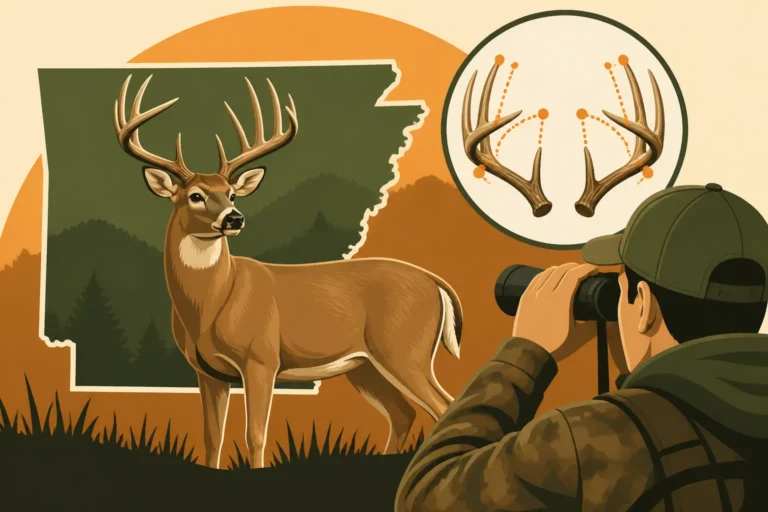
For modern gun hunters, understanding your specific zone is paramount. Some zones might have a more restrictive three-point rule, meaning a legal buck must have at least three points on one antler (excluding the brow tine), while others might have a more general antlered buck requirement. Antlerless harvest opportunities also differ significantly. In agricultural areas with higher deer densities, antlerless tags are often more plentiful, encouraging hunters to help manage the population. Conversely, in regions where deer numbers are lower or growth is prioritized, antlerless harvest might be severely restricted or even closed. For example, a hunter in Zone 16 (often a Delta zone) might have a higher antlerless limit than a hunter in Zone 2 (a central Ozark zone). Always confirm your zone boundary—using a mapping app like GoHunt can be incredibly helpful for this—and then consult the specific regulations for that zone regarding antlered and antlerless bag limits before heading afield. It’s easy to get caught up in the excitement, but a quick check can save a lot of heartache.
Special Considerations for WMAs and CWD Zones
Hunting on Wildlife Management Areas (WMAs) and within Chronic Wasting Disease (CWD) management zones introduces additional layers of rules and restrictions for modern gun hunters. These areas are managed intensively by the AGFC, and while they offer fantastic public hunting opportunities, they often come with their own unique set of regulations that supersede general statewide rules.
Many WMAs, especially those popular for deer, have specific permit requirements or even draw hunts during modern gun season. This is done to control hunter density and ensure a quality experience while also managing the deer herd effectively. You might need to apply for a WMA deer permit well in advance, and failure to do so could mean you're ineligible to hunt that specific area. Beyond permits, WMAs often have different check-in/check-out procedures, vehicle restrictions, and even specific weapon limitations. It's not uncommon for some WMAs to restrict modern gun hunting to shotguns with slugs or muzzleloaders, even during the statewide modern gun season, to reduce shooting distances and increase safety in densely hunted areas.
Then there's the critical issue of CWD. Arkansas has designated CWD Management Zones where the disease has been detected, primarily concentrated in parts of the Ozarks. Hunting in these zones comes with strict regulations regarding carcass transport, feeding/baiting, and sometimes mandatory CWD testing of harvested deer. For instance, you might not be allowed to transport certain parts of a harvested deer out of a CWD zone, and baiting, which is generally legal on private land outside CWD zones, is strictly prohibited within them. Understanding Arkansas CWD Rules and Carcass Transport is not just about compliance; it's about being a responsible hunter and helping prevent the spread of a devastating disease. Before you step foot in the woods, use the AGFC's interactive maps or a reliable mapping app like GoHunt to confirm if your hunting area falls within a CWD zone and familiarize yourself with all the specific rules that apply.
Effective Modern Gun Tactics on Public Land
Hunting public land in Arkansas during modern gun season can be a truly rewarding experience, but it’s rarely easy. With increased hunter pressure and diverse terrain, success often hinges on careful planning, strategic movement, and a willingness to work harder than the next hunter. For a broader overview, check out Modern Gun Tactics on Arkansas Public Land.
Scouting and Locating Pressure-Free Zones
The biggest challenge on public land during modern gun season is undoubtedly hunter pressure. Deer quickly learn to avoid areas with heavy human activity, moving into thicker cover or going nocturnal. This means your pre-season scouting is more critical than ever. Don't just look for deer sign; look for access points and potential pressure points. Use aerial imagery and topographic maps (available through tools like GoHunt) to identify areas that are difficult to access, far from roads, or hidden behind natural barriers like steep ridges, swamps, or dense briar thickets. These are your pressure-free zones, and they're often where the mature deer retreat.
Once you identify these potential havens, put boots on the ground long before the season. Look for fresh deer sign—tracks, rubs, scrapes, and droppings—in these remote spots. Pay close attention to transition areas where different types of cover meet, like where a pine plantation gives way to a hardwood bottom or where a thick clearcut borders a mature timber stand. Deer often use these edges for travel, especially when pressured. Remember, deer might be using entirely different patterns during hunting season than they did in the summer. They'll be more nocturnal and move through the thickest cover they can find during daylight hours. Finding these sanctuaries and the subtle travel corridors leading to them is key to encountering deer that haven't been pushed out.
Still-Hunting and Stand Placement Strategies
Modern gun hunting isn't just about sitting in a blind. Still-hunting, a slow and deliberate method of moving through the woods, can be incredibly effective, especially after the initial opening day pressure pushes deer into less accessible areas. When still-hunting, move against the wind, taking one or two steps, then stopping to scan thoroughly. Use binoculars to pick apart dense cover, looking for horizontal lines of a deer's back or leg amidst the vertical trees. Focus on thickets, creek bottoms, and the leeside of ridges where deer will seek refuge from the wind and other hunters. The key is to be constantly aware of your surroundings, listen for subtle sounds, and be ready to stop and shoot at a moment's notice.
For stand placement, think about escape routes and travel corridors away from human activity. Instead of setting up right on a major trail you found in August, consider where deer will go after they've been bumped by other hunters. This might mean setting up along a thick creek bottom, a hidden saddle between two ridges, or on the edge of a dense bedding area where deer will stage before dark. Often, the best stand locations on public land are those that require a significant hike or cross difficult terrain. When placing a stand, think about the wind direction for your chosen spot, your approach and exit routes, and how to minimize your scent and noise. A well-placed treestand or ground blind in a secluded area can offer a fantastic opportunity, especially during mid-day when most other hunters are taking a break. You can read more about specific stand tactics in posts like Hanging a Stand in Bottomland Hardwoods or Reading an Ozark Bench for Deer.
Utilizing Topography and Natural Funnels
Arkansas's diverse topography, from the rolling hills of the Ouachitas to the flat agricultural fields of the Delta, offers unique advantages for modern gun hunters. Understanding how deer use the landscape can greatly increase your odds. In mountainous or hilly terrain, deer often follow the path of least resistance. Look for saddles (low points in a ridge), benches (flat areas along a slope), and points (protrusions from a ridge) as natural travel corridors. Deer will often move across a saddle to avoid climbing a steep peak, or use a bench to traverse a hillside without exposing themselves on the ridgetop or in the valley. Creek and river bottoms also serve as highways, offering cover and water.
In the flatter Delta regions, natural funnels might be less about elevation changes and more about changes in vegetation or water features. Strips of timber between agricultural fields, levees, drainage ditches, and patches of dense cover like cane thickets or flooded timber all act as funnels. Deer will use these features to move from bedding areas to food sources while staying hidden. Using an app like GoHunt to study satellite imagery and topographic maps can help you identify these subtle features before you even step foot in the woods. Pay attention to how wind and thermals interact with these features; in hilly country, thermals often rise in the morning and fall in the evening, affecting how your scent carries. Always try to position yourself so your scent is blowing away from where you expect deer to approach.
Hunting Private Land with Modern Firearms
While public land offers a challenge, hunting private land in Arkansas with a modern firearm brings its own set of considerations, often revolving around maximizing the potential of limited acreage, managing relationships, and ensuring safety in potentially close quarters. Acquiring Getting Private Land Permission in Arkansas can be a game-changer.
Gaining Access and Building Relationships
Access to quality private land is often the golden ticket for modern gun hunters. Many of the state's largest bucks and highest deer densities are found on private agricultural lands in the Delta or managed timberlands elsewhere. Gaining access usually starts with respectful communication and building a relationship with landowners. This means knocking on doors, introducing yourself, and offering to help out with chores or property maintenance in exchange for hunting privileges. Always present yourself professionally, explain your intentions clearly, and assure them of your commitment to safety and respect for their property.
Once you have permission, maintaining that relationship is crucial. This could involve sharing game camera photos, offering to help with planting food plots, mending fences, or even just leaving a gift card at the end of the season. Remember, you are a guest on their land, and your actions reflect not only on you but on all hunters. Respect property boundaries (especially important when using an app like GoHunt to verify lines), leave no trash, and always communicate your hunting plans. Never take permission for granted, and continuously demonstrate that you are a responsible and trustworthy individual. This long-term approach will open more doors than a one-time request.
Utilizing Food Plots and Agricultural Fields
Private lands, particularly in the agricultural heartland of Arkansas, often feature meticulously maintained food plots and sprawling crop fields. For the modern gun hunter, these are absolute magnets for deer, especially as natural food sources diminish later in the fall. During modern gun season, deer will readily visit fields of corn, soybeans, winter wheat, clover, and brassicas. The key is to understand when and how they use these fields.
Deer are often more nocturnal around open fields when hunting pressure is high. This means focusing your efforts on the transition periods: dawn and dusk. Set up your stand or blind on the edge of the field where it meets dense cover, paying close attention to the wind direction. Identify entry and exit points deer use to move from their bedding areas into the fields. Look for trails that lead directly into the crops or along brushy fence lines. During the mid-day, deer might still be found browsing smaller, secluded food plots or staging in dense cover just inside the woods before venturing into larger fields. Consider using ground blinds brushed into natural cover along field edges, as they provide excellent concealment and can be comfortable for long sits.
Strategic Stand Placement on Private Holdings
Even on private land with exclusive access, strategic stand placement is paramount. You might have the luxury of knowing where deer are, but you still need to get a shot. Unlike public land where you're looking for areas away from people, on private land, you're often looking for areas between bedding and feeding, or along rut-specific travel corridors. If you have multiple hunters, coordinate stand locations to push deer towards each other naturally, or to cover different travel routes.
Think about pinch points—narrow strips of cover, fences, or ditches that funnel deer movement into a predictable path. A stand overlooking a creek crossing or a gate in a fence line can be incredibly effective. Consider the impact of food sources: if deer are hammering a particular oak flat, position yourself downwind of it. If you're hunting during the rut, focus on areas where bucks will cruise for does, such as along thick creek banks, ridge lines, or the edges of dense bedding areas. Using a mobile treestand, especially one that's easy to set up and take down, allows you to adapt to changing deer patterns and shift your strategy as the season progresses. Always have multiple stand options based on wind direction to ensure you can hunt your best spots effectively without blowing out the area.
Essential Gear and Preparation for Modern Gun Hunting
Stepping into the woods for modern gun season isn't just about grabbing your rifle and heading out. Proper gear and preparation are critical for safety, comfort, and success, especially when considering Arkansas's varied weather conditions and terrain.
Choosing the Right Firearm and Ammunition
The "modern gun" designation in Arkansas is quite broad, typically encompassing rifles, shotguns with slugs, and handguns. Deciding which firearm to bring often depends on personal preference, comfort level, and the specific terrain you'll be hunting. For longer shots across clearings or fields, a rifle chambered in a common deer cartridge like .270, .30-06, .308, or 6.5 Creedmoor is an excellent choice. These calibers offer flat trajectories and sufficient energy for clean kills at extended ranges. Ensure your rifle is sighted in accurately, not just at 100 yards, but know your bullet drop out to 200 or 300 yards if you anticipate those longer shots.
For dense cover, thick timber, or WMAs with shotgun-only restrictions, a shotgun firing slugs is the way to go. Modern sabot slugs fired from a rifled barrel can be surprisingly accurate out to 150 yards or more, offering significant stopping power. Handguns, while legal, are typically reserved for experienced handgun hunters due to the added challenge of accuracy and effective range. Regardless of your choice, select ammunition designed for deer hunting. Expanding bullets that mushroom upon impact are crucial for quick, humane kills. Practice extensively with your chosen firearm and ammunition before the season to ensure you're confident in your accuracy and handling. You can learn more about Legal Firearms for Arkansas Deer in depth.
| Firearm Type | Best Use Case | Typical Effective Range | Common Calibers/Gauges |
|---|---|---|---|
| Rifle | Open fields, longer shots, varied terrain | 100 – 300+ yards | .270, .30-06, .308, 6.5 Creedmoor, 7mm-08 |
| Shotgun (Slugs) | Dense timber, short to medium range, WMA restrictions | 50 – 150 yards | 12 Gauge, 20 Gauge |
| Handgun | Close-quarters, experienced handgun hunters only | 25 – 75 yards | .44 Magnum, .357 Magnum, 10mm Auto |
Optics, Clothing, and Safety Gear
Beyond the firearm itself, reliable optics, appropriate clothing, and essential safety gear can make or break your modern gun hunt. A good quality scope on your rifle is non-negotiable, providing clarity and light-gathering capability in low-light conditions. Binoculars are equally important for scanning distant fields or picking apart dense cover without moving your head, which can spook wary deer.
Layered clothing is key in Arkansas, where a November morning can start below freezing and warm up considerably by midday. Opt for moisture-wicking base layers, insulating mid-layers, and a quiet, waterproof/windproof outer shell. Hunter orange is a legal requirement during modern gun season for safety, often requiring a minimum amount visible from all directions. Don't skimp on this; visibility can save lives, especially on crowded public lands. Always wear sturdy, waterproof boots suitable for hiking long distances over uneven terrain, and bring a comfortable backpack to carry essentials.
Your safety gear checklist should include a first-aid kit, a reliable knife, a headlamp or flashlight (with extra batteries), a compass or GPS device (many hunters rely on their GoHunt app for this), and a way to communicate in case of emergency (fully charged phone, satellite messenger if in remote areas). If you're using a treestand, a full-body harness is non-negotiable—falls are a leading cause of hunting injuries. Being prepared not only keeps you safe but also allows you to focus on the hunt. For a comprehensive look at safety, consider Arkansas Hunter Education and Safety Rules.
Scouting Tools and Technology
Modern gun hunting in Arkansas has been revolutionized by technology. While traditional scouting methods will always be important, tools like mapping applications, trail cameras, and even weather apps can provide a significant edge. Mapping apps, such as GoHunt, are invaluable. They offer detailed satellite imagery, topographical maps, property boundaries (crucial for distinguishing public from private land), and GPS tracking, allowing you to mark stands, rubs, scrapes, and other sign. Using these apps before the season helps you identify potential bedding areas, food sources, and travel corridors, and helps you navigate confidently in the field, even in unfamiliar territory.
Trail cameras, strategically placed along known trails, pinch points, or near food sources, can provide real-time intelligence on deer movement patterns, preferred travel times, and even specific bucks in the area. Checking them regularly (but sparingly to avoid disturbing the area) helps you adapt your strategy. Weather apps and websites are essential for tracking wind direction and thermals, both critical factors for scent control. Monitoring barometric pressure and upcoming fronts can also give you insight into when deer might be more active. Incorporating these technologies into your hunting strategy allows for more informed decisions and can significantly increase your chances of success during the challenging modern gun season.
Shot Placement, Tracking, and Ethical Recovery
The moment of truth in modern gun hunting is when you take the shot. Making a clean, ethical kill is every hunter's primary responsibility, followed by diligent tracking and recovery of the animal.
Precision Shot Placement for Clean Kills
When a deer presents a shot opportunity, your goal is a quick, humane kill. For modern firearms, the most effective shot placement is almost always the "boiler room"—the lung and heart area. This typically involves aiming just behind the shoulder, slightly low on the body for a broadside shot. This area offers a large, vital target and minimizes the chance of hitting non-vital organs or wounding the deer. A well-placed shot here will sever major arteries and veins, causing rapid blood loss and incapacitation.
Practice is key to consistent accuracy, especially under pressure. Understand your rifle's zero and how bullet trajectory changes at different ranges. Avoid "Texas heart shots" (shooting at the rear of a deer running away) or high shoulder shots unless you are absolutely confident in your ability to hit the spine. These can lead to wounded animals and long, difficult tracking jobs. If a deer is quartering away, aim to penetrate the vitals while minimizing meat damage, usually by aiming for the opposite shoulder. If the deer is quartering towards you, it's generally best to wait for a better angle, as the front shoulder bone can deflect a bullet and an ethical shot to the vitals is more challenging. Patience and discipline to wait for the right shot are hallmarks of an ethical hunter.
Tracking a Deer After the Shot
Even with a perfect shot, a deer often runs a short distance. Tracking the animal after the shot is a critical skill that requires patience and a keen eye. After taking a shot, observe the deer's reaction. Did it mule kick? Hump its back? Run off steadily or stumble? Note the direction it ran and any landmarks in the area. Then, resist the urge to immediately rush in. Give the deer 15-30 minutes, or even longer if you suspect a gut shot, to lie down and expire. Pushing a wounded deer too soon can make it run farther and harder, making recovery much more difficult.
Once you approach the shot site, carefully look for signs: blood, hair, bone fragments, or disturbed earth. A good blood trail is your best friend. Note the color (bright red and foamy suggests lung, dark red indicates muscle, greenish-brown with stomach contents indicates a gut shot), quantity, and consistency of the blood. If the blood trail is sparse or disappears, slow down. Get on your hands and knees if necessary. Look for subtle signs like disturbed leaves, bent grass, or drops of blood on the underside of leaves or bushes. If you lose the trail, grid search the area in the direction the deer was last seen. If tracking conditions are poor (minimal blood, rain, or darkness setting in), consider backing out and returning in the morning with fresh eyes and potentially a tracking dog, if allowed in your area. Blood Trailing After Dark in Arkansas can be especially challenging, so preparation is key.
Ethical Recovery and Reporting Requirements
Successfully recovering your deer is the culmination of the hunt, and it comes with specific responsibilities in Arkansas. Once you find your deer, immediately validate your tag, as required by AGFC regulations. Then, you'll need to check your deer. Arkansas offers several convenient ways to do this, including online through the AGFC website or via their mobile app. You'll need to provide details like the date, time, zone, and sex of the deer. This step is crucial for wildlife management, as it provides the AGFC with data on harvest rates and population trends.
Field dressing should be done promptly to begin cooling the meat, especially if temperatures are mild, which can often be the case during Arkansas's early modern gun season. If you're hunting in warm weather, getting the guts out quickly is paramount to preserving the meat. Consider what you need to do to get the deer out of the woods. This could involve quartering the animal, dragging it, or using a game cart. Remember to respect private property boundaries if your deer crosses onto land where you don't have permission; you will need to seek permission to retrieve it. Ethical recovery extends beyond the shot—it's about ensuring the animal is treated with respect and that all legal requirements are met. Take a look at Field Dressing in Arkansas Heat for more specific advice.
Post-Harvest Regulations and Best Practices
Harvesting a deer is a big moment, but the hunt isn't truly over until you've properly checked, processed, and respected the animal in accordance with Arkansas regulations. This includes everything from tagging and checking to proper carcass handling and meat processing.
Checking and Tagging Your Harvest
In Arkansas, once you've successfully harvested a deer, the first step is to immediately validate your deer tag. This typically means noting the date of harvest on your license or tag. The next critical step is to check your deer with the AGFC. This is not just a suggestion; it's a legal requirement and a vital part of deer management in the state. The AGFC uses this data to track harvest numbers, assess population health, and make informed decisions about future regulations.
You have several convenient options for checking your deer. The most common methods are through the AGFC's website, their mobile app, or by calling a toll-free number. You'll need to provide information such as your customer ID, the date and time of harvest, the deer's sex, and the county and deer zone where it was harvested. Make sure to complete this process before processing the deer or transporting it out of the state. Failure to properly check your deer can result in fines and legal penalties. Always keep your validated tag and confirmation number with the deer until it is processed into its final edible portions. For details, refer to Arkansas Deer Checking and Tagging.
Carcass Transport and CWD Precautions
Transporting a deer carcass in Arkansas, especially if you're hunting in or through a CWD Management Zone, requires careful attention to regulations. To prevent the spread of Chronic Wasting Disease, specific rules are in place regarding which parts of a deer can be transported out of a CWD zone. Generally, only deboned meat, cleaned skulls (without brain matter), antlers, hides, and taxidermy-ready capes are allowed to leave these zones. Whole carcasses, spinal columns, and brain material are typically prohibited from being moved across CWD zone boundaries.
If you're hunting outside a CWD zone, these restrictions are less stringent, but it's still wise to be informed. Always keep your deer cool during transport, especially if you have a long drive home. A cooler with ice, or even just leaving the hide on if temperatures are cool enough, can help prevent spoilage. If you plan to travel across state lines, be aware of the CWD regulations in your destination state as well, as they may have their own import restrictions on deer carcasses. Being proactive with carcass handling not only prevents the spread of disease but also ensures the quality and safety of your venison.
Venison Care and Processing
Proper care of your venison begins immediately after the harvest. The goal is to cool the meat down as quickly as possible to prevent bacterial growth. After field dressing, if temperatures are warm, you might consider quartering the deer and placing the meat on ice in coolers. Avoid letting the meat sit in bloody water, though; use drain plugs or elevate the meat above the ice. If it's cold enough, simply hanging the deer in a shaded, well-ventilated area can work, but monitor temperatures closely.
Whether you process the deer yourself or take it to a professional processor, cleanliness is paramount. Use sharp, clean knives and sanitize your workspace. If you're processing at home, consider what cuts you want: steaks, roasts, ground venison, or jerky meat. Label and date all packages before freezing. Finding a reputable local processor near your hunting area can be a huge convenience, especially if you're traveling a long distance or don't have the facilities for home processing. Many processors in Arkansas are well-versed in handling deer, especially around peak modern gun season. They can often handle everything from skinning and butchering to packaging and even making specialty items like venison sausage.
Navigating Challenges and Ethical Considerations
Modern gun hunting is a powerful tradition, but it comes with challenges, responsibilities, and ethical dilemmas that every hunter should consider deeply.
Dealing with Hunting Pressure and Crowds
The popularity of modern gun season, especially on public lands and easily accessible private parcels, means encountering other hunters is almost inevitable. This pressure significantly impacts deer behavior. Deer become warier, often move more at night, and seek out the thickest, most secluded cover they can find during daylight hours. This can be frustrating, making you feel like you're constantly chasing ghosts.
The key to dealing with pressure is anticipation and adaptation. Instead of getting discouraged by crowded parking lots, use them as clues. If everyone is hunting the same easy-access areas, you need to go where others aren't willing to go. This often means walking farther, tackling rougher terrain, or hunting overlooked pockets of cover. Consider hunting mid-week when crowds thin out, or focus your efforts during mid-day when many hunters are back at camp or home for lunch. Staying flexible, adapting your tactics based on what other hunters are doing (or not doing), and being patient will often yield results. Remember, courtesy goes a long way. A friendly wave or a quiet acknowledgment is better than an aggressive confrontation. Understanding Hunting Pressure on Arkansas WMAs can help you strategize.
Ethical Shooting Distances and Scenarios
With modern firearms, especially rifles, the temptation to take longer shots can be strong. However, an ethical hunter knows their personal limitations and the capabilities of their equipment. Just because your rifle can shoot 300 yards doesn't mean you should take that shot under every circumstance. Factors like wind, shooter fatigue, unfamiliar range, and the deer's behavior can all drastically reduce accuracy. Know your maximum effective range where you can consistently place a bullet within a 6-inch vital zone. For most hunters, this is often closer to 150-200 yards, not 300+.
Beyond distance, consider the scenario. Is the deer calm and stationary, or is it moving? Is there anything between you and the deer that could deflect the bullet? Is there a clear, safe backstop beyond the deer? Never take a shot where you are unsure of what lies beyond your target. Ethical hunting means waiting for the perfect shot opportunity: a broadside or quartering-away shot on a calm, stationary deer within your proven effective range, with a clear line of sight and a safe background. A missed or wounded deer is far worse than no deer at all.
Respect for Wildlife and Other Hunters
The foundation of modern gun hunting in Arkansas, and indeed all hunting, rests on respect: respect for the game we pursue, respect for the land we hunt on, and respect for fellow hunters. This means adhering to all hunting regulations, not just to avoid penalties, but because these rules are designed for the sustainable management of wildlife populations. It means making every effort to ensure a quick, clean kill and diligently recovering every animal you shoot.
Respect for other hunters involves courtesy in the field. This could mean giving another hunter a wide berth, avoiding cutting off their access, or being mindful of your noise levels. On public land, be especially aware of your presence. Drive slowly, keep camp noise down, and if you encounter another hunter, a friendly nod is usually sufficient. Remember that we are all part of the hunting community, and promoting a positive image of hunting for the next generation is a collective responsibility. It's about being a good steward of both the land and the tradition.
Disclaimer
Please be aware that hunting regulations, seasons, and zone boundaries are subject to change annually by the Arkansas Game and Fish Commission. This guide provides general information and best practices. It is the responsibility of every hunter to consult the most current official AGFC regulations booklet or website before engaging in any hunting activity. Failure to do so could result in legal penalties.