Still-Hunting Arkansas Pine Country
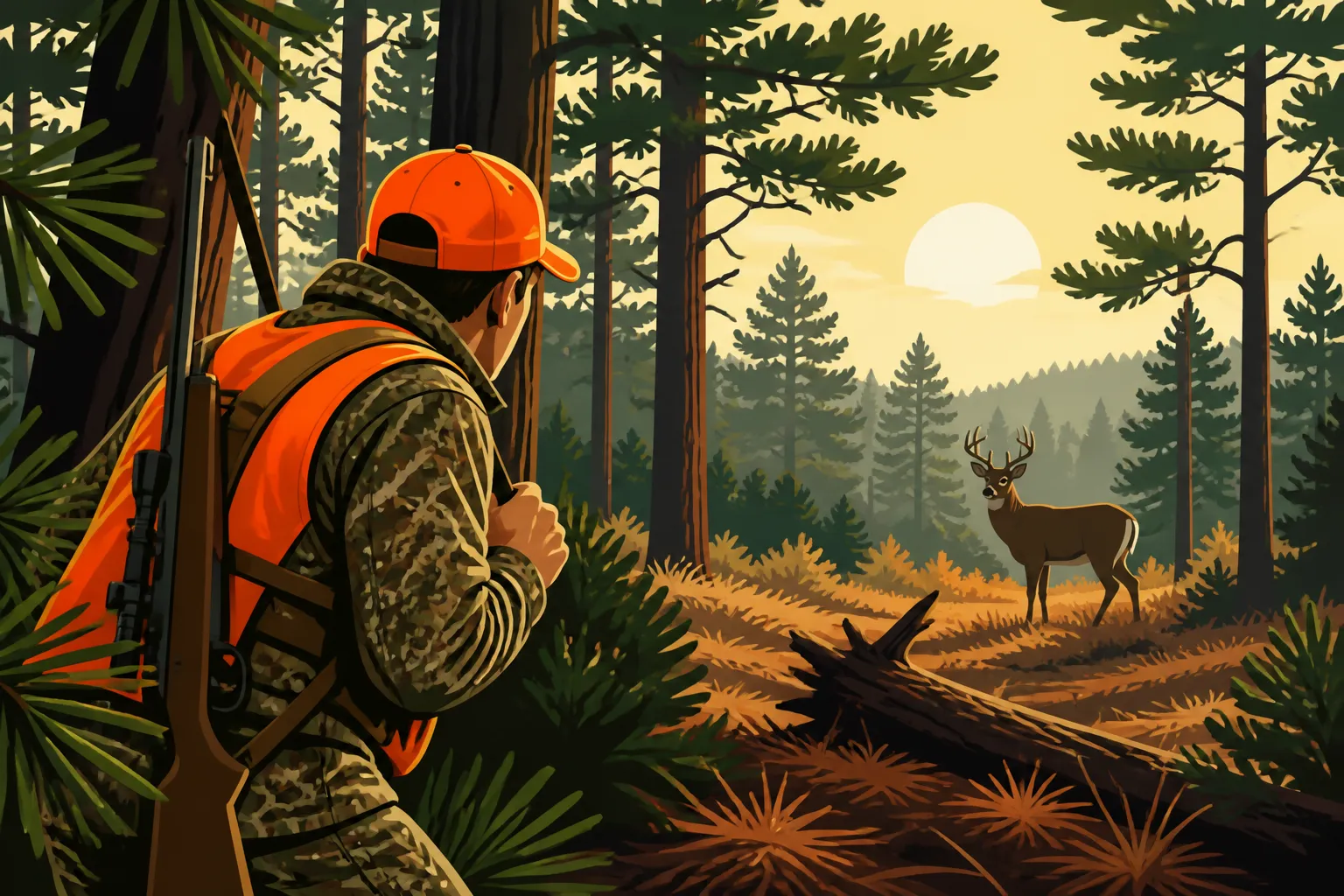
Hunting deer in Arkansas's vast pine country can feel like an entirely different beast than slipping through hardwood bottoms or stalking open fields. The dense stands, often uniform timber, and crunchy needle-covered ground present unique challenges that can frustrate even seasoned hunters. This guide is all about embracing those challenges and mastering the quiet, deliberate art of still-hunting to find success in the whispering pines.
The Unique Challenge of Arkansas Pine Country
When you think of deer hunting in Arkansas, you might first picture the flooded timber of the Delta or the rugged hardwood ridges of the Ozarks. But a huge portion of our state, especially the Ouachita Mountains and parts of the Gulf Coastal Plain, is dominated by pine forests, often managed as commercial timberlands. Hunting these areas demands a different approach, and still-hunting is often your most effective tactic.
Dense Plantations and Monoculture
Pine plantations, particularly the younger stands, can be incredibly thick. We're talking about areas where pines are planted in tight rows, creating an almost impenetrable wall of green. While this offers incredible bedding cover for deer, it also makes it nearly impossible for a hunter to move quietly or see more than a few yards in any direction. It’s not uncommon to walk right past a deer bedded down that you’d never have a chance of spotting. As these pines mature, the lower limbs self-prune, and the canopy closes, creating a more open understory, which can be easier to navigate but might lack the diverse food sources found in mixed timber.
This monoculture of pine can be a major hurdle. Deer thrive on variety – a mix of hardwoods providing acorns, soft mast, and browse. In a pure pine stand, especially if it’s uniform in age, those varied food sources are often scarce. Hunters often find themselves scratching their heads, wondering where the deer are eating when all they see are pines. This means you have to be even more diligent in identifying the subtle transitions where food might be present, or where deer are simply seeking refuge.
Reading the Ground in Pine Needles
One of the most frustrating aspects of still-hunting pine country is the ground itself. A thick carpet of pine needles, especially when dry, can sound like you’re walking on potato chips. Every step crunches and announces your presence to every deer within earshot. This makes the silent, deliberate movement that still-hunting demands incredibly difficult. You really have to adjust your pace and technique to minimize noise, which often means moving at a snail's pace, or even slower.
Furthermore, reading deer sign on a thick bed of pine needles is a skill unto itself. Tracks can be hard to discern, rubs might be less obvious on the smooth bark of pines, and scrapes might be less frequently used or harder to spot in the acidic soil. You're not looking for clear, muddy prints like you might find in a creek bottom; you’re looking for subtle depressions, disturbed needles, or faint scuffs that hint at deer movement. It requires a much more keen eye and an understanding of where deer might choose to leave more obvious clues.
Wind and Sound in a Pine Forest
The way wind behaves in a pine forest is also different from open hardwoods. While dense pines can sometimes break up strong gusts, they can also create a tunneling effect, carrying sound further or in unexpected directions. The constant rustle of needles in even a light breeze can offer some sound dampening, which is a small blessing, but it can also mask the sounds of a deer moving or your own subtle movements. It's a double-edged sword that requires constant awareness.
Your scent, too, can be tricky. While the dense cover might seem to offer protection, those same dense trees can swirl and eddy the wind, creating unpredictable scent cones. Maintaining the wind in your favor is always critical in deer hunting, but in pine country, you need to be exceptionally mindful of micro-thermals and shifts. Using a reliable mapping tool, like GoHunt, can help you visualize topography and predict how wind might behave in different drainages and ridges, which is invaluable for planning your approach.
Essential Gear and Mindset for Still-Hunting
Still-hunting is as much about your mental game as it is about your physical equipment. In Arkansas's pine country, where patience is paramount and visibility can be limited, having the right gear and, more importantly, the right mindset, makes all the difference between a frustrating walk and a successful hunt.
Quiet Clothing and Footwear
The number one rule in still-hunting pine country is to be quiet. This starts with your clothing and footwear. Fabric choices are crucial; you want soft, brushed materials like fleece or wool that don't rustle or snag on every branch. Avoid anything with a slick outer shell. Even your zippers and buckles can make noise, so opt for silent closures where possible. Layering is also important for warmth, but make sure those layers don't create bulk that restricts movement or rubs together loudly.
Footwear is equally critical. You need boots that offer good support and traction for navigating uneven terrain, but they also need to be flexible and quiet. Hard soles that "clunk" on rocks or make loud thuds on solid ground are a no-go. Many still-hunters prefer soft-soled boots or even moccasins for their ability to feel the ground and place each step silently. Some hunters even wear gaiters over their boots to prevent pine needles and debris from entering, which can be surprisingly loud. It's about being able to feel the crunch before you commit your full weight.
Optic Choices and Visibility
While still-hunting is about slow movement, it's equally about intense observation. In the thick, often monotonous environment of a pine forest, a good pair of binoculars is your best friend. You're not just looking for a whole deer; you're looking for an ear flick, a horizontal line in a vertical world, a patch of brown hair, or the subtle twitch of a tail. Mid-range magnification, typically 8x or 10x, is ideal for scanning through the dense understory and distinguishing subtle details.
A rangefinder is also a smart addition, especially if you're bowhunting or using a muzzleloader. Shooting lanes can be very tight and fleeting in pine timber, and quickly verifying distances can prevent a missed shot or, worse, a wounded animal. While you're often hunting at closer ranges when still-hunting, having that precise information adds confidence and helps you make a clean, ethical shot when the opportunity finally arises. Don't overlook the importance of optical clarity when trying to spot game in the shadows of the pines.
Patience and Purposeful Movement
The most important "gear" you'll carry into the pine woods is your patience. Forget the idea of covering miles; still-hunting is about covering yards, sometimes feet, with extreme deliberation. A common mantra is "10 steps, 10 minutes." This means you take ten slow, quiet steps, then stop and spend ten minutes scanning, listening, and observing. Repeat. This methodical approach might feel painfully slow at first, but it forces you to slow down and truly absorb your surroundings.
Every movement you make should be purposeful. Before you take a step, plan where your foot will land to minimize noise. Before you move a branch, consider if it's truly necessary. Constantly scan ahead and to your sides, searching for any flicker or odd shape. Don't just look at the woods; look into the woods. Deer are masters of camouflage, especially against the backdrop of pine bark and shadows. This slow, deliberate process is crucial for spotting game before it spots you, giving you the upper hand in a potentially close-quarters encounter.
Strategies for Locating Deer in Pine Forests
Finding deer in vast, seemingly uniform pine forests can feel like searching for a needle in a haystack. Unlike hardwood forests where food sources are often obvious, pine country requires a more nuanced approach to pinpoint where deer are spending their time. It's about looking for the subtle deviations and understanding how deer use this unique habitat.
Focusing on Edges and Transitions
Deer, even in pine country, are creatures of the edge. They utilize the security of dense cover but need access to food. This means that edges and transition zones are your prime hunting grounds. Look for where a dense pine plantation meets a hardwood draw, a creek bottom, or even an old field. These interfaces often provide a mix of food (acorns, browse, forbs) and cover that deer can't resist. Logging roads, firebreaks, and old access trails also create linear edges that deer frequently travel, offering easier movement and sometimes new growth for browsing.
Consider areas where different age classes of pines meet. An older, more open stand bordering a young, thick clearcut is a classic example. Deer will bed in the thick stuff and often move into the more open timber to feed or travel, especially during low light. Creek bottoms that wind through pine forests are also natural highways and food sources, often harboring a mix of hardwoods and denser vegetation that attracts deer. These transition areas concentrate deer activity, making your still-hunting efforts much more efficient.
Identifying Subtle Sign
As mentioned, obvious deer sign can be scarce in pine needles. You need to train your eye to spot the subtle clues. Look for disturbed pine needles where deer have walked, especially along ridges or near thickets. Faint tracks might be visible in damp spots, eroded paths, or where needles are thin. Rubs on small pine saplings or even the occasional hardwood stem can indicate a buck's presence, though they might not be as pronounced as those on larger oak trees.
Scrapes are trickier to find in pine country. Deer might scrape in areas where the soil is more exposed, such as along logging roads, at the base of a small hardwood, or where a slight depression collects moisture. Look for broken branches overhead and pawed-out earth, even if it's mostly pine duff. Also, pay close attention to fresh droppings and beds. A fresh bed of flattened pine needles with deer hair often means a deer was recently there, and if you find several, you're near a bedding area. Tools like GoHunt can help you mark these locations and build a pattern over time.
Understanding Pine Deer Behavior
Deer in pine forests adapt their behavior to the environment. They often use the dense cover of young pine plantations for bedding, especially on public land where pressure is higher. This thick cover provides thermal protection in cold weather and keeps them hidden from predators. During the day, they might only move short distances within this cover. When they do move, they'll often follow the path of least resistance: old logging roads, game trails, or the edges of dense thickets.
Their feeding patterns can be tied to specific mast crops in adjacent hardwoods, or they might browse on pine saplings, forbs, and grasses that grow in openings or along edges. During the rut, bucks will still cruise for does, often using these same travel corridors, but they might also slip silently through the densest cover. Understanding that these deer are often more secretive and move more cautiously in open pine timber is key. Your approach needs to match their stealth, which again, reinforces the ultra-slow pace of still-hunting.
Mastering the Art of Movement and Observation
Still-hunting is often described as "hunting with your feet," but it's really about hunting with your eyes and ears, with your feet merely facilitating the process. In Arkansas's pine country, where sight lines are short and sound carries, mastering your movement and observation skills is absolutely paramount.
The Wind as Your Ally
In still-hunting, the wind isn't just a factor; it's your primary guide. You should always hunt into or across the wind. This ensures that your scent is carried away from the areas you're moving into, preventing deer from smelling you before you even know they're there. In pine country, with its swirling air currents, this requires constant vigilance. Carry a small wind checker (a squeeze bottle of powder or milkweed seeds works great) and use it frequently to monitor wind direction.
Planning your route with the wind in mind is crucial. If you're hunting a ridge, consider how thermals will draw scent uphill in the morning and push it downhill in the evening. In the flat expanses of some pine plantations, the wind might be more consistent, but drainages and subtle changes in elevation can still create unpredictable currents. Never compromise on wind direction; if the wind shifts and blows into an area you're trying to hunt, it's often best to change your plan or exit and re-approach from a different direction later.
Utilizing Topography and Cover
Even in relatively flat pine plantations, there are always subtle changes in topography and areas of denser cover that you can use to your advantage. Look for small ridges, depressions, or drains that offer natural concealment and might funnel deer movement. These slight elevation changes can also help block your silhouette or muffle the sound of your footsteps. If a drain contains a mix of hardwoods, it's an even better bet.
When moving, constantly assess your next step. Can you move behind a cluster of pine saplings? Is there a depression that will hide your approach? Use every piece of cover available, no matter how small, to break up your outline. Move from tree to tree, pausing behind each one to scan. Think like a predator, using the landscape to remain unseen. This might mean taking a slightly longer, circuitous route to get to a specific point, but the increased stealth is almost always worth the extra effort in Arkansas pine country.
Scanning for Parts, Not Whole Animals
One of the biggest mistakes hunters make when still-hunting dense cover is looking for an entire deer. In the pine woods, you rarely see a whole animal first. Instead, you need to train your eyes to pick out individual components. Look for the horizontal line of a deer's back or belly amidst the vertical lines of pine trunks. Search for the subtle curve of an ear, the shine of an eye, the flick of a tail, or the dark patch of a nose. Any unnatural shape, color, or movement should immediately grab your attention.
Use your binoculars to methodically scan every potential hiding spot. Don't just glance; scrutinize. Pay extra attention to areas of shadow, dense thickets, and the bases of trees where a deer might be bedded. It's amazing what blends in until you focus on it intently. Often, a deer will reveal itself with a subtle movement – a turn of the head, a shift of weight – so remain patient and persistent in your observation. This is where your still-hunting really pays off, giving you the chance to spot the deer before it knows you're there and prepare for a shot.
Effective Shot Placement and Recovery in Pine
Finally, after all the careful planning, slow movement, and intense observation, you might get a shot opportunity while still-hunting Arkansas's pine country. The unique environment impacts not only how you approach the shot but also the critical recovery process.
Picking Your Lanes
Shooting lanes in dense pine timber are almost never wide open. You'll likely be presented with a fleeting opportunity through a small window in the trees. This means you need to be constantly aware of potential lanes as you move. Before you even spot a deer, visualize where you might be able to take a shot if one presented itself. If you're bowhunting, this is even more critical; you need a clear path for your arrow, free of any small twigs or branches that could deflect it.
When a deer appears, quickly assess the clearest shot opportunity. Don't rush, but don't hesitate too long either. You might only have a few seconds before the deer moves behind more cover. Aim for the vital zone – typically the heart-lung area – and take a deep breath to settle your aim. Because of the limited visibility, waiting for a broadside shot is always preferred to ensure a clean kill and easier tracking. Even if you're using a powerful rifle, a precise shot is always paramount.
Tracking in Dense Pine Needles
This is where the real challenge of recovering a deer in pine country often begins. A thick carpet of pine needles can make blood trailing incredibly difficult. Blood can soak into the needles, be masked by their color, or simply be hard to see in the dim light of the forest floor. Immediately after the shot, mark the exact spot where the deer was standing, and where you last saw it run. Tie a piece of flagging tape, drop your hat, or use a bright piece of gear to mark these crucial spots.
Give the deer time, especially if it's not a confident hit. For a gut shot, waiting 4-6 hours or even overnight is often necessary. When you begin trailing, move slowly and methodically, looking for the smallest speck of blood, disturbed needles, or broken twigs. Expand your search outward in circles if you lose the trail. Remember that deer often run downhill, to water, or towards the thickest cover when wounded. The GoHunt app can be invaluable here, allowing you to mark your last blood and retrace your steps, ensuring you don't accidentally cut off the trail.
The Advantage of a Partner
While still-hunting is often a solitary pursuit, having a partner for recovery can be a massive advantage in pine country. Two sets of eyes are always better than one when blood trailing. If you’re with a buddy, have one person on the last known blood trail, while the other circles slightly ahead or to the side, looking for the next sign. This method, often called "leapfrogging," can be incredibly effective at maintaining the trail.
Beyond just finding the deer, having a partner makes getting a deer out of dense pine country significantly easier. Whether it's dragging, quartering, or loading into a cart, two people can accomplish tasks that would be nearly impossible alone. If you're hunting public land, know the rules about Tracking a Deer in Ozark Rock or Blood Trailing After Dark in Arkansas if your search extends past legal hunting hours or onto private property. Always be prepared for a tough recovery in the pines; it's rarely a simple walk.
Still-Hunting Checklist for Arkansas Pine Country
To help you get ready for your next adventure in the silent, whispering pines, here's a handy checklist of things to consider and bring:
| Category | Item | Importance in Pine Country | Notes |
|---|---|---|---|
| Clothing | Quiet Outer Layers (Fleece, Wool) | Essential for silent movement on crunchy needles. | Avoid noisy synthetics or rain gear unless absolutely necessary. |
| Soft-Soled Boots | Minimizes noise, allows feel for the ground. | Consider gaiters to keep out pine needles. | |
| Optics | Binoculars (8x or 10x) | Spotting deer parts in dense cover, especially in shadows. | Look for good low-light performance. |
| Rangefinder | Quick distance verification for precise shots in tight lanes. | Crucial for bowhunting or muzzleloader. | |
| Navigation | GPS Device or Mapping App | Identifying edges, topo, logging roads, marking sign/trails. | Apps like GoHunt with offline maps are a lifesaver for Scouting Arkansas Public Land Before Season. |
| Compass & Paper Map (Backup) | Essential backup in areas with poor cell service. | Don't rely solely on electronics. | |
| Hunting Aids | Wind Checker (Powder, Milkweed) | Constant monitoring of unpredictable wind shifts. | Use frequently. |
| Small Pruning Shears | Clearing a quiet path or small shooting lanes before a shot. | Only use where legal and ethical. | |
| Fluorescent Survey Tape | Marking shot locations, last blood, and recovered game. | Brightly colored and easily tied. | |
| Essentials | Water, Snacks | Still-hunting is slow and requires sustained focus. | |
| First-Aid Kit | Always a good idea, especially in remote areas. | ||
| Knife, Game Bags | For field dressing and protecting meat. | Especially important if a long pack out is anticipated. |
Remember, successful still-hunting is a marathon, not a sprint. Take your time, trust your instincts, and enjoy the quiet challenge of the Arkansas pine country. It's a truly rewarding way to hunt. You can gain further insight into specific terrain features by looking into Wind and Thermals in Ouachita Hollows or how to set up strategically with Setting Up on a Pine Plantation Edge. If you find yourself in a different type of pine environment, consider strategies for Hunting Arkansas Cutovers and Clearcuts. For broad tactics, our guide on Still-Hunting Arkansas Pine Country offers more general advice.
Disclaimer
Hunting is an inherently risky activity. Always prioritize safety, understand and follow all Arkansas Game and Fish Commission regulations, and obtain proper licenses and permits before heading into the field. This guide provides general information and should not replace proper hunter education or professional guidance. Conditions in the field can change rapidly, and hunters should always be prepared for emergencies.