Snow Goose Tactics in the Delta
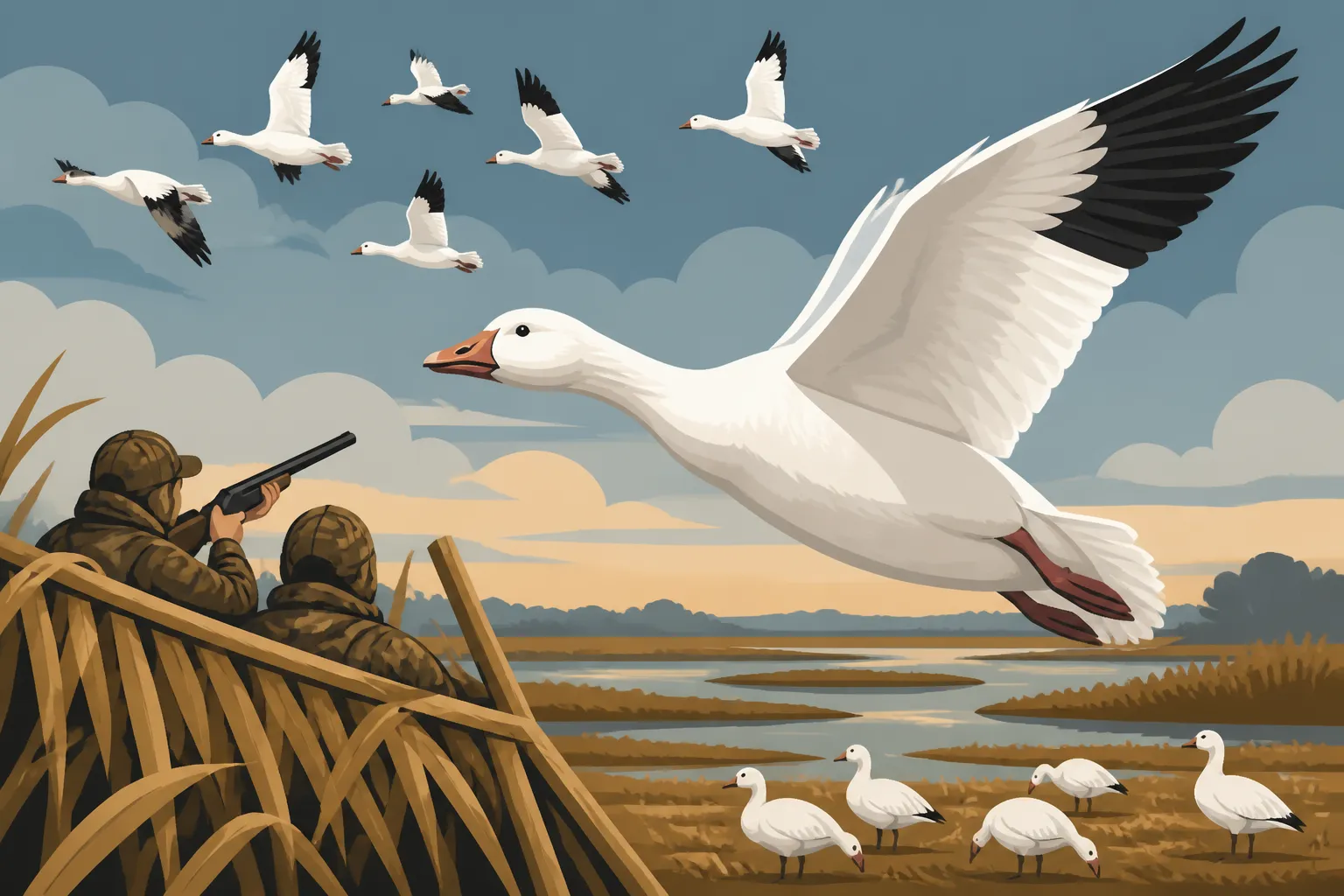
You’ve done it before: driven past a field in the Arkansas Delta, eyes wide at the sheer number of snow geese covering every inch, and thought, "How on earth do you even begin to hunt those things?" It feels like an insurmountable challenge when you see thousands upon thousands, but they’re also incredibly wary, flaring at the slightest mistake. This guide is all about cutting through that frustration and giving you the real-world, no-nonsense tactics you need to consistently put snow geese on the ground in Arkansas's legendary Delta.
Understanding the Elusive Nature of Snow Geese in the Delta
Hunting snow geese, especially during the Light Goose Conservation Order, isn't like hunting mallards in a timber hole or even specklebellies in a field. These birds are on a different level of wariness, often having been shot at from the Arctic all the way down the flyway. They travel in massive flocks, offering both incredible opportunity and immense challenge. Getting them to commit to a decoy spread in the vast, open landscapes of the Arkansas Delta requires a deep understanding of their behavior, their preferred habitats, and the sheer volume of effort involved.
Why Snow Geese Are So Challenging to Hunt
The biggest hurdle with snow geese is their intelligence and their experience with hunting pressure. They've seen it all. Every field, every set of decoys, every call has likely been encountered before. When you’re dealing with a flock of thousands, their collective eyes and ears make them incredibly difficult to fool. They have sentinels, birds that hang high above, circling and watching for any sign of danger. If just one bird in a huge flock senses something is off, the whole group will flare, leaving you empty-handed and frustrated. Plus, their immense numbers often lead to "snow blindness" for hunters – you see so many, you just assume they'll commit, but that's rarely the case with mature, pressured birds.
Another factor is their nomadic nature. One day they could be devouring waste grain in a cut rice field, and the next they've moved miles away to a freshly cut bean field or a patch of sheet water, depending on food availability and disturbance. Staying on top of their movements requires constant scouting and adaptability.
Preferred Delta Habitats and Food Sources
In the Arkansas Delta, snow geese are primarily after waste grain left over from the harvest. Their favorite buffet items include rice, corn, and soybeans. After the combines have rolled through, these fields become prime feeding grounds, especially if there's a little bit of shallow water present.
- Cut Rice Fields: These are often gold mines, particularly if there's some residual standing water or "sheet water" that attracts them for both feeding and loafing. The stubble provides cover and plenty of dropped grains.
- Cut Corn and Soybean Fields: Similar to rice, these fields offer an abundance of high-energy food. Snow geese will relentlessly grub for these grains, often leaving visible churned-up patches on the ground where they've dug for food.
- Sheet Water: Any large, shallow pools of water in fields or low-lying areas will draw snow geese. They use these areas for drinking, bathing, and loafing between feeding sessions. Even a few inches of water can make a field irresistible. Understanding Reading Water in the Arkansas Delta can give you an edge in finding these crucial spots.
- Mud Flats/Open Ground: Sometimes, especially in colder weather, they'll just loaf on open mud flats or bare ground, conserving energy and staying visible to avoid predators. These spots might not offer food but are important rest areas.
Effective scouting is paramount to finding these active feeding or loafing zones. You can drive around, but using mapping tools like GoHunt can significantly cut down on windshield time. These platforms often allow you to scout from home, identifying potential areas of interest, public land access, and even topographical features that might hold sheet water. Knowing Scouting Arkansas Public Land Before Season is a great skill that directly applies here.
Essential Gear for Delta Snow Goose Hunting
Once you've zeroed in on where the geese are, you'll quickly realize that standard duck hunting gear just won't cut it for a dedicated snow goose hunt. The scale of the operation, the open environment, and the sheer numbers of birds you're trying to fool demand a specialized approach to your equipment.
Decoys: Quantity and Quality Matter
This is where the rubber meets the road. You can't just throw out a dozen duck decoys and expect success. Snow goose hunting is a game of numbers, and that means lots and lots of decoys.
- Spread Size: For serious snow goose hunting in the Delta, you're looking at a spread of at least 500-1,000 decoys. Some hunters run spreads of 2,000 or more. The goal is to mimic the massive flocks that snow geese feel safe joining. You need to make your spread look like the safest, most appealing place for them to land.
- Decoy Types: A mix is key to realism.
- Full-Body Decoys: While expensive, a few dozen full-bodies around your kill hole add incredible realism, especially on clear, calm days. Their three-dimensionality makes a huge difference.
- Shell Decoys: These are a more affordable way to add volume and are easier to transport. They sit directly on the ground.
- Socks/Silosocks: The workhorse of snow goose spreads. These are lightweight, compact, and allow you to deploy hundreds quickly. They flutter in the wind, mimicking movement. Brands like Sillosock are very popular and effective.
- Flyer Decoys/Rotators: Motion is crucial. Using a few flyer decoys on poles or battery-operated rotators (like a "flapper") can draw attention from miles away and simulate landing birds.
- Placement and Realism: Don't just dump them. Group some as if they're feeding, others as if they're loafing. Leave a clear "landing strip" for the birds to commit to. Think about how real geese would space themselves out.
Blinds and Concealment
Open fields mean no natural cover, so your concealment needs to be absolute. Any glint, any unnatural shape, any movement will send birds flaring.
- Layout Blinds: These are the standard for snow goose hunting. They keep you low to the ground, allowing you to hide effectively within the decoy spread. Brands like Avery Outdoors and Final Approach offer robust and comfortable layout blinds. It's critical to brush them in thoroughly with local vegetation – whatever is in the field you're hunting. Corn stalks, rice stubble, soybean trash – make it blend perfectly.
- Pit Blinds: If you have access to private land and can dig in, a permanent pit blind offers the ultimate concealment. These are typically more common for Hunting Rice Fields and Levees for ducks but can be adapted for geese. The downside is they are fixed, meaning you lose the mobility required to follow nomadic snow geese.
- Camouflage Clothing: Even when in a blind, wear good quality camouflage that matches the surrounding field. Face masks and gloves are non-negotiable. Any exposed skin or shiny objects will give you away.
Calls and Calling Strategy
During the Conservation Order, electronic calls are your best friend. This is a game-changer that allows you to mimic the immense clamor of a huge snow goose flock, something impossible with mouth calls alone.
- Electronic Calls: Invest in a high-quality e-caller with a variety of snow goose sounds – feeding chatter, landing calls, distressed calls, and flight calls. Brands like Foxpro and Lucky Duck are top-tier. You'll need multiple speakers placed strategically throughout your spread to make the sound appear widespread and realistic.
- Mouth Calls: Don't discard them entirely! A good mouth call can add realistic nuances, especially when birds are closer or to mimic a specific distressed call. Use them sparingly, however, as the e-caller does the heavy lifting.
- Calling Volume: You're trying to replicate thousands of birds, so don't be shy with the volume. Blast those calls, especially when birds are distant. As they get closer, you might soften it a bit to sound more inviting, but snow geese are inherently noisy.
Guns and Ammunition
You need reliable firepower and ammunition designed for tough birds.
- Shotguns: A 12-gauge shotgun is the undisputed king. A 3-inch or 3.5-inch chamber is preferred for heavier loads. Auto-loaders or pump-action shotguns are best for quick follow-up shots.
- Ammunition: Non-toxic shot is required for all waterfowl hunting. For snow geese, think large shot sizes: BB, BBB, or T shot in high-velocity loads. Heavy payloads (1 ¼ oz to 1 ½ oz) are common. Brands like Kent Cartridge and Federal Ammunition offer excellent waterfowl loads. You'll be taking shots at longer ranges, and snow geese are tough birds, so penetration is key. Remember, the goal is clean kills, so patterns are more important than just big shot. Always pattern your shotgun with your chosen load before the hunt.
Strategic Spread Setup in the Delta
Your decoy spread is your stage, and the geese are your audience. A well-designed spread not only looks convincing but also funnels birds into your desired kill zone. This is where patience, observation, and a bit of artistry come into play.
Scouting for the Perfect Spot
Finding the right location is paramount. It’s not just about finding a field with geese, but the field where they consistently want to be and where you can set up effectively. This is where tools like GoHunt become invaluable. You can use their satellite imagery to identify sheet water, logging roads for access, and even track previous movements if you've marked observations.
- Active Feeding Zones: Look for the field they were actively feeding in yesterday or this morning. Fresh droppings, churned-up earth, and leftover waste grain are all good indicators. If you can, watch them fly out in the morning and note where they go to feed during the day.
- Flight Lines: Pay attention to how the birds approach and depart the field. Are they coming from a specific direction? Is there a noticeable flyway they use? Setting up directly under or near a common flight path can increase your chances significantly.
- Wind Direction: This is critical. Geese, like all waterfowl, land into the wind. Your kill hole should be downwind of your main spread, allowing birds to approach into the wind, slow down, and float right over your concealed position.
- Access: Can you get your truck and trailer, laden with hundreds of decoys, into the field without getting stuck? Is there public access or have you secured private land permission? Some of the best spots might be on public lands, but they often require Arkansas WMA Permits and Draw Hunts or
Hunting Arkansas Public Landrestrictions to be understood.
Decoy Placement and Kill Hole Design
Once you've picked your spot, it's time to create the illusion. Remember, you're trying to convince thousands of wary birds that your small patch of decoys is the safest place on earth.
- The "X" or "U" Pattern: This is a classic. You create two large arms of decoys, forming either an X or a U shape, with the open part of the X or the bottom of the U facing downwind. Your blinds (the kill hole) are placed at the center of the X or just inside the bottom of the U. This creates a natural landing zone where birds can glide in without feeling cramped.
- Dense Pockets: Within your main spread, create some tighter clusters of feeding decoys. Geese often feed in groups, and these dense pockets add realism.
- Motion Decoys: Place your flyers and rotators upwind of your kill hole, so their movement is visible to approaching birds. This simulates active, happy geese on the ground.
- The Landing Strip: Ensure a clear, open area for birds to land. Nothing spooks a landing goose like having to dodge decoys. This open area should be directly in front of your blinds, allowing for close-range shots.
- Natural Spacing: While you need numbers, don't overcrowd everything. Allow for some natural variation in spacing, just as real birds would have.
- Adding Color: Some hunters mix in a few dark goose (Canada or specklebelly) decoys. This can sometimes add an extra layer of comfort for snows, as they often associate with other goose species.
Hiding Yourself Effectively
Your decoy spread can be perfect, but if you're exposed, it's all for naught.
- Brush In Your Blinds: This cannot be emphasized enough. Collect local vegetation – rice stubble, corn stalks, grass – and weave it into the loops of your layout blind. Make sure your blind disappears completely into the surrounding field. Looking at Brushing In a Blind on a Levee for duck hunting provides good general principles for concealment in open areas.
- No Gaps: Check for any gaps in your brushing. Even a small hole can be spotted by an eagle-eyed snow goose.
- Shadows: Be mindful of where the sun is. Position your blinds so that you are not silhouetted against the sky, especially during morning or late afternoon hunts.
- Stay Motionless: This is perhaps the hardest part. As the birds circle, every hunter needs to be absolutely still. No peeking, no fidgeting, no checking your phone. Wait for the call from your lead caller to shoot.
- Mud and Dirt: If you have to move decoys around or walk through the mud, ensure you're not leaving obvious trails or creating unnatural disturbances right around your kill hole.
Calling and Shooting Strategies for Snow Geese
Once your spread is perfectly set and you're hidden like a ninja, the real test begins: convincing those skeptical birds to drop their guard and commit. This involves a dynamic interplay of calling, observation, and precise shooting.
Reading the Birds and Adapting Your Call
Snow geese are masters of circling and inspecting. They'll make multiple passes, often high above, testing the waters before committing. Your calling strategy needs to evolve with their approach.
- Distant Birds: When birds are far out, blast your electronic call at maximum volume. You want to grab their attention from miles away and draw them toward your massive spread. Use aggressive, high-energy feeding chatter and loud flight calls. You can learn more about Hail Calls Versus Soft Feeding Chuckles from duck hunting to see how different calling types apply to different distances.
- Approaching Birds (High): As they get closer but are still high, maintain a good volume, but start listening to their responses. Are they answering back? Are they cupping their wings and gliding a bit? If they start to look interested, maintain strong calling to pull them in closer for a better look.
- Circling and Inspecting: This is the critical phase. When birds are directly over your spread, circling and losing altitude, you need to adjust. Sometimes backing off the call slightly, letting the realistic sounds of the spread and flyers do the work, can be effective. Other times, a short burst of excited, aggressive calling can make them drop. Watch their body language – if their feet are down and wings are cupped, they're ready to commit. If they're craning their necks and staring, they're suspicious.
- Flaring Birds: If birds suddenly flare, hit them with a few quick, distressed calls. Sometimes, this can make a few birds break off from the main flock and circle back for one last look, giving you a second chance.
- The Silence: Never underestimate the power of momentary silence. Sometimes, a well-timed pause in the calling can make the birds curious enough to drop another 20-30 yards to investigate. It breaks the monotony and creates a sense of "something just changed."
Timing Your Shot and Follow-Up
The moment of truth can be chaotic, but discipline is key to maximizing your harvest and ensuring clean kills.
- The "Kill Hole" Concept: This is the imaginary zone directly over your blinds where you want the geese to be when you call the shot. It's often within 20-35 yards, giving you optimal range for effective patterns.
- Leader's Call: Designate a lead caller who also acts as the shot caller. Everyone else remains motionless until that person gives the command to shoot. This ensures everyone comes up at once, minimizing flaring and maximizing the concentrated firepower. It also helps prevent sky-busting, where excited hunters shoot at birds that are too far out, spooking the rest.
- Coming Up and Shooting: When the call is made, come up smoothly, acquire your target, and lead the bird appropriately. Don't rush. The goal is a clean kill. In a big flock, it's easy to get overwhelmed. Pick one bird, focus on it, and shoot.
- Follow-Up Shots: Snow geese are resilient. Don't assume a bird is dead until it's on the ground. If you hit one and it starts to fall, be ready for a follow-up shot. With large flocks, it's often a race against time before they're out of range, so quickly acquiring another target and taking a second shot can be productive.
- Targeting Body Shots: Aim for the body, not the head or neck, on incoming birds. The larger target area increases your chances of hitting vital organs or breaking a wing, leading to a quick, ethical kill.
- Retrieving Birds: After the shooting is done, quickly retrieve your downed birds. Not only is it good sportsmanship to recover every bird, but their white feathers can also act as additional decoys. If you're hunting with dogs, they are invaluable for Handling Dogs in a Deer Drive (principles of dog control apply) or Running Deer Dogs in Arkansas and can make quick work of retrieving birds, especially in mucky conditions.
Hunting snow geese in the Arkansas Delta is an experience unlike any other. It's demanding, often frustrating, but incredibly rewarding when you finally crack the code and have a massive flock commit to your spread. It takes dedication, the right gear, and a willingness to learn and adapt, but the Delta offers some of the best opportunities in the country to witness this spectacular migration and participate in this unique form of hunting.
Snow Goose Decoy Spreads Compared
| Spread Type | Description | Pros | Cons | Ideal for |
|---|---|---|---|---|
| "X" Pattern | Two large arms forming an 'X' with blinds at the center. | Creates multiple approach angles, natural look. | Requires a large number of decoys and space. | Large, open fields with varying wind directions. |
| "U" Pattern | Open end facing downwind, blinds at the base of the 'U'. | Funnels birds directly into the kill zone, clear landing strip. | Less adaptable if wind shifts dramatically. | Fields with a consistent prevailing wind. |
| Random Cluster | More organic, dense groupings of decoys with open lanes. | Highly realistic, mimics natural feeding behavior. | Can be harder to define a clear kill zone for new hunters. | Experienced hunters, smaller, more pressured areas. |
| Motion-Centric | Heavy emphasis on flyers, rotators, and wind socks for movement. | Attracts birds from a distance, highly engaging. | Requires more active setup/maintenance, battery power for some devices. | Any spread type to enhance realism and draw. |
| Juice Ball/Vortex | Extremely dense, small circular spread with a gap for landing. | Creates a strong visual magnet, good for drawing high birds down. | Can feel unnatural to very wary birds, very tight shooting zone. | Aggressive calling, birds that are working high. |
Disclaimer
Hunting is an inherently dangerous activity. Always prioritize safety, follow all local, state, and federal hunting regulations, and ensure you have the necessary licenses and permits, such as Arkansas Hunting Licenses and What They Cost and the Arkansas Waterfowl Stamp Requirements. This guide is for informational purposes only and does not endorse illegal or unsafe hunting practices. Consult the Arkansas Game and Fish Commission (AGFC) for the most current rules and regulations.