Field and Flooded Rice Duck Hunting in the Delta
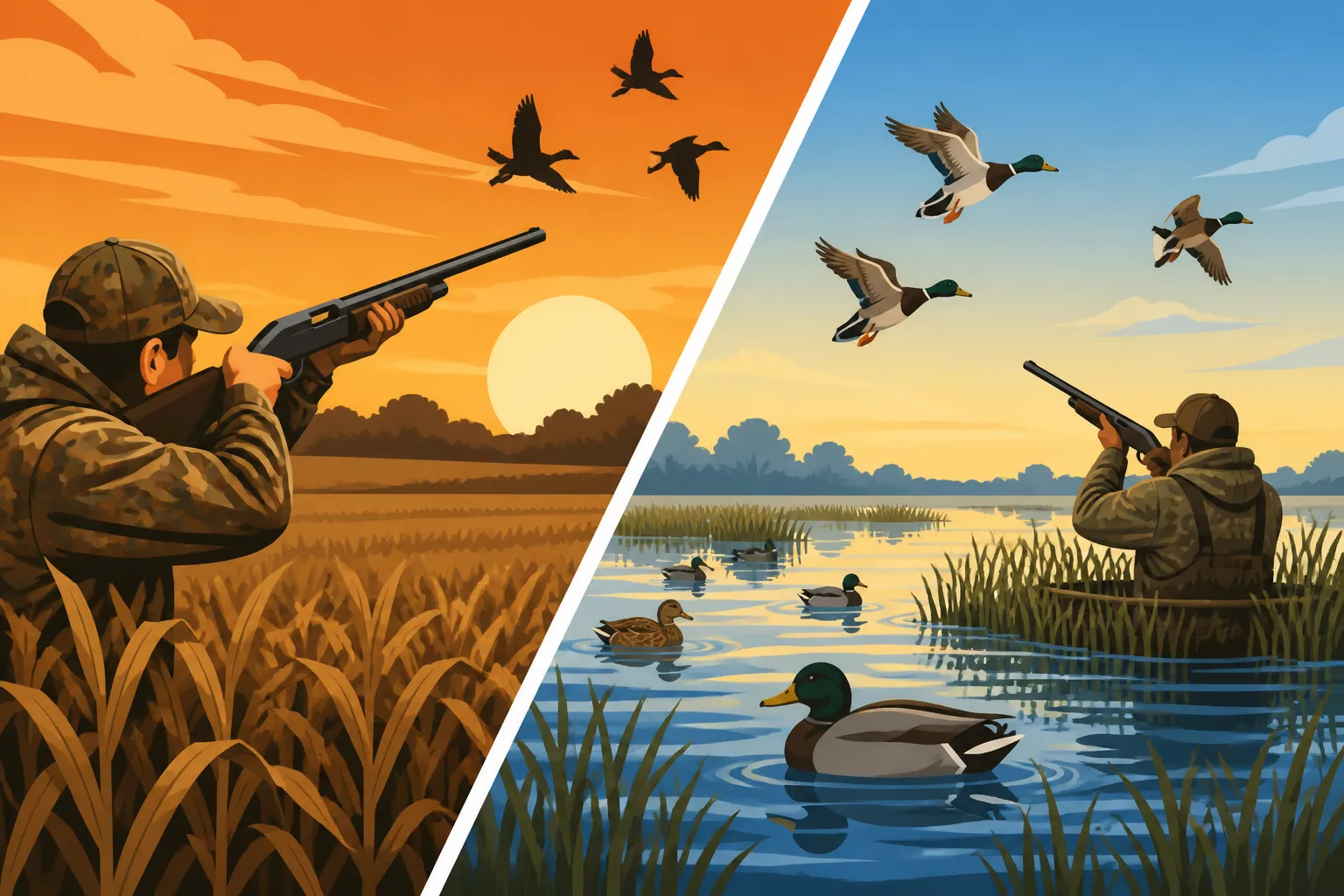
There's nothing quite like the unique challenge and immense reward of duck hunting in Arkansas, especially when you're staring across those vast, open landscapes of rice fields and agricultural land in the Delta. It’s a completely different ballgame than hunting flooded timber, presenting its own set of frustrations, from ducks circling high out of range to finding proper concealment in a sea of stubble. This guide is all about equipping you with the knowledge and tactics to successfully pursue mallards and other waterfowl in the expansive fields and flooded rice country of the Arkansas Delta, helping you turn those challenging days into unforgettable hunts.
Understanding the Delta Landscape and Duck Behavior
Hunting ducks in the Arkansas Delta's agricultural landscape is a world apart from the deep woods. It's a game of vast spaces, subtle movements, and understanding how waterfowl interact with wide-open fields, whether they're dry, stubbled, or intentionally flooded. The sheer scale can be daunting, but once you grasp the patterns, it becomes incredibly rewarding.
The Unique Allure of Arkansas's Delta
The Arkansas Delta, particularly the Grand Prairie region around Stuttgart, is often dubbed the "Duck Capital of the World" for a very good reason. It sits squarely in the heart of the Mississippi Flyway, a superhighway for migratory waterfowl. But what makes it truly special isn't just the sheer number of birds; it's the diverse habitat driven by agriculture. You'll find a mix of harvested rice fields, soybean fields, corn stubble, and even some dedicated moist-soil units. This variety offers ducks a smorgasbord of food sources and resting areas, drawing them in by the millions. For hunters, it means a diverse array of hunting scenarios, from crawling into a layout blind in a dry field to wading through shin-deep water in a flooded rice cut. It's a landscape that demands adaptability and a keen eye for subtle signs.
Why Ducks Love Rice Fields
Rice fields, whether freshly harvested or intentionally flooded post-harvest, are absolute magnets for ducks, especially mallards, pintails, and wigeon. After harvest, the fields are littered with waste grain—rice, corn, soybeans—which provides a high-energy food source critical for ducks enduring long migrations and cold winter days. When these fields are then flooded, either by rain or managed irrigation, they become ideal foraging grounds. The shallow water allows ducks to easily dabble and tip up for the fallen grain, while also offering protection from ground predators. It creates a perfect trifecta: abundant food, accessible water, and relative safety. Understanding this connection is key to locating where the birds want to be and, more importantly, where they feel comfortable enough to pitch in.
Reading Duck Movements and Flight Patterns
In the wide-open expanse of the Delta, ducks often fly much higher than they do over flooded timber. They have miles of visibility, and they use it to their advantage, spotting potential threats from a long distance. You’ll frequently see birds on what we call "reconnaissance flights," circling wide, scrutinizing every detail of a field before committing. This means patience is paramount. Look for consistent flight lines—where birds are traveling from their roosts to feeding areas—and pay attention to how they approach and leave those areas. Are they pitching straight in, or are they making several passes, checking for danger? Are they hitting certain sections of a field more than others? These observations are crucial for deciding your setup location and how aggressively to call. When birds are working a field, they often don't just drop in; they'll make those big, sweeping turns, losing altitude gradually, offering you precious time to assess their commitment.
Scouting and Reconnaissance for Rice Field Ducks
Successful field and flooded rice hunting in the Delta hinges on meticulous scouting. You can't just show up and expect birds to be everywhere; you have to find where they want to be, and that requires time and effort, both before and during the season. It’s a constant chess match with highly intelligent waterfowl.
Pre-Season Digital Scouting with Tools like GoHunt
Before you even step foot in a field, a significant amount of your scouting can be done from the comfort of your home, especially with modern mapping tools. Platforms like GoHunt offer invaluable satellite imagery that allows you to identify potential hunting spots, even if you’re miles away. Look for patterns in agricultural fields, noting crop types, proximity to water sources like rivers or sloughs, and potential travel corridors. You can often discern standing stubble fields, flooded areas, and even distinct patches where birds might be feeding. Pay attention to ditches, levees, and any slight elevation changes that could offer natural concealment. By studying these aerial views, you can narrow down vast tracts of land to a few promising areas, saving you countless hours of unproductive driving or walking once you arrive. Using these digital tools also helps you understand land ownership, which is crucial for gaining permission.
Boots-on-the-Ground Reconnaissance
As helpful as digital maps are, there's absolutely no substitute for getting your boots on the ground. Once the season approaches or opens, driving the backroads, pulling over, and simply watching fields at dawn and dusk will provide the most current information. Look for actual birds: where are they landing, how are they approaching, and what time of day are they most active? Pay attention to "sign"—droppings, feathers, and muddy edges where ducks have been feeding. If you're seeing fresh sign and birds working a field, you're in the right spot. Also, observe other hunters. Are they finding success? Where are they setting up? Sometimes, observing pressure can tell you where not to hunt, guiding you to less disturbed areas. Remember, fields can change daily depending on weather and pressure, so ongoing scouting is crucial. This is particularly important for areas within Wildlife Management Areas (WMAs) where hunting pressure can shift bird patterns rapidly. Many hunters spend hours simply "road scouting" after work, looking for those hidden honey holes.
Understanding Water Levels and Access Points
Water is the lifeblood of duck hunting in the Delta, especially for flooded rice. Knowing the current water levels in ditches, bayous, and managed fields is critical. Too little water, and ducks can't feed comfortably; too much, and they might spread out too thinly or choose deeper areas. If you're hunting private ground, understanding the landowner's irrigation schedule for flooded fields is paramount. For public ground, like many of the famed areas around Stuttgart, water levels can fluctuate based on rainfall or managed drawdowns, which often dictate where birds will concentrate. Always check local forecasts and the Arkansas Game and Fish Commission (AGFC) website for updates on specific WMA conditions. Access is another huge consideration. Can you drive to your spot, or will you need to wade or use a boat like a mud motor? Knowing this in advance prevents last-minute scrambling and ensures you can get to your chosen spot quietly and efficiently before daylight. Checking current conditions will also inform your approach to Reading water in the Arkansas Delta effectively.
Setting Up Your Spread in Fields and Flooded Rice
Once you've scouted and located birds, the next critical step is deploying an effective decoy spread and ensuring your concealment is top-notch. Unlike timber hunting where trees offer natural cover, field hunting is all about creating the illusion of safety in wide-open spaces.
Decoy Spreads for Open Fields
In dry fields, whether cut corn, rice stubble, or soybeans, your decoy spread needs to be realistic and inviting. Ducks have excellent eyesight and will quickly spot anything unnatural. The most effective spreads often mimic a feeding flock. Consider using a good number of full-body decoys to give the impression of a large, contented group on the ground. Motion is also key; wind-activated decoys like flags or spinning wing decoys (where legal) can draw attention from a distance. A common setup involves a main "landing zone" directly in front of your blinds, with smaller groups of feeders scattered around the perimeter. It’s important to create open pockets or "holes" within your spread where ducks can comfortably land without feeling crowded. These landing zones should always be directly downwind of your blinds, forcing birds to cup their wings and commit for a shot. For more specific guidance on placement, you might want to review Setting a Spread on a Levee and adapt those principles to your field conditions.
Layout Blind Placement and Concealment
Layout blinds are your best friend in open-field hunting, but simply throwing one down isn't enough. They need to be meticulously concealed. The goal is for your blind to disappear into the landscape, becoming just another lump of stubble or dirt. Brush them in heavily with natural vegetation from the field itself—rice stubble, corn stalks, grass. Don't be shy; over-brushing is better than under-brushing. Pay particular attention to the edges and any shadows cast by the blind. Position your blinds with the sun at your back, if possible, to keep the glare out of your eyes and further obscure your setup from approaching birds. Also, consider the wind direction. Ducks almost always land into the wind, so your blinds should be positioned to allow for a shot as they commit to your landing zone. A common mistake is not brushing in the entry points or the area around the blind, which can stand out like a sore thumb to circling ducks. Always test your concealment by walking away from the blinds and looking back from different angles, just as a duck would.
Spreads for Flooded Rice and Levees
Hunting flooded rice fields presents a blend of field and shallow-water tactics. Here, you can utilize both full-body field decoys and floating decoys. The key is to blend them seamlessly. In shallower water or on exposed mudflats within the flooded field, full-body decoys can be incredibly effective, especially if you add some to depict ducks loafing or resting. In the actual flooded sections, use floating decoys, again aiming for a natural feeding pattern. Jerk cords or agitators can create lifelike ripples and movement, simulating feeding activity, which is crucial for attracting weary birds. When hunting from a levee, concealment is still paramount. Levees often offer a bit more elevation, so you might be able to dig in a bit or use heavier brushing. Ensure your decoys are spread out in a way that provides a clear landing strip in front of your hidden position, often directly into the wind and usually in front of the levee. This combination of natural-looking decoys and motion, especially for Flooded Rice Versus Green Timber scenarios, makes your spread irresistible to incoming flocks.
Calling Strategies for Delta Rice Field Ducks
Calling ducks in the wide-open expanse of Delta rice fields requires a nuanced approach. It’s less about brute force and more about finesse, timing, and understanding how birds react to calls in a big, open environment. The sound carries differently, and ducks have more time to scrutinize your setup.
The Art of Subtle Calling
Unlike hunting in tight timber where loud, aggressive calling can be effective in drawing birds through the canopy, field hunting often demands a softer, more subtle touch. In open country, ducks can hear your call from a mile away, and incessant, loud calling can make them wary. Start with soft, inviting lulls and clucks to grab their attention. Once they acknowledge you, read their reaction. Are they turning towards you? Are they flying higher? If they're interested, ease off the volume and focus on realistic feeding chuckles and contented quacks. The goal is to reassure them that your spread is a safe, happy place. Only increase volume or urgency if birds are distant or seem to be losing interest. Think of it as a conversation; you don't shout at someone across a room if they're already listening. This soft approach is particularly important for birds that have been pressured, a common occurrence on public lands or well-known hunting spots.
Adapting Your Call to Conditions
Wind, weather, and pressure all dictate how you should call. On calm days, sound travels far and clear, so very soft calling is often best. A single quack might be all it takes to turn a distant flock. On windy days, you'll need more volume and a sharper pitch to cut through the noise, but still focus on realism. Rain and fog can muffle sound, requiring more assertive calling, but be mindful of visibility. When birds are working a field with intense pressure, they'll be much warier. That's when your subtle, confidence-building calls are most effective. Avoid over-calling pressured birds, as it can quickly send them packing. Conversely, early in the season or after a fresh cold front brings in new birds, they might respond more aggressively to louder, more excited calling. Continuously observe the ducks' reactions and adjust your calling strategy. Sometimes, even going completely silent can be the most effective call of all, especially if birds are already committed.
Incorporating Confidence Calls
Beyond the basic quacks and greeting calls, mastering "confidence calls" is a game-changer for field hunting. These are the sounds that suggest a flock is happily feeding and content. Soft feeding chuckles, contented single quacks, and even the subtle whistle of a wigeon or the purr of a pintail can add incredible realism to your setup. These sounds are often the final convincers for wary birds that are circling high, trying to make up their minds. Using a variety of calls that mimic different species can also add to the illusion of a diverse, active feeding area. A good strategy is to have one caller focus on mallard quacks and chuckles, while another might incorporate pintail whistles or teal peeps. This creates a rich soundscape that makes your spread feel more natural and alive. Remember, the goal is to paint a picture with sound, making your spread the most appealing spot in the entire field. The sound dynamics are truly different from Calling ducks in tight Arkansas timber, which often requires a sharper, more piercing call to echo through the trees.
Essential Gear and Equipment for Rice Field Hunting
Successful field and flooded rice duck hunting demands specific gear that can withstand the elements and effectively conceal you in an open, often muddy, environment. Having the right tools makes a huge difference in comfort, effectiveness, and ultimately, success.
Blind Selection and Concealment Materials
For field hunting, layout blinds are the standard, but there are various types. From low-profile, coffin-style blinds to larger, more comfortable pit blinds or even A-frame blinds for multiple hunters, choosing the right one depends on your hunting style and the specific field. Most importantly, ensure your blind is well-camouflaged. Invest in high-quality stubble straps and loops on your blind to attach natural vegetation. Bring plenty of zip ties or bungee cords to secure local grasses, rice stalks, or corn stubble. You want your blind to blend seamlessly into the surroundings. Another crucial piece of gear is a good ground cover or tarp to keep your gear dry and muddy boots from tracking dirt into your blind. Don't forget a comfortable seat or backrest within the blind; you'll be spending hours in it!
Decoy Types and Numbers
When it comes to decoys for field hunting, quality and quantity both matter. Full-body decoys are highly realistic and give ducks a strong visual cue that birds are on the ground. You'll want a good spread of these, often a dozen or more, to create a convincing feeding flock. Mix in different species—mallards, pintails, wigeon—to add realism. For flooded rice, add floating decoys, ensuring they are weighted well enough to stay stable in any wind. Motion decoys, such as spinning wing decoys (check local regulations for legality), can be incredibly effective in drawing distant birds' attention. However, don't overdo it, as too much unnatural motion can sometimes spook wary birds. Consider a jerk cord system for floating decoys to add realistic ripples and movement without relying on batteries. The table below offers a good starting point for common decoy types and their typical use in the Delta:
| Decoy Type | Best Use Case | Key Features | Pros | Cons |
|---|---|---|---|---|
| Full Body Decoys | Dry fields, mud flats, edges of flooded fields | Highly realistic, durable plastic or foam | Strong visual appeal, very natural | Bulky to transport, more expensive |
| Floating Decoys | Flooded rice, shallow water, ditches | Keel for stability, often foam or plastic | Easy to deploy in water, good movement | Less realistic for dry field "feeders" |
| Sillosocks/Windsocks | Dry fields, large spreads, motion | Lightweight fabric, collapse easily | Highly portable, great motion in wind | Less realistic up close, can tangle in high wind |
| Spinning Wing Decoys | Attracting distant birds, adding high visibility | Battery-operated, rotating wings | Excellent long-range attraction | Can spook wary birds, battery dependent, legal limits |
| Jerk Cord Decoys | Flooded fields, creating ripples and motion | Attached to cord, moved manually or by wind | Very realistic movement, no batteries | Requires active management, can tangle |
| Shell Decoys | Dry fields, budget-friendly spreads, bulk numbers | Half-shell design, lightweight | Economical, easy to stack, decent realism | Can appear flat from above, less durable |
Waders, Boats, and Transportation
Field hunting in the Delta, especially flooded rice, means you're going to get wet and muddy. High-quality, durable waders are non-negotiable. Chest waders with insulated boots are usually the best choice, providing warmth and protection from unpredictable water depths. You'll be walking a lot, so comfort is key. For accessing flooded fields or carrying large spreads of decoys, a boat might be necessary. Jon boats, mud motors, or even ATVs (where legal and permitted) can be invaluable for transporting gear and hunters to remote locations. Always ensure your vehicle is capable of handling muddy, unpaved roads, as many field access points can become treacherous after rain. Having a reliable truck or ATV with good tires and four-wheel drive is often essential. Moreover, consider a sled or decoy bag on wheels to haul heavy loads across dry ground to minimize fatigue.
Overcoming Challenges and Adapting to Conditions
Field hunting for ducks in Arkansas is rarely a walk in the park. It comes with its own set of unique challenges that can frustrate even the most seasoned hunter. Learning to adapt and overcome these hurdles is what separates a successful hunt from a bust.
Dealing with High Pressure and Shy Birds
The Arkansas Delta is famous for its duck hunting, which unfortunately means it can also be famous for high hunting pressure. Birds that have been shot at repeatedly become incredibly wary and can appear "shy." They'll circle high, look at your spread, and then flare off, often without giving you a single shot opportunity. When facing pressured birds, subtlety is your best friend. Reduce your calling volume, even going completely silent when birds are working. Ensure your concealment is absolutely flawless—no shiny faces, no exposed skin, no movement in the blinds. Less is often more with decoys; sometimes a smaller, more realistic spread of high-quality full-bodies is better than a massive, unnatural-looking spread. Focus on making your setup look as natural and non-threatening as possible. Often, these shy birds will only commit if they truly believe your spot is safe, and that means a perfect hide and minimal human intrusion. In areas with significant pressure, understanding Hunting pressure on Arkansas WMAs becomes even more critical for success.
Adapting to Weather Changes Wind, Rain, Cold
Arkansas weather can be incredibly fickle, especially during duck season, and it directly impacts duck behavior and your hunting strategy. Wind is probably the most significant factor. Ducks always land into the wind, so your setup must account for this. A sudden wind shift can ruin a perfectly laid-out spread, forcing you to scramble to reposition blinds and decoys. Practice adjusting your spread quickly. Rain and fog can be miserable for hunters but can sometimes work in your favor by lowering ducks' visibility and making them more susceptible to calling. However, heavy rain can also raise water levels, causing birds to spread out. Cold fronts often bring in fresh waves of migratory birds, but they also make hunting conditions tougher for you. Insulated waders, warm layers, and reliable rain gear are essential. Always monitor the forecast closely and be prepared to adapt your plans, whether that means adjusting your hunting location or changing your calling technique. It's often the hunters who can roll with the punches that find success.
Managing Retriever Behavior in Open Fields
retrievers are indispensable for duck hunting, but in open fields, their behavior needs to be meticulously managed. Unlike timber hunting, where dogs might be more confined, an excited dog in an open layout blind can easily be spotted by circling ducks, leading to flared birds. Your dog needs to be rock-solid in the blind, completely still and quiet until commanded to retrieve. This means extensive training for steadiness. Keep your dog hidden as much as possible, often under a blind cover or in a designated dog blind brushed into the setup. When a bird is down, wait for a lull in the action or a break in incoming flights before sending your dog. A dog running out too early can blow any chances at subsequent flocks. Ensure your dog wears a visible collar, especially if you're hunting near other groups, and has good recall. Furthermore, be mindful of their warmth in cold weather; a dog blind with extra straw or a mat can help keep them comfortable between retrieves.
Ethical Considerations and Conservation in the Delta
Hunting in the Arkansas Delta, particularly for waterfowl, comes with a deep responsibility. As stewards of the land and its wildlife, ethical practices and a commitment to conservation are paramount. It ensures not only the future of our hunting heritage but also the health of the incredible ecosystem we get to experience.
Responsible Hunting Practices
Ethical hunting goes beyond simply following the law; it's about respecting the game, the land, and your fellow hunters. This means taking only clean, ethical shots within your effective range, minimizing the chance of wounding birds. It means immediately retrieving all downed birds, never leaving cripples in the field. Be mindful of sky-busting—shooting at birds that are too high—which typically results in missed shots, wounded birds, and often spooks incoming flocks for everyone in the area. When hunting near other parties, always maintain a respectful distance and avoid interfering with their hunts. Be conscious of your impact on the environment; pick up all spent shells, trash, and remove all your decoys. Leave no trace. These practices ensure a positive experience for everyone and uphold the integrity of our sport.
Understanding Local Regulations and WMA Draws
Arkansas Game and Fish Commission (AGFC) regulations are dynamic and can change annually. It is your responsibility to know and abide by all current hunting seasons, bag limits, and specific rules for the areas you plan to hunt. This includes understanding the specific requirements for different game zones, especially for species like deer if you're hunting in a multi-species area. For waterfowl, pay close attention to the Arkansas Duck Season Splits, daily bag limits, and shooting hours. Many prime public hunting areas, particularly Wildlife Management Areas (WMAs) in the Delta, operate under special regulations or require permits obtained through a draw system, such as Arkansas WMA Duck Hunt Draws. Missing these deadlines or failing to understand WMA-specific rules can lead to fines or the loss of hunting privileges. Always check the AGFC website for the most up-to-date information, maps, and specific WMA regulations before heading afield. Also, be aware of state-specific rules regarding Nontoxic shot rules in Arkansas, as lead shot is typically prohibited for waterfowl hunting.
Contributing to Habitat Conservation
The incredible duck hunting opportunities in the Arkansas Delta are not by accident; they are the result of tireless conservation efforts, habitat management, and the financial contributions of hunters. Organizations like Ducks Unlimited, Delta Waterfowl, and the AGFC work year-round to conserve and restore wetland habitats that are vital for migratory birds. As hunters, we contribute directly through the purchase of hunting licenses, state duck stamps, and federal duck stamps, which all directly fund these critical efforts. Beyond financial contributions, consider volunteering for habitat projects or supporting local conservation initiatives. Many landowners in the Delta also actively manage their rice fields and properties to benefit waterfowl, recognizing the importance of wintering habitat. By practicing ethical hunting, adhering to regulations, and supporting conservation, you become an active participant in ensuring that future generations can experience the magic of Why Arkansas holds so many ducks and the incredible hunting opportunities in the Delta.
Disclaimer
Please be aware that hunting regulations and conditions can change. Always consult the most current Arkansas Game and Fish Commission (AGFC) regulations before planning any hunting trip. This guide is for informational purposes only and does not constitute legal advice or an exhaustive list of all hunting rules. Safety should always be your top priority.